Key Takeaways for Aerospace Buyers
- Aerospace fabrication and machining services provide precision cutting, forming and finishing for flight-critical, defense and space components where tolerances and compliance remain non-negotiable.
- Buyers face three primary sourcing risks: tolerance failures that trigger costly rework, traceability gaps that expose programs to audit findings, and scaling bottlenecks driven by workforce shortages that constrain domestic manufacturing capacity.
- AS9100D, ISO 9001:2015 and ITAR registration establish the baseline quality framework. Precision Advanced Manufacturing maintains these certifications across both California and Texas facilities to support repeatable processes and full traceability.
- Consolidating machining, fabrication, welding, finishing and kitting under one certified quality system reduces handoff errors, documentation gaps and schedule risk while supporting seamless prototype-to-full-rate production transitions.
- Partner with Precision Advanced Manufacturing to secure a qualified domestic supplier that mitigates tolerance, traceability and scaling risks for aerospace programs.
Domestic Aerospace Sourcing Trends and Risk Pressures
CNC machines held an 84.1% technology share in the U.S. machine tools market in 2025, reflecting near-complete displacement of conventional machining across aerospace production environments. Demand for domestic capacity continues to rise as reshoring moves from a reactive posture to standard operating practice.
The policy environment reinforces this shift. Since 2023, USD 1.2 billion in Defense Production Act Title III awards have flowed to domestic producers of titanium, rare-earth magnets and wide-bandgap semiconductors, creating a direct tailwind for U.S.-based aerospace suppliers. At the same time, 2024 ITAR amendments requiring annual on-site audits of foreign end users and fully auditable supply-chain records raise barriers to entry and concentrate program awards among established, certified vendors.
Three sourcing risks dominate buyer conversations in this environment.
Tolerance failures. A single batch of noncompliant parts can trigger supply chain delays, contract penalties and platform downtime in defense applications where minor deviations cannot be waived. Out-of-spec components force rework, scrap and expedited reorders that erode program budgets.
Traceability gaps. Lack of full traceability can allow a minor anomaly to escalate into a major safety risk, costly recall or mission failure. Incomplete records expose procurement teams to audit findings and corrective action cycles that consume engineering and program management resources.
Scaling bottlenecks. A projected 35,000 unfilled machinist and composite-technician roles by 2028 constrain U.S. aerospace manufacturing throughput and supplier ramp-up. Suppliers without established multishift capacity struggle to transition programs from prototype to full-rate production without quality degradation or schedule slippage. Mitigating these three risks begins with verifying that a supplier operates within a certified quality framework.
Quality Frameworks and Traceable Documentation
Certification serves as the baseline for supplier qualification, not a differentiator on its own. AS9100 certification demonstrates that a supplier operates within a structured aerospace-aligned quality framework, and it functions as a baseline against which supplier approval teams evaluate operational maturity.
AS9100D requires manufacturers to maintain repeatable processes for quality management, documentation, traceability and continuous improvement across aerospace production programs. Precision Advanced Manufacturing holds AS9100D and ISO 9001:2015 registrations and is ITAR registered, so every production step operates within a certified quality management system aligned to these requirements.
Documentation depth carries as much weight as certification status. AS9100 auditors expect to reconstruct the exact sequence of production events for any serialized unit. When records are assembled after the fact, they may satisfy completeness checks but struggle under examination of the event sequence.
Precision Advanced Manufacturing’s quality systems capture contemporaneous inspection data, material certifications and process records that support audit response without reactive document assembly. These systems maintain a clear, time-ordered record for each part and batch.
Common red flags identified by aerospace supplier approval teams include material certificates that do not match batch numbers on production records, gaps between drawing revisions and manufacturing documentation, and informal change processes without documented impact assessment. Precision Advanced Manufacturing’s traceability systems link finished components to raw material batches, supplier certifications and inspection records at every production stage, which closes these gaps.
Integrated Operations and Delivery Model
Supplier fragmentation acts as a primary driver of program risk. When machining, fabrication, welding and finishing sit with multiple vendors, each handoff introduces a tolerance, documentation or schedule risk. Precision Advanced Manufacturing consolidates these capabilities under one certified quality system across two specialized facilities in California and Texas.
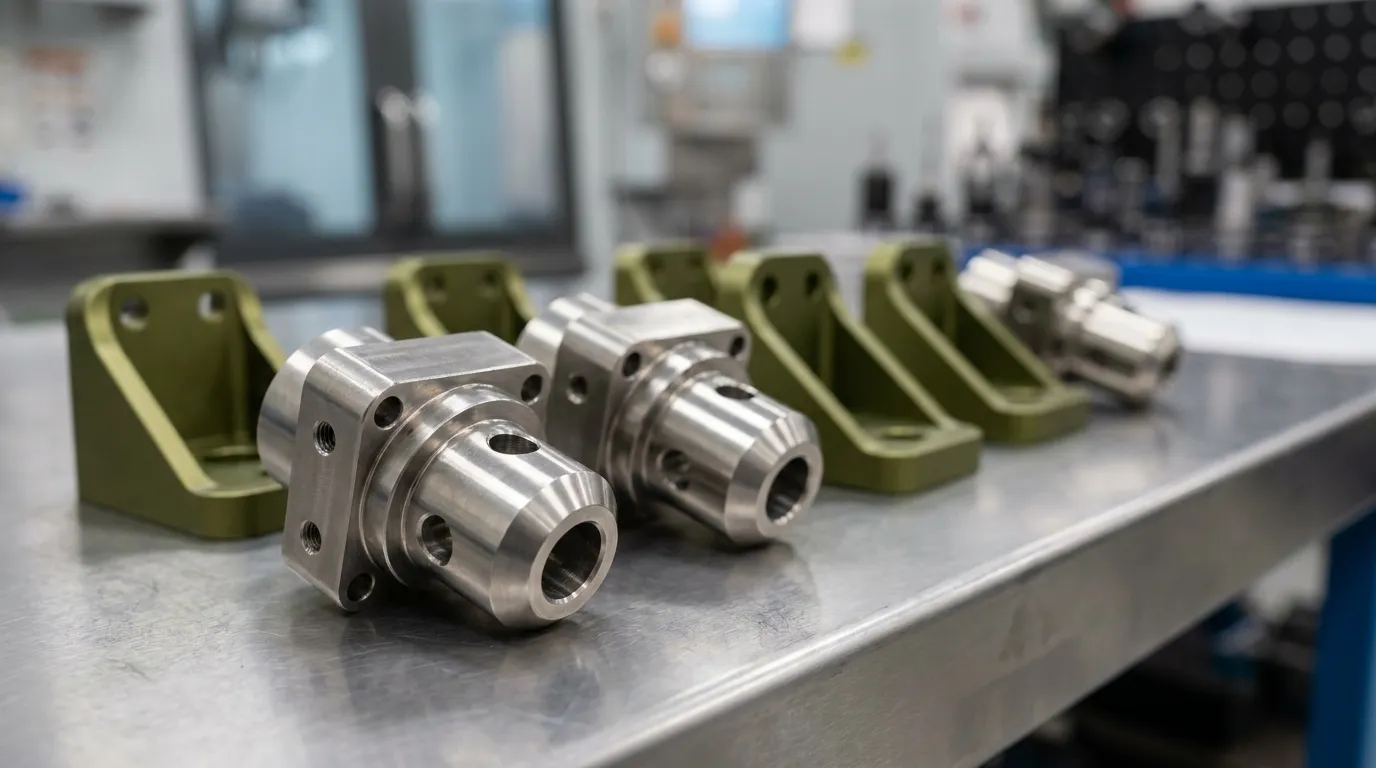
Core capabilities include advanced multi-axis CNC milling and turning for complex, high-tolerance components, plus precision sheet-metal fabrication using CNC machining, waterjet and laser cutting. These primary processes are complemented by specialty welding, including TIG, MIG and laser welding, with thermal distortion controls that preserve structural integrity in lightweight aerospace assemblies. Because secondary finishing services such as anodizing, passivation, plating, sandblasting and ultrasonic cleaning are integrated into the same production flow, components arrive ready to assemble without additional supplier engagement.
Kitting services consolidate individual components into organized kits, which reduces handling and streamlines downstream assembly. Hardware installation, brush finishing, laser marking and deburring round out the secondary services available within the same certified environment.
The two-facility footprint supports scalable capacity from prototype development through sustained, multishift production. Programs transition from initial design validation to full-rate manufacturing without a supplier change, which preserves the quality baseline established during prototyping.
Request a quote to evaluate how Precision Advanced Manufacturing’s integrated capabilities align with program requirements.
Customer Segments and Aerospace Use Cases
Commercial aerospace. Flight-critical components demand tight tolerances, full traceability and regulatory alignment. Integrated machining and finishing under AS9100D reduce the supplier count and documentation burden for OEMs and Tier 1 integrators.
Military and defense. Higher technology readiness levels accelerate the transition of hypersonic, electronic-warfare and counter-UAS prototypes into production, which increases demand for production-qualified suppliers rather than purely developmental shops. ITAR registration and AS9100D certification position Precision Advanced Manufacturing as a qualified domestic partner for this transition.
Space and satellites. Orbital and deep-space applications require components that perform reliably under extreme thermal and mechanical stress. Multi-axis CNC machining combined with thermal-distortion-controlled welding addresses the structural integrity requirements of satellite structures and launch vehicle assemblies.
UAV. UAV programs require lightweight, high-precision structures with rapid prototype-to-production transitions. Precision Advanced Manufacturing’s scalable platform and engineering support enable programs to validate designs quickly and ramp production without a supplier change.
Advanced industrials. Precision-engineered components for industrial applications benefit from the same certified processes and material expertise developed for aerospace programs, which supports long service life and consistent production quality.
Stakeholders and Supplier Evaluation Priorities
Procurement and sourcing managers prioritize reliable delivery, proven compliance and full traceability. They evaluate whether a supplier’s certified systems reduce the risk of rework, scrap and compliance failures that generate cost overruns.
Program managers focus on schedule protection. Out-of-spec parts and integration delays represent the primary threats to milestone adherence. Suppliers that deliver finished, ready-to-integrate components remove secondary work and protect assembly timelines.
Supplier quality engineers assess documentation depth, inspection rigor and process repeatability. When supplier quality and compliance data are disconnected from engineering and certification workflows, risks can go undetected until late in the program. Complete inspection reports and material certifications delivered with every shipment reduce the incoming inspection burden on customer quality teams.
Practical Evaluation Checklist for Aerospace Suppliers
The list below provides a neutral framework for evaluating any aerospace fabrication and machining supplier. Apply it during initial qualification and periodic reapproval reviews.
- Quality certification: Confirm that the supplier holds current AS9100D and ISO 9001:2015 registrations. Active third-party-audited certifications with documented scope reduce audit findings and program disqualification risk.
- ITAR compliance: Confirm that the supplier is ITAR registered for defense and space programs. Active ITAR registration with controlled access procedures reduces export control violations and contract loss risk.
- Material traceability: Confirm that the supplier can link finished components to raw material batches and certifications. Lot-level traceability with certificate-of-conformity management reduces recall exposure, audit failure and mission risk.
- Integrated capabilities: Confirm that the supplier performs machining, fabrication, welding and finishing under one quality system. Single-source, multiprocess capability with no undocumented subcontracting reduces handoff errors, documentation gaps and schedule risk.
- Scalability: Confirm that the supplier can transition from prototype to full-rate production without a quality reset. A documented prototype-to-production process with multishift capacity reduces ramp delays and mid-program supplier change risk.
- Documentation package: Confirm that the supplier delivers inspection reports and material certifications with every shipment. First-article inspection reports, in-process records and final inspection documentation reduce incoming inspection burden and compliance gaps.
Frequently Asked Questions
What certifications does Precision Advanced Manufacturing hold, and what do they cover?
Precision Advanced Manufacturing holds AS9100D and ISO 9001:2015 registrations and is ITAR registered. AS9100D governs the quality management system across all aerospace production, requiring documented processes, traceability and continuous improvement. ISO 9001:2015 provides the underlying quality framework. ITAR registration authorizes the company to handle defense and space-related technical data and hardware subject to U.S. export control regulations. All three apply across both the California and Texas facilities.
How does Precision Advanced Manufacturing support supplier transitions mid-program?
Precision Advanced Manufacturing provides complete documentation, material traceability and engineering support to ensure continuity when a program transitions from an existing supplier. The team can begin with pilot builds or validation runs to minimize risk while integrating into existing supply chains. This approach preserves the quality baseline and avoids the schedule disruption that typically accompanies a supplier change mid-program.
What does the engagement process look like from first contact to production?
The process begins with a consultation to define program needs, part specifications and critical timelines. Precision Advanced Manufacturing then delivers a tailored quote covering capabilities, tolerances, materials, certifications and production strategy. Once the program is awarded, production moves from prototype through full-rate manufacturing within the same certified quality system, with full traceability and documentation at every stage.
Can Precision Advanced Manufacturing handle complex geometries and difficult materials?
Precision Advanced Manufacturing specializes in aerospace and UAV requirements that include complex geometries and materials that standard machine shops may struggle to execute reliably. The company’s multi-axis CNC machining, precision sheet-metal fabrication and specialty welding capabilities support the tight tolerances and material performance requirements of flight-critical and space applications. Engineering support is available from the outset to refine designs for manufacturability.
How does the two-facility model benefit program continuity and capacity?
Specialized facilities in California and Texas provide geographic redundancy and combined capacity that support both prototype development and sustained, multishift production. Programs can scale without a supplier change, and the distributed footprint reduces single-point-of-failure risk for supply chain continuity. Both facilities operate under the same AS9100D and ISO 9001:2015 quality management systems, which ensures consistent documentation and process standards across locations.
Conclusion: Lower-Risk Domestic Aerospace Manufacturing
Tolerance failures, traceability gaps and scaling bottlenecks represent the primary risks that procurement, program and supplier quality teams face when sourcing aerospace fabrication and machining services. An integrated domestic supplier that combines multi-axis CNC machining, precision sheet-metal fabrication, specialty welding, kitting and secondary finishing under AS9100D, ISO 9001:2015 and ITAR-compliant systems directly addresses each of these risks. Precision Advanced Manufacturing’s two-facility footprint, full material and process traceability, and scalable production platform provide the documented reliability that mission-critical aerospace, defense, space and UAV programs require.
Request a quote to connect with Precision Advanced Manufacturing’s aerospace and UAV manufacturing specialists and begin the qualification process.