Last updated: August 6, 2026
Key takeaways for ITAR aerospace machining
- ITAR compliance for aerospace machining requires active DDTC registration, AS9100D certification and complete material traceability from raw stock through delivery.
- Procurement teams can qualify suppliers with a seven-step checklist that covers DDTC registration, CAGE code, Technology Control Plans, traceability systems, access controls, training records and FAI capability.
- Noncompliance risks include civil and criminal penalties, debarment and program delays that can halt production and trigger federal enforcement actions.
- ITAR-registered shops handling CUI must also address CMMC 2.0 requirements, including NIST SP 800-171 cybersecurity controls layered on existing export-control infrastructure.
- Precision Advanced Manufacturing delivers ITAR-compliant aerospace machining and fabrication services in the United States with full traceability and certified quality systems, so start the qualification process with a detailed quote request.
ITAR regulations applied to machining work
ITAR, the International Traffic in Arms Regulations, is administered by the Directorate of Defense Trade Controls (DDTC) under 22 CFR parts 120-130. It governs the manufacture, export and handling of defense articles and technical data listed on the U.S. Munitions List.
Any U.S. person who manufactures a defense article, even once, must register with DDTC. That requirement covers machining shops that produce flight-critical components, structural assemblies and precision-fabricated hardware for defense programs.
A September 2025 final rule amended 15 of 21 U.S. Munitions List categories, expanding coverage to advanced sensors, propulsion systems and unmanned underwater vehicles. Procurement teams sourcing machined components must confirm that supplier registration reflects current U.S. Munitions List scope.
ITAR registration is not a third-party certification. Organizations complete registration by submitting Form DS-2032 through the DECCS portal and must renew annually. A lapse does not pause legal obligations and can create added cost exposure.
Seven-step ITAR compliance checklist for aerospace suppliers
Procurement and supplier quality teams can use this seven-step checklist to qualify ITAR-registered machining and fabrication suppliers for defense and aerospace programs.
- Verify active DDTC registration. Confirm the supplier holds a current ITAR registration via the DDTC.state.gov database. A lapse in registration does not pause legal obligations, and re-registrants must pay fees for the entire intervening period.
- Confirm CAGE code and AS9100D certification. Cross-reference the supplier CAGE code with AS9100D registration in the IAQG OASIS database. AS9100D governs risk management, configuration management and counterfeit part prevention.
- Review the Technology Control Plan. Request the Technology Control Plan before award and confirm that it covers access control, data handling and visitor management for ITAR areas.
- Assess material traceability systems. Confirm the supplier maintains mill certifications, heat and lot number tracking and serial-number-level traceability from raw stock through final inspection and delivery.
- Evaluate access controls for ITAR-controlled data. Require restricted access controls, visitor escort procedures and documented audit trails for all areas that contain ITAR-controlled articles or information.
- Confirm personnel training records. Organizations should offer ITAR training on a recurring basis at least annually and maintain accurate training records that must generally be retained for at least five years, along with export and transfer records.
- Request First Article Inspection capability documentation. Confirm the supplier can produce AS9102-compliant First Article Inspection reports with balloon drawings, dimensional results and material certifications before production release.
Evaluating ITAR machine shops for defense production
The seven-step checklist provides the qualification framework, and evaluation then confirms operational controls that sustain compliance across every production run. Procurement teams need evidence that registration, quality systems and daily practices align.
Begin with registration scope and identification. Cross-reference the supplier CAGE code against DDTC records to confirm that registration is current and that the scope covers the specific U.S. Munitions List categories relevant to the program. This step builds on the registration verification in the checklist and narrows focus to program-specific coverage.
Next, assess controls that prevent unauthorized access to technical data. A deemed export occurs when ITAR-controlled technical data is released to a foreign person inside the United States, including sharing a drawing or allowing visual inspection of a controlled article. Confirm that the shop enforces nationality-based access controls for drawings, models and all program documentation.
Then review documentation and recordkeeping. Request sample material certifications, inspection reports and nonconformance records that demonstrate the five-year retention program described in the qualification checklist. Confirm that records link back to heat and lot numbers and that nonconformance history is traceable.
Finally, evaluate supporting systems. Confirm that the shop maintains a controlled approved supplier list for sub-tier and special process providers with documented requalification criteria. For programs involving Controlled Unclassified Information, assess alignment with NIST SP 800-171 controls as preparation for CMMC Level 2 requirements.
Procurement and sourcing: Managing program delay risk
Program delays caused by nonconforming parts, compliance failures or supplier lapses create direct cost consequences. Procurement teams that source from unverified suppliers absorb that schedule and cost risk.
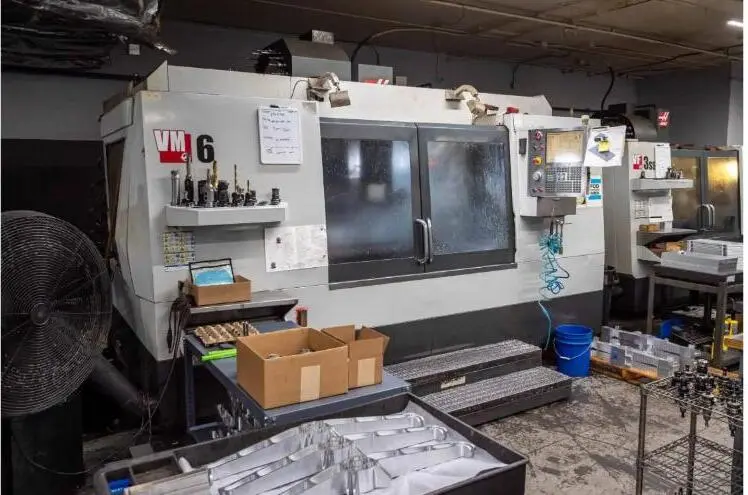
Precision Advanced Manufacturing reduces procurement risk through consistent, on-time delivery backed by AS9100D, ISO 9001 and ITAR-compliant processes. Full material traceability across every production step supports audit readiness and closes documentation gaps. Scalable capacity from prototype through multi-shift, high-volume production reduces supplier-change risk that often creates bottlenecks at program transition points.
Program management: Protecting milestones from out-of-spec parts
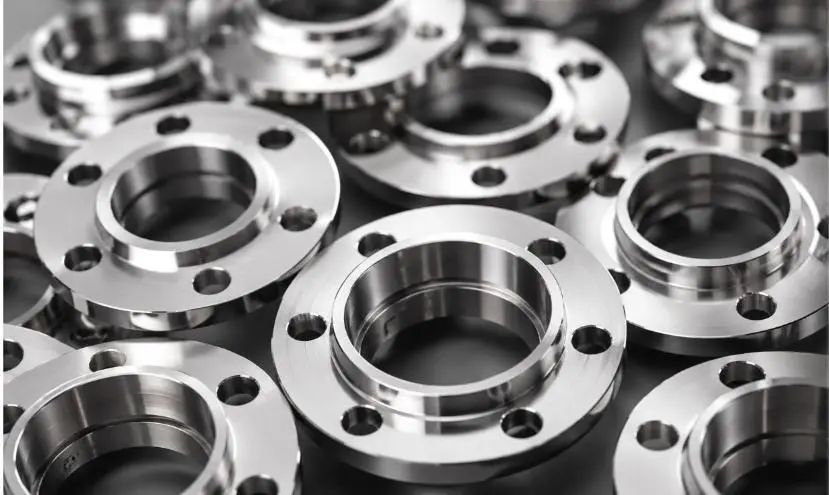
Out-of-spec components arriving at integration create downstream delays that compound across program milestones. Transferring work between separate prototype and production suppliers introduces risks of lost process knowledge, duplicated tooling costs and repeated First Article Inspection cycles.
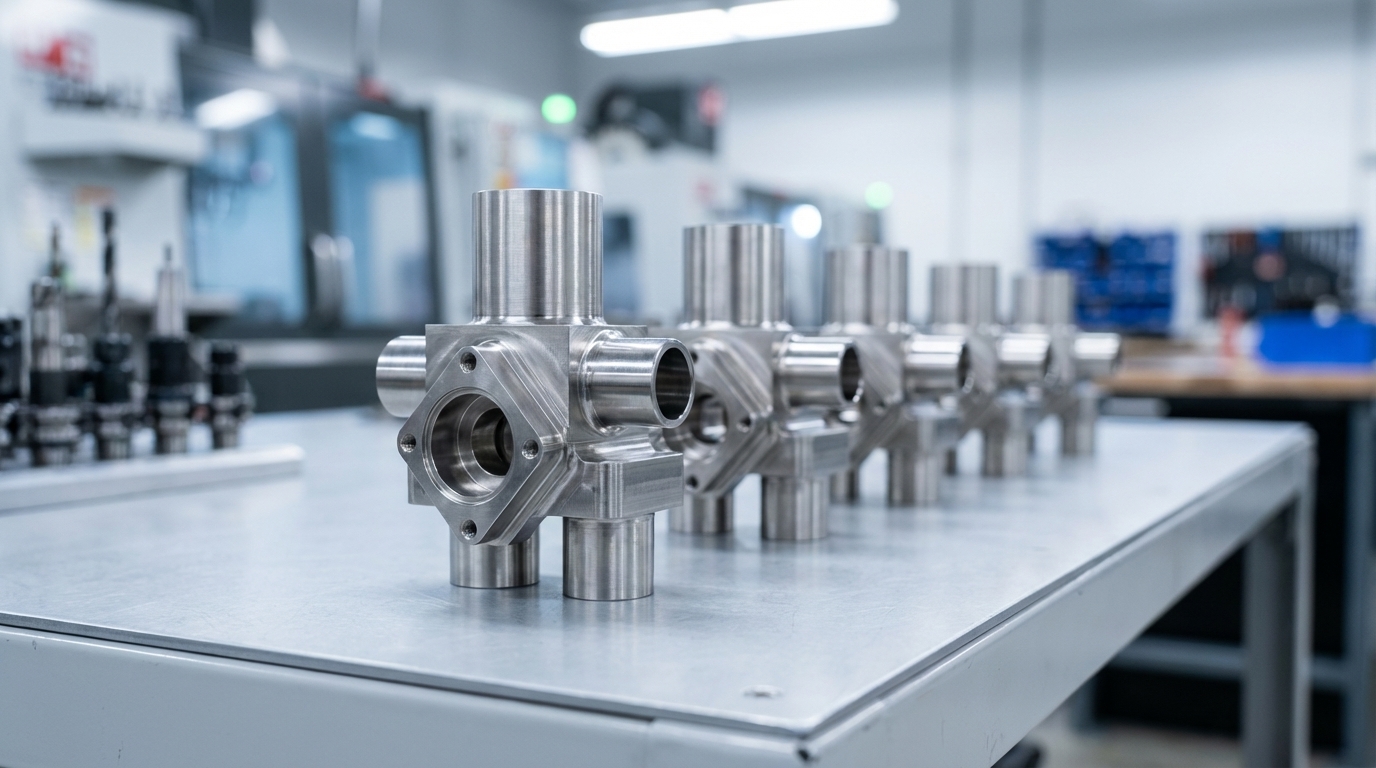
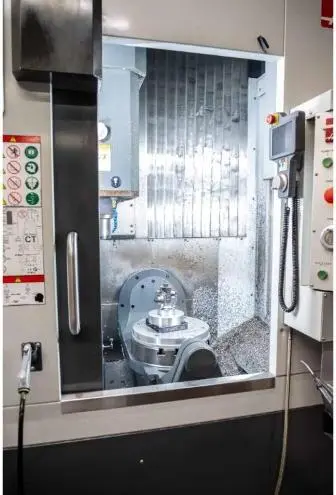
Precision Advanced Manufacturing delivers finished, ready-to-integrate components that meet exact specifications. Advanced multi-axis CNC machining, precision fabrication and integrated finishing services operate under one roof, which removes handoffs and reduces integration delays. The same quality processes validated during prototyping continue into full-rate production and protect program timelines and budgets.

Supplier quality and engineering: Confidence in tolerances and compliance
Traceability gaps in aerospace manufacturing can trigger AS9100 major nonconformities with potential certification suspension, loss of prime contractor business and ITAR violation penalties. Supplier quality engineers need complete documentation before parts reach inspection.
Precision Advanced Manufacturing operates under certified AS9100D and ISO 9001 quality systems with in-process and final inspection at every production stage. Complete inspection documentation, material certifications and nonconformance records accompany every order. Expertise in complex materials and advanced fabrication processes, including TIG, MIG and laser welding with thermal distortion control, supports reliability in demanding aerospace environments.

Non-U.S. persons and access to ITAR projects
Non-U.S. persons may not access ITAR-controlled technical data, hardware or manufacturing areas without a specific license or other authorization from DDTC. A deemed export occurs when controlled technical data is released to a foreign person inside the United States, including sharing a drawing or allowing visual inspection of a controlled article.
Unauthorized access by foreign persons to ITAR-controlled technical data can create potential violations even without a physical export. Procurement teams must confirm that suppliers enforce nationality-based access controls for all program documentation and controlled work areas.
Indicators of active ITAR compliance
ITAR compliance functions as an ongoing operational state rather than a single certification. There is no size threshold for ITAR registration under 22 CFR Part 122, so even a 10-person shop manufacturing U.S. Munitions List items faces the same registration requirement as larger primes.
Indicators of active compliance include a current DDTC registration, a documented Technology Control Plan, annual employee training records, restricted-party screening procedures, physical access controls for ITAR areas and a minimum five-year record retention program. Voluntary self-disclosure of violations to DDTC before government discovery can lead to substantially reduced penalties or no penalty.
ITAR versus AS9100 in aerospace machining
ITAR is a U.S. State Department export-control regulation that governs who may access and handle defense articles and technical data on the U.S. Munitions List. AS9100D is an aerospace quality management standard built on ISO 9001:2015 that governs how a supplier documents, inspects, controls and corrects its manufacturing processes.
A machining or fabrication supplier can be ITAR-registered and still need AS9100D for quality management and CMMC Level 2 for cybersecurity to satisfy full obligations for defense programs. The frameworks address different risk domains and both are required for most flight-critical and defense supply chain positions.
Cost and consequences of ITAR noncompliance
Noncompliance carries financial, operational and legal consequences that extend well beyond the initial violation.
- Civil penalties under 22 CFR 127.10 reach up to the current inflation-adjusted schedule, with no showing of intent required.
- Criminal penalties under the Arms Export Control Act include fines and imprisonment per willful violation, applying to both companies and individuals.
- The RTX and Raytheon settlement reached the largest ITAR enforcement outcome in history, involving unauthorized exports, failure to disclose known violations and systemic compliance deficiencies.
- Debarment under 22 CFR 127.7 prohibits participation in the export of defense articles. Prime contractors routinely remove debarred suppliers because an ineligible entity in the chain jeopardizes licensing across the entire program.
- DDTC consent agreements have exceeded significant amounts against major defense contractors for systemic violations, with the average agreement involving monitored compliance remediation.
2026 CMMC 2.0 overlap for ITAR-registered shops
The CMMC 2.0 rollout began Nov. 10, 2025, with phased implementation through 2028 under 32 CFR Part 170 and DFARS rules. ITAR-registered shops that also handle Controlled Unclassified Information must now address both regimes.
ITAR and CMMC overlap when ITAR-controlled technical data is also treated as CUI, and in that case a supplier must satisfy both export-control restrictions and CMMC or NIST cybersecurity controls. The two frameworks operate in parallel and do not replace one another.
A supplier may be fully ITAR-compliant and still fail CMMC Level 2 if it lacks required cyber controls such as logging, encryption or documented incident response. CMMC Level 2 requires 110 security controls aligned to NIST SP 800-171, including multifactor authentication, FIPS 140-2 validated encryption and a documented system security plan. Mandatory third-party C3PAO assessment was originally scheduled to become a condition of award for most Level 2 contracts beginning Nov. 10, 2026, but the Phase II requirement has been suspended.
ITAR-registered shops building toward CMMC Level 2 readiness can treat existing access control infrastructure, personnel training programs and audit trail requirements as a foundation. Additional cybersecurity controls required by CMMC then layer on top of that export-control baseline.
Frequently asked questions about ITAR machining suppliers
How long does it take to qualify a new ITAR-registered aerospace machining supplier?
Qualification timelines vary by program complexity and by the documentation a supplier can provide at the outset. Suppliers with active AS9100D certification, current DDTC registration and complete quality documentation, including First Article Inspection capability, material traceability records and a Technology Control Plan, can move through qualification faster than suppliers that require remediation. Precision Advanced Manufacturing maintains required certifications and documentation, which supports efficient supplier onboarding for both prototype and production programs.
What drives cost differences between ITAR-compliant and standard machining suppliers?
ITAR-compliant aerospace machining reflects the cost of certified quality systems, compliance infrastructure, trained personnel and documentation requirements. These investments reduce downstream costs from rework, scrap, compliance failures and program delays. Delivering parts correctly the first time, with full traceability and inspection documentation, protects program budgets more effectively than lower-cost suppliers that introduce nonconformance risk.
How does Precision Advanced Manufacturing maintain AS9100D and ITAR compliance across production runs?
Precision Advanced Manufacturing operates under AS9100D and ISO 9001:2015 registered quality management systems with defined quality checkpoints, in-process and final inspection and full documentation at every production stage. ITAR compliance is maintained through access controls, personnel training, Technology Control Plan procedures and restricted-party screening. These systems apply consistently from prototype through full-rate production.
What happens when a program needs to transition from an existing supplier mid-program?
Supplier transitions mid-program introduce risk when documentation, material traceability and process knowledge are incomplete. Precision Advanced Manufacturing supports transitions by providing complete documentation packages, material traceability records and engineering support to maintain continuity. Pilot builds or validation runs can minimize risk while integrating into an existing supply chain without disrupting program schedules.
Conclusion: Integrated, compliant aerospace machining support
Qualifying ITAR-compliant aerospace machining and fabrication services in the United States requires verification of registration, certification, traceability systems, access controls and scalability, not just price and lead time. Each step in the qualification checklist maps directly to a compliance or program risk that unverified suppliers create.
Precision Advanced Manufacturing consolidates multi-axis CNC machining, precision metal fabrication, specialty welding, integrated finishing and engineering support under AS9100D, ISO 9001 and ITAR-compliant quality systems at two U.S. facilities. Programs receive consistent, traceable, ready-to-integrate components from prototype through sustained production without supplier changes, documentation gaps or compliance exposure.