Last updated: July 31, 2026
Key Takeaways for ITAR-Compliant Flight-Critical Sheet Metal
- ITAR-compliant flight-critical sheet metal fabrication relies on DDTC registration under 22 CFR Part 122, AS9100D and ISO 9001:2015 certifications, AS9102 first article inspection, NADCAP-aligned special processes, and full material traceability.
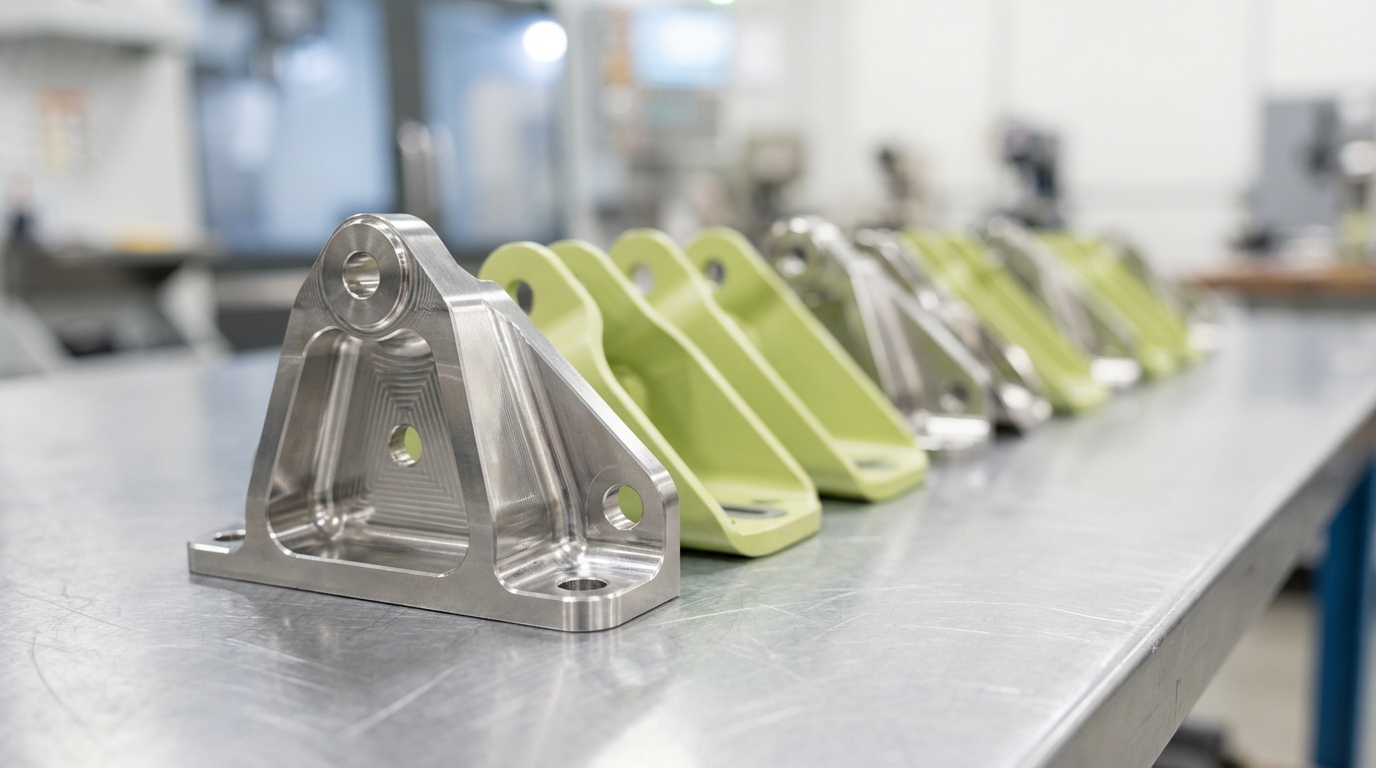
- Suppliers demonstrate readiness when CNC machining, precision sheet metal fabrication, specialty welding, and finishing operate under one quality system, which reduces traceability gaps and schedule risk.
- AS9102 Rev C first article inspection with complete Forms 1–3, material lot tracking, and NADCAP process certifications provides the objective evidence regulators and aerospace primes require before rate production.
- End-to-end material traceability, including lot and heat numbers, DFARS 252.225-7001 country-of-origin documentation, and five-year ITAR record retention, supports audit readiness and reduces regulatory exposure.
- Precision Advanced Manufacturing meets every requirement on the supplier qualification checklist; discuss flight-critical program requirements with an aerospace manufacturing specialist.
8-Step Supplier Qualification Checklist for ITAR-Compliant Flight-Critical Sheet Metal
Supplier quality engineers and strategic sourcing managers can apply this checklist to evaluate any candidate fabricator against flight-critical compliance and production controls.
- Verify active ITAR registration. Confirm the supplier holds a current DDTC registration under 22 CFR Part 122 and has appointed an Empowered Official. Registration must be renewed annually, so request the current registration certificate before issuing a purchase order.
- Confirm AS9100D and ISO 9001:2015 certification. AS9100D adds configuration management, FOD controls, counterfeit parts prevention and first article inspection requirements beyond ISO 9001 alone. Both certifications must be current and issued by an accredited registrar.
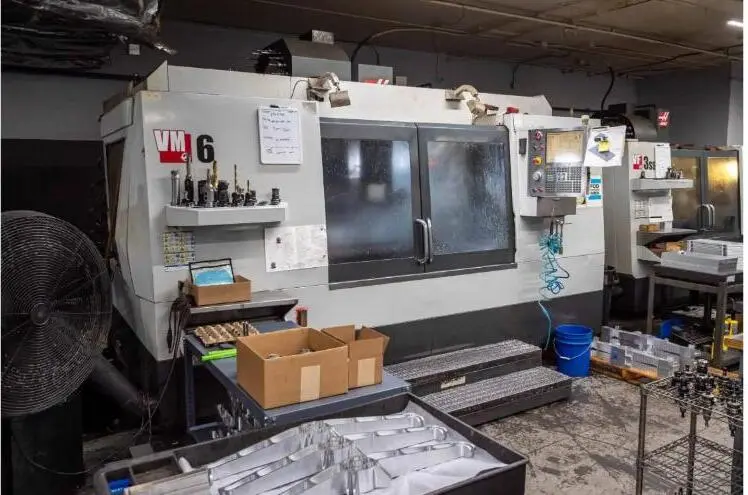
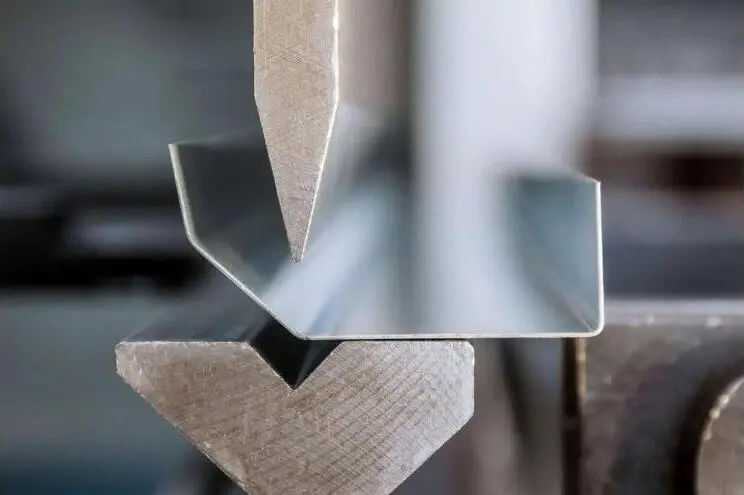
- Assess integrated fabrication capabilities. Fragmented supply chains create traceability gaps and schedule risk. Confirm the supplier performs CNC machining, precision sheet metal fabrication, specialty welding and secondary finishing under one roof.
- Review AS9102 first article inspection readiness. The supplier must execute full FAI per AS9102 Rev C Forms 1–3, covering part-number accountability, material lot and heat numbers, special-process certifications and characteristic accountability tied to design data.
- Evaluate material traceability controls. Require documented lot and heat tracking, country-of-origin records per DFARS 252.225-7001, Certificates of Conformance and material test reports that meet ITAR’s five-year record retention requirement.
- Confirm NADCAP-aligned special process controls. For heat treatment, NDT, welding, chemical processing and coatings, verify that the supplier uses NADCAP-accredited sub-tier processors or holds direct accreditation. Check current status in the eAuditNet database before releasing a purchase order.
- Audit FOD prevention and cleanliness controls. AS9100D Clause 8.5.1 requires documented FOD prevention programs. Confirm the supplier maintains controlled work areas, tool accountability procedures and inspection records for FOD-sensitive assemblies.
- Validate prototype-to-production scalability. Confirm the supplier can transition from prototype builds to multi-shift, full-rate production without a supplier change, which preserves validated processes and documentation continuity.
Precision Advanced Manufacturing satisfies every step on this checklist. The company is ITAR registered, AS9100D and ISO 9001:2015 certified, and operates multi-axis CNC machining, precision sheet metal fabrication, specialty welding and integrated finishing at its U.S. facilities. Start the qualification process for ITAR-compliant aerospace sheet metal fabrication for flight-critical parts.
ITAR Compliance Requirements for Aerospace Sheet Metal
22 CFR Part 122 mandates that any U.S. person engaged in manufacturing defense articles, even on a single occasion, register with the DDTC. Registration functions as a legal prerequisite for producing items listed on the United States Munitions List (USML), including specially designed aerospace components.
Registration is submitted via Form DS-2032 through the DECCS online system and requires annual renewal. The registrant appoints an Empowered Official, a senior U.S. person authorized to certify export-license submissions and bind the company legally with the State Department. Registration does not grant export privileges; it establishes the precondition for applying for licenses or Technical Assistance Agreements.
ITAR compliance also requires retaining export records, technology-transfer records, physical-access logs for controlled areas and ITAR awareness training records for a minimum of five years. Civil penalties for violations can reach the greater of $1,271,078 or twice the value of the underlying transaction, with criminal penalties reaching $1 million per violation and 20 years imprisonment.
How Precision meets this requirement. Precision Advanced Manufacturing holds active ITAR registration and operates under AS9100D and ISO 9001:2015 certified quality management systems. In-house engineering support and documented quality checkpoints maintain access controls, record retention and compliance documentation across every flight-critical program.
How ITAR and AS9100 Work Together
ITAR and AS9100D address different categories of risk within aerospace programs. ITAR, administered by the U.S. Department of State under 22 CFR Parts 120–130, governs lawful handling of defense articles and technical data listed on the USML. AS9100D governs quality management and production controls for the aviation, space and defense industry.
The two frameworks overlap in document control, supplier qualification, internal audits, corrective action, configuration management, traceability and risk assessment. AS9100D requirements on configuration management, first article inspection, customer-specific flow-down, risk management, FOD controls and counterfeit parts prevention create a structural foundation that supports ITAR compliance buildout. ITAR does not recognize AS9100 or ISO 9001 certification as satisfying specific regulatory obligations, yet AS9100-certified companies often reduce ITAR compliance buildout time compared with companies starting from zero.
AS9100 certification addresses overall quality management systems, while NADCAP provides technical process-level accreditation. Aerospace production programs typically require both. An AS9100-certified shop may still be ineligible to perform NADCAP-required special processes without separate accreditation.
How Precision meets this requirement. Precision Advanced Manufacturing maintains AS9100D, ISO 9001:2015 and ITAR registration concurrently. This integrated compliance posture builds traceability, configuration management and risk controls directly into production.
Certificate of Conformance Requirements for Aircraft Parts
A Certificate of Conformance (CoC) is a supplier-issued document declaring that delivered parts conform to the applicable drawing, specification, purchase order and quality requirements. For flight-critical sheet metal parts, the CoC references the part number, revision level, quantity, material specification, applicable process certifications and the quality management system under which the parts were produced.
Under AS9102 Rev C, Form 2 (Product Accountability) documents materials with lot and heat numbers, applicable material specifications and certifications for special processes including heat treatment, NDT, plating and coating. NADCAP approvals must be referenced where applicable. The CoC and Form 2 together create a traceable audit trail from design data to inspection evidence that airworthiness regulators and aerospace primes require.
The CoC is supported by material test reports and process certifications. Country-of-origin documentation is required for defense programs under DFARS 252.225-7001. As noted earlier, ITAR’s five-year retention requirement governs these records.
How Precision meets this requirement. Precision Advanced Manufacturing delivers complete CoC packages with every shipment, including material certifications, inspection reports and process documentation aligned to AS9100D and AS9102 requirements. Documentation remains traceable from raw material receipt through final inspection.
Common Metals in Flight-Critical Aircraft Structures
Aluminum alloys, titanium alloys and stainless steels serve as the primary metals for flight-critical aerospace sheet metal fabrication. Selection depends on structural requirements, weight targets, operating environment and applicable material specifications.

Aluminum alloys 6061 and 7075 support airframe structures, brackets and panels where low weight, machinability and good thermal conductivity matter. Ti-6Al-4V (Grade 5) titanium is the most common titanium alloy in flight hardware, specified for airframe structures, fasteners, brackets and engine-adjacent components because of its strength-to-weight ratio, corrosion resistance and fatigue behavior. It is typically supplied to AMS specifications such as AMS 4911 for sheet, strip and plate. Stainless steels support components that require durability and corrosion resistance in harsh environments.
In space and satellite applications, these alloys pair with surface finishes such as anodizing, electroless nickel or dry film lubricants to mitigate cold welding, outgassing and thermal cycling risks. Material selection for spacecraft must also satisfy ASTM E595 outgassing requirements to protect optics and sensors.

How Precision meets this requirement. Precision Advanced Manufacturing works with aluminum alloys, titanium alloys, stainless steels and other aerospace-grade materials. Secondary finishing capabilities, including anodizing, passivation and plating, are integrated into the production platform so materials meet durability and compliance requirements for flight-critical applications.
AS9102 First Article Inspection for Sheet Metal Programs
AS9102 Rev C is the current aerospace first article inspection standard. It defines full FAI triggers that include a new part number, engineering changes affecting fit, form, function, reliability or safety, process or location changes and lapses in production. Rev C addresses digital and software-driven environments and provides clearer handling of partial and delta FAI scenarios.
FAI is documented across three forms. Form 1 establishes part-number accountability. Form 2 covers product accountability, including materials with lot and heat numbers, applicable specifications and NADCAP-approved special processes. Form 3 records characteristic accountability, linking every inspected dimension and feature to design data and inspection evidence.
Partial FAI is triggered by manufacturing process, location, tooling or equipment changes. Delta FAI is triggered by engineering or design changes. Both require traceable linkage to the baseline full FAI for configuration control. Special processes documented on Form 2, including heat treatment, NDT, plating and coating, must reference applicable specifications and NADCAP certifications. AS9102 provides objective evidence to AS9100 and airworthiness regulators that production processes are validated before rate production.
How Precision meets this requirement. Precision Advanced Manufacturing executes AS9102 Rev C FAI as a standard production gate and delivers complete Forms 1–3 with every new or changed part. In-house inspection capabilities and documented quality checkpoints support full characteristic accountability from prototype through full-rate production.
Material Traceability Standards for Flight-Critical Components
End-to-end traceability for flight-critical sheet metal parts requires lot and heat tracking from raw material receipt through final delivery, along with country-of-origin documentation per DFARS 252.225-7001. As noted earlier, ITAR’s five-year retention requirement governs these records.
AS9100D requires maintaining part identification throughout production, tracking material certifications and providing serialized part tracking for flight-critical components. Aerospace and defense supply chains must connect internal records with upstream suppliers and downstream customers, not just internal lot tracking. A traceability gap in an ITAR-controlled production environment can result in fines, imprisonment or export bans.
Companies with weak traceability pay more per recall because they cannot isolate affected lots. Defense programs require machined parts and systems housings with strict traceability, and aircraft OEMs increasingly favor suppliers that demonstrate audit-ready quality systems and clear documentation for flight-critical components.
How Precision meets this requirement. Precision Advanced Manufacturing maintains complete material traceability from raw stock to finished part, including lot and heat records, Certificates of Conformance, material test reports and country-of-origin documentation. Records are retained in compliance with ITAR requirements, which supports customer audits and regulatory reviews.
Qualification Matrix Connecting Compliance to Production Controls
ITAR registration under 22 CFR Part 122 requires an Empowered Official, U.S. person access controls and export record retention. Internal compliance audits verify these controls and confirm that access restrictions are enforced and records are maintained. The audit trail includes the DDTC registration certificate, access logs and training records that demonstrate ongoing compliance.
AS9100D quality management covers configuration management, FOD prevention, risk assessment and supplier flow-down. Internal and third-party QMS audits confirm these controls and drive corrective actions. Documentation includes the AS9100D certificate, audit reports and corrective action records.
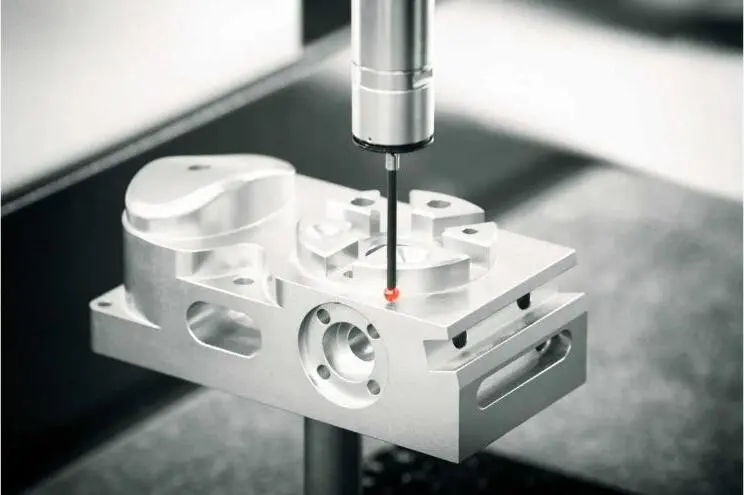
AS9102 Rev C first article inspection requires in-process and final dimensional inspection along with special-process verification. CMM, optical and attribute inspection per design data provide verification. AS9102 generates Forms 1–3 and characteristic accountability records that link inspection results to design requirements.
Material traceability under DFARS 252.225-7001 requires lot and heat tracking, country-of-origin controls and serialized part identification. Receiving inspection and material certification review confirm these controls and feed traceability records. This framework produces the CoC, material test reports and lot records used during audits.
NADCAP-aligned special processes require NADCAP-accredited sub-tier processors and process traveler controls. Process certification review and eAuditNet status verification confirm these controls. NADCAP certificates, process certifications and Form 2 entries then complete the process-level documentation within the overall compliance framework.
Seamless Scalability from Prototype to Full-Rate Production
Fragmented sourcing that splits sheet metal fabrication, machining, welding and finishing across multiple vendors introduces traceability gaps, schedule risk and compliance exposure at every handoff. The aerospace parts manufacturing market is projected to grow from USD 161.9 billion in 2026 to USD 235.1 billion by 2036, driven by demand for certified supplier capacity with strict material traceability. OEMs evaluate suppliers on tolerance control, documentation depth and program-specific capacity, not price alone.
A single-source fabricator that validates processes during prototyping and carries those same processes into full-rate production eliminates supplier-change risk. That approach avoids delta FAI requirements, re-qualification costs and program delays. Multi-shift capacity and disciplined scheduling allow programs to ramp without operational disruption.
How Precision meets this requirement. Precision Advanced Manufacturing operates multi-axis CNC machining, precision sheet metal fabrication, specialty welding, kitting and integrated finishing under one roof at its U.S. facilities. Programs transition from prototype to full-rate production without a supplier change, which preserves validated processes, documentation continuity and AS9100D compliance at every production stage. Explore prototype-to-production capabilities for flight-critical sheet metal programs.
Next Steps for Qualifying an ITAR-Compliant Supplier
Qualifying a supplier for ITAR-compliant aerospace sheet metal fabrication for flight-critical parts requires verifying registration, certifications, traceability controls, FAI readiness and production scalability before the first purchase order. Discovering a compliance or traceability gap during rate production creates risk that is difficult and costly to remediate.
Precision Advanced Manufacturing provides integrated capabilities, certified quality systems and complete documentation that support flight-critical programs from initial prototype through sustained production. Teams can engage an aerospace manufacturing specialist, receive a tailored quote covering capabilities, tolerances, materials, certifications and production strategy, then launch production under AS9100D, ISO 9001:2015 and ITAR-compliant quality controls with full traceability from day one.
Start the qualification process for ITAR-compliant aerospace sheet metal fabrication for flight-critical parts.
Frequently Asked Questions
What certifications should a supplier hold for flight-critical aerospace sheet metal fabrication?
A supplier producing flight-critical aerospace sheet metal parts should hold active AS9100D and ISO 9001:2015 certifications issued by an accredited registrar and must be registered with the DDTC under 22 CFR Part 122 if the parts are defense articles or specially designed aerospace components. AS9100D adds requirements beyond ISO 9001 that directly support flight-critical work, including configuration management, FOD prevention, counterfeit parts controls, first article inspection and customer-specific flow-down. NADCAP accreditation or the use of NADCAP-accredited sub-tier processors is required for special processes such as heat treatment, NDT, welding and chemical processing when those processes are called out on the drawing or purchase order. Precision Advanced Manufacturing holds AS9100D and ISO 9001:2015 certifications and is ITAR registered.
What is the difference between a full FAI and a delta FAI under AS9102 Rev C?
A full first article inspection under AS9102 Rev C is required for a new part number, a new production source or any change affecting fit, form, function, reliability or safety. It documents part-number accountability on Form 1, product accountability including materials and special processes on Form 2 and characteristic accountability on Form 3. A delta FAI is a targeted inspection triggered by an engineering or design change and covers only the characteristics and documentation affected by the change while remaining traceable to the baseline full FAI. A partial FAI is triggered by manufacturing process, location, tooling or equipment changes and similarly covers only the affected scope. Both delta and partial FAIs require documented linkage to the original full FAI to maintain configuration control for flight-critical parts.
How does material traceability work for ITAR-controlled flight-critical sheet metal parts?
Material traceability for ITAR-controlled flight-critical sheet metal parts requires tracking lot and heat numbers from raw material receipt through final delivery, maintaining country-of-origin records per DFARS 252.225-7001 for defense programs and retaining all records for a minimum of five years under ITAR requirements. Each part or lot must be accompanied by a Certificate of Conformance and material test reports referencing the applicable material specification. Special-process certifications, including NADCAP approvals where required, must be documented on AS9102 Form 2 and retained as part of the quality record. Serialized part tracking is required for flight-critical components under AS9100D. A traceability gap in an ITAR-controlled environment can result in regulatory penalties, so end-to-end visibility from supplier material certification to customer delivery record represents the minimum acceptable standard.
Can a single supplier handle both prototype and full-rate production for flight-critical sheet metal parts?
A supplier with integrated machining, fabrication, welding and finishing capabilities under a single AS9100D-certified quality system can manage the full product lifecycle from prototype through sustained production. A single-source approach allows processes validated during first article inspection to carry directly into rate production without triggering a supplier change, which would otherwise require re-qualification, potential delta FAI and supply chain disruption. The supplier must demonstrate multi-shift capacity and disciplined scheduling to support production ramp while maintaining the quality controls established during prototyping. Precision Advanced Manufacturing is structured to support this transition, with scalable production capacity and the same certified quality system applied at every stage.
What documentation should be included in a complete quality package for flight-critical sheet metal parts?
A complete quality package for flight-critical sheet metal parts includes the Certificate of Conformance referencing the part number, revision, applicable specifications and quality management system; material test reports with lot and heat numbers; special-process certifications with NADCAP approval references where required; AS9102 Forms 1–3 for first article inspection; dimensional inspection reports; country-of-origin documentation for defense programs and any customer-specific flow-down documentation required by the purchase order. For ITAR-controlled parts, the package must also support the supplier’s five-year record retention obligation. All documentation should be traceable from raw material receipt through final inspection and delivery, creating an audit-ready record that supports customer quality reviews and regulatory compliance.