
Last updated: August 25, 2026
Key Takeaways for AS9100D Space Suppliers
- AS9100D extends ISO 9001:2015 with about 100 aerospace requirements that cover configuration management, counterfeit prevention, product safety and risk management for space hardware suppliers.
- Five core AS9100D clauses on configuration management, risk management, counterfeit prevention, traceability and supplier oversight align with the controls space programs require.
- Primes use a seven-step qualification checklist that covers OASIS verification, risk-based audit tiering, capability audits, AS9102 Rev C FAI review, NADCAP checks, ITAR registration and ongoing performance monitoring.
- Suppliers maintain auditable evidence packages that include active AS9100D certificates, configuration baseline records, risk registers, counterfeit prevention plans, FAI packages and outgassing test reports.
- Precision Advanced Manufacturing holds AS9100D and ITAR registration with documented controls that support each step of the space hardware qualification process; request a quote to review specific program needs.
Core AS9100D Clauses Mapped to Orbital Requirements
AS9100D clauses align with the controls that space hardware programs require for safe, repeatable production. The five clauses most critical to these programs cover configuration management, risk management, counterfeit prevention, traceability and supplier oversight.

Precision Advanced Manufacturing operates documented controls for each of these clauses under its AS9100D registration. These controls support space and satellite programs that require full configuration traceability and counterfeit prevention at every production step.

Connect with Precision Advanced Manufacturing to map these AS9100D controls to specific configuration and traceability requirements for a space hardware program.
7-Step Supplier Qualification Checklist Used by Primes
Primes follow a structured sequence when qualifying AS9100D suppliers for space programs. The steps below reflect the process major OEMs including Boeing, Lockheed Martin and RTX apply before adding a supplier to an Approved Supplier List.
- Verify OASIS certification status. Confirm the supplier holds an active AS9100D certificate in the IAQG OASIS database with a scope that covers the processes being sourced. Primes rely on a live OASIS lookup rather than certificate copies.
- Apply risk-based audit tiering. Score the supplier against part criticality, sub-tier complexity, special-process involvement and performance history. Scale audit depth according to the resulting risk profile.
- Conduct a capability audit. Evaluate configuration management records, risk registers, counterfeit prevention procedures, FOD controls and ESD handling against the AS9100D clause requirements.
- Review an AS9102 Rev C First Article Inspection package. Major primes require submissions that use the current AS9102 Rev C forms for FAI documentation.
- Confirm special-process NADCAP accreditation. Suppliers that perform heat treating, welding or nondestructive testing often require NADCAP accreditation for those specific processes.
- Verify ITAR registration and flow-down compliance. Organizations that handle defense articles or technical data maintain current ITAR registration as a baseline qualification condition for space programs.
- Establish ongoing performance monitoring. Approved Supplier List status depends on continuous scorecard tracking of quality, delivery, responsiveness and compliance metrics, with Supplier Corrective Action Requests issued for nonconformances.
Request a quote from Precision Advanced Manufacturing, which maintains AS9100D registration, ITAR registration and full documentation that supports each step of this qualification process.
Audit Evidence Packages Aerospace Primes Expect
Supplier qualification audits follow a predictable pattern, and primes request a defined set of records. The items below represent the evidence packages that aerospace primes expect contract manufacturers to produce on demand.
- Active AS9100D certificate with OASIS-confirmed “Certified” status and matching scope
- Configuration baseline records that link drawing revision, BOM revision and build lot for each delivered serial
- Risk register with identified critical items, mitigation actions and effectiveness monitoring entries
- Counterfeit parts prevention plan with Approved Vendor List and broker-source qualification records per SAE AS6081
- AS9102 Rev C First Article Inspection package for each active part number
- Calibration traceability records that link each measurement instrument to its calibration certificate at the date of use
- FOD inspection and incident log that covers the most recent production period
- ESD handling procedure and training records for personnel who work on ESD-sensitive hardware
- Outgassing test reports (ASTM E595, TML <1.0%, CVCM <0.10%) traceable to the delivered material batch
- Material certifications and certificates of conformance traceable to lot numbers consumed in production
- NADCAP accreditation certificates that cover applicable special processes with current scope verification
- Supplier scorecard data and Supplier Corrective Action Request log for sub-tier providers
Special-Process Control and NADCAP Expectations
AS9100D certification alone does not satisfy prime requirements for special processes. Suppliers that perform welding, heat treating or nondestructive testing often require NADCAP accreditation in the applicable process category.

AS9100D includes requirements for the control of special processes. A recurring audit finding is that special-process supplier approvals exist on the Approved Supplier List but the scope of approval is not verified at purchase order release, which allows a supplier approved for one alloy to process material for another without conforming evidence.
Primes verify NADCAP scope at each purchase order, not only at initial qualification. Suppliers maintain current accreditation certificates and confirm that the approved scope covers the specific alloys, processes and certifications required for each job.
AS9102 First Article Inspection Data Packages
AS9100D mandates AS9102 First Article Inspection as documented proof that a manufacturing process can consistently produce parts that meet design specifications. AS9102 Rev C is the current standard.
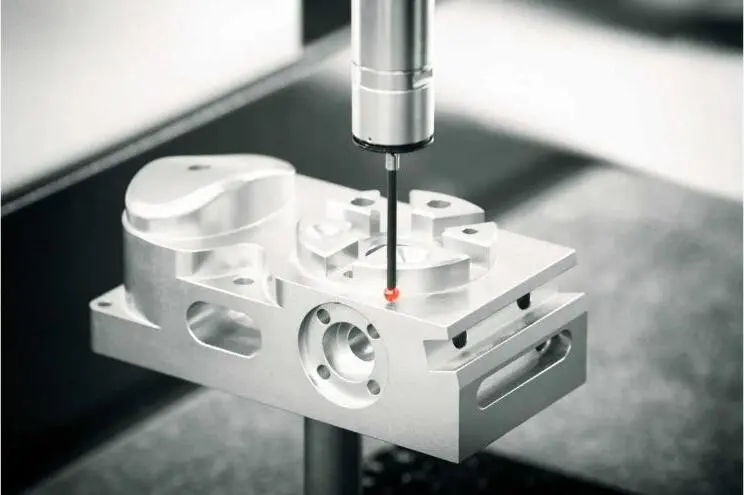
A new FAI is also required when any of the following conditions occur.
- A design change that affects the part
- A significant change to the manufacturing process, tooling or facility
- A change in sub-tier supplier that performs a special process
A common AS9100D nonconformance occurs when suppliers miss FAI re-verification triggers and ship against a stale FAI package. Every characteristic on the drawing must be verified and recorded before serial production begins.
IAQG OASIS Verification Steps for AS9100D Status
Aerospace primes treat AS9100D certification as a hard supplier-qualification gate and do not issue RFQs to contract manufacturers absent from the OASIS database. The following steps confirm a supplier’s active status.
- Navigate to the IAQG OASIS database at oasis.sae-international.org.
- Select “Organization Search” and enter the supplier’s legal company name or certificate number.
- Confirm the certificate status field reads “Certified.” Any other status, such as “Suspended,” “Withdrawn” or “Expired,” disqualifies the supplier.
- Verify that the certification standard listed is AS9100D, not AS9100C or ISO 9001 alone.
- Confirm that the scope description covers the specific processes being sourced, such as CNC machining, precision fabrication or welding.
- Record the certificate expiration date and the name of the accredited certification body for the qualification file.
Common AS9100D Audit Failures and Prevention Tactics
AS9100 audit findings cluster around traceability gaps, inconsistent procedure execution, inadequate nonconformance documentation and configuration-control failures.
AS9100 Clause 7.1.5.2 Measurement Traceability ranks among the most frequently cited nonconformances in AS9100 audits. AS9100 audits often identify multiple minor nonconformities in this area.
The most common failure categories and their prevention actions include the following.
- Traceability gaps: Implement lot travelers that capture material certifications, inspection results and instrument calibration references at each production step. A common finding is that the specific gauge used to measure a first article cannot be traced to its calibration record at the date of measurement.
- Configuration drift: Enforce a formal engineering change process that propagates revisions to drawings, routings, inspection plans and work instructions before shop floor release. A baseline change record that exists while production paperwork still references the prior baseline is a recurring audit finding.
- Counterfeit part escapes: Maintain receiving inspection criteria that include counterfeit prevention checks for all distributor-sourced material. A frequent nonconformance occurs when a documented counterfeit prevention plan exists yet receiving inspection criteria lack counterfeit checks.
- Stale risk registers: Update risk registers when product mix, suppliers or production systems change. Risk registers created once for certification and not updated for subsequent changes represent a common implementation failure.
- MRB documentation gaps: Document all scrap, rework and use-as-is dispositions with full technical justification. Use-as-is decisions made under schedule pressure without full technical risk assessment or required customer approval appear as recurring nonconformances.
Precision Advanced Manufacturing maintains documented controls for each of these categories, including full lot traceability, formal engineering change authorization, counterfeit prevention procedures and a live risk register, all auditable under its AS9100D registration.
Frequently Asked Questions
How does a procurement team verify that a supplier’s AS9100D certification is current and covers the right scope?
The IAQG OASIS database serves as the authoritative source. Search by company name or certificate number, confirm the status field reads “Certified,” verify that the standard is AS9100D and check that the scope description matches the processes being sourced. Primes require a direct OASIS lookup for Approved Supplier List qualification rather than a certificate copy.
What triggers a new AS9102 First Article Inspection for an existing part number?
Per AS9102, a new (or partial) FAI is required after a production lapse of two years unless the customer specifies a different interval. A new FAI is also required when a design change affects the part, when the manufacturing process or tooling changes significantly or when a sub-tier supplier that performs a special process changes. AS9102 Rev C is the current standard.
How should counterfeit part prevention evidence be structured for a space hardware audit?
Auditors expect a documented counterfeit prevention plan, an Approved Vendor List that defaults to authorized distributors, broker-source qualification records aligned with SAE AS6081, receiving inspection criteria that include counterfeit checks for distributor-sourced material and a quarantine log for suspect parts. The plan must flow down to sub-tier suppliers so that lower-tier providers remain accountable to the same controls.
What outgassing documentation is required for space hardware components?
Space programs typically require ASTM E595 test reports that show total mass loss below 1.0 percent and collected volatile condensable material below 0.10 percent. The test report must be traceable to the specific material batch used in production and delivered with the certificate of conformance. If a material does not appear in the NASA Goddard Space Flight Center outgassing database with passing results, the supplier performs qualification testing before delivery.
What requalification events require a supplier to restart the qualification process?
Various events can trigger requalification, including changes to production, facilities, processes, ownership or performance metrics. Primes may also require requalification when a supplier’s AS9100D certificate lapses or when a NADCAP accreditation scope changes in a way that affects the approved work. Suppliers notify prime customers proactively when any of these events occur rather than waiting for the next scheduled audit.
Conclusion: Building a Space-Ready AS9100D System
Meeting AS9100D requirements for space hardware requires documented, auditable controls across configuration management, risk, counterfeit prevention, traceability and supplier oversight. Primes verify these controls through OASIS lookups, AS9102 Rev C FAI packages, NADCAP accreditation checks and structured qualification audits.
Suppliers that maintain live risk registers, lot-level traceability, counterfeit prevention procedures and current special-process accreditations reduce qualification risk and audit failures. Precision Advanced Manufacturing operates under AS9100D and ISO 9001:2015 registrations with full ITAR compliance, supporting space and satellite programs that require the documentation, traceability and process discipline described throughout this guide.
Request a quote to connect with Precision Advanced Manufacturing’s aerospace manufacturing specialists and discuss the requirements of a space hardware program.