Last updated: August 23, 2026
Key Takeaways
- Flight-qualified satellite components require AS9100D certification and ITAR registration to meet orbital environment standards.
- Precision Advanced Manufacturing maintains AS9100D and ITAR compliance as a qualified U.S. supplier for aerospace and space programs.
- Integrated manufacturing capabilities, including multi-axis CNC, sheet-metal fabrication, welding and kitting, reduce supply chain risk and tolerance stack-up.
- Consolidating work with a single certified supplier prevents documentation gaps, rework and schedule delays.
- Request a quote from Precision Advanced Manufacturing for ITAR-registered, AS9100D-certified satellite component manufacturing aligned to program needs.
Five-Point Framework for Qualifying Satellite Component Suppliers
Procurement teams apply a structured framework to reduce program risk when qualifying tier-2 and tier-3 satellite component suppliers. The framework covers five areas.
- Technical capability: Multi-axis CNC machining, sheet-metal fabrication, specialty welding and secondary finishing in one facility reduce handoffs and tolerance stack-up risk.
- Quality and compliance: AS9100D certification, ITAR registration, CMM-based dimensional verification and first article inspection per AS9102 form the baseline.
- Scalability: Suppliers must support prototype builds and then ramp to full-rate production without quality drift or supplier changes.
- Integration scope: Kitting, hardware installation, laser marking, deburring and secondary finishing from one source reduce schedule risk and incoming inspection work.
- Total cost of ownership: Rework, scrap, expedited orders and incoming inspection from fragmented suppliers often exceed the premium for a certified, integrated source.
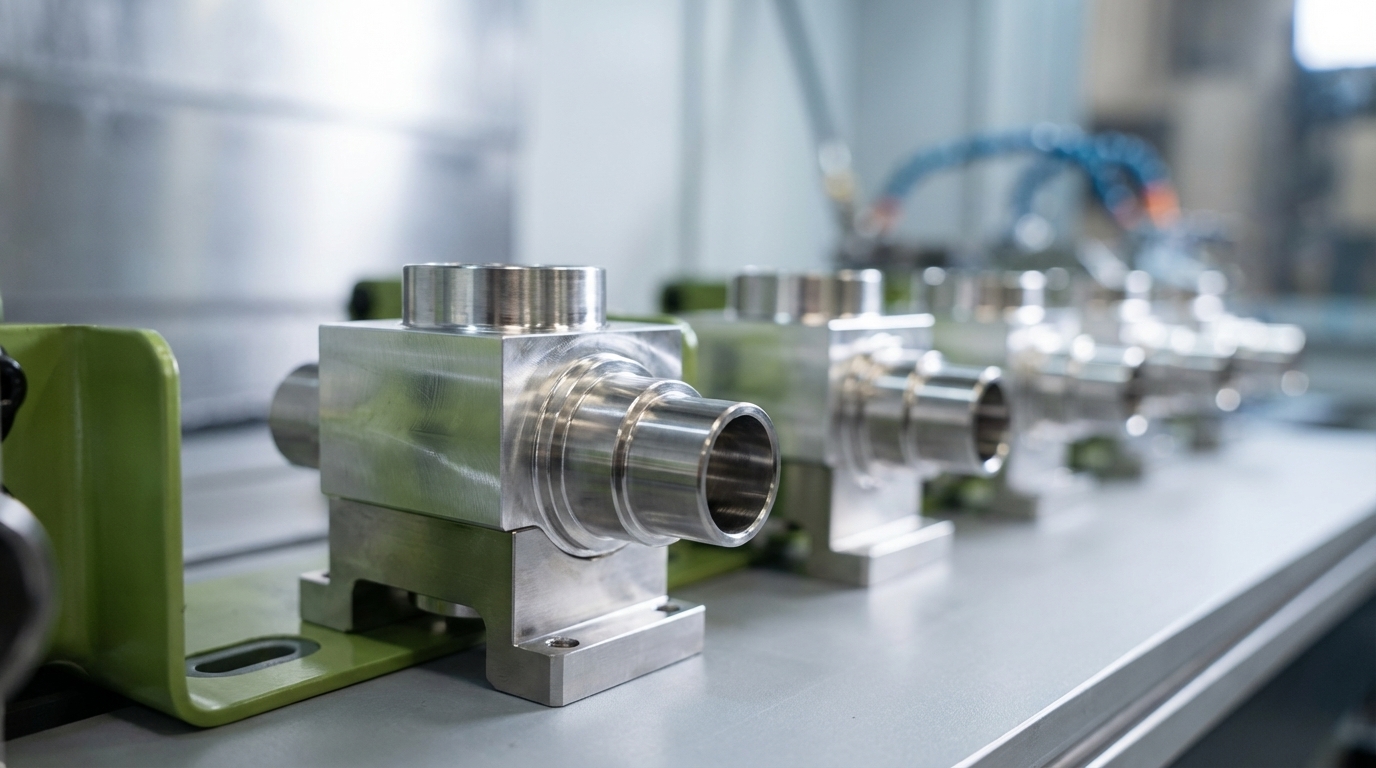
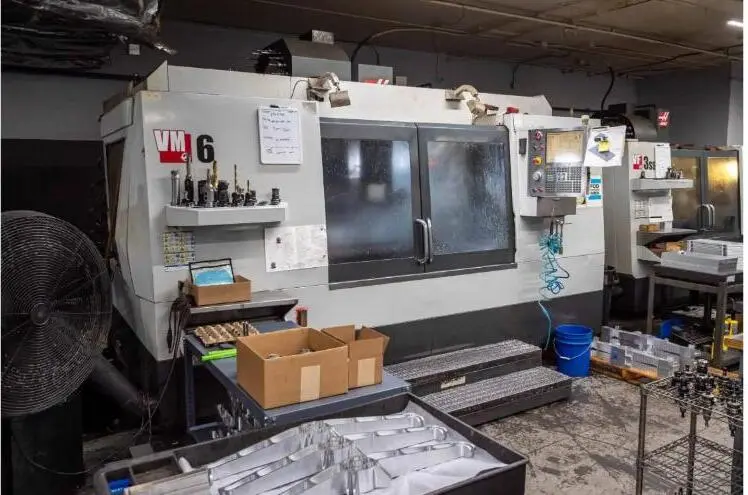
Precision Advanced Manufacturing meets each criterion with multi-axis CNC machining, precision sheet-metal fabrication, specialty welding, kitting and secondary finishing under AS9100D, ISO 9001 and ITAR-compliant quality systems at two U.S. facilities.
Request a quote and receive a tailored production plan aligned to program evaluation criteria.
U.S. Satellite Manufacturing Landscape by Supplier Tier
Novaspace’s March 2026 forecast projects 16,900 small satellites under 500 kg to be launched globally between 2026 and 2035, which creates sustained demand for precision-machined components.

Global satellite manufacturing revenue grew 17% to $20 billion in 2024, with U.S. firms building 83% of commercial satellites launched that year. Analysts project the market to reach $86.7 billion by 2035.
The supplier landscape divides into three tiers. Small job shops offer flexibility but often lack AS9100D certification, ITAR registration or scalable capacity. Mid-sized manufacturers such as Precision Advanced Manufacturing combine certified quality systems with integrated capabilities. Large contract manufacturers serve primes directly but often require minimum volumes that exclude smaller satellite programs.
A 2026 AIA-PwC study found that many essential satellite components are supported by three or fewer qualified domestic suppliers, and that smaller firms struggle with regulatory and cybersecurity demands. This capacity gap makes certified, integrated mid-tier suppliers a strategic asset for program managers.
Request a quote from a certified U.S. mid-tier supplier with capacity to support satellite programs.
Strategic Trade-Offs in Satellite Parts Sourcing
Three trade-offs drive most satellite component sourcing decisions.
Cost versus capability: EEE parts grade and radiation hardening create the largest recurring cost swing in satellite builds, often producing a significant price difference versus COTS for the same function. This same cost-versus-quality trade-off applies to machining, where certified capability commands a premium, but rework, scrap and delays from non-certified sources often exceed that premium.
COTS versus custom: Catalog components typically ship faster than custom fabricated parts, which gives off-the-shelf parts a schedule advantage for programs with aggressive timelines. Custom parts make sense when no catalog option meets functional requirements or when unique interface, fit or environmental needs exceed standard components. A hybrid approach that reserves custom fabrication for differentiating elements while using off-the-shelf components for standard structures often delivers strong cost, lead time and reliability results.
Prototype speed versus production efficiency: Suppliers that validate quality during prototyping and then hold the same processes at full-rate production remove requalification risk. Precision Advanced Manufacturing uses a scalable production platform that supports this transition without supplier changes.
Request a quote to compare sourcing options against program cost and schedule requirements.
Design-for-Manufacturability and Quality Practices for Flight Hardware
Design-for-manufacturability collaboration between the buyer’s engineering team and the machine shop reduces tolerance stack-up, material waste and cycle time. Early supplier engagement during design review, before drawing release, often delivers the strongest cost control.

Process control for flight hardware relies on approved procedures, stable production travelers and configuration control with impact analysis.
Traceability remains mandatory. Space programs require full material traceability from raw-stock receipt through final shipment, documenting each piece of raw material to its heat, lot and certified material test report. CMM-based dimensional verification and AS9102 first article inspection reports with balloon drawings and measured values for all controlled dimensions form standard deliverables.
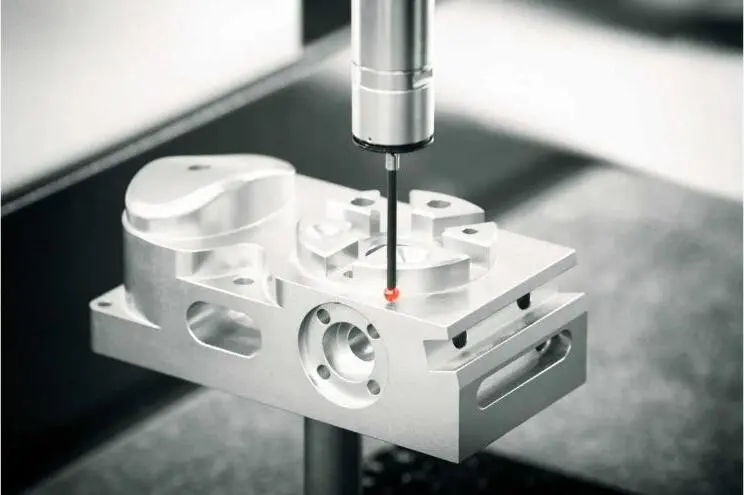
Inspection metrics should track first-pass yield, nonconformance rate and on-time delivery. Suppliers operating under AS9100D quality management systems maintain these metrics within their surveillance audit cycle.
Precision Advanced Manufacturing applies in-house CNC programming and tooling development at program launch to refine designs, adjust tolerances and strengthen production efficiency.
Satellite Supplier Readiness Checklist
This checklist helps teams assess whether a precision machine shop is ready to support flight-qualified satellite hardware.
- AS9100D certification from an accredited registrar with current surveillance audit status
- ITAR registration with the DDTC and role-based access controls for controlled technical data
- NADCAP accreditation for applicable special processes such as heat treating, NDT, welding and coatings
- CMMC Level 2 certification or active pursuit for programs involving Controlled Unclassified Information
- Full material traceability to heat and lot with certified material test reports
- CMM-based dimensional verification and AS9102 first article inspection capability
- Multi-axis CNC machining for complex geometries in a single setup
- Specialty welding with thermal distortion control for lightweight aerospace assemblies
- Secondary finishing such as anodizing, passivation and plating aligned to aerospace standards
- Kitting and hardware installation that deliver ready-to-integrate components
- Scalable production from prototype to full-rate manufacturing without quality degradation
- Documented nonconformance control and counterfeit-part prevention procedures
Precision Advanced Manufacturing satisfies every item on this checklist across facilities in California and Texas.
Common Sourcing Pitfalls for Satellite Components
Fragmented vendor bases create frequent program risk. When machining, welding, finishing and kitting move across multiple suppliers, tolerance stack-up, documentation gaps and schedule misalignment accumulate at each handoff. A single integrated supplier removes many of these failure modes.
Unclear specifications at the RFQ stage often produce nonconforming parts at first article inspection. Buyers reduce this risk by providing model-based definition files, GD&T callouts, material specifications and surface finish requirements before quote requests.
Inadequate qualification of new suppliers mid-program introduces schedule risk. Buyers qualifying machine shops should confirm that ITAR-controlled data is protected through role-based access controls, audit trails, centralized data management and document traceability inside the shop’s ERP system. Pilot builds and validation runs help reduce integration risk during supplier transitions.
Space-grade components often carry longer lead times and higher qualification costs than commercial equivalents, while compliance requirements impose fixed cost burdens that smaller suppliers struggle to absorb. Selecting a supplier with established compliance infrastructure avoids many of these costs.
U.S. Satellite Component Supplier Directory
NASA, SpaceX and commercial smallsat programs rely on a mix of primes, mid-sized manufacturers and specialized machine shops. The directory below summarizes representative U.S. suppliers and typical roles.
- Precision Advanced Manufacturing — California and Texas; AS9100D, ISO 9001, ITAR; integrated CNC machining, fabrication, welding, kitting and finishing for satellite components
- Lockheed Martin Space — Littleton, Colorado; prime contractor; spacecraft integration and structures
- Northrop Grumman Space Systems — Redondo Beach, California; prime contractor; satellite buses and payloads
- Boeing Defense, Space & Security — El Segundo, California; prime contractor; satellite platforms
- Ball Aerospace (BAE Systems) — Boulder, Colorado; instruments and spacecraft
- Rocket Lab USA — Long Beach, California; smallsat manufacturing and launch integration
- Terran Orbital — Irvine, California; smallsat manufacturing
- Millennium Space Systems — El Segundo, California; smallsat production
- SolAero Technologies (Rocket Lab) — Albuquerque, New Mexico; space-grade solar cells
- Norsk Titanium — Plattsburgh, New York; additive titanium structures
- Materion Corporation — Mayfield Heights, Ohio; advanced materials and precision components
- Moog Inc. — East Aurora, New York; propulsion, actuation and precision mechanisms
- Ducommun — Santa Ana, California; AS9100D; aerospace structures and electronic systems
- Kaman Aerospace — Bloomfield, Connecticut; aerospace structures and distribution
- TransDigm Group — Cleveland, Ohio; aerospace components and subsystems
- Triumph Group — Berwyn, Pennsylvania; aerospace structures and systems
- Spirit AeroSystems — Wichita, Kansas; aerostructures
- Precision Castparts Corp. — Portland, Oregon; investment castings and forgings
- Exotic Metals Forming — Kent, Washington; titanium and specialty metal fabrication
- BTD Manufacturing — Detroit Lakes, Minnesota; precision metal fabrication
- Carr Machine & Tool — Elk Grove Village, Illinois; AS9100D, ITAR; structural, thermal and propulsion hardware
- Mountain CNC — Loveland, Colorado; AS9100D, ITAR; space hardware machining since 1997
- Primus Aerospace — Broomfield, Colorado; AS9100D; precision aerospace structures
- Acutec Precision Aerospace — Meadville, Pennsylvania; AS9100D; complex aerospace machining
- Heico Corporation — Hollywood, Florida; aerospace parts and repair
- CPI Aerostructures — Edgewood, New York; aerospace structural assemblies
- Applied Signal Technology — Sunnyvale, California; signal processing hardware
- Carpenter Technology — Reading, Pennsylvania; specialty alloys for aerospace
- Allegheny Technologies — Pittsburgh, Pennsylvania; titanium and specialty materials
Precision Advanced Manufacturing combines this integrated capability set with a dual-facility footprint that supports NASA, SpaceX and commercial smallsat programs from raw material through ready-to-integrate components.
Request a quote for AS9100D-certified, ITAR-registered satellite component manufacturing.
Precision CNC Parts for Smallsat Programs
In 2025, smallsat-related private funding reached approximately $11.5 billion, supporting the transition from concept to scaled deployment of next-generation constellations. This funding wave increased demand for precision CNC components tailored to smallsat structures and subsystems.
Precision Advanced Manufacturing provides multi-axis CNC machining, sheet-metal fabrication, specialty welding and kitting for ready-to-integrate smallsat components with full traceability and AS9100D documentation from two U.S. facilities.

Request a quote for precision CNC parts for small satellite programs.
Certification Requirements for Flight-Qualified Satellite Components
The table below summarizes primary certification and compliance requirements for U.S. precision machine shops that supply flight-qualified satellite components.
| Certification / Registration | Governing Body | Scope | Sourcing Implication |
|---|---|---|---|
| AS9100D | SAE International / accredited registrar | Adds aerospace-specific requirements to ISO 9001, including configuration management, risk management, counterfeit-part prevention and first article inspection per AS9102 | Baseline qualification requirement for flight hardware |
| ITAR Registration (DDTC) | U.S. State Department | Mandatory for any machine shop receiving controlled drawings for spacecraft, satellite or launch-vehicle hardware on government or defense-adjacent programs | Violations carry civil fines and criminal penalties, so teams should verify role-based access controls and audit trails |
| NADCAP | Performance Review Institute (PRI) | Process-specific accreditation for chemical processing, heat treating, NDT, welding and coatings, required when special processes are involved | Prime contractor flow-down requirements such as Boeing D6-51991 and GE Aviation S-1000 often include NADCAP mandates for applicable special processes |
| CMMC Level 2 | U.S. Department of Defense | Increasingly required by primes in 2026 for suppliers handling Controlled Unclassified Information under NIST SP 800-171 | Third-party assessment is required, and suppliers without CMMC progress risk disqualification from DoD-adjacent programs |
Precision Advanced Manufacturing holds AS9100D and ISO 9001:2015 registrations and maintains full ITAR registration, which covers baseline requirements for flight-hardware programs.
Request a quote from a supplier that meets every certification requirement in this table.
Satellite Part Categories and Manufacturing Requirements
The matrix below outlines primary satellite component categories, typical materials, tolerance considerations and manufacturing process requirements.
| Component Category | Typical Materials | Tolerance Considerations | Key Manufacturing Requirements |
|---|---|---|---|
| Structures (bus panels, brackets, frames) | Aluminum 6061-T6, 7075-T6, CFRP honeycomb sandwich panels | Interface tolerances for precision structure machining often specified as ±0.05–0.2 mm, with CMM records, tool calibration and stress-relief documentation required | Multi-axis CNC, flatness verification, thermal cycling stability and full material traceability |
| RF and antenna components (housings, reflector brackets, mounts) | Aluminum 6061-T6 for RF shielding housings, Invar 36 for alignment-critical antenna brackets | Antenna and alignment features often held to ±0.010–0.025 mm | Alignment accuracy, surface finish control and material stability under thermal cycling |
Precision Advanced Manufacturing applies multi-axis CNC machining, sheet-metal fabrication, specialty welding and kitting to produce satellite components that meet these requirements.
Request a quote for precision CNC parts for satellite programs.