Key Takeaways
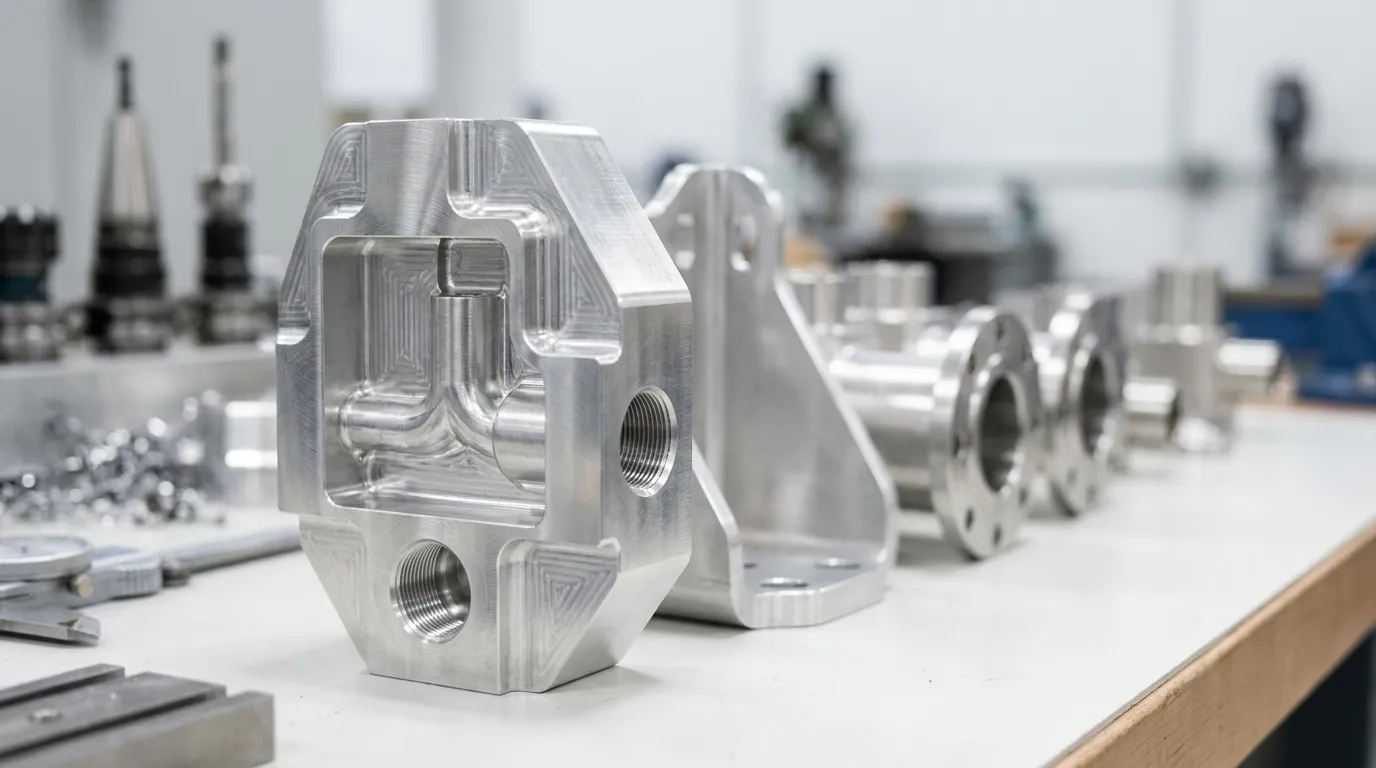
- Precision CNC machining aluminum supports tight-tolerance aerospace and defense components using alloys such as 2024-T351, 6061-T6, 7075-T6 and 7050-T7451 with CMM-verified accuracy.
- Supplier selection depends on technical capability, AS9100D and ITAR compliance, scalability, integrated finishing and total program risk.
- Domestic ITAR-registered suppliers reduce supply chain and compliance risk compared with offshore sources for flight-critical aluminum parts.
- Design-for-manufacturability collaboration and in-process inspection prevent costly failures and maintain traceability from prototype through production.
- Precision Advanced Manufacturing delivers certified multi-axis CNC machining and integrated finishing services; discuss program requirements with the team.
Evaluating Aerospace Aluminum CNC Machining Suppliers
Selecting a precision CNC machining aluminum supplier for aerospace or defense programs requires five coordinated criteria. Together they determine whether a supplier can deliver flight-critical components consistently. These criteria are technical capability, quality and compliance, scalability, integration scope and total program risk.
Technical capability covers multi-axis CNC milling and turning, tight-tolerance performance across relevant aluminum alloys and in-house programming and tooling development. Alloys such as 7075-T6 and 2024-T351 demand specific cutting strategies because they generate higher tool wear or stringy chips that affect dimensional consistency. A capable supplier demonstrates repeatable process control across these materials, not just isolated success on a single alloy.
Quality and compliance criteria center on AS9100D registration, ISO 9001:2015 certification and ITAR registration. AS9100 is the primary quality management standard for flight-critical components and requires audits that extend beyond ISO 9001. ITAR registration is mandatory for defense and space-related programs that involve controlled technical data or hardware.
Scalability means a supplier can move from prototype builds to multi-shift production while maintaining the same quality systems and documentation practices. Integration scope covers whether secondary finishing such as anodizing, passivation, plating, laser marking and deburring occurs in-house or through outside vendors. Each external handoff introduces schedule and traceability risk. Total program risk reflects the combined effect of these factors, since gaps in any category transfer exposure directly to the program.
Precision Advanced Manufacturing addresses each criterion through multi-axis CNC machining, AS9100D and ISO 9001:2015 certified quality systems, ITAR registration and integrated finishing services under one roof. Connect with the team to review program requirements.
Precision Aluminum Tolerances and U.S. Machining Categories
U.S. precision aluminum machining typically falls into three practical tolerance categories. Standard production machining covers general-purpose dimensions on non-critical features. High-precision machining targets tighter control for mating surfaces and assembly holes. Ultra-precision work applies to the most demanding flight-critical features and relies on controlled environments and specialized equipment.
Aluminum alloys 7075-T6 and 6061-T6 provide strong dimensional stability for tight tolerances, while softer alloys deform more under cutting forces. Standard CNC turning on aluminum often achieves tighter tolerances than milling because rotating symmetry reduces distortion sources. Thin-walled features and long unsupported spans require relaxed tolerances that account for material deflection and thermal effects.
Demand for domestic precision aluminum machining is driven by aerospace OEM production rates, defense modernization programs and UAV growth across commercial and military sectors. This demand growth increases scrutiny of offshore sourcing, where procurement teams face compounding risks such as longer supply chains, reduced traceability visibility and potential ITAR exposure. Domestic certified suppliers reduce these risks through shorter logistics paths and controlled documentation systems.
ITAR Aluminum CNC: Prototype-to-Production Strategy
ITAR registration forms the baseline requirement for any supplier handling defense-related aluminum components, technical data or manufacturing processes. A supplier without ITAR registration cannot participate in most defense and space programs, regardless of machining capability.
Flight-grade aerospace parts require complete material traceability from raw billet to finished component using heat numbers, lot codes and full documentation. This traceability chain must remain intact as programs move from prototype to full-rate production. A three-point verification approach supports that goal through incoming material verification, in-process tracking and final documentation.
Incoming material verification confirms each delivery against mill certificates and recorded heat numbers. In-process tracking links every CNC program and operation to the specific material batch. Final documentation packages include Certificates of Conformance and inspection records that align with customer and regulatory expectations.
Scaling from prototype to production under a single ITAR-registered, AS9100D-certified supplier removes requalification risk associated with mid-program supplier changes. Processes validated during prototyping carry directly into production runs. Documentation formats, inspection protocols and quality records remain consistent, which reduces administrative work for supplier quality engineers during ramp.
Major aerospace contractors impose their own supplier qualification processes in addition to AS9100 and ITAR requirements. A supplier already operating under these certified systems enters customer qualification with foundational documentation in place and often moves through approval faster.
DFM and In-Process Inspection for Local Aluminum CNC Programs
DFM collaboration at the outset of a program prevents the most common and costly precision aluminum machining failures. These failures often arise from geometry that forces compromises in tooling or process stability. Internal corner radii should measure at least one-third of the cavity depth so standard cutters can run without smaller, deflection-prone tools.
Metal parts should maintain a minimum wall thickness that preserves stiffness and limits vibration or distortion during machining. Beyond geometry, tolerance specification drives both cost and risk. Tolerances tighter than necessary on non-critical features increase machining time, inspection burden and rejection risk without functional benefit.
In-process inspection methods for precision aluminum components include calipers for general measurements, micrometers for precision dimensions and CMM for complex geometries and GD&T features. CMM inspection at defined production intervals detects dimensional drift before it spreads across a batch. For anodized aluminum parts, designers must allow additional clearance for coating thickness on mating surfaces, and DFM review addresses this requirement before machining begins.
Precision Advanced Manufacturing applies in-house CNC programming and tooling expertise at the start of each program to refine designs and strengthen production efficiency. Integrated finishing services such as anodizing, passivation and plating align with aerospace standards and occur without outsourcing, which maintains inspection continuity through the full production sequence.
Readiness Checklist for Aerospace Aluminum CNC Sourcing
An internal gap assessment before issuing an RFQ reduces program risk and shortens supplier qualification time. Together the following criteria form a practical framework for identifying capable, compliant aluminum CNC machining partners for aerospace and defense programs.
Certification and compliance: AS9100D registration with a current certificate, ISO 9001:2015 certification, confirmed ITAR registration for the specific facility and a documented quality management system with a defined audit schedule.
Technical capability: Multi-axis CNC milling and turning, documented experience with 2024, 6061, 7075 and 7050 aluminum alloys, in-house CMM inspection capability and proven process controls for thin-wall and tight-tolerance features.
Traceability and documentation: Material certifications with heat numbers, in-process inspection records, Certificates of Conformance for each shipment and First Article Inspection capability per AS9102.
Scalability: Demonstrated prototype-to-production transitions on aerospace programs, multi-shift production capacity and consistent quality systems across volume levels.
Integration scope: In-house secondary finishing such as anodizing, passivation and plating, along with deburring, hardware installation and engineering support for DFM review.
Precision Advanced Manufacturing meets each criterion across two specialized U.S. facilities in California and Texas. Request a tailored plan covering capabilities, tolerances, materials, certifications and production strategy.
Common Aluminum CNC Sourcing Pitfalls and Controls
The most consequential sourcing pitfalls in precision aluminum CNC machining share a common root: supplier selection based on price or proximity without confirming certification, traceability and scalability.
Relying on ISO 9001:2015-only suppliers for flight-critical components creates the compliance exposure described earlier. The control remains straightforward and effective. Require AS9100D registration as a minimum qualification criterion rather than a preference.
Fragmented supply chains that use separate suppliers for machining, finishing and inspection multiply handoff points and documentation gaps. Each transition creates a potential traceability break. Consolidating work with a single supplier that offers integrated capabilities removes this risk category.
Offshore sourcing for ITAR-controlled aluminum components introduces legal exposure that no cost advantage offsets. Domestic ITAR-registered suppliers remove this exposure by design and align with defense program expectations.
Accepting parts without complete documentation such as material certifications, CMM reports and Certificates of Conformance shifts the verification burden to the customer quality team and increases inspection costs. Requiring full documentation as a contractual deliverable, not a discretionary request, provides a practical control.
Mid-program supplier changes to address quality or capacity failures rank among the most expensive program events. Qualifying a scalable, certified supplier at the prototype stage, one capable of sustaining full-rate production, prevents this scenario. Precision Advanced Manufacturing uses certified processes, repeatable quality and a scalable production platform to reduce mid-program supplier risk. Start the supplier qualification process with the team.
Frequently Asked Questions
What aluminum alloys does Precision Advanced Manufacturing machine for aerospace and defense programs?
Precision Advanced Manufacturing works with aluminum alloys commonly specified for aerospace and defense applications, including 2024, 6061, 7075 and 7050 series materials. Each alloy presents distinct machining characteristics, and 7075 and 2024 support high-strength, fatigue-resistant structural applications. Alloy 6061 sees wide use for its machinability and corrosion resistance. The engineering team selects tooling strategies and cutting parameters for each alloy to maintain dimensional consistency across production runs.
What tolerances can Precision Advanced Manufacturing hold on aluminum CNC machined parts?
Precision Advanced Manufacturing delivers tight-tolerance aluminum components that align with aerospace and defense program requirements. Achievable tolerances depend on part geometry, alloy selection, feature type and finishing requirements. CMM inspection verifies critical dimensions and GD&T features. The engineering team reviews part designs at the outset to identify features where tolerance specification, wall thickness or geometry may affect dimensional stability and then provides DFM guidance before machining begins.
How does Precision Advanced Manufacturing maintain traceability for flight-critical aluminum components?
Traceability remains intact from raw material receipt through final shipment. Incoming materials are verified against mill certificates with heat numbers and lot codes. In-process records link each CNC program and operation to the specific material batch. Final documentation packages include material certifications, in-process inspection records, CMM reports and a Certificate of Conformance. This documentation chain supports customer audits, regulatory compliance and future traceability requirements under AS9100D and ITAR-registered quality systems.
Can Precision Advanced Manufacturing transition a program from prototype to full-rate production without a supplier change?
Precision Advanced Manufacturing operates a production platform designed to scale from prototype builds through multi-shift, high-volume manufacturing while maintaining the same quality systems, documentation practices and process controls validated during prototyping. Programs do not require requalification when moving from development to production under this model. This continuity protects program timelines and reduces risk associated with introducing a new supplier during production ramp.
What certifications does Precision Advanced Manufacturing hold, and why do they matter for defense sourcing?
Precision Advanced Manufacturing operates under AS9100D and ISO 9001:2015 registered quality management systems and maintains ITAR registration. AS9100D serves as the aerospace industry primary quality standard and requires defined quality checkpoints, traceability and documentation at a level that ISO 9001 alone does not mandate. ITAR registration is a legal requirement for suppliers involved in defense and space-related programs. These certifications embed compliance into every production step rather than relying on after-the-fact verification, which reduces audit burden and program risk for defense procurement teams.
Conclusion and Next Steps for Aluminum CNC Programs
Sourcing precision CNC machining aluminum for aerospace, defense and UAV programs carries program-level consequences when supplier selection falls short. Certification gaps, traceability failures, limited scalability and fragmented supply chains represent primary risk vectors, and deliberate supplier selection can address each one.
Precision Advanced Manufacturing consolidates multi-axis CNC machining, precision fabrication, engineering support and integrated finishing at two U.S. facilities while maintaining the certified quality systems described earlier. This structure creates a single partner that delivers repeatable tight-tolerance aluminum components with full documentation from prototype through sustained production.
Program managers, procurement professionals and supplier quality engineers working on mission-critical aluminum programs can engage Precision Advanced Manufacturing aerospace and UAV manufacturing specialists to define program needs, part specifications and critical timelines. Request a detailed plan covering capabilities, tolerances, materials, certifications and production strategy.