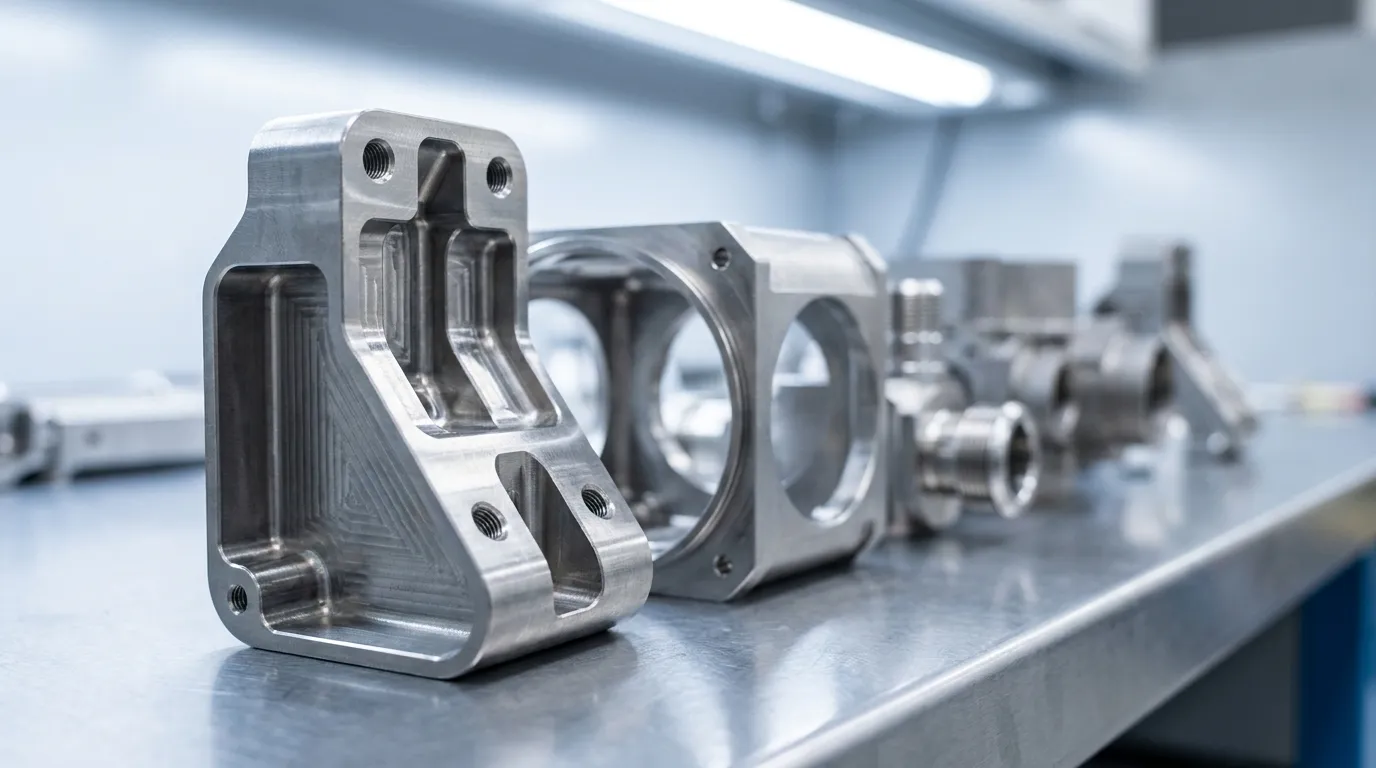
Key Takeaways for Space-Grade CNC Programs
- Precision CNC machining for space applications depends on strict process control, regulatory compliance and full documentation to prevent out-of-spec parts and schedule risk.
- Suppliers need ITAR registration plus AS9100D and ISO 9001:2015 certifications so program teams avoid extra audit work and compliance exposure.
- Space-grade components require micron-level tolerances, vacuum outgassing compliance and validated cleaning that standard commercial machining rarely delivers.
- A five-part evaluation framework covering technical capabilities, quality systems, scalability, integration scope and total program risk supports confident supplier selection.
- Precision Advanced Manufacturing delivers mission-critical, traceable components for satellite, rocket and spacecraft programs as a U.S.-based, ITAR-registered, AS9100D and ISO 9001:2015 certified provider; request a quote to review specific program requirements.
Certification and Traceability Requirements for Flight Hardware
Flight hardware for space programs operates under a layered compliance structure that includes ITAR registration, AS9100D and ISO 9001:2015. Each certification and documentation requirement aligns with a buyer concern such as legal exposure, quality control or audit readiness. Gaps in any layer create audit findings, delivery risk and downstream rework.
Suppliers without this certification stack shift compliance work onto program and supply chain teams. Precision Advanced Manufacturing certified systems absorb that burden, simplify audits and keep programs aligned with regulatory requirements.
Discuss program-specific certification and documentation needs with the Precision Advanced Manufacturing team to align compliance expectations early.
Space-Grade CNC Machining Tolerances and Component Demands
Space-grade components require tolerances that standard commercial machining rarely achieves consistently. Satellite structural frames, optical benches and rocket engine components each carry distinct dimensional requirements driven by thermal cycling, vibration loads and assembly fit.
Optical benches and precision instrument mounts demand micron-level flatness and surface finish control to preserve alignment under thermal and mechanical stress. Rocket engine components require tight bore tolerances and surface integrity to maintain sealing and flow performance under extreme pressure and temperature. Satellite structural assemblies must meet mass and dimensional targets that leave no margin for rework or shimming at integration.
When any of these components fall out of spec, integration delays cascade through program schedules. A single nonconforming part can hold an entire assembly, trigger expedited reorders, compress schedules and increase cost.
Precision Advanced Manufacturing multi-axis CNC milling and turning capabilities support repeatable accuracy across production runs. In-house CNC programming and tooling development allow the engineering team to refine setups for complex geometries before the first cut, which reduces the risk of dimensional nonconformance. Finished components arrive ready for integration and remove the need for secondary work at customer facilities.
ITAR CNC Machining Requirements for Satellite Programs
Satellite programs that involve U.S.-origin technology, components or technical data fall under International Traffic in Arms Regulations. ITAR defines who can manufacture, handle and access controlled hardware and information. Noncompliant suppliers introduce direct legal and program risk for prime contractors and integrators.
The risks of working with a non-ITAR-registered supplier extend beyond regulatory penalties. Uncontrolled access to technical data, improper handling of controlled hardware and incomplete documentation create audit findings that can halt program activity. For procurement and program management teams, these findings translate into schedule delays and cost exposure.
Precision Advanced Manufacturing maintains full ITAR registration across its California and Texas operations. Every satellite-related program runs within ITAR-compliant workflows, with documentation structured to support customer audits and government reviews. This structure reduces the compliance management burden on program and supply chain teams.
Confirm ITAR compliance coverage for a satellite or defense program by contacting the Precision Advanced Manufacturing team.
AS9100D Quality Systems for Space Components
AS9100D is the aerospace quality management standard that governs flight hardware production. It requires documented process controls, risk management, configuration management and continuous improvement disciplines that extend beyond ISO 9001 alone.
For space programs, AS9100D compliance means every production step is defined, monitored and traceable. Nonconformances are captured, dispositioned and prevented from recurring. First article inspection results are documented and retained. These disciplines reduce rework and scrap events that drive cost overruns and schedule slippage.
AS9100D also supports smooth prototype-to-production transitions. Process parameters documented during prototyping scale into full-rate production without revalidation delays. Precision Advanced Manufacturing AS9100D-certified processes provide this continuity so programs can ramp production without changing suppliers or requalifying manufacturing methods.
For supplier quality engineers, AS9100D certification at the supplier level reduces incoming inspection workload. Validated processes and complete documentation packages mean fewer surprises at receiving inspection and fewer corrective action requests.
Vacuum Outgassing-Compliant CNC Parts and Cleaning
Components that operate in the space environment must meet vacuum outgassing requirements. Materials that release volatile compounds in vacuum can contaminate optical surfaces, degrade thermal coatings and compromise sensitive electronics. Material selection and post-machining processing become critical steps in the supply chain.
Outgassing compliance starts with material selection. Metals specified for space applications, including aluminum alloys, titanium alloys and stainless steels, are chosen in part for low outgassing characteristics. Lubricants, cutting fluids and surface treatments used during machining must also support vacuum service. Residual contamination from machining processes can cause outgassing failures even when the base material meets requirements.
Post-machining cleaning and validation carry equal importance. Ultrasonic cleaning and passivation processes remove machining residues and surface contaminants that would otherwise outgas in orbit. Precision Advanced Manufacturing integrates secondary finishing services, including ultrasonic cleaning and passivation, into its production workflow. This consolidation reduces handling risk and keeps cleaning protocols consistent before delivery.
For supplier quality teams, receiving components that arrive cleaned and validated to aerospace standards reduces downstream testing and accelerates integration timelines.
Talk with the engineering team at Precision Advanced Manufacturing about material selection and finishing protocols for vacuum-compatible components.
Evaluating Supplier Readiness: Five-Part Framework for Space CNC
A structured evaluation framework reduces the risk of supplier selection errors. The five elements below create a practical checklist for assessing any precision CNC supplier for space applications.
Technical capabilities: Confirm that the supplier operates multi-axis CNC milling and turning equipment capable of the required tolerances. Without this baseline capability, the supplier cannot meet space-grade dimensional requirements. Verify in-house programming and tooling development, which shows that the team can refine setups for complex geometries instead of relying on generic toolpaths. Assess experience with the specific materials and geometries required by the program, since unfamiliar materials increase the risk of scrap and missed schedules. Precision Advanced Manufacturing multi-axis machining capabilities and engineering-driven manufacturability address each of these criteria.
Quality and compliance: Require AS9100D and ISO 9001:2015 certifications and ITAR registration as baseline qualifications. Request sample inspection packages and material certifications to confirm depth of documentation. Confirm that the supplier quality system generates the records needed for customer audits. Precision Advanced Manufacturing certified quality management system produces complete inspection and traceability documentation for every order.
Scalability: Evaluate whether the supplier can support prototype quantities and full-rate production without a supplier change. Assess multi-shift capacity and scheduling discipline to understand how the team handles volume increases. Precision Advanced Manufacturing scalable production platform supports the full program lifecycle from initial prototype through sustained high-volume manufacturing.
Integration scope: Fragmented supply chains introduce handoff risk, schedule variability and traceability gaps because each transfer creates chances for miscommunication, delay and lost documentation. Suppliers that consolidate machining, fabrication, finishing and kitting under one roof remove many of these handoffs and reduce the related risks. Precision Advanced Manufacturing combines multi-axis CNC machining, precision sheet metal fabrication, specialty welding, secondary finishing and kitting at its facilities to deliver finished, ready-to-integrate components.
Total program risk: Assess the supplier track record in aerospace and space programs. Evaluate corrective action responsiveness, on-time delivery performance and engineering support availability. Precision Advanced Manufacturing documented processes, certified quality systems and repeatable manufacturing methods provide confidence for mission-critical programs.
Conclusion and Recommended Next Steps for Space CNC Sourcing
Precision CNC for space applications requires a supplier that combines tight-tolerance machining, certified quality systems, ITAR compliance, vacuum-compatible processing and scalable production under one roof. Fragmented supply chains and noncertified suppliers introduce the program risks described throughout this guide, including schedule slippage, compliance findings and integration delays that compound across the supply chain.
The evaluation framework presented here, covering technical capabilities, quality and compliance, scalability, integration scope and total program risk, offers a structured basis for supplier selection decisions. Precision Advanced Manufacturing meets each criterion through certified quality systems, ITAR compliance and integrated machining and fabrication capabilities across two domestic facilities.
Recommended next steps include conducting an internal needs assessment against the five framework elements, shortlisting suppliers that meet baseline certification requirements and engaging Precision Advanced Manufacturing to review program requirements, tolerances and production timelines.
Begin the engagement by requesting a tailored production plan for a space or satellite program from Precision Advanced Manufacturing.
Frequently Asked Questions
What certifications does Precision Advanced Manufacturing hold for space and satellite programs?
Precision Advanced Manufacturing holds AS9100D and ISO 9001:2015 quality management certifications and is fully ITAR registered. These certifications cover all production activity at its California and Texas facilities. Every space and satellite program runs within these certified quality systems, with full documentation and traceability provided for each order.
How does Precision Advanced Manufacturing support the transition from prototype to full-rate production?
Precision Advanced Manufacturing production platform scales across the full program lifecycle. Process parameters and quality controls documented during prototyping carry into full-rate production and remove revalidation delays. Multi-shift capacity supports high-volume manufacturing while maintaining the same quality standards validated during initial builds. Programs can transition without changing suppliers or disrupting supply chain continuity.
What finishing and cleaning services are available for vacuum-compatible space components?
Precision Advanced Manufacturing integrates secondary finishing services including ultrasonic cleaning, passivation, anodizing and plating as part of its production workflow. These services follow aerospace standards to remove machining residues and surface contaminants that could affect vacuum compatibility. Delivering cleaned and finished components reduces downstream testing and accelerates customer integration timelines.
How does Precision Advanced Manufacturing handle ITAR compliance for satellite programs?
All production activity related to ITAR-controlled hardware and technical data takes place within ITAR-registered workflows at Precision Advanced Manufacturing domestic facilities. Documentation is structured to support customer audits and government reviews. This approach reduces the compliance management burden on program and supply chain teams and removes the regulatory exposure associated with nonregistered suppliers.
Can Precision Advanced Manufacturing manage complex geometries and demanding materials for space applications?
Precision Advanced Manufacturing specializes in complex, tight-tolerance components for aerospace, defense and space programs. Multi-axis CNC machining capabilities, combined with in-house engineering and CNC programming expertise, support difficult geometries and demanding material specifications. Engineering support is available from the outset to refine designs for manufacturability and confirm that tolerance requirements remain achievable in production.