Key Takeaways for Selecting an Austin CNC Partner
-
Consumer star ratings do not address certifications, traceability or scalability for aerospace and defense programs.
-
A structured framework covering capabilities, quality, scalability, integration and total cost helps procurement teams avoid mismatched suppliers.
-
AS9100D, ISO 9001:2015 and ITAR registration with full material traceability support regulated programs and reduce audit and compliance risk.
-
Keeping prototype and production in the same facility with validated processes avoids requalification costs and supplier transition risk.
-
Precision Advanced Manufacturing consolidates multi-axis CNC machining, fabrication, welding, finishing and engineering support within one certified operation, aligning capabilities with the next program.
Why Austin Programs Benefit From a Structured CNC Evaluation
Austin’s manufacturing base has expanded alongside its aerospace and defense ecosystem. More local shops create more choice and more risk of selecting a partner that falls short of mission-critical requirements. A shop that excels at low-complexity commercial work may lack the quality systems, documentation infrastructure or equipment depth required for tight-tolerance aerospace components. A structured framework that covers technical capabilities, quality and compliance, scalability, integration scope and total cost of ownership filters out mismatches before they become program liabilities.
Technical Capabilities for Tight-Tolerance Metal Components
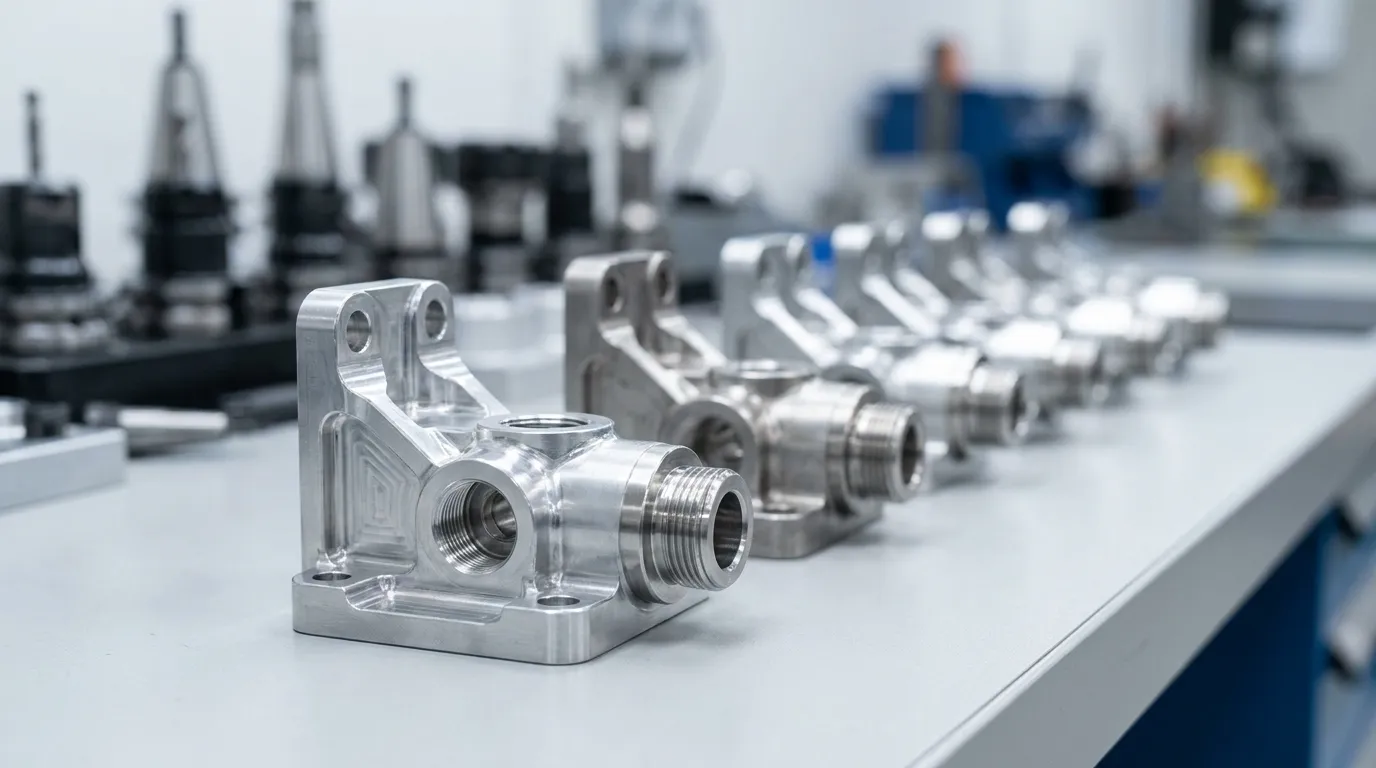
Equipment depth forms the first evaluation criterion. Multi-axis CNC machining supports complex aerospace geometries and tight-tolerance features. Shops limited to three-axis equipment increase fixturing complexity and tolerance stack-up risk on parts that require five-axis or more. Many programs also require sheet metal fabrication, precision welding with thermal distortion control and secondary finishing, all operating within one quality system.
Fragmented supply chains, where machining, welding and finishing sit with separate vendors, introduce handoff risk, documentation gaps and schedule variability. Precision Advanced Manufacturing consolidates multi-axis CNC machining, precision sheet metal fabrication, specialty welding, hardware installation and secondary finishing in a single, certified operation. This integration removes inter-vendor handoffs and keeps every operation within one audited quality system, a capability that merits confirmation before committing to a production program.
Discuss technical requirements with Precision Advanced Manufacturing’s team to confirm capability alignment before launching a new program.
Quality and Compliance for Regulated Aerospace and Defense Work
Certifications function as operational requirements for regulated programs. AS9100D serves as the aerospace quality management standard. It builds on ISO 9001:2015 and adds requirements for aviation, space and defense, including risk management, configuration control and first-article inspection. A shop operating under AS9100D follows defined processes, documented checkpoints and third-party audit accountability at every production stage.
ITAR registration is a legal requirement for manufacturing or handling defense-related technical data and hardware. Sourcing from a non-ITAR-registered shop on a defense program creates compliance exposure that can halt production and trigger program reviews.
Traceability means every material lot, process step and inspection result is documented and retrievable. For supplier quality engineers, full traceability reduces incoming inspection burden and provides the audit trail required for nonconformance investigations. Precision Advanced Manufacturing operates under AS9100D, ISO 9001:2015 and ITAR registration, with complete documentation and inspection reporting on every project.
Scalability From Prototype Through Production
Prototype-focused shops prioritize speed and flexibility. Production-focused shops prioritize repeatability and throughput. Programs that start with one and transition to the other face requalification costs, process validation delays and the risk that production parts diverge from validated prototypes.
The most efficient sourcing model keeps prototype and production within the same operation, using the same validated processes, tooling and quality system. Precision Advanced Manufacturing supports the full product lifecycle, from initial prototype development through sustained, multi-shift production, without supplier changes or process revalidation at transition points.
Integrated Services and Total Cost of Ownership
Total cost of ownership extends beyond unit price. Engineering support at the design stage, including design for manufacturability collaboration and in-house CNC programming, reduces tolerance errors and rework before production begins. Beyond core machining and fabrication, integrated finishing services eliminate the cost and schedule risk of outsourcing to third parties already mitigated by the single-operation model.
Kitting services consolidate components into organized, assembly-ready packages, which reduces handling time and downstream labor. This assembly-ready approach also ensures documentation packages, including material certifications, inspection reports and first-article documentation, arrive with the parts rather than weeks later. Together, these integrated capabilities reduce program overhead and compress the total cost of sourcing precision components.
Precision Advanced Manufacturing’s in-house engineering team applies manufacturability expertise from the outset, shaping designs and production strategy before the first chip is cut. Connect with Precision Advanced Manufacturing’s engineering team to receive a tailored production plan that reflects the full scope of program requirements.
Common Sourcing Pitfalls With Austin CNC Providers
Several red flags appear consistently when programs source from shops that lack aerospace-grade infrastructure. The absence of AS9100D or ITAR registration becomes an immediate disqualifier for regulated programs. Shops that cannot provide material certifications or in-process inspection records create traceability gaps that surface during audits or nonconformance investigations.
Shops without multi-shift production capacity create scaling bottlenecks when programs ramp, which forces buyers to accept delayed delivery or fragment work across multiple suppliers. That fragmentation, with separate vendors for machining, welding and finishing, multiplies handoff points and documentation gaps. The problem compounds when shops lack in-house engineering support, pushing DFM responsibility back to the customer and increasing design iteration cycles and pre-production costs.
Precision Advanced Manufacturing addresses each of these risks through a single-facility model with certified quality systems, integrated capabilities and engineering support built into the production process.
Meaning of Key CNC Machining Certifications
AS9100D is the aerospace quality management system standard maintained by the International Aerospace Quality Group. It requires documented processes, risk-based thinking, configuration management and regular third-party audits. ISO 9001:2015 is the foundational quality management standard on which AS9100D builds. ITAR registration, administered by the U.S. Department of State, authorizes manufacturers to produce and handle defense-related hardware and technical data. Together, these certifications confirm that a shop has the process discipline, documentation infrastructure and legal authorization to support regulated aerospace and defense programs.
Primary Cost Drivers in Precision CNC Programs
Part complexity functions as the primary cost driver. Tight tolerances, complex geometries and difficult materials require advanced equipment, skilled programming and extended cycle times. Setup time, including fixturing, tooling and first-article inspection, is a fixed cost that amortizes across production volume, which makes higher quantities more cost-efficient per part. Secondary operations, including finishing, marking and hardware installation, add cost when sourced externally but remain more predictable when integrated in-house. Documentation requirements, including first-article inspection reports and material certifications, add overhead that certified shops absorb into standard quality systems rather than billing as exceptions.
Indicators of Reliable Production Scaling
Reliable scaling requires multi-shift capacity, disciplined scheduling and process validation that carries from prototype to production. Shops that rely on a single shift or a small number of key operators create throughput ceilings. Shops that use different processes or equipment for prototype and production runs introduce quality variation at the transition point.
The clearest indicator of scalable production is a documented transition process that uses the same validated tooling, programs and quality checkpoints across all volume levels. Requesting examples of programs that have transitioned from prototype to full-rate production within the same operation provides a direct way to assess this capability.
Red Flags During CNC Shop Tours
During a facility tour, the absence of visible quality documentation such as travelers, inspection records and material certifications indicates a shop that manages quality informally. Equipment limited to three-axis machining signals capability gaps for complex aerospace geometries. Separate areas for machining, welding and finishing managed by different teams without integrated scheduling suggest fragmented production control.
Shops that cannot describe a nonconformance management process or corrective action system lack the quality infrastructure required for regulated programs. Shops without dedicated engineering or programming staff push process development responsibility to the customer.
Conclusion: A Practical Framework for Austin CNC Selection
Evaluating Austin precision machining partners for mission-critical programs requires five criteria. These include technical capabilities matched to part complexity, certified quality systems with full traceability, scalability from prototype through production, integrated services that reduce handoffs and total cost of ownership that accounts for documentation and engineering support. Star ratings on consumer platforms do not address these factors.
Precision Advanced Manufacturing delivers all five criteria within one coordinated operation through certified quality systems, integrated capabilities and a scalable production platform built for aerospace, defense, space and advanced industrial programs. Both California and Texas facilities support programs that require the same audited systems and integrated services.
Connect with Precision Advanced Manufacturing’s team to receive a tailored plan for the next precision machining program.
Frequently Asked Questions
What certifications should an Austin CNC shop hold for aerospace and defense work?
Shops supporting aerospace and defense programs should hold AS9100D registration, which is the aerospace-specific quality management standard, and ISO 9001:2015 certification, which is the foundational quality management framework. For defense-related hardware and technical data, ITAR registration is a legal requirement. These certifications confirm that a shop operates with documented processes, third-party audit accountability and the legal authorization to handle regulated programs. Precision Advanced Manufacturing holds all three.
Can a single CNC shop handle both prototype and full-rate production for aerospace components?
A single CNC provider can support both prototype and full-rate production. When prototype and production share the same equipment, tooling, programs and quality system, the validated process carries directly into production without requalification. Precision Advanced Manufacturing supports the full product lifecycle, from initial prototype through sustained, multi-shift production, using the same certified processes at every stage. This approach removes supplier transition risk and revalidation costs that arise when programs move between separate vendors.
What documentation should a precision CNC shop provide with delivered parts?
For aerospace and defense programs, standard documentation includes material certifications, in-process inspection records, first-article inspection reports and dimensional inspection data. Nonconformance records and corrective action documentation should be available on request. Full traceability means every material lot and process step is documented and retrievable throughout the part’s lifecycle. Precision Advanced Manufacturing delivers complete documentation packages with every project, aligned to AS9100D and customer-specific requirements.
How does integrated manufacturing reduce program risk compared to using multiple vendors?
Fragmented supply chains introduce handoff points where documentation gaps, schedule delays and quality variation accumulate. Each vendor transition creates an opportunity for parts to arrive out of spec, for paperwork to be incomplete or for schedules to slip. An integrated operation, where machining, fabrication, welding, finishing and engineering support function under one quality system, removes those handoff risks. Precision Advanced Manufacturing consolidates these capabilities in-house and delivers fully finished, ready-to-integrate components with a single documentation package.
What is the process for getting started with Precision Advanced Manufacturing?
The process begins with a consultation that defines program needs, part specifications and critical timelines. Precision Advanced Manufacturing then provides a tailored quote that outlines capabilities, tolerances, materials, certifications and production strategy. Once the program is confirmed, production launches with certified quality systems, full traceability and engineering support in place from the first part through full-rate manufacturing. Supplier transitions mid-program are also supported, with pilot builds and validation runs available to reduce risk during integration.