Last updated: July 5, 2026
Key takeaways for Texas aerospace CNC sourcing
- Selecting a CNC machining partner for aerospace and defense programs in Texas requires more than available capacity. Certifications, process discipline and scalability protect schedules and compliance.
- Unqualified local shops create significant risk, including out-of-spec parts, higher inspection burden, compliance failures and production bottlenecks across the supply chain.
- Certified providers operating under AS9100D, ISO 9001:2015 and ITAR registration deliver full material traceability, rigorous documentation and repeatable quality systems for mission-critical applications.
- A five-step supplier evaluation checklist covering certifications, traceability, multi-axis capability, scalability and integrated finishing helps sourcing teams qualify the right Texas CNC partner.
- Precision Advanced Manufacturing combines Texas-based certified CNC machining with integrated finishing and scalable production to support aerospace, defense and UAV programs from prototype through full-rate production. Discuss program requirements with the team.
Precision CNC machining in Texas for regulated programs
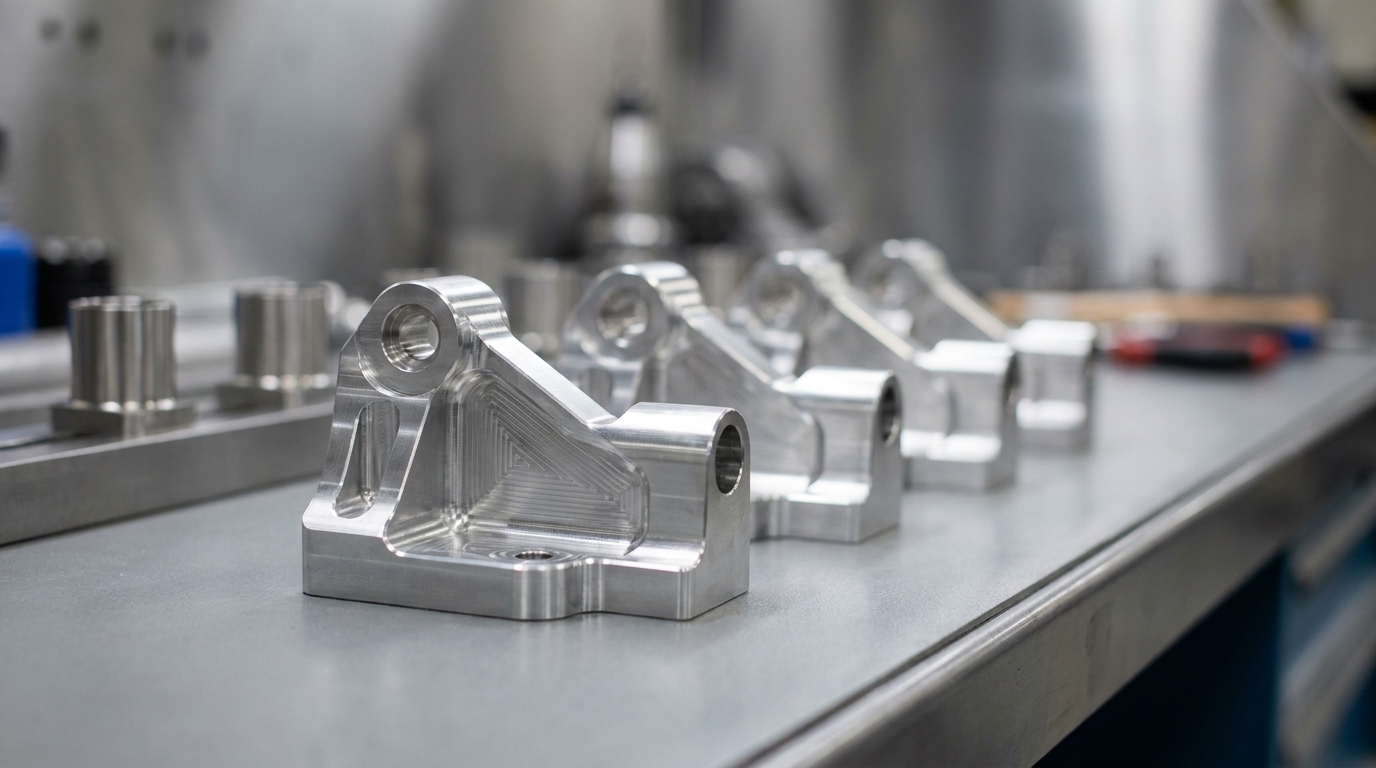
Precision CNC machining in Texas uses computer-controlled subtractive manufacturing to produce tight-tolerance metal components for regulated industries such as aerospace, defense, space and UAV. Certified Texas providers operate under AS9100D and ITAR-compliant quality systems. These systems support programs from prototype through full-rate production with full material traceability and documentation.
Compliance and delivery risks with unqualified Texas CNC shops
The U.S. aerospace and defense industry achieved $1 trillion in sales, with nearly half of that revenue generated through the supply chain. That scale places pressure on procurement teams to qualify suppliers quickly, which increases risk when shops lack the certifications needed for regulated programs.
Many unqualified machine shops across the Dallas, Houston, Austin, San Antonio and Frisco markets offer competitive pricing but lack documented quality systems for aerospace and defense work. The A&D supply chain faces complex regulatory compliance demands, including cybersecurity standards, sourcing requirements and export controls. These demands have prompted some suppliers to exit the defense industrial base.
Sourcing from non-certified shops often results in out-of-spec parts, higher inspection burden, compliance failures and production ramp bottlenecks. Scaling CNC machined parts from first article inspection to repeat production requires rigorous, repeatable documentation systems and process controls that many standard machine shops do not provide. Gaps in these systems create bottlenecks around quality, delivery and compliance.
Certified ITAR-registered CNC machining services in Texas
Precision Advanced Manufacturing operates as an ITAR-registered, AS9100D and ISO 9001:2015 certified CNC machining and fabrication provider with facilities in Texas and California. The company serves commercial aerospace, military and defense, space and satellites, advanced industrials and UAV programs. Teams receive tight-tolerance components with full traceability from raw material through final inspection.
AS9100D builds on the ISO 9001 base standard and adds aerospace-specific requirements for precision, traceability, documentation, risk management and repeatability in aviation, space and defense manufacturing. Operating under both certifications means every production step at Precision Advanced Manufacturing follows defined quality checkpoints aligned to demanding program requirements.
5-step checklist for evaluating Texas CNC suppliers
Strategic sourcing managers and supplier quality engineers evaluating Texas CNC providers for aerospace and defense programs can apply five clear criteria.
- Certifications and registrations: Confirm AS9100D, ISO 9001:2015 and ITAR registration. AS9100D certified manufacturers operate with stronger controls around manufacturing processes, supplier management, documentation, product safety and risk than shops holding only general quality certifications.
- Traceability and documentation systems: Verify that the supplier maintains full material traceability, inspection records and material certifications. Aerospace programs require full material traceability to mill sources and heat-treatment lots, along with first article inspection per AS9102 and statistical process control for every part.
- Multi-axis machining capability: Confirm access to advanced multi-axis milling and turning equipment. Five-plus-axis machining centers support complex geometries in weight- and performance-focused aerospace parts.
- Prototype-to-production scalability: Assess whether the supplier can move from prototype runs to multi-shift, high-volume manufacturing without a supplier change or quality gap.
- Integrated finishing and engineering support: Evaluate whether secondary finishing, engineering support and inspection are available in-house to eliminate handoffs and reduce integration delays.
Request a tailored production plan that addresses each of these criteria for the current program.
Managing tight tolerances and complex geometries
Problem: Standard machine shops struggle to hold the tolerances required for aerospace structural, engine and avionics components across production runs.
Solution: Precision Advanced Manufacturing applies advanced multi-axis CNC milling and turning to achieve the tight tolerances required for space, satellite and UAV systems. Multi-axis CNC milling and turning deliver fine tolerances, strong surface finishes and repeatability in high-mix, low-volume production common in aerospace workflows. In-house CNC programming and tooling development improve manufacturability from the outset. This approach reduces the risk of dimensional drift across production batches.
Maintaining compliance and full traceability
Problem: Non-certified suppliers cannot produce the documentation required for defense audits, ITAR compliance reviews or AS9100D supplier assessments.
Solution: Every component produced at Precision Advanced Manufacturing is backed by these certified, ITAR-compliant processes. Full traceability from raw material sourcing through final inspection supports flight-critical and defense-related applications. Documentation includes material certifications, inspection reports and process records. This structure reduces audit burden and supports regulatory alignment for programs operating across Dallas, Houston, Austin, San Antonio and Frisco supply chains.
Reducing rework, scrap and inspection workload
Problem: Out-of-spec parts from unqualified shops increase rework costs, scrap rates and the inspection workload placed on customer quality teams.
Solution: Inspection discipline in AS9100D-certified operations requires equipment, procedures and documentation to verify critical dimensions, tolerances, materials and customer-specific quality needs. Precision Advanced Manufacturing applies rigorous in-process and final inspections. The team delivers validated parts with complete quality documentation, which reduces the workload on customer quality teams.
Scaling from prototype to production without disruption
Problem: Suppliers that perform well on prototype runs often lack the process stability, tooling control and capacity to sustain quality at production volumes.
Solution: First article approval confirms a CNC supplier can produce a part to print once, while production readiness requires verified process stability including tooling, workholding, inspection plans and capacity for consistent repeat batches. Precision Advanced Manufacturing uses a scalable production platform that supports the full product lifecycle. Programs move from prototype development through sustained, multi-shift manufacturing without a supplier change or quality reset.
Improving schedule predictability and on-time delivery
Problem: Supplier fragmentation across multiple vendors for machining, welding and finishing introduces handoff delays and schedule risk that compound across program milestones.
Solution: Precision Advanced Manufacturing consolidates multi-axis CNC machining, precision metal fabrication, specialty welding, integrated finishing and engineering support under one Texas roof. This structure removes inter-vendor handoffs, which reduces transit time, revision miscommunication and schedule exposure. Fully finished, ready-to-integrate components reach assembly without secondary work at the customer site.
Comparing sourcing options for Texas CNC machining services
With these problem-solution pairs in place, sourcing teams still must select the supplier model that can meet program requirements. Program managers and sourcing teams in Texas typically evaluate three supplier categories.
- General local job shops: Provide broad machining capacity but often lack AS9100D certification, ITAR registration and documentation systems for regulated aerospace and defense programs.
- Large national contract manufacturers: Offer scale but may deprioritize lower-volume aerospace programs. These providers often introduce longer communication cycles and less program-specific responsiveness.
- Certified regional aerospace CNC providers: Combine compliance credentials, multi-axis capability and scalable production with regional presence and program responsiveness that mission-critical schedules require. Precision Advanced Manufacturing operates in this category, with Texas and California facilities serving aerospace, defense, space and UAV programs under the certified quality systems described above.
Due-diligence steps for selecting a Texas CNC partner
Sourcing and quality teams can reduce risk by following a structured due-diligence sequence before awarding a program to a Texas CNC machining provider.
First, request current certification documentation, including AS9100D, ISO 9001:2015 and ITAR registration certificates, and verify active status. These certifications establish baseline compliance, while documentation alone does not confirm operational readiness. Second, review the supplier quality manual and confirm that documented processes cover non-conformance control, corrective action, revision management and inspection planning. Documentation control in certified quality systems ensures suppliers work from correct drawings, revisions, specifications and customer requirements before production begins.
With quality systems verified, turn to capacity. Third, assess production capacity and multi-shift capability to confirm the supplier can sustain volume as the program ramps. Fourth, evaluate engineering support resources such as in-house CNC programming, tooling development and manufacturability review that reduce design-to-production risk. Fifth, confirm that secondary finishing, inspection and kitting services are available in-house to eliminate supplier fragmentation.
Begin the qualification process with Precision Advanced Manufacturing as a certified Texas CNC partner.
Frequently asked questions
What certifications should a Texas CNC machining provider hold for aerospace and defense programs?
Aerospace and defense programs require suppliers to hold AS9100D certification, ISO 9001:2015 registration and ITAR registration at minimum. AS9100D adds aerospace-specific requirements for risk management, traceability, process validation and non-conformance control on top of the ISO 9001 base standard. ITAR registration is mandatory for any supplier handling defense-related technical data, components or production processes. Precision Advanced Manufacturing holds all three, with documented quality systems covering every production step from raw material receipt through final inspection and delivery.
How does a certified CNC provider reduce program risk compared to a standard machine shop?
Certified providers operate under defined quality management systems that require documented processes, inspection plans, corrective action procedures and revision control before production begins. This discipline reduces the likelihood of out-of-spec parts, non-conformances and audit failures that create program delays and cost overruns. Standard machine shops without these systems may produce acceptable parts intermittently but lack the process stability to sustain quality across production runs or support compliance reviews. Precision Advanced Manufacturing uses AS9100D and ITAR-compliant systems that close these gaps for mission-critical aerospace, defense and UAV programs.
Can a single Texas CNC provider support both prototype development and full-rate production?
A single provider can support both stages when process controls, capacity and scalable production infrastructure remain in place as volume increases. The transition from prototype to production often fails when suppliers lack verified process stability, including tooling control, inspection planning and multi-shift capacity. Precision Advanced Manufacturing operates a production platform that supports the full product lifecycle. Programs move from initial prototype runs to sustained high-volume manufacturing without changing suppliers or resetting quality validation.
What does full traceability mean in aerospace CNC machining?
Full traceability means every component can be traced back to its raw material source, heat-treatment lot, inspection records and production process documentation. Aerospace and defense programs rely on this traceability to support audits, non-conformance investigations and regulatory compliance reviews. Traceability includes material certifications, mill test reports, first article inspection records, in-process inspection data and final inspection reports. Precision Advanced Manufacturing maintains complete traceability across materials and processes for every component produced, which provides documentation transparency for mission-critical programs.
How does Precision Advanced Manufacturing support a mid-program supplier transition?
Precision Advanced Manufacturing manages supplier transitions with complete documentation, material traceability and engineering support to maintain continuity. The process typically begins with pilot builds or validation runs that confirm dimensional accuracy and process alignment before full production transfer. In-house engineering and CNC programming resources allow the team to review existing designs, identify manufacturability improvements and integrate into the customer supply chain with limited disruption. This structured approach reduces the risk associated with changing suppliers mid-program while maintaining schedule and quality commitments.
Conclusion: Texas CNC partner for mission-critical aerospace programs
Selecting a CNC machining partner in Texas for aerospace, defense or UAV programs functions as a risk management decision as much as a sourcing decision. Geopolitical uncertainties and regulatory compliance challenges require proactive risk identification and mitigation across the A&D supply chain. A certified, ITAR-registered partner with proven process discipline reduces compliance, traceability and delivery risks that unqualified local shops introduce.
Precision Advanced Manufacturing serves aerospace, defense, space and UAV programs from its Texas facility with AS910D, ISO 9001:2015 and ITAR-compliant quality systems, advanced multi-axis CNC machining, integrated finishing and a scalable production platform built for mission-critical applications. Programs across Dallas, Houston, Austin, San Antonio and Frisco rely on this combination of certified quality and regional responsiveness to protect schedules and meet demanding specifications.
Connect with aerospace manufacturing specialists to define the production strategy for the next program.