Last updated: June 30, 2026
Key Takeaways for Austin CNC Buyers
- Austin CNC pricing in 2026 varies by capability tier, with standard 3-axis work at lower rates and premium 5-axis aerospace machining at higher rates.
- AS9100D certification and ITAR registration add measurable overhead but reduce risk for aerospace, defense and space programs through documented quality systems and traceability.
- Material selection directly affects cost, as aerospace-grade alloys and exotic metals require specialized tooling, slower feed rates and full traceability documentation.
- Part complexity, tight tolerances and multi-axis requirements increase setup, programming and inspection costs, so total cost of ownership matters more than hourly rates.
- Precision Advanced Manufacturing delivers certified, scalable CNC machining backed by AS9100D and ITAR compliance; review a tailored CNC program proposal for upcoming work.
Material Choices That Shape Austin CNC Pricing
Material choice is one of the most direct drivers of CNC machining cost. Even aerospace-grade aluminum alloys, which machine efficiently, require certified material documentation that adds administrative overhead. Harder materials escalate costs further, as titanium and high-strength nickel alloys demand slower feed rates, specialized tooling and more frequent tool changes, which increase machine time and cost per part.
Exotic alloys used in space, satellite and defense applications add further complexity. These materials often require controlled cutting environments and process validation to protect structural integrity and performance.
Traceability requirements compound material costs for regulated programs. AS9100D-compliant shops must maintain documented material certifications, heat lot records and chain-of-custody documentation from raw stock through finished part. That documentation infrastructure requires time, software and trained staff.
Buyers who specify aerospace-grade materials without planning for traceability overhead often encounter cost surprises mid-program. Selecting a certified supplier at the outset aligns material cost and compliance cost from the start and supports smoother audits.
Precision Advanced Manufacturing works with a broad range of metals and alloys suited to aerospace and defense applications, backed by full material traceability and certified quality documentation. Discuss material and traceability requirements for an upcoming program.
How Part Complexity and Tolerances Affect CNC Cost
Material selection establishes the baseline cost structure, but part geometry and tolerance requirements determine how much machine time and programming effort that material will require. Part geometry and tolerance requirements directly influence machine time, programming effort and inspection burden. A simple bracket with standard tolerances requires far less setup and cycle time than a multi-feature structural component with tight geometric dimensioning and tolerancing callouts.
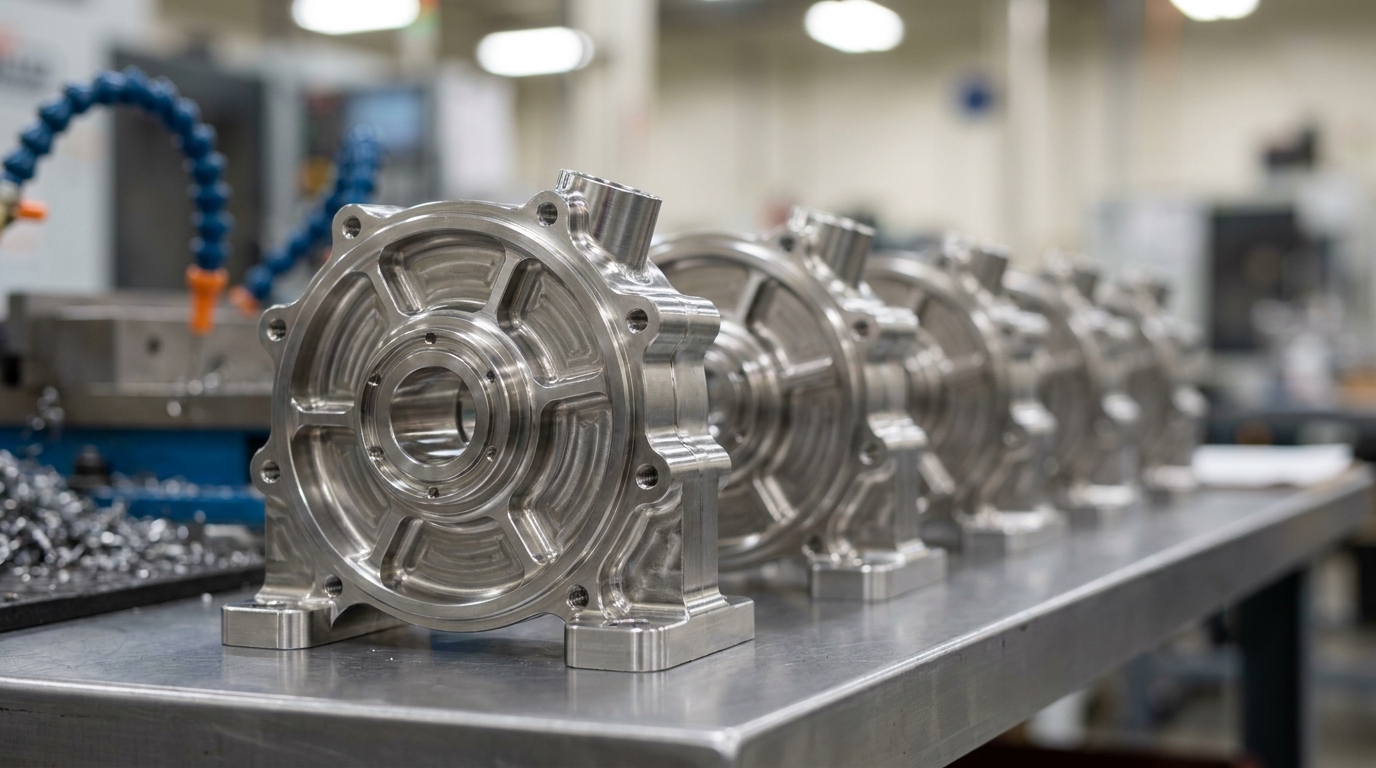
Five-axis machining enables complex geometries to be completed in fewer setups, which improves repeatability and reduces handling risk. However, 5-axis equipment carries higher capital and operating costs, and programming these parts requires skilled CAM engineers. Both factors appear in the hourly rate for advanced work.
Tight tolerances also increase inspection time. Parts requiring coordinate measuring machine verification on multiple features add cost at the quality stage, not just the machining stage. For aerospace and defense programs, that inspection documentation is mandatory, not optional.
Precision Advanced Manufacturing operates advanced multi-axis CNC milling and turning equipment designed for complex, high-tolerance components. In-house programming and tooling expertise support efficient setups and consistent results across production runs. Explore options for complex or multi-axis components.
Certification, Traceability and Compliance Cost Drivers
AS9100D certification and ITAR registration are not marketing credentials. They represent documented, audited quality management systems that govern how parts are planned, produced, inspected and recorded. Because these systems require ongoing investment in personnel, software, audit cycles and corrective action processes, they directly affect the cost structure of any certified shop.
That investment appears in hourly rates at certified shops. A noncertified provider may quote a lower rate, but that rate excludes the compliance infrastructure that regulated programs require. When a noncertified part fails an incoming inspection or triggers a customer audit finding, the cost of remediation, including rework, re-sourcing and schedule recovery, typically exceeds the savings from the lower quote.
ITAR registration adds a separate layer of compliance for defense and space programs. It governs how technical data and hardware are handled, stored and transferred. Working with an ITAR-registered supplier removes a significant category of program risk related to data handling and export control.
Precision Advanced Manufacturing operates under AS9100D and ISO 9001:2015 certified quality management systems and is ITAR registered. Every program runs under defined quality checkpoints, full traceability and complete documentation aligned to aerospace standards.
Setup, Programming and Engineering Support Costs
Setup and programming function as largely one-time costs that spread across a production run. For prototype or low-volume work, these costs represent a larger share of total project cost. For higher-volume runs, they become a smaller per-unit factor as quantities increase.
Programming complexity scales with part geometry. Multi-feature parts with tight tolerances require more CAM development time, toolpath verification and first-article inspection before production begins. Buyers can expect these costs to appear as line items on detailed quotes.
In-house engineering support reduces total program cost by catching manufacturability issues before production starts. When a supplier engineering team reviews a design for machining efficiency, the result includes fewer surprises, tighter process control and more predictable unit costs.
Precision Advanced Manufacturing provides in-house CNC programming, tooling development and engineering support. That capability applies at the outset of each program to refine tolerances, streamline setups and strengthen production efficiency from the first part to the last.
Volume, Lead Time and Scaling from Prototype to Production
Volume acts as a primary lever in CNC unit pricing. Setup and programming costs remain fixed, and spreading them across more parts reduces cost per unit. Material purchasing at higher volumes also improves efficiency and pricing. Buyers sourcing prototype quantities should expect higher per-part costs than production-run pricing.
Lead time expectations interact with pricing as well. Expedited schedules require dedicated machine time and may displace other work, which carries a cost. Programs with predictable, planned schedules allow suppliers to plan capacity and pass efficiency gains back to the buyer.
Scalability matters for programs that begin with prototypes and transition to full-rate production. Changing suppliers mid-program introduces requalification risk, documentation gaps and schedule exposure. A supplier capable of supporting both phases under the same certified quality system removes that risk.
Precision Advanced Manufacturing supports the full product lifecycle from prototype development through sustained, multi-shift production at its Texas facility. Programs scale without supplier changes, quality system gaps or requalification delays. Discuss prototype and production volume strategies.
Understanding Austin CNC Hourly Rates and Total Cost
Buyers often focus on two points about Austin CNC pricing, the hourly rate and the method for estimating total project cost. On hourly rates, standard 3-axis machining at general shops runs within common industry ranges. Certified aerospace shops running 5-axis work operate at higher rates that reflect equipment investment, quality system overhead and skilled labor costs.
On estimation methodology, total CNC machining cost equals the sum of material cost, setup and programming, machine time, inspection and documentation, and finishing operations. Machine time reflects cycle time multiplied by hourly rate. Each variable scales with part complexity, material and volume.
For regulated programs, add the compliance overhead and inspection costs discussed earlier, including material certifications, first-article inspection reports, traceability documentation and AS910D quality records. These items function as program requirements, not optional add-ons. A quote that excludes them does not present a complete cost picture.
Commodity providers may present lower hourly rates, but the absence of certified quality infrastructure shifts compliance cost and risk to the buyer program. Total cost of ownership, not the hourly rate, provides the relevant metric for mission-critical sourcing decisions.
Quote Checklist for Aerospace and Defense CNC Work
Regulated programs require specific documentation from any CNC machining supplier. A complete quote package for aerospace or defense work should include:
- The material certifications and traceability records described earlier
- First-article inspection reports with dimensional results
- AS9100D certificate of registration, current and audited
- ITAR registration confirmation
- ISO 9001:2015 certificate of registration
- Traceability matrix linking raw material to finished part
- Nonconformance and corrective action process documentation
- Inspection plan aligned to drawing requirements
Suppliers unable to provide these documents at the quote stage represent a compliance risk before production begins. Verifying documentation capability upfront protects program schedules and audit readiness.
Precision Advanced Manufacturing provides complete documentation packages with every program, including material certifications, inspection reports and full traceability records aligned to AS9100D requirements. Review a detailed proposal covering capabilities, certifications and production strategy.
Frequently Asked Questions
Why does AS9100D certification increase CNC machining costs?
AS9100D requires documented quality management systems, defined inspection checkpoints, corrective action processes and regular third-party audits. Maintaining that infrastructure requires dedicated personnel and ongoing investment, which appear in the hourly rate at certified shops. The tradeoff is a measurable reduction in rework, audit failure and program disruption risk.
What traceability documentation should buyers expect from a certified CNC supplier?
A certified supplier should provide the documentation outlined in the quote requirements section, including material certifications with heat lot records, first-article inspection reports, in-process inspection records, a traceability matrix linking raw material to finished part and nonconformance documentation when applicable. These records support customer audits and regulatory compliance throughout the program lifecycle.
How does a certified precision shop differ from a commodity machine shop for defense programs?
Commodity shops typically operate without AS9100D or ITAR compliance infrastructure. They may produce acceptable parts for commercial applications but lack the documented quality systems, traceability records and regulatory controls required for defense and aerospace programs. Using a noncertified supplier on a regulated program shifts compliance burden and risk to the buyer team.
What is total cost of ownership in the context of CNC machining for aerospace?
Total cost of ownership includes the quoted part price plus all downstream costs associated with quality failures, rework, re-sourcing, expedited orders, audit findings and schedule recovery. A lower initial quote from a noncertified supplier often produces a higher total cost of ownership when compliance gaps surface during production or customer audits.
Can a single supplier support both prototype and full-rate production for a defense program?
A single supplier can support both phases when that supplier has scalable production infrastructure and a certified quality system that applies equally to prototype and production quantities. Transitioning between suppliers mid-program introduces requalification risk, documentation gaps and schedule exposure. A supplier capable of supporting both phases under the same quality system removes those risks.
Conclusion: Focusing on Total Cost for Austin CNC Programs
Austin CNC pricing in mid-2026 does not reduce to a single number. It reflects capability tier, material, complexity, certifications, setup and volume. For aerospace, defense and space programs, total cost of ownership, not the hourly rate on a commodity quote, provides the meaningful benchmark.
The certification overhead discussed earlier adds measurable cost to any program but removes a larger category of risk, including rework, audit failures, schedule disruption and compliance exposure. Evaluated against those risks, certified precision manufacturing functions as a cost-reduction strategy rather than a premium.
Precision Advanced Manufacturing operates from its Texas facility with AS9100D and ISO 9001:2015 certified quality systems, full ITAR registration and integrated multi-axis machining, fabrication, engineering support and finishing under one roof. The platform supports prototype through full-rate production without supplier changes or quality system gaps.
Connect with the Precision Advanced Manufacturing team for a mission-critical CNC proposal.