Last updated: August 7, 2026
Key Ways Precision Machining Protects Aerospace Programs
- Aerospace precision machining demands tight tolerances, full traceability and certified quality systems to meet flight-critical and defense requirements.
- Traceability gaps and supplier handoffs create frequent compliance failures and program delays that procurement teams must manage.
- AS9100D, ISO 9001:2015 and ITAR registrations provide documented processes and supplier controls that support audits and reduce verification workload.
- Integrated capabilities under one roof, combined with scalable multi-shift capacity, support a smooth path from prototype to full-rate production.
- Precision Advanced Manufacturing delivers these capabilities with complete documentation and traceability; request a quote to start a mission-critical program.
Procurement and Sourcing: Reducing Delays and Compliance Risk
Procurement and sourcing teams carry direct risk when a supplier delivers late, out-of-spec or non-compliant parts. Rework, scrap, expedited orders and audit findings compound quickly on mission-critical programs.
Traceability gaps create a persistent source of that risk. Legacy systems that rely on paper travelers, spreadsheets and siloed applications lose data fidelity at every handoff in multi-site, multi-supplier programs. Incomplete certificates of conformance, missing heat-lot data and unlogged process deviations create compliance exposure and slow containment when quality issues emerge.
Precision Advanced Manufacturing addresses these risks through AS9100D, ISO 9001:2015 and ITAR-registered quality systems. These certifications ensure every project includes full material certifications, inspection documentation and end-to-end process traceability. AS9100D builds on the ISO 9001:2015 foundation with aerospace-specific requirements for counterfeit parts prevention, configuration management and supplier controls, which directly target common traceability gaps. This documented framework reduces the compliance burden on sourcing teams during audits.
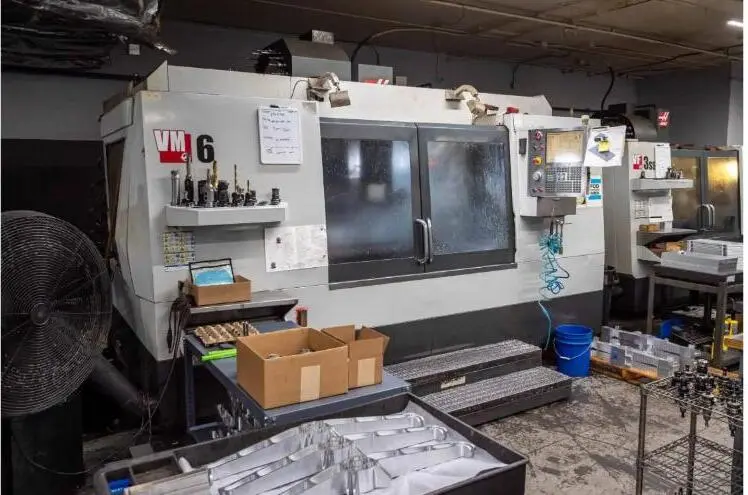
Integrated capabilities across machining, fabrication and finishing in a single organization remove handoffs between vendors that often introduce delays and documentation gaps. Scalable multi-shift operations support smooth transitions from prototype to full-rate production without a supplier change.
Reduce compliance risk on the next program and request a quote with full traceability documentation.
Program Management: Keeping Parts in Spec and Schedules on Track
Program managers absorb schedule risk when parts arrive needing extra finishing, dimensional correction or re-inspection. Each unplanned step adds time and cost to integration and testing timelines.
Aerospace suppliers must document what was produced and how it was produced. That record includes who performed the work, which materials were used, which inspections were completed and whether every process followed documented procedures. Fragmented evidence across disconnected systems slows root-cause investigations and increases program risk.
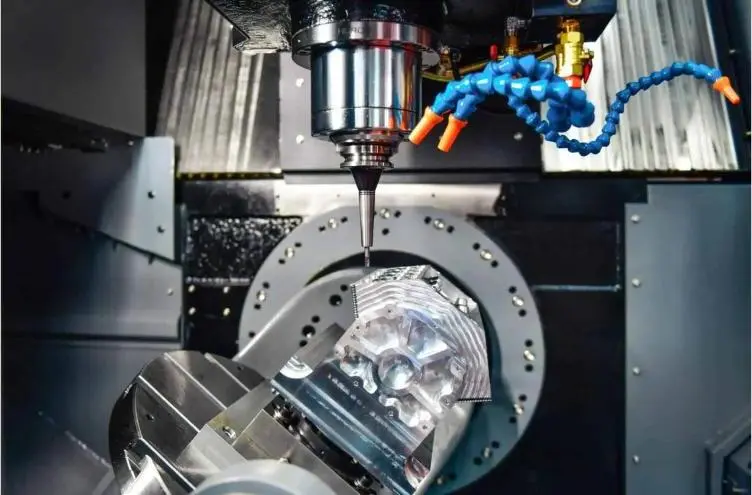
Precision Advanced Manufacturing delivers fully finished, ready-to-integrate components. Advanced multi-axis CNC machining, in-house engineering support and rigorous in-process inspection combine to produce parts that meet exact specifications on the first pass. Scalable production capacity, supported by multi-shift operations across two specialized facilities, allows programs to ramp without disruption.
A controlled scale-up plan qualifies the process across intended production resources. This approach establishes repeatable conformity at volume and protects timelines and budgets as programs grow.
Supplier Quality and Engineering: Holding Tight Tolerances with Full Traceability
Supplier quality engineers face a heavier inspection burden when incoming parts lack complete documentation or fall outside tolerance. Non-conformances that escape detection create failures in assembly and test.
Aerospace CNC components often require tolerances measured in ten-thousandths of an inch for structural, engine and hydraulic applications. Consistent performance at that level depends on process capability, not only operator skill. Scaled production requires statistical process capability to prevent operator-dependent quality drift across shifts.
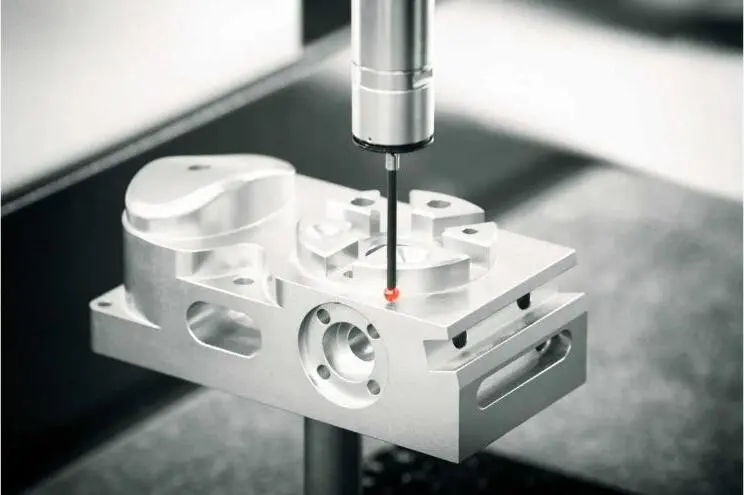
Precision Advanced Manufacturing applies rigorous in-process and final inspections and delivers validated parts with complete quality documentation. Material certifications, dimensional inspection reports and process records accompany every shipment. Certified quality processes reduce the verification workload on customer quality teams and support confidence that parts will perform in service.
Core Certifications for Aerospace Machining Suppliers
AS9100 Rev D, published in September 2016, remains the current quality management standard for aviation, space and defense. It builds on ISO 9001:2015 with requirements for product safety, counterfeit parts prevention, configuration management, risk-based thinking and enhanced supplier controls. AS9100D is mandatory for aerospace machining suppliers and covers risk management, process validation, non-conformance control and supplier management.
ISO 9001:2015 establishes the baseline quality management framework. It covers documentation control, production planning, customer communication and continual improvement. Together, AS9100D and ISO 9001:2015 give aerospace buyers evidence of structured quality systems that support tight-tolerance components, repeatable production and traceability from prototype through full-rate production.
ITAR registration is a separate legal requirement for suppliers that handle defense-related technical data and hardware. It governs how controlled information is stored, shared and transmitted. ITAR appears alongside AS9100D and ISO 9001 as a core credential for aerospace and defense work.
Precision Advanced Manufacturing maintains these certifications, meeting the compliance baseline required for commercial aerospace, military and defense, space and satellite and UAV programs.

AS9100 is being revised and rebranded as IA9100, with final publication expected in late 2026 and a transition window projected through 2028 to 2029. Buyers should confirm that prospective suppliers maintain current certification status and monitor the transition timeline.
Traceability Practices for Aerospace Components
Aerospace traceability requires part genealogy that tracks every serialized or lot-controlled item from raw material heat and mill certifications through intermediate revisions and assembly relationships. Records must also capture any repair or rework paths.
Regulators and OEMs increasingly require records that link specific operators, machines with calibration status, work instruction revisions, controlled process parameters and inspection results to each production outcome. This level of detail supports investigations and audits.
All aerospace material supply must provide full traceability to mill sources and heat-treatment lots. Documentation includes mill test certificates, heat-lot traceability, chemical composition and mechanical testing and conformance to AMS, ASTM or MIL specifications.
Precision Advanced Manufacturing builds traceability into every production step under its certified quality systems. Material certifications, routing records, in-process controls and final inspection results link to each part and lot. This approach supports AS9100D audit requirements and gives procurement and quality teams the documentation they need without manual reconstruction.
Get the material certifications and process records that audits require and request a quote for aerospace components.
Scaling with One Partner from Prototype to Production
Changing suppliers mid-program introduces risk. New tooling setups, different programming conventions and fresh documentation requirements can alter part behavior even when drawings remain unchanged.
Moving a part to another machine or supplier without a controlled scale-up plan can change part behavior. Differences in tooling layout, spindle condition, programming conventions, coolant delivery or workholding all influence results.
Precision Advanced Manufacturing supports the full product lifecycle from project-specific prototype development through sustained, multi-shift production within the same certified quality system. The processes validated during prototyping carry forward to full-rate manufacturing. Capacity across two specialized facilities in California and Texas supports high-volume, multi-shift programs while maintaining the tolerances and documentation standards established at program launch.
Managing Mid-Program Supplier Transitions
Mid-program supplier changes sometimes become unavoidable. The main risks involve documentation gaps, unvalidated processes and integration delays that can set a program back by weeks.
Precision Advanced Manufacturing makes transitions manageable by providing complete material traceability, process documentation and engineering support from the outset. Pilot builds or validation runs establish conformity before full-rate production begins.
In-house CNC programming and tooling development allow the team to review incoming designs, identify manufacturability issues and align processes to existing engineering revisions. Proactive communication about changes in requirements, material availability, tolerances or delivery dates, including early flagging of issues before they affect production, supports lower risk in supplier selection for aerospace and defense programs.
Checklist for Selecting an Aerospace Machining Partner
Selecting a precision machining partner for aerospace and defense programs benefits from a structured evaluation. Aerospace supplier evaluation often weighs technical compliance, quality maturity, delivery reliability, capacity robustness, financial stability and total lifecycle cost, with unit price rarely dominant.
In flight-critical categories, technical compliance and quality maturity often carry most of the weighting. A structured evaluation checklist should include the following criteria.
- Current AS9100D and ISO 9001:2015 certification status, verified through the IAQG OASIS database where certification status and audit findings are recorded
- ITAR registration with documented controlled-data handling procedures
- Demonstrated capacity for the program volume and shift requirements
- In-process and final inspection protocols, including First Article Inspection per AS9102
- Full material traceability to mill source, heat lot and applicable AMS, ASTM or MIL specifications
- Experience with the relevant materials and geometries for the program
- Integrated capabilities that reduce supplier handoffs and documentation gaps
- Proactive communication practices and defined escalation paths
- On-time delivery performance over a meaningful prior period, with documented procedures for managing and communicating deviations
How to Partner with Precision Advanced Manufacturing
Engaging Precision Advanced Manufacturing follows a straightforward three-step process.
- Connect with an expert. Engage with aerospace and manufacturing specialists to define program needs, part specifications and critical timelines.
- Receive a tailored quote. Review a detailed plan covering capabilities, tolerances, materials, certifications and production strategy.
- Launch production. Move from prototype to full-rate manufacturing with certified quality, full traceability and program support at every stage.
Ready to move from prototype to production with one certified partner? Request a quote to start the program.
Frequently Asked Questions
What materials does Precision Advanced Manufacturing work with?
Precision Advanced Manufacturing works with a broad range of metals and materials, including stainless steel, carbon steel, aluminum, titanium alloys, exotic alloys and composites suited for aerospace, defense and space applications. The team applies expertise in complex materials to meet the durability and reliability requirements of mission-critical programs.
Can Precision Advanced Manufacturing handle complex geometries and tight tolerances?
Precision Advanced Manufacturing specializes in complex, tight-tolerance components for aerospace and UAV applications. Advanced multi-axis CNC milling and turning equipment, combined with in-house programming and tooling development, supports the geometric complexity and dimensional accuracy that mission-critical programs require.
How does Precision Advanced Manufacturing support mid-program supplier transitions?
The team provides complete documentation, material traceability and engineering support to maintain continuity during supplier transitions. Pilot builds or validation runs minimize risk before full-rate production begins and allow programs to integrate a new supplier without disrupting schedules.
Does Precision Advanced Manufacturing have the certifications required for defense and space programs?
The company operates under the certified quality management systems described earlier. These certifications cover the compliance baseline required for commercial aerospace, military and defense, space and satellite and UAV programs. All components are produced to these standards with full documentation.
How does Precision Advanced Manufacturing scale from prototype to full production?
Precision Advanced Manufacturing supports the full product lifecycle within the same certified quality system. Multi-shift operations across two specialized facilities in California and Texas provide the capacity to scale from prototype through high-volume production. The processes and quality controls validated during prototyping carry forward to full-rate manufacturing and avoid the risk of introducing a new supplier at a critical program stage.
Conclusion: Aligning Machining Capability with Program Risk
Selecting an aerospace precision machining partner functions as a risk management decision. Certification status, traceability capability, inspection discipline, material expertise and scalable capacity determine whether a supplier protects or threatens program timelines and compliance standing.
Procurement teams, program managers and supplier quality engineers each carry a portion of that risk. A certified, integrated supplier with documented processes, full traceability and the capacity to scale from prototype to full-rate production within one organization reduces exposure across all three functions.
Precision Advanced Manufacturing operates under certified aerospace quality systems across two specialized facilities. Integrated multi-axis CNC machining, precision fabrication, finishing and engineering support deliver mission-critical components with the documentation and traceability that regulated programs require.
Start a mission-critical program with a certified, integrated supplier and request a quote today.