Last updated: April 17, 2026
Key Takeaways
- Dynamic sheet metal fabrication uses 5-axis waterjet, laser cutting, and CNC machining to produce complex aerospace components with tight tolerances and high material efficiency.
- ITAR compliance is essential for defense programs and requires registered partners with AS9100D certification, strong data security, and full traceability to avoid penalties and delays.
- Procurement teams should evaluate partners on ITAR status, precision capabilities, quality control, scalability, traceability, U.S. facilities, and integrated services for dependable performance.
- Precision Advanced Manufacturing provides one-roof ITAR-compliant solutions, handles exotic materials, scales from prototype to production, and reduces costs through efficient processes.
- Partner with Precision Advanced Manufacturing for mission-critical sheet metal fabrication that supports compliance, precision, and on-time delivery for aerospace and defense programs.
Dynamic Sheet Metal Design and Fabrication for Aerospace and Defense
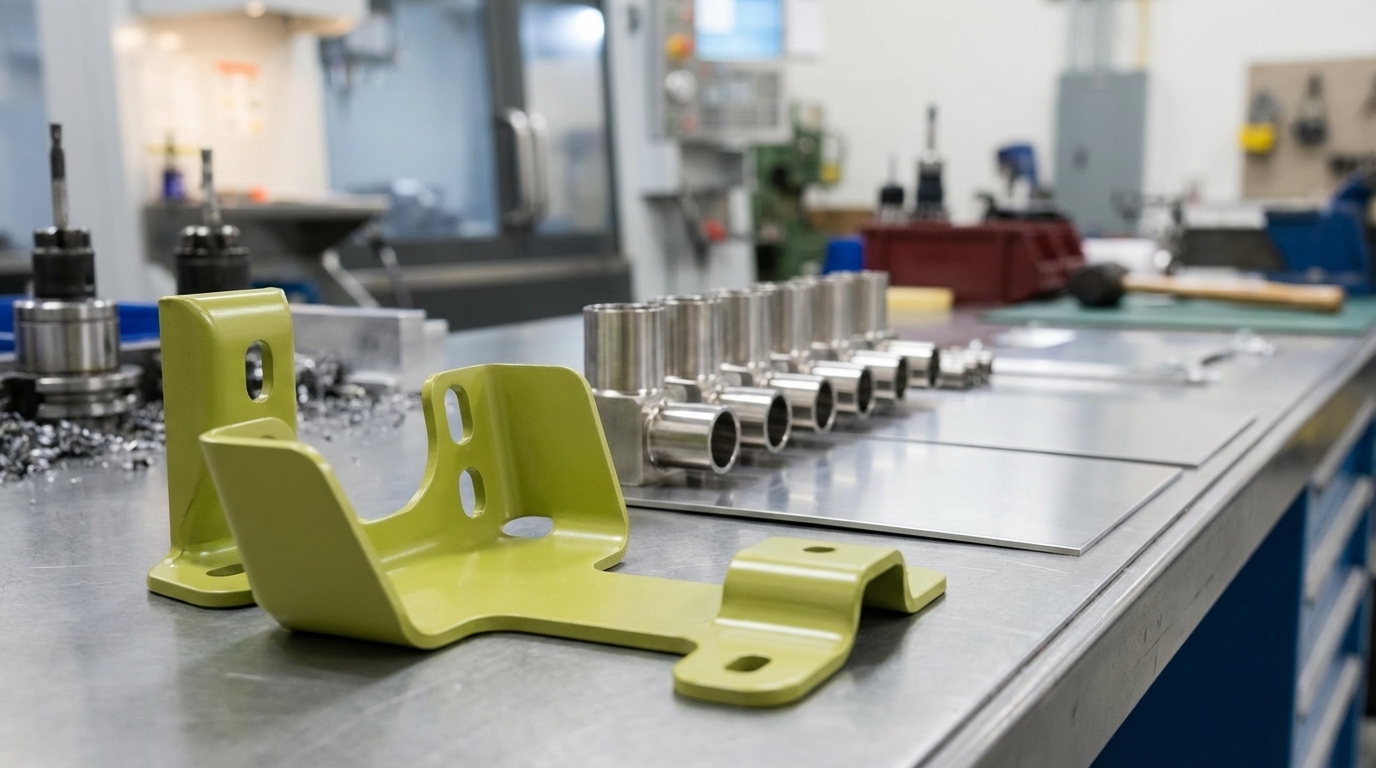
Dynamic sheet metal design and fabrication uses advanced processes to create complex, high-precision components for aerospace and defense applications. These processes center on 5-axis dynamic waterjet systems that eliminate taper and handle exotic materials like titanium composites without heat-affected zones, precision laser cutting that achieves ±0.002″ tolerances on materials up to 1″ thick, and multi-axis CNC machining for intricate geometries. Recent 2026 comparative studies show waterjet cutting achieving 85% material utilization rates on aerospace aluminum alloys, which significantly improves efficiency compared with traditional milling. Beyond cutting performance, the integration of AI, IoT sensors, and predictive maintenance in modern waterjet systems supports smart manufacturing and ITAR-compliant traceability. These capabilities cover materials ranging from ballistic composites and Kevlar to exotic alloys, with capacity for oversized components up to 96″ x 240″.
Why ITAR Compliance Protects Your Defense Programs
ITAR registration and compliance form the foundation of any legitimate defense manufacturing partnership. The December 30, 2025 DDTC final rule implementing AUKUS defense trade cooperation introduced new license exemptions while preserving strict controls on defense articles and technical data. Non-compliant partners expose programs to severe penalties, export violations, and schedule slips that can derail critical timelines. ITAR-registered sheet metal fabricators must maintain robust data security, personnel screening, and facility controls that protect controlled technical information at every manufacturing stage. Precision Advanced Manufacturing maintains 100% ITAR registration with AS9100D and ISO 9001:2015 certifications, so every component aligns with current regulatory standards. The company’s facilities provide redundancy while maintaining complete ITAR compliance. Connect with their compliance team to verify registration status and review your program requirements.
Key Criteria for Your ITAR-Compliant Dynamic Sheet Metal Partner
Once you confirm a partner’s ITAR registration, you need to determine whether they can support your technical and operational requirements. Selecting the right ITAR-compliant dynamic sheet metal design and fabrication partner requires careful evaluation of seven criteria.
- ITAR Registration and AS9100D Certification: Verify current ITAR registration status and AS9100D certification scope that clearly covers sheet metal fabrication processes.
- Dynamic Manufacturing Capabilities: Confirm access to 5-axis waterjet systems, precision laser cutting with tight tolerances, and multi-axis CNC machining for complex geometries.
- Precision and Quality Control: Review thermal distortion control in welding, comprehensive inspection capabilities, and first-article inspection performed to AS9102 standards.
- Scalability and Capacity: Assess prototype-to-production support, multi-shift operations, and available capacity for program growth without sacrificing quality.
- Traceability and Documentation: Require complete material traceability from raw material through finished product, including manufacturer’s part numbers, lot numbers, and date codes.
- U.S. Manufacturing Facilities: Confirm domestic manufacturing locations with appropriate security clearances and facility registrations for controlled work.
- Integrated Service Portfolio: Evaluate one-roof capabilities such as CNC machining, welding, finishing, kitting, and secondary operations that reduce supply chain complexity.
Precision Advanced Manufacturing meets all of these criteria with NAICS codes 332710 (Machine Shops) and 332721 (Precision Turned Product Manufacturing), which reflect broad manufacturing capabilities under strict regulatory oversight.
How Precision Advanced Manufacturing Supports ITAR Programs
Precision Advanced Manufacturing operates as a premier ITAR-registered sheet metal fabricator that solves common procurement challenges. The company’s facilities include advanced multi-axis CNC machining, dynamic waterjet cutting with double-head 5-axis taper elimination, precision laser cutting, and specialized welding with tight thermal distortion control. This one-roof structure removes costly supplier handoffs and preserves traceability and quality control from raw material through final shipment.
The engineering team provides in-house CNC programming, tooling development, and manufacturability improvements that strengthen designs from project kickoff. Multi-shift production supports smooth scaling from prototype development to full-rate manufacturing while maintaining AS9100D quality standards. Precision Advanced Manufacturing’s expertise covers exotic materials such as ballistic composites, Kevlar, titanium alloys, and advanced ceramics, with the specific exceptions of tempered glass and beryllium copper.
Integrated services include hardware installation, brush finishing, laser marking, deburring, and secondary finishing such as anodizing and passivation. The company’s kitting services group components into organized assemblies, which reduces handling costs and simplifies customer operations. A recent UAV program illustrates this approach, as Precision Advanced Manufacturing moved a complex composite bracket from prototype to full-rate production, maintained the same precision tolerances mentioned earlier, and cut program costs by 15% through better material utilization and removal of supplier handoffs.
Addressing Common Concerns About Precision Manufacturing
Precision Manufacturing Costs Compared with Standard Fabrication
Certified precision manufacturing can carry higher initial piece prices, yet it often reduces total program cost. Precision Advanced Manufacturing limits rework, scrap, and schedule disruptions by producing parts correctly the first time. Right-first-time manufacturing avoids the much higher expense of out-of-specification parts in mission-critical applications.
Meeting Aggressive Program Deadlines
Precision Advanced Manufacturing supports aggressive timelines through integrated manufacturing that removes shipping delays between separate vendors. Multi-shift operations and advanced scheduling systems keep production aligned with program milestones. This structure helps procurement teams maintain delivery commitments to their internal stakeholders.
Transitioning from an Existing Supplier Mid-Program
Precision Advanced Manufacturing manages supplier transitions with structured documentation reviews, pilot builds, and validation runs that reduce risk. Complete material traceability and dedicated engineering support preserve continuity and prevent program disruption. This approach allows teams to correct supplier issues without restarting qualification from scratch.
Three-Step Process to Partner with Precision Advanced Manufacturing
Partnering with Precision Advanced Manufacturing follows a clear three-step process tailored to mission-critical programs. First, you connect with aerospace and defense manufacturing specialists who review program requirements, part specifications, and key milestones. Second, you receive a detailed, customized quote that outlines capabilities, tolerances, materials, certifications, and a production strategy aligned with mission needs. Third, you launch production with a controlled transition from prototype to full-rate manufacturing, supported by certified quality systems, complete traceability, and dedicated program management. Start your partnership process to see how their team can support your specific program.
Conclusion: A Proven ITAR Sheet Metal Partner for Mission-Critical Work
Precision Advanced Manufacturing delivers the capabilities and regulatory compliance that mission-critical aerospace and defense programs require. As a focused ITAR-compliant dynamic sheet metal design and fabrication partner, the company provides precision, scalability, and reliability that align with procurement and engineering expectations. Request a quote today to secure your mission-critical manufacturing partnership.
Frequently Asked Questions
What materials can Precision Advanced Manufacturing process for ITAR-compliant projects?
Precision Advanced Manufacturing processes nearly any material used in aerospace and defense applications, including stainless steel, ballistic and armor plating, carbon steel, composites, exotic alloys, titanium, Kevlar, and advanced ceramics. The company’s dynamic waterjet and laser cutting capabilities handle a wide range of material thicknesses and support heat-sensitive materials that cannot tolerate thermal distortion. The only excluded materials are tempered glass and beryllium copper because of safety and processing constraints.
How does Precision Advanced Manufacturing ensure complete traceability for ITAR compliance?
Complete traceability starts with raw material certification and continues through every manufacturing step to final delivery. Each component maintains documented links to original mill certificates, batch identifiers, and lot numbers. The company’s AS9100D-certified quality management system requires systematic documentation of all processes, inspections, and material movements. Digital tracking systems provide real-time visibility into component status, and comprehensive inspection reports plus certificates of conformance create audit-ready records that satisfy stringent aerospace requirements.
Can Precision Advanced Manufacturing scale from prototype to full production while maintaining quality?
Precision Advanced Manufacturing’s flexible manufacturing platform scales from single prototypes to high-volume production runs while maintaining consistent quality and delivery performance. Multi-shift operations, advanced scheduling systems, and proven process controls support smooth transitions as program volumes increase. Standardized work instructions, validated tooling, and stable quality checkpoints ensure that production parts match the precision achieved during prototype development and reduce the risk associated with supplier changes during ramp-up.
What certifications and compliance standards does Precision Advanced Manufacturing maintain?
Precision Advanced Manufacturing maintains 100% ITAR registration, AS9100D aerospace quality management certification, and ISO 9001:2015 quality systems. The company operates under NAICS codes 332710 and 332721, which confirm qualified machine shop and precision manufacturing capabilities. All facilities maintain appropriate security clearances and use data protection measures that exceed ITAR and EAR requirements. Regular third-party audits and continuous improvement programs support ongoing compliance with evolving regulatory standards.
How does Precision Advanced Manufacturing’s integrated approach reduce program risk?
The company’s one-roof manufacturing model removes the supply chain complexity and quality risk that come with multiple vendors. Integrated capabilities across CNC machining, waterjet cutting, laser processing, welding, finishing, and kitting reduce handoff points where errors often occur. This consolidation provides single-source accountability, clear communication, and coordinated scheduling that help keep programs on track. In addition, the engineering team improves designs for manufacturability at the outset, which prevents costly redesigns and production delays that frequently affect fragmented supply chains.