Last updated: August 16, 2026
Key Takeaways for Defense Manufacturers
- ITAR registration applies to any U.S. manufacturer that produces USML-listed defense articles or handles controlled technical data, even without exports.
- Core compliance steps include DDTC registration, appointing an Empowered Official, USML classification, a Technology Control Plan, and recurring audits and training.
- Common violations such as deemed exports, recordkeeping failures and USML misclassification can trigger civil penalties and potential debarment from defense trade.
- Deemed exports occur when ITAR-controlled data is released to foreign persons inside the United States, which requires strict nationality screening and access controls.
- Precision Advanced Manufacturing delivers ITAR-registered, AS9100D-certified machining and fabrication services with documented controls already in place. Request a quote to partner with a proven defense manufacturing supplier.
Core ITAR Compliance Requirements for U.S. Manufacturers
The following seven steps define the core compliance obligations for U.S. defense manufacturers under ITAR.
- Register with DDTC. Submit Form DS-2032 through the DECCS portal before engaging in any ITAR-regulated manufacturing or service activity. Renewal fees apply annually, and a lapsed registration creates a violation.
- Appoint an Empowered Official. Designate a U.S. person authorized to sign export license applications and DDTC submissions, as required under 22 CFR 120.67.
- Classify all products and technical data. Conduct USML classification reviews for all hardware, software, defense services and technical data handled in production.
- Implement a Technology Control Plan (TCP). Document access controls, IT restrictions, visitor screening procedures and authorized disclosure protocols for every program involving ITAR-controlled data.
- Screen employees, visitors and suppliers. Apply the definition of foreign person in 22 CFR 120.63 to prevent unauthorized deemed exports.
- Maintain records. Retain export licenses, technical data transfer records, visitor logs and all related correspondence as required under ITAR.
- Conduct regular internal audits and training. Perform annual risk assessments, update the compliance manual when personnel or business activities change and train all personnel with access to ITAR-controlled items.
Frequent ITAR Violations in Defense Manufacturing
Common ITAR violation patterns in defense manufacturing fall into several recurring categories.
- Deemed exports: Sharing controlled drawings with H-1B employees, allowing foreign visitors to observe controlled machining processes or granting IT access to ITAR databases without verifying nationality.
- Recordkeeping failures: Missing or incomplete export transaction records, incomplete visitor logs and technical data transfer records that cannot be produced during an audit.
- Proviso breaches: Transferring ITAR-controlled hardware or technical data to end users or sublicensees not authorized under the applicable Technical Assistance Agreement or DSP-5 license.
- USML misclassification: Treating a defense article as EAR99 or failing to identify controlled status before production or data sharing begins.
- Failure to report material changes: Not notifying DDTC within 60 days of changes to ownership, senior officers or the scope of defense trade activities, as required under 22 CFR Part 122.
ITAR Rules for Employees, Visitors and Foreign Persons
A deemed export occurs when ITAR-controlled technical data or a defense service is released to a foreign person inside the United States. The release is treated as an export to that person's country of nationality, regardless of whether any data crosses a border.
The definition of foreign person for ITAR screening appears in 22 CFR 120.63. U.S. persons include citizens, lawful permanent residents, refugees and asylees. Sharing ITAR-controlled data with these individuals does not trigger deemed export requirements. All others qualify as foreign persons for ITAR purposes.
Shop-floor deemed export triggers include visual access to controlled drawings on a monitor, observing controlled manufacturing processes, training on controlled systems and informal technical conversations involving controlled data. Because any of these exposures constitutes an unauthorized export, a compliant Technology Control Plan must address each scenario with documented controls, including designated restricted work areas, role-based IT access, pre-visit nationality screening, escort requirements and visitor log retention.
10 ITAR Control Areas for Defense Manufacturers
Every defense manufacturer must document ten control areas, each with a regulatory basis, a manufacturing requirement and a key record.
- DDTC registration: Maintain current Form DS-2032, payment confirmation and annual renewal documentation.
- Empowered Official designation: Document the appointed U.S. person, training records and written delegation of authority.
- USML classification: Retain classification determinations, jurisdiction analyses and customer classification guidance for all parts and data.
- Technology Control Plan: Keep a current TCP that covers physical security, IT controls, training and incident response for each program.
- Foreign person screening: Record nationality screening for employees, contractors and visitors, including use of 22 CFR 120.63 criteria.
- Technical data controls: Maintain procedures and logs for data marking, encryption, file access, transfers and storage locations.
- Recordkeeping system: Document how export records, visitor logs and license files are stored, indexed and retained for the required period.
- Cloud and IT security: Record the use of U.S.-sovereign cloud environments, encryption methods and access controls for ITAR data.
- Voluntary disclosure program: Keep written procedures for identifying, escalating and disclosing potential violations under 22 CFR 127.12.
- Training and internal audits: Retain training rosters, materials, audit plans, findings and corrective actions for ITAR compliance.
2026 DDTC Enforcement: Penalties and Trends
DDTC enforcement activity in 2026 shows that regulators apply both financial penalties and administrative exclusions with increasing frequency.
On April 17, 2026, DDTC entered into a consent agreement with General Electric Company resolving 116 alleged ITAR violations that occurred between 2018 and 2024. The violations included unauthorized exports of technical data related to F-35 and F414 engine programs to China, proviso breaches across multiple Technical Assistance Agreements and failure to report material changes to GE's DDTC registration. The consent agreement imposed a $36 million civil penalty. GE's voluntary disclosure of all violations served as a significant mitigating factor in the outcome.
DDTC announced statutory debarments of persons for violating or conspiring to violate the Arms Export Control Act, which barred them from any ITAR-regulated activity until DDTC approves reinstatement.
Civil penalties for violations can be significant, with each unauthorized export, deemed export or recordkeeping failure counted separately. Criminal penalties for willful violations can include fines and imprisonment. A timely voluntary disclosure under 22 CFR 127.12 remains the most effective mitigating factor available to manufacturers that discover a potential violation.
How Precision Advanced Manufacturing Applies ITAR Controls
Precision Advanced Manufacturing operates as an ITAR-registered, AS9100D- and ISO 9001:2015-certified machining and fabrication provider across facilities in California and Texas. Every program runs under documented quality systems that address DDTC registration, USML classification, foreign-person access controls, technical data marking and recordkeeping as standard operating procedure.
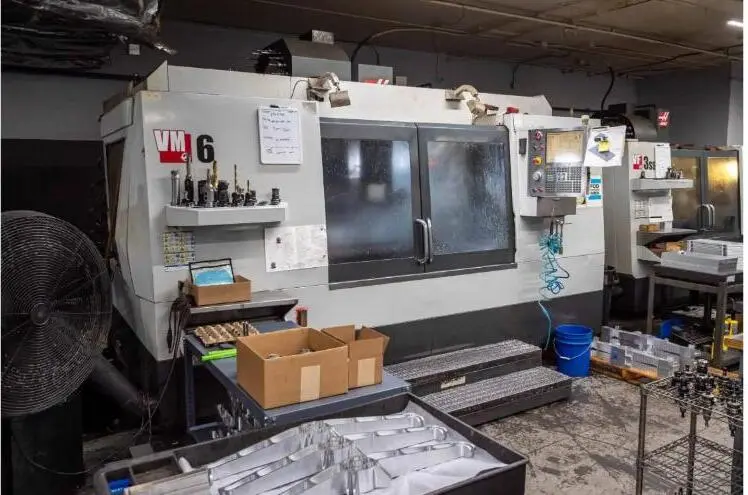
Multi-axis CNC machining, precision sheet-metal fabrication, specialty welding and integrated finishing services sit under one roof. This structure removes supplier handoffs that create traceability gaps and foreign-person access risks in fragmented supply chains. Components move from raw material through final finishing with full documentation at each stage. This approach produces the inspection records, material certifications and process traceability that Supplier Quality Engineers and Program Managers require for audit readiness.
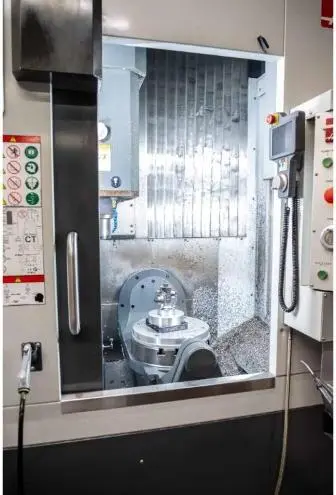
For programs requiring ITAR-controlled technical data, Precision Advanced Manufacturing's controls cover physical access restrictions, IT access management, visitor screening and TCP documentation aligned to program requirements. Production scales from prototype through full-rate manufacturing without changing the compliance posture or the quality system.

Defense procurement and supplier quality teams working with Precision Advanced Manufacturing receive a partner whose compliance infrastructure already operates at scale. Request a quote to engage with an ITAR-registered manufacturing partner for the next defense program.
Frequently Asked Questions
Does ITAR registration apply to manufacturers that never export products overseas?
ITAR registration applies to any U.S. manufacturer that produces a defense article listed on the USML or handles ITAR-controlled technical data. DDTC registration under 22 CFR Part 122 remains required even when no physical product leaves the United States. Receiving controlled drawings, machining USML-listed components or providing defense services to a domestic government customer all trigger the registration obligation. A lapsed registration creates a violation, and manufacturing during a lapse constitutes a separate violation.
How do deemed exports affect a machine shop?
As explained earlier, deemed exports treat the release of controlled data to a foreign person as an export to that person's country of nationality. On a machine shop floor, common triggers include showing a controlled drawing to a foreign national employee, allowing a foreign visitor to observe a controlled machining process or granting IT access to a system containing ITAR-controlled files. Manufacturers should screen for foreign persons as defined in 22 CFR 120.63, implement role-based IT access controls and maintain visitor logs to prevent and document these exposures.
How does CMMC relate to ITAR compliance for defense manufacturers?
CMMC and ITAR operate as separate regulatory frameworks with overlapping data environments. CMMC Level 2 certification verifies implementation of the 110 security controls in NIST SP 800-171 under DFARS 252.204-7012 but does not satisfy ITAR obligations. ITAR separately requires DDTC registration, export licenses or exemptions for releases to foreign persons and recordkeeping for every export transaction.
Most ITAR-controlled technical data handled under a federal contract is also marked CUI//SP-EXPT, which places the same environment under both frameworks at the same time. Cloud storage of ITAR data requires U.S.-sovereign environments with customer-controlled encryption. Standard commercial cloud platforms do not meet this requirement.
What is the recordkeeping requirement under ITAR?
Manufacturers must retain all export-related records, including export licenses, technical data transfer records, visitor logs, brokering records and all DDTC correspondence. These records must remain accessible for audit purposes. Failure to produce required records during a DDTC review constitutes a violation, separate from any underlying export control issue.
What steps should a manufacturer take after discovering a potential ITAR violation?
A manufacturer that discovers a potential ITAR violation should immediately escalate the matter to the Empowered Official and legal counsel, preserve all relevant records and assess the scope of the potential violation. A timely voluntary disclosure submitted to DDTC under 22 CFR 127.12 functions as a significant mitigating factor and often results in reduced penalties or a warning letter rather than a formal enforcement action.
Concealing a violation or allowing it to be discovered through third-party channels converts the matter into an enforcement action and removes the mitigating benefit of voluntary disclosure. Manufacturers should maintain written procedures for identifying, escalating and disclosing potential violations as part of a standard compliance program.
Conclusion: Protect Programs with an ITAR-Registered Manufacturing Partner
ITAR compliance for U.S. defense manufacturers functions as an operational requirement enforced through civil penalties, criminal liability and debarment from defense trade activities. Recent DDTC consent agreements and debarment actions confirm that regulators actively pursue both financial penalties and administrative exclusions across the defense industrial base.
Supplier Quality Engineers, Procurement Managers and Program Managers that source from nonregistered or inadequately controlled suppliers inherit that compliance risk. Precision Advanced Manufacturing's ITAR-registered, AS9100D-certified manufacturing platform applies the required controls as standard practice on every defense program.
Program timelines and audit readiness benefit from a manufacturing partner whose compliance infrastructure already operates at scale. Request a quote from Precision Advanced Manufacturing for ITAR-compliant machining, fabrication and finishing services.