Last updated: August 12, 2026
Key Takeaways for Spacecraft and Launch Vehicle Sourcing
- US spacecraft and launch vehicle sourcing depends on a clear distinction between prime contractors and subsystem specialists, with procurement teams primarily engaging specialists for qualified hardware.
- Satellite supply chains center on five subsystem categories, including buses, propulsion, avionics and power, structures and communications, and each category carries distinct certification and sourcing requirements.
- ITAR registration, AS9100D certification and ISO 9001:2015 form the baseline compliance framework, while Nadcap accreditation for special processes helps prevent part rejection.
- Supplier evaluation should prioritize certification verification, process capability evidence, full traceability documentation, scalability from prototype to production and integrated capabilities under one roof.
- Precision Advanced Manufacturing delivers certified, integrated precision machining solutions for satellite and launch vehicle components; request a quote to engage its aerospace specialists.
Prime Contractors and Subsystem Specialists in Space Programs
Prime contractors such as Lockheed Martin, Northrop Grumman and Boeing design and integrate complete spacecraft and launch vehicles. They hold program authority and manage system-level performance. Subsystem specialists operate one level below and supply qualified hardware for structures, propulsion, avionics, power and communications.
Procurement teams sourcing at the subsystem or component level deal primarily with specialists, not primes. The distinction matters because qualification requirements, lead times and compliance obligations differ by tier. A component supplier must demonstrate process capability, traceability and certification alignment independent of the prime’s quality system. Understanding this structure prepares procurement teams to map requirements to the right supplier tier.
Satellite Subsystems and US Component Suppliers
The satellite supply chain organizes around five primary subsystem categories. Each category signals different certification expectations and sourcing strategies.

Satellite buses integrate structure, power, avionics and propulsion into a flight-ready platform. The May 2026 NASA State-of-the-Art of Small Spacecraft Technology report lists US-based bus providers including Apex, Blue Canyon Technologies, York Space Systems, Northrop Grumman, Redwire Space, Sierra Space, Terran Orbital and Moog, among others. Vast announced in May 2026 the launch of Vast Satellite, a new line of high-power satellite buses for communications, Earth observation and national security missions. Boeing and Millennium Space Systems introduced the Resolute mid-class satellite bus in 2026, targeting the 2 kW to 4 kW power range for defense and commercial applications.
Propulsion systems represent the fastest-growing subsystem category. Propulsion hardware accounted for 33.76% of the satellite parts and components market in 2025 and is projected to grow at a 10.22% CAGR through 2031. Key US suppliers include Northrop Grumman, Aerojet Rocketdyne (now part of L3Harris Technologies), Moog, Busek, Phase Four, Benchmark Space Systems and VACCO Industries, as identified in a July 2026 Research and Markets report.
Avionics and power systems require radiation-tolerant designs and rigorous qualification. BAE Systems, Honeywell and Texas Instruments supply radiation-hardened electronics. Commercial off-the-shelf alternatives are now accepted for LEO operations, which expands the supplier pool for lower-orbit programs.
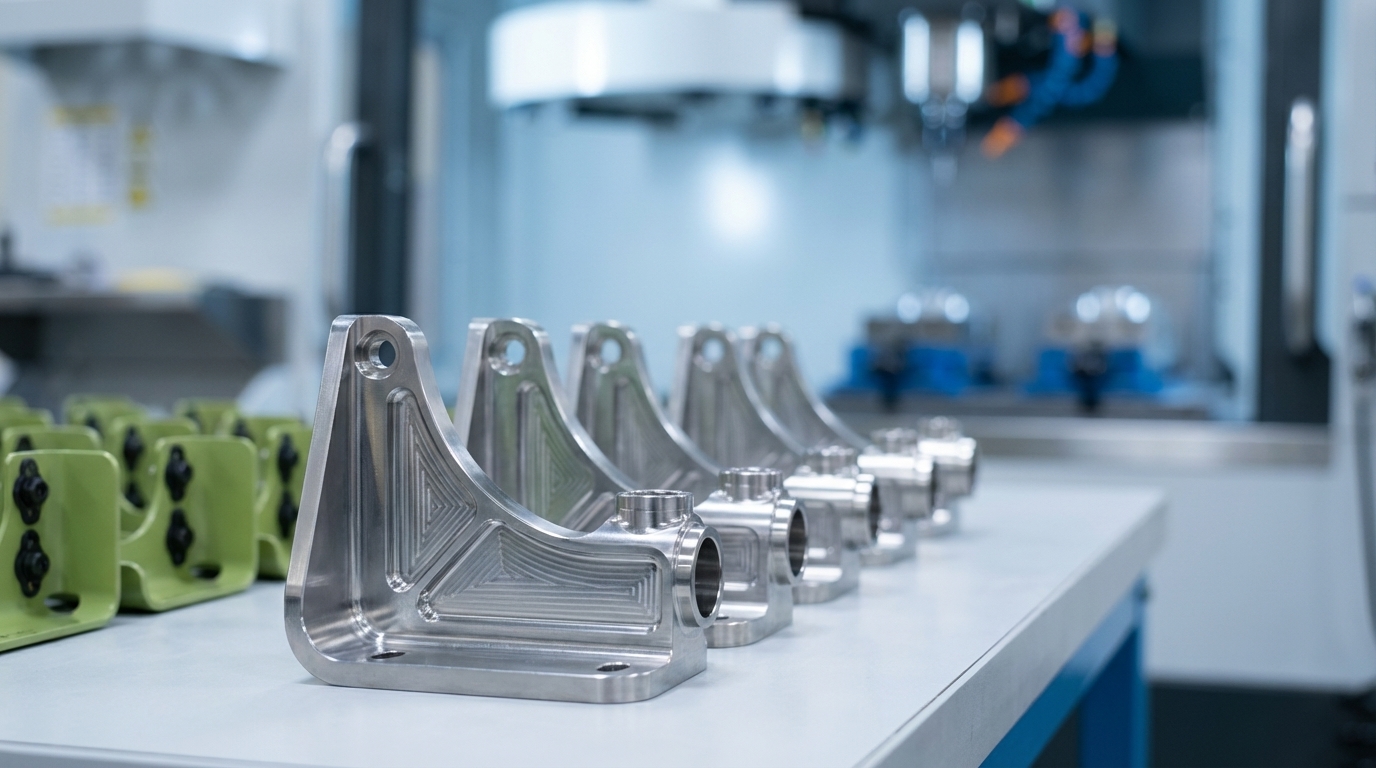
Structures demand tight-tolerance machining in aluminum, titanium and composite materials. Structural components span bus panels, payload adapters, brackets and housings. All structural hardware requires full material traceability and dimensional documentation.
Launch Vehicle Structures, Propulsion and Fairing Suppliers
Launch vehicle supply chains concentrate around structures, propulsion, fairings and payload adapters. The US Space Vehicle and Missile Manufacturing industry reached a market size of $61.3 billion in 2026, with Lockheed Martin, Raytheon Technologies and SpaceX holding the largest market shares.
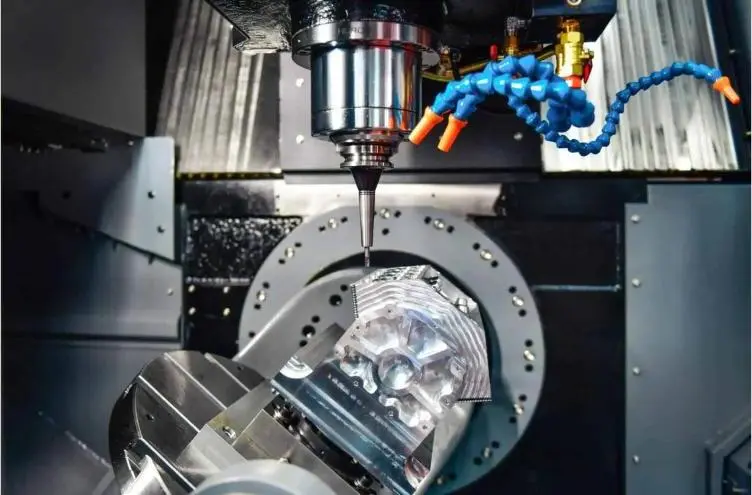
Structural components for launch vehicles, including interstages, thrust structures and adapter rings, require multi-axis machining, precision welding and secondary finishing to meet flight loads. Fairing and nose cone suppliers include specialists such as AADX, which supplies payload fairings and nose cones for orbital launch vehicles including SpaceX’s Falcon 9.
Propulsion hardware for launch vehicles spans liquid engines, solid motors and upper-stage systems. Northrop Grumman integrates solid, liquid and electric propulsion as a vertically integrated supplier. L3Harris Technologies acquired Aerojet Rocketdyne to consolidate propulsion supply chains and position itself as a pure-play supplier across satellite and launch vehicle programs.
Certification and Compliance Requirements for Space Suppliers
Certification status serves as the first filter in any aerospace supplier evaluation. Three registrations carry the most weight for US spacecraft and launch vehicle component sourcing.
ITAR registration is mandatory for any US manufacturer that produces or handles components falling under USML Category IV (launch vehicles) or Category XV (spacecraft). Under 22 C.F.R. § 122.1, any US person who manufactures defense articles listed on the USML must register with the DDTC before beginning manufacturing. Registration is not optional. ITAR violations carry civil penalties up to $1.3 million per violation and criminal penalties including fines and imprisonment. Procurement teams confirm that suppliers hold active DDTC registration and maintain documented technology control procedures.
AS9100D certification is the baseline quality management standard for aerospace manufacturing. Most OEM aerospace customers require AS9100 Rev D certification as a baseline qualification criterion. The standard covers risk management, configuration management, first article inspection and operational safety. Suppliers without AS9100D certification introduce audit burden and compliance risk into the program.
ISO 9001:2015 underpins AS9100D and provides the foundational quality management framework. Suppliers holding both AS9100D and ISO 9001 demonstrate a layered quality system aligned to aerospace and commercial requirements.
Additional considerations include Nadcap accreditation for special processes such as anodizing, heat treatment and chemical film. Using a non-Nadcap facility for special processes leads to part rejection at receiving inspection. These certification requirements form the foundation of supplier qualification and set the floor for further evaluation.
How Procurement Teams Evaluate US Spacecraft Component Suppliers
Aerospace procurement teams typically weight supplier evaluation across technical compliance, quality maturity, delivery reliability, capacity robustness, financial stability and total lifecycle cost, with unit price rarely dominant. These certification requirements create the baseline, and procurement teams then assess additional dimensions beyond compliance.
- Certification verification: Confirm active ITAR registration, AS9100D and ISO 9001 certificates before issuing an RFQ. These credentials establish legal and quality system compliance.
- Process capability evidence: After confirming certifications, request recent Cpk studies on representative features. A Cpk of 1.67 or higher on critical features indicates a stable, well-centered process.
- Traceability documentation: Once capability is confirmed, require full material certifications, in-process inspection records and first article inspection reports per AS9102 to maintain end-to-end traceability.
- Scalability assessment: Evaluate whether the supplier can transition from prototype to full-rate production without a supplier change or quality gap. This continuity protects schedule and configuration control.
- Integration depth: Favor suppliers that consolidate machining, fabrication, welding, finishing and kitting under one roof, which reduces handoffs and program risk.
Precision Advanced Manufacturing addresses each of these criteria. Operating under the AS9100D baseline discussed earlier, along with ISO 9001:2015 and ITAR-registered quality systems, the company delivers tight-tolerance components with full traceability across materials and processes. Multi-axis CNC machining, precision sheet metal fabrication, specialty welding, secondary finishing and kitting capabilities are consolidated at facilities in California and Texas, which reduces supplier fragmentation and program delays.
New and Expanding US Space Suppliers in 2025–2026
Several new entrants have entered or expanded within the US spacecraft component supply chain since 2025.
York Space Systems acquired Orbion Space Technology in March 2026, adding a Michigan-based manufacturer of flight-proven Hall-effect electric thrusters and Aurora integrated propulsion systems for constellation-scale missions. York also agreed to acquire solar technology company Solestial and communications provider ALL.SPACE to further build out its domestic supply chain.
Rocket Lab introduced the Gauss electric satellite thruster in Q1 2026 and completed the acquisition of Mynaric AG for laser optical communications terminals. Rocket Lab also entered an agreement to acquire Motiv Space Systems for solar array drive assemblies and precision mechanisms.
Applied Aerospace and Defense (AADX) was established in December 2025 through a private-equity-backed consolidation of PCX Aerosystems and Applied Aerospace, creating a vertically integrated supplier of satellite bus structures, solar arrays, propellant tanks, payload adapters and fairings.
In July 2026, the US Space Force added Impulse Space and Relativity Federal to its National Security Space Launch Phase 3 Lane 1 provider pool, bringing the total number of qualified launch providers to seven. Impulse Space is developing the Helios kick stage for high-energy orbit delivery, while Relativity Federal is developing the reusable Terran R rocket.
The Role of Precision Machining in Space Hardware Reliability
Spacecraft and launch vehicle components operate in environments where tolerance errors, material failures and documentation gaps translate directly into mission loss. Precision machining functions as a risk-management tool in this context, not a commodity service.
US aerospace products and parts manufacturing output grew 30% over the five years ending in 2025, driven primarily by higher utilization of existing facilities rather than new capacity additions. With supply chain strain affecting lead times across the industry, programs that depend on fragmented supplier networks face compounding risk.
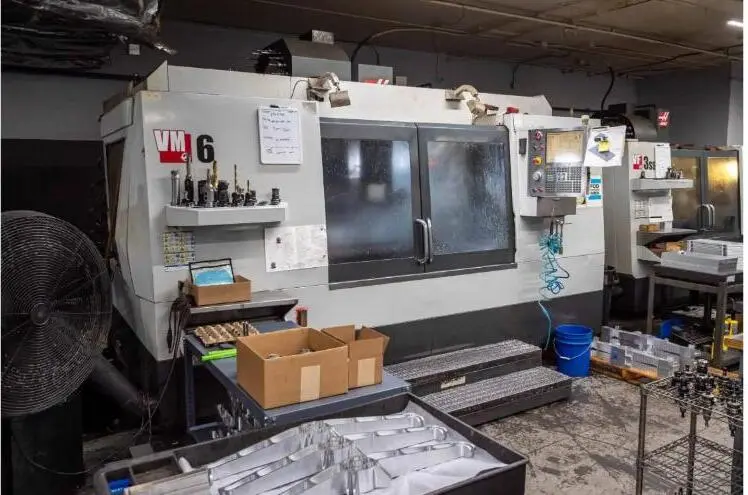
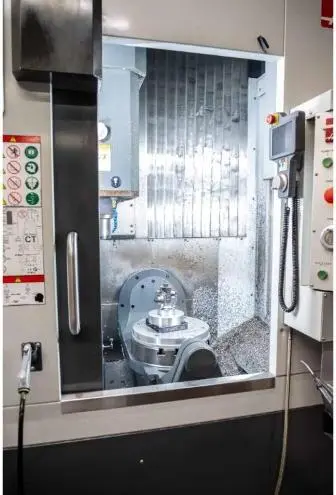
Precision Advanced Manufacturing consolidates the capabilities that space programs require under one roof. Multi-axis CNC milling and turning produce complex, high-tolerance components with repeatable accuracy across production runs. Precision sheet metal fabrication, TIG and MIG welding with thermal distortion control, secondary finishing including anodizing and passivation, hardware installation and kitting all operate within the same certified quality system. This integration reduces vendor handoffs that introduce schedule risk and traceability gaps.

The company supports programs from prototype through full-rate production without a supplier change. This structure provides the scalability that program managers require when transitioning from development to sustained manufacturing.
Sourcing Checklist for Mission-Critical Space Programs
Procurement and supplier quality teams verify the following points before awarding a contract for spacecraft or launch vehicle components:
- Active ITAR registration with the DDTC and documented technology control procedures
- AS9100D certification covering the specific processes required by the program
- ISO 9001:2015 registration as a foundational quality management baseline
- Full material traceability from raw stock through finished component
- First article inspection capability per AS9102 with complete dimensional and material documentation
- Demonstrated process capability on representative features, not stated capability alone
- Integrated finishing and special process access within a Nadcap-aligned supply chain
- Scalable production capacity from prototype to multi-shift full-rate manufacturing
- Engineering support for manufacturability, tolerance refinement and design-for-production
- Kitting and ready-to-integrate component delivery that reduces assembly burden
Frequently Asked Questions
What certifications should a US spacecraft component supplier hold?
The baseline certifications for spacecraft and launch vehicle component suppliers are ITAR registration with the US Department of State’s Directorate of Defense Trade Controls, AS9100D certification covering aerospace quality management and ISO 9001:2015 registration. Programs involving special processes such as anodizing, heat treatment or chemical film also require suppliers to work within a Nadcap-aligned supply chain. Procurement teams verify that certifications are current and that the supplier’s quality system covers the specific processes required by the program, not just the facility in general.
What is the difference between ITAR registration and AS9100D certification?
ITAR registration is a legal requirement administered by the US Department of State. Any manufacturer that produces or handles components listed on the US Munitions List, including spacecraft, launch vehicle components and related technical data, registers annually with the DDTC. ITAR registration does not confer export rights; it serves as a precondition for obtaining licenses and approvals. AS9100D is a quality management system standard developed by the International Aerospace Quality Group. It establishes requirements for risk management, configuration management, first article inspection and process control in aerospace manufacturing. Both requirements apply to mission-critical space programs, but they address different aspects of compliance.
How does single-facility sourcing reduce program risk for satellite and launch vehicle components?
Multi-vendor supply chains introduce handoff points where traceability gaps, scheduling mismatches and quality escapes occur. When machining, fabrication, welding, finishing and kitting take place at separate facilities, each transition adds lead time, documentation burden and risk of non-conformance. A single-facility supplier operating under one certified quality system maintains continuous traceability from raw material through finished component, delivers ready-to-integrate hardware and reduces the coordination overhead that drives program delays. For mission-critical programs where schedule and compliance remain fixed, consolidating to an integrated supplier functions as a direct risk-reduction strategy.
Can a precision machining supplier support both prototype and full-rate production for space programs?
A precision machining supplier can support both prototype and full-rate production when it has established processes, multi-shift capacity and a quality system that scales without degradation. The critical requirement is that the same quality standards validated during prototyping carry forward into production. Suppliers that require process requalification when transitioning from prototype to production introduce schedule risk and additional cost. Precision Advanced Manufacturing is structured to support the full product lifecycle, from initial prototype development through sustained, multi-shift manufacturing, under the same AS9100D and ITAR-compliant quality system.
What materials and processes are relevant for spacecraft structural components?
Spacecraft structural components commonly require aluminum alloys, titanium, stainless steel and exotic alloys that meet demanding stiffness-to-weight and thermal performance requirements. Manufacturing processes include multi-axis CNC milling and turning for complex geometries, precision welding with thermal distortion control for lightweight assemblies and secondary finishing treatments such as anodizing and passivation that improve durability and corrosion resistance in the space environment. Full material traceability, dimensional inspection per GD&T requirements and first article inspection documentation are standard requirements for structural hardware on satellite and launch vehicle programs.
Next Steps for Engaging a Certified US Space Manufacturing Partner
The US spacecraft and launch vehicle component supply chain continues to grow, yet supply chain strain remains significant. Space-grade power distribution components can face extended lead times at some suppliers, and programs that depend on fragmented or under-certified vendors absorb that risk directly into schedules and budgets.
Precision Advanced Manufacturing provides an integrated alternative. ITAR-registered and certified to AS9100D and ISO 9001:2015, the company delivers tight-tolerance machined components with full traceability, engineering support and scalable production capacity across two US facilities. From satellite bus structures and propulsion housings to avionics brackets and payload adapters, mission-critical hardware is produced under one certified quality system. Ready-to-integrate hardware is fully documented and built to aerospace standards.