Key Takeaways
-
US spacecraft connectors must withstand extreme conditions like radiation, thermal cycling from -55°C to +125°C, 100G shock, and vibration per MIL-STD-810 standards.
-
Top manufacturers including Precision Advanced Manufacturing, Glenair, Amphenol Aerospace, TE Connectivity, ITT Cannon, and others offer ITAR-compliant, space-grade solutions meeting MIL-DTL-38999 and NASA EEE-INST-002.
-
Key selection criteria include AS9100D certification, radiation and vibration resistance, scalability from prototype to production, and integrated manufacturing that reduces supply chain risks.
-
Precision Advanced Manufacturing provides one-roof capabilities such as CNC machining, welding, fabrication, and finishing for custom, traceable space-rated connectors and harnesses.
-
For reliable custom space-grade manufacturing, get a custom quote for your 2026 space-grade connector project and align production with mission schedules.
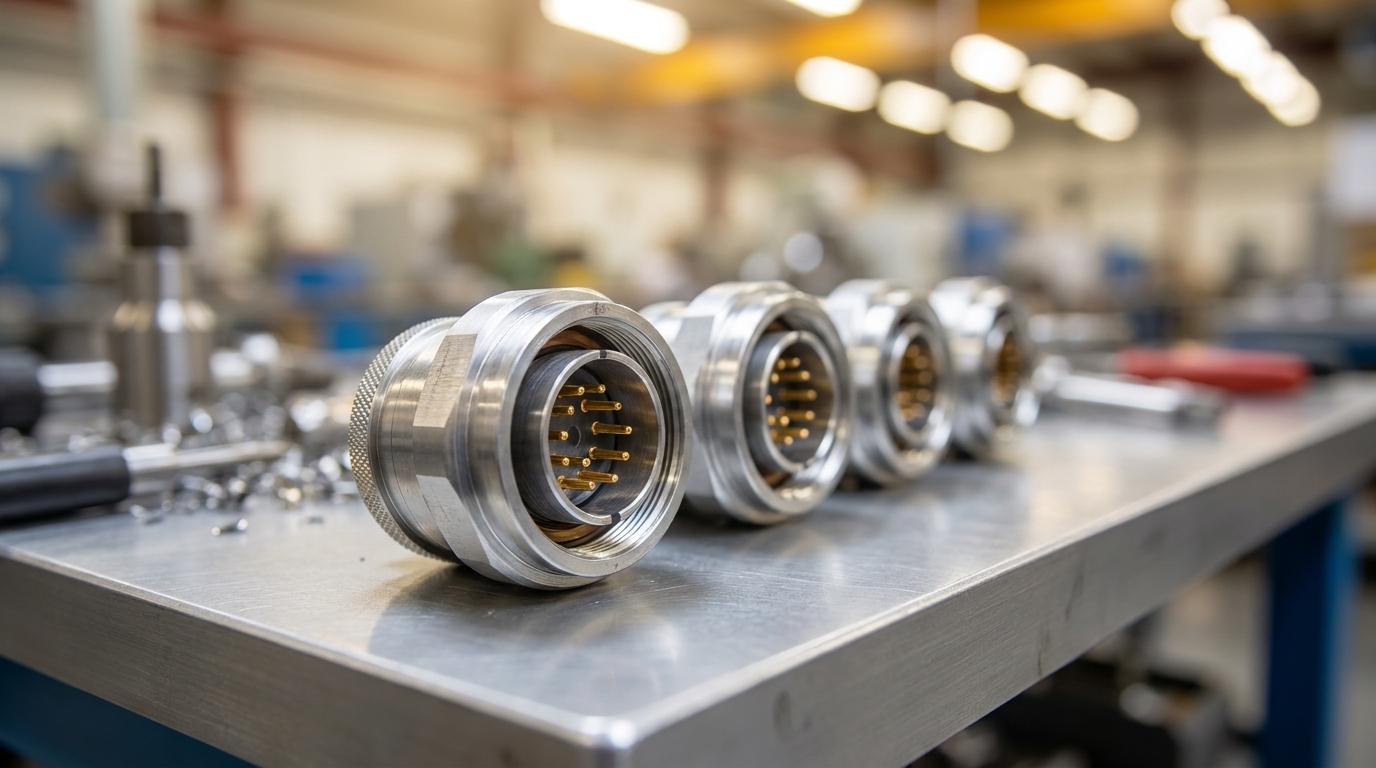
Spacecraft connectors and harnesses keep avionics, power, and communications systems linked in some of the harshest environments possible. These components must survive radiation, extreme temperature swings, and intense vibration without losing signal integrity or mechanical stability. This guide explains what to look for in space-rated connectors, highlights leading US manufacturers, and shows how Precision Advanced Manufacturing supports 2026 mission timelines with integrated production.
Top US Spacecraft Connector Manufacturers for Space-Rated Harnesses and Avionics
1. Precision Advanced Manufacturing
Precision Advanced Manufacturing leads with integrated multi-axis CNC machining, precision sheet metal fabrication, specialty welding with thermal distortion control, kitting, hardware installation, and secondary finishing including anodizing and passivation. These capabilities operate under AS9100D, ITAR, and ISO 9001 certifications, which support complete traceability for every space-rated connector and harness.
This one-roof approach removes typical multi-vendor handoffs and scales smoothly from prototype validation to multi-shift production. The team focuses on tight-tolerance manufacturing for space and UAV environments and pairs custom builds with engineering support and design for manufacturability guidance. Get a custom quote for your space-grade connector project.
2. Glenair, Inc.
Known for MIL-DTL-38999 space-grade circular connectors and micro-D series per MIL-DTL-83513, Glenair maintains strong ITAR focus with proven vibration and radiation resistance for satellite applications. The company sustains strength in quick-disconnect circular connectors and publishes detailed space-grade application guidelines for design teams.
3. Amphenol Aerospace
Amphenol provides MIL-SPEC avionics connectors, including MIL-DTL-38999 series, with custom harness capabilities that support space mission reliability. Amphenol Corporation announced plans to acquire Trexon for approximately $1 billion in August 2025, which expands its high-reliability interconnect capabilities for defense and space markets.
4. TE Connectivity
TE Connectivity offers space-grade wire harnesses and RF interconnects with AS9100 and ITAR compliance. The company provides automated assembly capabilities that support scalable production and showcased automated manufacturing for cable harnesses at Productronica 2025, demonstrating data-driven assembly for next-generation connector systems.
5. ITT Cannon
ITT Cannon specializes in rugged MIL-DTL-38999 series connectors with low-outgassing materials per NASA ASTM E595 standards for avionics integration. The company holds a strong position in military and aerospace markets with a track record of space-grade reliability.
6. Spacecraft Components Corporation
Spacecraft Components focuses on space-specific connectors with US manufacturing and ITAR compliance. The company offers dedicated harness solutions for orbital and deep-space applications with emphasis on mission-critical reliability and consistent performance.
7. Winchester Interconnect
Winchester Interconnect provides high-reliability interconnect solutions certified for ITAR, DFARS, AS9100:2016, and MIL-DTL specifications, featuring hermetically sealed and miniaturized form factors tuned for size, weight, and power constraints in space-based systems.
Knowing the strengths of these manufacturers gives engineering and sourcing teams a solid starting point. The next step is matching supplier capabilities to specific mission requirements, schedules, and integration constraints.
How to Choose US Suppliers for Space-Rated Connectors and Harnesses
Supplier selection starts with verifying AS9100D, ITAR, and relevant MIL-SPEC certifications along with NASA EEE-INST-002 screening levels for mission-critical applications. Teams should also confirm radiation and vibration performance, decide between custom and commercial-off-the-shelf options, and review scalability from prototype to full production. Complete traceability documentation across materials, processes, and inspections further reduces risk for long-duration missions.
Integration capabilities play a central role in reducing program risk, since suppliers that handle finishing, kitting, and assembly under one roof remove extra handoffs. As discussed earlier, Precision Advanced Manufacturing exemplifies this model with comprehensive manufacturing and engineering support.
To gain the most value from integrated suppliers, teams should collaborate early, validate repeatability through prototype builds, and define clear quality checkpoints across the manufacturing process. Discuss your connector requirements with our engineering team and align design decisions with manufacturability.
Reducing Sourcing Risks for Avionics Harnesses
Avionics programs often face sourcing pitfalls such as supply chain delays, non-compliance with ITAR or space-grade standards, and difficulty scaling from prototype to production. These issues create schedule slips and cost overruns for missions that already operate on tight timelines.
Precision Advanced Manufacturing addresses these risks through certified processes, controlled prototype-to-production transitions, and experience with tight-tolerance manufacturing. The integrated model supports on-time delivery while maintaining the quality levels required for extreme space environments and reduces program risk through thorough documentation and traceability systems.
FAQ
What are MIL-SPEC connectors for avionics?
MIL-SPEC connectors follow military specifications such as MIL-DTL-38999 for rugged performance under vibration, shock, and extreme temperatures. These connectors provide reliable signal and power transmission in harsh aerospace environments and support long-term mission durability.
What are ITAR requirements for space harnesses?
ITAR regulations restrict access to defense-related items and technical data to US persons only, which requires registered suppliers for spacecraft components. All manufacturing, assembly, and technical support must occur within ITAR-compliant facilities that control data access and physical security.
Custom vs. standard space-rated connectors: which is better?
Custom connectors work best when applications require specific tolerances, unique form factors, or tight integration with existing systems. Standard connectors fit common use cases but may not meet aggressive weight, space, or performance targets. Precision Advanced Manufacturing supports custom solutions when programs need exact fit, function, and documentation.
Which suppliers are best for 2026 Artemis programs?
Artemis programs need scalable US suppliers with proven space-grade capabilities, ITAR compliance, and the capacity to support rapid program growth. Suppliers such as Precision Advanced Manufacturing provide integrated manufacturing and engineering support that align with these demanding timelines and specifications.
What are low-outgassing standards for space connectors?
Low-outgassing standards require materials with low Total Mass Loss (TML) and Collected Volatile Condensable Materials (CVCM) per NASA ASTM E595 to prevent contamination in vacuum environments. These requirements help protect optics, sensors, and other sensitive spacecraft systems from film buildup and performance drift.
Conclusion
Precision Advanced Manufacturing leads US space-rated connector and harness production with integrated capabilities, certified quality systems, and scalable support for mission-critical applications. Start your 2026 mission planning with a tailored quote from Precision Advanced Manufacturing’s space-grade manufacturing experts and coordinate reliable production under one roof.