Last updated: August 19, 2026
Key Takeaways for 2026 Smallsat Bus Procurement
- A small satellite bus integrates power, propulsion, attitude control, communications and thermal subsystems. Procurement teams evaluate mass-class fit, production capacity, ITAR status and supply-chain reliability.
- Leading US manufacturers such as York Space Systems, Rocket Lab, Apex Space, Boeing/Millennium, L3Harris, Northrop Grumman, Lockheed Martin and Blue Canyon Technologies are scaling production for 2026 SDA and commercial constellations.
- Defense programs require ITAR registration, Technology Control Plans, full material traceability and documented process travelers to satisfy USML Category XV and national security sourcing rules.
- Consolidating precision machining, sheet-metal fabrication, welding and finishing under a single AS9100D and ITAR-registered supplier reduces handoff risk and preserves traceability from prototype through full-rate production.
- Precision Advanced Manufacturing supplies scalable, traceable precision components for space and defense programs; request a quote to review mission requirements.
Leading US Smallsat Bus Manufacturers in 2026
The United States hosts a broad mix of satellite bus classes, from ESPA-class smallsats to large GEO platforms, anchored by established primes and a growing cluster of dedicated smallsat manufacturers. The manufacturers below represent primary options for commercial and defense procurement in 2026.
York Space Systems completed a second batch of 21 satellites for the SDA Tranche 1 Transport Layer in 2026 and will have delivered more than 40 satellites for that program following the upcoming launch. York completed a $629 million IPO in January 2026 and acquired propulsion supplier Orbion Space Technology in March 2026 to deepen vertical integration for SDA constellations.
Rocket Lab received an $816 million SDA contract for 18 Tranche 3 Tracking Layer satellites, marking a significant step into prime contractor status for national security space. In May 2026, Rocket Lab was also awarded a $90 million US Space Force contract to build two GEO satellites on its Lightning bus for the Heimdall space domain awareness payload. The Lightning bus now supports multiple national security and commercial programs.
Apex Space operates Factory One in Los Angeles, capable of producing over 200 satellites per year at peak production as of June 2026. Apex is expanding its Los Angeles manufacturing campus by 30,000 square feet and Apex Group has grown its workforce to over 13,000 employees. The company serves as a collaborator with Northrop Grumman for scalable space-based interceptor capabilities under the Golden Dome for America initiative.
Boeing and Millennium Space Systems are targeting 26 satellite deliveries in 2026, scaling production of the Resolute mid-class platform from a new El Segundo production line. The Resolute platform supports multi-orbit missions that require more capability than a traditional smallsat.
L3Harris reached full-rate production for SDA satellites at its Palm Bay facility by late 2025. In July 2026, L3Harris received a $955 million SDA award for 18 Accelerated Missile Defense Tranche 3 satellites. L3Harris selected Lanteris Space Systems, now owned by Intuitive Machines, as its spacecraft bus provider for Tranche 3.
Northrop Grumman received a $764 million SDA Tranche 3 Tracking Layer contract and collaborates with Apex on Golden Dome interceptor capabilities. Lockheed Martin received a $1.1 billion SDA Tranche 3 award and agreed to acquire Terran Orbital on August 15, 2024, in a $450 million deal expected to close in the fourth quarter to secure in-house smallsat production capability.
Blue Canyon Technologies has launched 92 spacecraft and manufactures buses, star trackers, reaction wheels and avionics. The company is the subject of a pending $620 million acquisition by MDA Space, a Canadian company. That transaction is subject to CFIUS review, which affects perceived US ownership status for defense procurement screening.

Defense Sourcing Requirements for Smallsat Bus Components
Defense programs operating under PWSA and similar architectures impose sourcing requirements that extend beyond standard commercial procurement. Spacecraft systems and associated equipment fall under USML Category XV, which makes many bus components and related technical data ITAR-controlled defense articles. Any manufacturer that produces or exports these items must register with the Directorate of Defense Trade Controls.
ITAR compliance relies on Technology Control Plans that restrict access to US persons, segregated storage and documented personnel lists. Rocket Lab performs spacecraft assembly and integration at its Long Beach, California facility to maintain domestic manufacturing control. The pending MDA Space acquisition of Blue Canyon Technologies shows how foreign ownership of a US defense supplier triggers CFIUS review even when manufacturing remains on US soil.
Material traceability functions as a core requirement alongside ITAR controls. Every piece of raw material used in a space component must be traceable to heat, lot and a certified material test report, with traceability maintained from raw stock receipt through final shipment. Process documentation, including job travelers, CMM verification and first article inspection reports, is required for every operation on defense programs.

Bus primes and their subcontractors favor domestic, ITAR-registered suppliers that can scale from prototype to full-rate production without a supplier change. Mid-program supplier transitions introduce qualification risk, documentation gaps and schedule exposure that program managers work to avoid.
How US Precision Component Partners Reduce Program Risk
Consolidated US suppliers reduce program risk by limiting supply-chain fragmentation. When structural panels, brackets, welded assemblies and finished hardware move between multiple vendors, each handoff adds inspection burden, documentation gaps and schedule uncertainty.
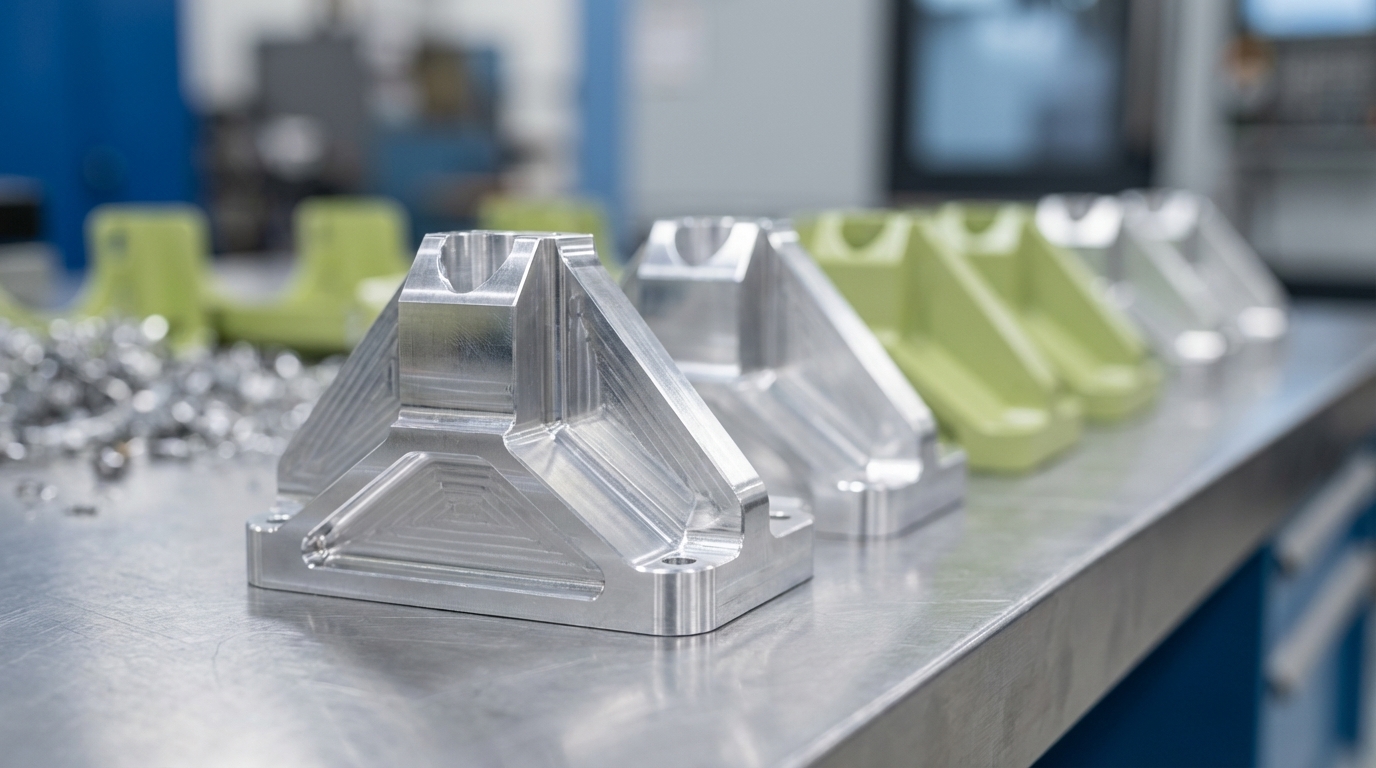
Precision Advanced Manufacturing addresses this risk by consolidating critical processes under one quality system. Operating from facilities in California and Texas, the company delivers multi-axis CNC machining, precision sheet-metal fabrication, specialty welding and secondary finishing under a single AS9100D and ITAR-registered framework. This integrated approach keeps components within a certified environment from raw material through machining, welding, finishing and inspection, maintaining the heat and lot traceability described earlier at every step.
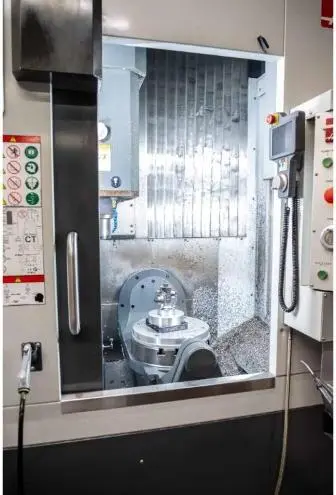
Space programs rely on several precision component categories that require full material traceability. These include structural panels, brackets and frames, propulsion hardware, thermal interface components and fastener-adjacent fittings. Materials such as titanium alloys, aluminum alloys, Inconel and high-strength stainless steels appear across these categories and require certified material test reports and heat and lot traceability.
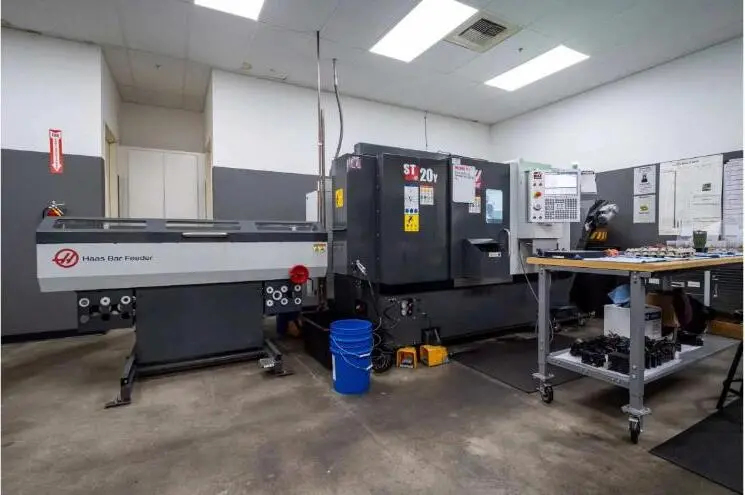
Precision Advanced Manufacturing’s scalable production platform supports prototype development and sustained, multi-shift manufacturing. Programs move from initial builds to full-rate production without a supplier change, which preserves the quality baseline established during qualification.

Request a quote to review precision component requirements for space and defense programs.
Checklist for Selecting a US Smallsat Bus Manufacturer and Component Partners
Procurement teams that evaluate bus manufacturers and their component supply chains against a structured checklist improve program outcomes. The criteria below highlight factors that most directly affect schedule, compliance and reliability.
- Mass-class fit: Confirm that bus platforms match the mission mass, volume and power envelope. Misalignment at this stage drives costly redesigns.
- Production-rate capacity: Verify that the manufacturer can sustain delivery rates required by the constellation schedule. Apex targets over 200 satellites per year at peak, while SDA Tranche 3 contractors run lines sized for 18 satellites over three years. Component suppliers must match these rates.
- Ownership and ITAR status: Confirm US ownership and active DDTC registration. Pending foreign acquisitions trigger CFIUS review and can affect program eligibility before a transaction closes.
- Supply-chain reliability: Assess the supplier track record for on-time delivery, first-article acceptance rates and mid-program performance. Consolidated suppliers with integrated capabilities reduce handoff risk.
- Certified quality systems: Require AS9100D certification, ITAR registration and ISO 9001 compliance as baseline. Verify that certifications cover the specific processes, such as machining, welding and finishing, being sourced.
- Material traceability: Confirm full heat and lot traceability from raw material receipt through final shipment, with certified material test reports and documented process travelers for every operation.
- Prototype-to-production continuity: Select suppliers that carry the same quality baseline from prototype qualification into full-rate manufacturing without a supplier change or requalification event.
- Documentation and inspection reporting: Require complete first article inspection reports, CMM verification records and material certifications as standard deliverables, not exceptions.
Precision Advanced Manufacturing aligns with each criterion on this checklist. The company’s integrated capabilities, including multi-axis CNC machining, sheet-metal fabrication, specialty welding, kitting and secondary finishing, operate under AS9100D and ITAR-registered quality systems with full traceability at every step.
Frequently Asked Questions
What production rates are US small satellite bus manufacturers targeting in 2026?
Production rates vary by manufacturer and program type. Apex Space’s Factory One facility, mentioned earlier, targets the high end of this range at peak capacity. Boeing and Millennium Space Systems are targeting 26 satellite deliveries across their portfolio in 2026. SDA Tranche 3 contractors are running production lines sized for 18 satellites over a three-year period. For component suppliers supporting these programs, the ability to scale from prototype quantities to sustained high-rate delivery without a supplier change or quality shift functions as a primary selection criterion.
Which manufacturers have secured SDA PWSA contracts in 2025–2026?
The Space Development Agency awarded approximately $3.5 billion in Tranche 3 Tracking Layer contracts in December 2025 to Lockheed Martin, L3Harris, Rocket Lab and Northrop Grumman, covering 72 satellites total. In July 2026, SDA awarded an additional $1.75 billion under the Accelerated Missile Defense Tranche 3 program to L3Harris and Sierra Space Corporation for 36 additional tracking satellites. York Space Systems, as noted earlier, has delivered more than 40 Tranche 1 Transport Layer satellites as of 2026. Rocket Lab also received a separate $90 million US Space Force contract in May 2026 for two GEO satellites hosting the Heimdall space domain awareness payload.
How do recent ownership changes affect ITAR and supply-chain traceability?
Ownership changes at US defense suppliers trigger regulatory scrutiny that can affect program eligibility and supply-chain continuity. The pending MDA Space acquisition of Blue Canyon Technologies is subject to CFIUS review because it involves foreign ownership of a US defense supplier, even though manufacturing facilities remain in Colorado. Lockheed Martin’s 2024 acquisition of Terran Orbital brought smallsat production in-house under an established prime’s compliance infrastructure. Intuitive Machines’ acquisition of Lanteris Space Systems created a vertically integrated prime with SDA Tracking Layer experience. For procurement teams, any pending or recent foreign acquisition of a component supplier warrants a review of that supplier ITAR registration status and Technology Control Plan before award.
What precision component categories require full material traceability for space programs?
Full material traceability, from raw stock heat and lot number through certified material test report to final shipment, applies across structural and functional component categories on space programs. These categories include structural panels, brackets, frames and fittings that form the bus structure. They also include propulsion hardware such as manifolds, valves and pressure components, along with thermal interface hardware, fasteners, high-strength structural fittings and avionics enclosures and mounting hardware. Process documentation requirements extend to job travelers, setup sheets, inspection points, CMM verification records and first article inspection reports for every operation. These requirements apply to commercial constellation programs operating under AS9100D and to defense programs with additional ITAR and DFARS material compliance obligations.
Conclusion: Secure Reliable US Precision Components for Next-Generation Missions
Selection of a US small satellite bus manufacturer requires evaluation of mass-class fit, production-rate capacity, ownership and ITAR status and supply-chain reliability. The 2026 procurement landscape features accelerating SDA awards, rapid production scaling among commercial constellation builders and heightened scrutiny of foreign ownership at domestic defense suppliers.
Component suppliers operate under the same scrutiny. Programs that consolidate precision machining, fabrication, welding and finishing under one AS9100D and ITAR-registered roof reduce handoff risk, preserve traceability and protect the quality baseline from prototype through full-rate production.
Precision Advanced Manufacturing delivers certified, scalable, traceable components for mission-critical space and defense programs from facilities in California and Texas. Every component is produced under documented quality systems with full material traceability and inspection reporting as standard deliverables.
Request a quote to start a conversation about precision components for the next mission.