
Last updated: August 24, 2026
Key Takeaways
- Satellite payloads drive 2026 demand from SDA Tranche 2 and Tranche 3 constellations, Next-Gen OPIR missile-warning programs and commercial LEO broadband deployments.
- EO/IR, RF/SATCOM, missile-warning and optical-communications primes such as Rocket Lab, GA-EMS, Lockheed Martin, Viasat, L3Harris and BAE Systems lead major 2026 contract awards.
- Precision component suppliers must hold AS9100D, ISO 9001:2015 and ITAR registrations to meet traceability, configuration management and production scalability requirements.
- Buyer sourcing checklists focus on certifications, material traceability, AS9102 First Article Inspection, formal nonconformance processes and proven scalability before contract award.
- Precision Advanced Manufacturing delivers ITAR-registered, AS9100D-certified precision machining and fabrication services that support prototype-to-full-rate satellite payload component manufacturing, with engagement available through a formal quote process.
1. EO/IR Payload Primes Supporting SDA and Next-Gen OPIR
Electro-optical and infrared payloads capture imagery and detect heat signatures for intelligence, surveillance, reconnaissance and missile tracking missions that underpin SDA Tranche 2 and Tranche 3 constellations and Next-Gen OPIR activity.

- Rocket Lab (Rocket Lab Optical Systems): Rocket Lab received a $90 million Space Force contract in May 2026 to build two GEO satellites hosting its Heimdall space domain awareness optical payload. Rocket Lab Optical Systems, formed after the 2025 GEOST acquisition and the February 2026 acquisition of Optical Support, Inc., now integrates advanced lenses and optomechanical systems for national security missions. The Lightning spacecraft bus supports SDA Tranche 2 and Tranche 3 programs.
- General Atomics Electromagnetic Systems (GA-EMS): GA-EMS received a contract in April 2026 from Lockheed Martin to deliver missile warning, tracking and defense infrared payloads for the SDA Tracking Layer Tranche 3 constellation. Its compact EO/IR sensors incorporate on-orbit mission data processing and support rapid production with high reliability.
- Lockheed Martin: Lockheed Martin serves as a prime contractor for SDA Tracking Layer Tranche 3 and was among the five companies selected in August 2026 Space Force SBST awards for next-generation satellite network demonstrations.
- Millennium Space Systems (Boeing): Millennium Space Systems is contracted to build 12 vehicles for Epoch 1 of the Resilient Missile Warning and Missile Tracking – MEO program, with a production line targeting 26 satellite deliveries in 2026.
2. RF/SATCOM Payload Primes Forming the Space Communications Backbone
RF and SATCOM payloads form the communications backbone that links satellites, ground stations and tactical users across defense and commercial networks. RF and SATCOM payload primes develop communications transponders, anti-jam waveform systems and protected tactical communications hardware for commercial and defense customers.
- Viasat: Viasat secured a prime contract in June 2026 under the PTS-G program, sharing a combined $437.7 million Swarm-1 award with Intelsat. Viasat’s dual-band X/Ka-band payload is hosted on Rocket Lab’s Lightning-GEO bus, with initial operating capability expected in 2029.
- Intelsat: Intelsat received a parallel PTS-G Swarm-1 production contract alongside Viasat, covering manufacturing, integration and test, launch and on-orbit checkout of anti-jam GEO communications satellites.
- Northrop Grumman: Northrop Grumman was among the five companies selected for August 2026 SBST SDN Backbone prototype awards and holds IDIQ task orders under the PTS-G conceptual design phase.
- L3Harris Technologies: L3Harris supplies RF amplifiers, waveguide assemblies and modem electronics across military and commercial satellite communication payloads, with satellite and airborne electronics reported through its Space and Airborne Systems segment.
- Kratos Defense and Security Solutions: Kratos centers its space offerings on satellite communications ground infrastructure, space command-and-control software and microwave electronics, serving primarily U.S. defense and national security markets.
Program teams sourcing RF and SATCOM payload hardware often pair these primes with domestic precision machining partners that can hold tight RF interface tolerances and maintain consistent performance across production runs.
3. Missile-Warning Payload Primes for Golden Dome and SDA Constellations
Missile-warning payload primes develop infrared sensors, tracking systems and space domain awareness instruments that support the Golden Dome architecture and SDA proliferated constellations.
- L3Harris Technologies: L3Harris received a $955 million SDA contract in July 2026 to produce 18 Accelerated Missile Defense Tranche 3 satellites. The award builds on L3Harris’s on-orbit demonstration of its Hypersonic and Ballistic Tracking Space Sensor payload.
- Sierra Space: Sierra Space received up to $798 million from SDA in July 2026 to deliver 18 missile warning, tracking and defense satellites based on its Horizon spacecraft from the Eclipse Satellite Family. Both L3Harris and Sierra Space satellites are targeted for launch availability by end of 2028.
- BAE Systems: BAE Systems completed the preliminary design review for Resilient Missile Warning and Missile Tracking – MEO Epoch 2 in March 2026, advancing 10 satellites under a $1.2 billion Space Systems Command contract. BAE Systems is responsible for payloads, buses and ground command-and-control systems.
Primary Missile-Warning Payload Builders for SDA
L3Harris Technologies and Sierra Space serve as the two primary SDA prime contractors for missile-warning payloads under the July 2026 Accelerated Missile Defense Tranche 3 awards. GA-EMS supplies infrared sensor payloads to Lockheed Martin for the SDA Tracking Layer Tranche 3 constellation. BAE Systems leads the Resilient Missile Warning and Missile Tracking – MEO Epoch 2 program under Space Systems Command.
4. Optical Communications Payload Primes Enabling Laser Crosslinks
Optical communications payloads use laser crosslinks to move data between satellites and ground terminals at high throughput with low probability of intercept.
- Rocket Lab: Rocket Lab’s Lightning bus, in production for SDA Tranche 2 Transport Layer-Beta and Tranche 3 Tracking Layer, supports optical crosslink payloads as part of the Proliferated Warfighter Space Architecture.
- York Space Systems: York Space Systems was selected in August 2026 for SBST SDN Backbone prototype awards, covering ground-to-space and space-to-space data transport demonstrations including optical interconnectivity.
- Amazon LEO for Government: Amazon LEO for Government was among the five companies awarded August 2026 SBST contracts to demonstrate open-architecture Space Data Network communications across disparate orbital constellations.
These optical communications primes depend on precise structural mounts, thermal management hardware and alignment-critical brackets produced by specialized component suppliers.
5. Precision Component and Subsystem Suppliers in the Payload Ecosystem
Payload primes rely on a network of precision component suppliers that deliver structural brackets, housings and machined interfaces that integrate sensors, transponders and optical systems into flight-ready assemblies. Precision Advanced Manufacturing is a U.S.-based precision machining and fabrication provider holding the certifications and registrations outlined above. The company serves satellite payload primes and their tier-one subcontractors from facilities in California and Texas, producing tight-tolerance metal components for space and satellite, military and defense, commercial aerospace and UAV programs.
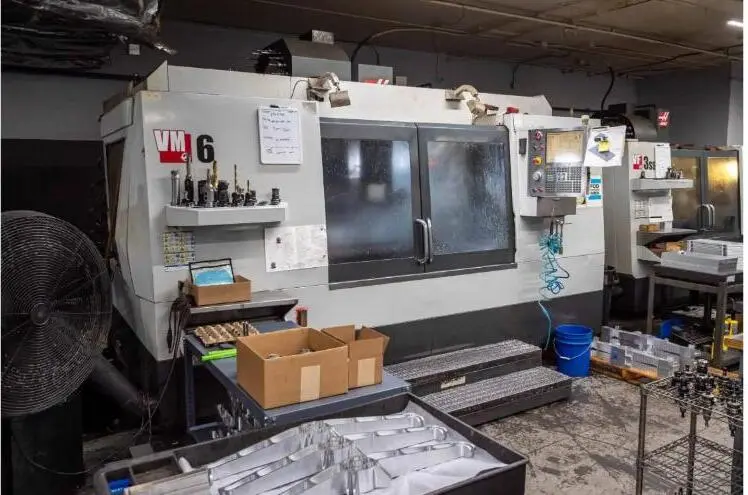
These programs demand a range of precision manufacturing processes that must be tightly coordinated to meet delivery schedules and quality requirements. Precision Advanced Manufacturing’s integrated capabilities under one roof include:

- Advanced multi-axis CNC milling and turning for complex, high-tolerance components
- Precision CNC sheet metal fabrication including stamping, forming, bending and laser cutting
- Specialty welding with thermal distortion control using TIG, MIG and laser welding methods
- Kitting and assembly consolidation that streamline integration timelines
- Secondary finishing including anodizing, passivation, plating, sandblasting and ultrasonic cleaning
- Hardware installation, laser marking, brush finishing and deburring
Every part ships with material traceability, inspection documentation and certifications aligned to AS9100D requirements. The production platform scales from prototype through multi-shift, full-rate manufacturing without supplier transitions, which matters when AIA and PwC report that many essential space components are supported by three or fewer qualified domestic suppliers.

Contact Precision Advanced Manufacturing to discuss satellite payload component sourcing and program-specific requirements.
Leading RF/SATCOM Payload Component Partners for Proliferated Constellations
For precision-machined structural and mechanical components supporting RF and SATCOM payload integration, sourcing managers prioritize ITAR-registered, AS9100D-certified suppliers with demonstrated scalability. RF and SATCOM component qualification can require significant time if a vendor changes mid-program, so supplier selection functions as a program-risk decision as well as a procurement decision.
ITAR and AS9100D Satellite Component Supplier Profile
Precision Advanced Manufacturing holds ITAR registration and AS9100D and ISO 9001:2015 certifications. Its quality system covers configuration management, risk control and product traceability from material certification through final inspection, reflecting the requirements AS9100D adds beyond ISO 9001 for mission-critical aerospace applications.

6. Buyer Sourcing Checklist for Satellite Payload Hardware
Selecting a component supplier requires more than matching capabilities to requirements. Procurement and supplier quality teams must verify that a vendor’s quality systems, traceability processes and scalability align with satellite payload program demands. Procurement and supplier quality teams should verify the following before awarding satellite payload component contracts:
- Certifications: Confirm AS9100D registration, ISO 9001:2015 certification and ITAR registration are current and cover the specific facility and processes involved.
- Traceability: Require material lot traceability, in-process inspection records and final acceptance documentation for every deliverable.
- First Article Inspection: Require AS9102 First Article Inspection on new part numbers and after engineering changes to confirm configuration compliance before production release.
- Nonconformance process: Confirm the supplier routes out-of-tolerance parts through a formal nonconformance report and Material Review Board process. Silent rework is prohibited to maintain auditability in satellite payload programs.
- Scalability: Verify the supplier can sustain production rate increases without quality degradation. A facility that produces one engineering unit may not sustain multiple flight units per month without process automation and inventory planning.
- Mid-program transition support: Confirm the supplier provides documentation packages, pilot build options and engineering support that enable integration into existing supply chains.
- Special process controls: Verify contamination, ESD and FOD controls are enforced daily and that material storage-life controls are documented for space-grade materials.
Frequently Asked Questions
What does AS9100D certification mean for satellite payload component sourcing?
AS9100D is the aerospace-specific extension of ISO 9001, adding requirements for configuration management, risk-based process control and full product traceability that ISO 9001 alone does not mandate. For satellite payload programs, this means every manufacturing step is defined, documented and monitored, which ensures that material certifications, inspection records and process approvals are maintained for every part through its production lifecycle. Sourcing from an AS9100D-certified supplier reduces audit burden and supports compliance with prime contractor flow-down requirements.
What is ITAR registration and why does it matter for satellite component suppliers?
ITAR, the International Traffic in Arms Regulations, governs the export and transfer of defense-related articles, services and technical data. Satellite payloads and many of their structural and mechanical components are controlled under the U.S. Munitions List. Suppliers working on defense satellite programs must be registered with the U.S. Department of State Directorate of Defense Trade Controls. Working with a non-registered supplier creates legal exposure for the prime contractor and can halt program deliveries. Precision Advanced Manufacturing maintains active ITAR registration covering its California and Texas facilities.
How does Precision Advanced Manufacturing support prototype-to-production transitions?
Precision Advanced Manufacturing operates a scalable production platform that supports the full product lifecycle from prototype development through sustained, multi-shift full-rate manufacturing. The same quality processes, documentation systems and certified personnel used during prototype builds carry forward into production. This continuity eliminates supplier qualification cycles and integration risks that arise when programs transition to a different manufacturer at production ramp. Engineering support, CNC programming and tooling development are available in-house from the outset to improve manufacturability before production begins.
What types of satellite payload components does Precision Advanced Manufacturing produce?
Precision Advanced Manufacturing produces complex, tight-tolerance metal components for space and satellite programs including structural brackets, housings, panels and precision-machined interfaces. Capabilities span multi-axis CNC milling and turning, precision sheet metal fabrication, specialty welding with thermal distortion control and integrated secondary finishing. The company works with aerospace alloys and materials suited for the thermal, vibration and radiation environments of orbital applications. Kitting services consolidate multiple components into organized assemblies that streamline payload integration.
What documentation does Precision Advanced Manufacturing provide with deliverables?
Every deliverable from Precision Advanced Manufacturing is accompanied by material traceability records, material certifications, in-process inspection data and final acceptance documentation aligned to AS9100D requirements. The quality system supports First Article Inspection per AS9102, nonconformance reporting with Material Review Board disposition and corrective action closure documentation. This documentation package supports prime contractor audits, government source inspection and program configuration control requirements without additional burden on the customer quality team.
Next Steps: Engage Precision Advanced Manufacturing
Satellite payload programs require precision component suppliers with certified quality systems, robust traceability and production scalability that support both early-phase prototype builds and full-rate constellation manufacturing. U.S. space supply chain capacity has not kept pace with demand growth, so early supplier engagement functions as a program-risk mitigation action. Precision Advanced Manufacturing’s ITAR registration, AS9100D certification, integrated multi-axis machining and fabrication capabilities and aerospace delivery record position it as a reliable component partner for satellite payload primes and their supply chains. Request a quote to begin a tailored engagement for satellite payload component requirements.