
Last updated: August 3, 2026
Key Takeaways for AS9100 Aerospace Sourcing
- US AS9100 aerospace manufacturers require verification through the IAQG OASIS database and prime contractor approved supplier lists. This confirms active certification, scope alignment, ITAR registration and Nadcap accreditation where needed.
- Verification criteria focus on active AS9100D certificates, scope alignment with program requirements, ITAR registration for defense programs, Nadcap accreditation for special processes and robust traceability systems.
- California, Texas, Washington, Connecticut and Arizona serve as key hubs for certified aerospace manufacturing, with Texas emerging as a high-growth market.
- Prime contractor approved supplier lists add program-specific qualification steps beyond AS9100D certification and require direct engagement with supplier quality organizations.
- Precision Advanced Manufacturing is an ITAR-registered, AS9100D and ISO 9001:2015 certified US manufacturer with facilities in California and Texas, serving commercial aerospace, defense, space and UAV programs from prototype through full-rate production. Connect with an aerospace manufacturing specialist to discuss program needs.
Accessing the IAQG OASIS Database for AS9100 Suppliers
The IAQG OASIS database serves as the primary public registry for AS9100D-certified organizations worldwide. Procurement and supplier quality teams use it to confirm active certification status before engaging a supplier. The steps below outline a standard search.
- Navigate to the OASIS portal at oasis.sae-international.org.
- Select “Organization Search” from the main menu.
- Filter by country (United States) and standard (AS9100D) to narrow results to US-based manufacturers.
- Enter a company name, city or state to refine the list further.
- Open the supplier record and review certificate details, including the issuing certification body, certificate number and expiration date.
- Confirm the certification scope matches the processes and products being sourced. Scope is documented on the certificate and must align with the supplier’s actual operations. A certified plant may cover manufacture and assembly but exclude design activities.
- Note the audit cycle status. Surveillance audits occur between recertification cycles and confirm the quality management system remains active.
OASIS records reflect the certification body’s most recent audit data. Cross-reference with the supplier to confirm no scope changes or suspensions have occurred since the last update.
Precision Advanced Manufacturing’s certifications cover precision machining, metal fabrication and integrated finishing for aerospace, defense, space and UAV programs. Speak with an aerospace manufacturing specialist about current certifications and capabilities.
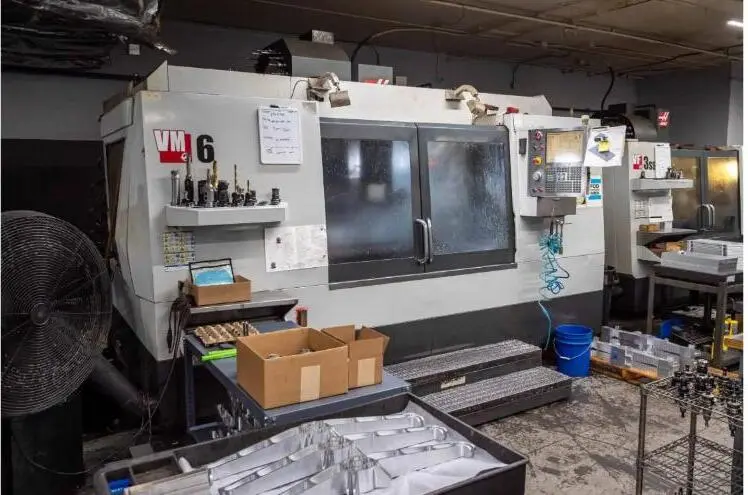
Verification Steps for AS9100 Certification
AS9100D certification establishes the baseline for aerospace quality management, but full supplier qualification extends beyond a single standard. Aerospace supplier qualification commonly combines AS9100 for quality management, Nadcap for special processes, AS9145 for production approval and AS9102 for first article inspection. Because certification alone does not prove a supplier can meet program-specific requirements, a structured verification checklist reduces the risk of approving a supplier whose credentials do not match program needs.

The following verification criteria apply to most commercial aerospace, defense, space and UAV sourcing decisions.
- Active AS9100D certificate: Confirm the certificate is current, issued by an accredited certification body and not under suspension. Check OASIS for the latest audit status.
- Scope alignment: The scope of certification must cover the specific processes, products and sites relevant to the program, such as machining, fabrication, assembly or inspection.
- ITAR registration: For defense, space and UAV programs, confirm registration with the US Directorate of Defense Trade Controls. ITAR governs articles on the US Munitions List and requires US-citizen or appropriately licensed personnel for handling and controls on technical data sharing.
- Nadcap accreditation: For suppliers performing special processes such as heat treatment, welding, nondestructive testing or coatings, Nadcap accreditation is required by aerospace customers in addition to AS9100. Confirm which commodity categories are covered.
- Traceability systems: Material traceability in regulated aerospace supply chains requires linking the finished component to the manufacturing batch, raw material batch, supplier certifications and inspection and test records.
- First article inspection: Confirm adherence to AS9102 FAI requirements to validate parts meet design specifications before full-scale production.
- Delivery and quality history: AS9100 requires risk-based supplier selection and monitoring that includes on-time delivery, quality performance and special approvals such as Nadcap and customer approvals where applicable.
Precision Advanced Manufacturing operates quality systems with full documentation, inspection reporting and material certifications built into every production step. Review certification documentation and scope details for specific programs with the team.

US AS9100 Supplier Hubs and Growth States
The geographic distribution of US AS9100-certified manufacturers reflects the concentration of aerospace and defense primes, tier-1 suppliers and defense installations. California, Texas, Washington, Connecticut and Arizona account for a significant share of certified aerospace manufacturing capacity, supported by proximity to major OEMs and long-standing industrial infrastructure.
Reshoring trends accelerate this distribution. A 2025 Roland Berger survey found that 90% of aerospace and defense respondents said domestic sourcing capacity is essential to success, while two-thirds of aerospace supply chain companies reported experiencing supply chain disruption. Geopolitical pressures reinforce this shift. Rare earth shortages centered on yttrium and scandium worsened for US aerospace supply chains in early 2026 despite an October 2025 trade truce with China, increasing demand for domestically capable, certified manufacturers.
Texas stands out as a particularly active growth market. Xometry’s 2026 platform data shows Texas-based manufacturers growing at nearly twice the rate of its national partner network, with buyers in aerospace, defense, energy and industrial sectors accelerating domestic sourcing. Jobs requiring credentials such as AS9100D, ISO 9001, ITAR and CMMC Level 2 generated about 3.4 times the annual job value of non-certified jobs in 2025.
Precision Advanced Manufacturing operates specialized facilities in both California and Texas, serving aerospace and defense programs across the western United States and the Gulf Coast corridor. Both locations run under the same AS9100D and ITAR-compliant quality systems, which supports consistent performance across program locations. Discuss regional sourcing requirements and facility capabilities with the team.
Prime Contractor Approved Supplier List Requirements
Major primes including Boeing, Airbus, Lockheed Martin, Raytheon and Northrop Grumman maintain approved supplier lists with their own additional qualification criteria, making AS9100D only the baseline for suppliers serving commercial aerospace, defense or space programs. Geographic proximity to major aerospace hubs matters, but location alone does not secure program access.
Access to a prime’s approved supplier list typically requires direct engagement with the prime’s supplier development or supplier quality organization. Most primes publish supplier quality manuals and purchase order quality clauses that define documentation, audit and performance requirements for approved status. AS9100 certification is most commonly treated as mandatory for flight-critical or safety-critical components, special process providers, design-responsible or build-to-spec suppliers and key or single-source suppliers on certified or defense programs.
Procurement teams sourcing from the IAQG OASIS database should cross-reference results against the relevant prime’s approved supplier list to confirm completion of program-specific qualification steps beyond AS9100D certification. These steps may include source inspections, first article approval, customer-specific quality plan reviews and Nadcap verification for applicable special processes.
Precision Advanced Manufacturing’s quality systems are structured to meet the documentation, traceability and process control requirements that prime contractors flow down through supplier quality manuals. Discuss program-specific qualification requirements with a manufacturing specialist.
ITAR-Registered AS9100 Manufacturers and Compliance Checks
ITAR registration is a legal requirement for US manufacturers that produce, export or broker defense articles or services listed on the US Munitions List. For aerospace procurement teams sourcing components for defense, space or UAV programs, confirming ITAR registration status forms a core step in supplier qualification.

ITAR and EAR export-control requirements sit alongside AS9100 and Nadcap, requiring US-citizen or appropriately licensed personnel for handling and controls on technical data sharing. A supplier that holds AS9100D certification but lacks ITAR registration cannot legally support defense or space programs involving controlled technical data or hardware.
Verification steps for ITAR registration include the following actions.
- Request a copy of the supplier’s registration certificate and confirm it is current.
- Confirm the registration covers the relevant commodity categories for the program.
- Review the supplier’s ITAR compliance program, including controls on technical data access, personnel screening and export licensing procedures.
- Confirm facility controls restrict access to ITAR-controlled information to authorized personnel.
Forty-seven percent of aerospace and defense respondents in a December 2025 survey cited regulatory and quality compliance as a primary supply-chain vulnerability, specifically naming standards such as AS9100, ITAR and CMMC. Selecting a supplier with established ITAR compliance systems reduces this risk at the program level.
Precision Advanced Manufacturing is ITAR registered and operates compliance systems designed for defense, space and UAV programs that involve controlled technical data and hardware. Confirm ITAR registration details and program-specific compliance requirements with the team.
Checklist to Build an Approved Supplier List
The following checklist integrates the verification steps in this guide into a repeatable process for qualifying US AS9100 aerospace manufacturers. Supplier quality engineers and strategic sourcing managers can apply this framework when building or updating an approved supplier list.
- Search IAQG OASIS: Filter by country, standard and state or region. Confirm the certificate is active and issued by an accredited certification body.
- Verify certification scope: Confirm the scope covers the specific processes, products and sites relevant to the program. Do not assume certification applies to all business units or activities.
- Confirm ITAR registration: Request the registration certificate and review the supplier’s compliance program for defense, space or UAV work.
- Check Nadcap accreditation: For special processes including heat treatment, welding, NDT or coatings, confirm Nadcap accreditation in the applicable commodity categories.
- Review traceability systems: Confirm material traceability from raw material through finished component, including certificates of conformity and inspection records.
- Assess FAI capability: Confirm adherence to AS9102 first article inspection requirements and the ability to provide complete FAI documentation.
- Cross-reference prime approved lists: For programs tied to a specific prime, confirm the supplier appears on the relevant approved supplier list or has completed prime-specific qualification steps.
- Evaluate delivery and quality performance: Request on-time delivery data and quality metrics. Confirm a corrective action process and documented performance history.
- Assess scalability: Confirm the supplier can support prototype through full-rate production without compromising quality or traceability.
- Engage for a tailored quote: Use the quote process to review capabilities, tolerances, materials, certifications and production strategy against program requirements.
Precision Advanced Manufacturing meets each criterion on this checklist and supports programs from prototype through multi-shift full-rate production. Begin the qualification process with a tailored quote discussion.
Conclusion: A Structured Path to Qualified AS9100 Suppliers
Sourcing from unverified or under-qualified suppliers increases compliance risk, delivery risk and program cost. The verification framework in this guide, including IAQG OASIS checks, scope confirmation, ITAR registration, Nadcap accreditation, traceability review and prime approved list cross-reference, gives procurement and supplier quality teams a structured path to qualified US AS9100 suppliers.
Precision Advanced Manufacturing delivers AS9100D-certified, ITAR-registered precision machining and fabrication from US facilities in California and Texas. The company supports commercial aerospace, defense, space, satellite and UAV programs with full documentation, material traceability and scalable production capacity. Connect with a manufacturing specialist to begin supplier qualification.
Frequently Asked Questions
What is the difference between AS9100D certification and ISO 9001:2015 for aerospace suppliers?
ISO 9001:2015 serves as the foundational quality management system standard across industries. AS9100D builds on ISO 9001 by adding aerospace-specific requirements for risk management, configuration control, production process validation, product safety and counterfeit part prevention. AS9100D adds nearly 40 mandatory requirements beyond ISO 9001. For flight-critical, safety-critical or defense-related components, prime contractors and government customers typically require AS9100D as a baseline condition for approved supplier status. ISO 9001 alone may be accepted for noncritical hardware or indirect materials in some cases, but it does not satisfy AS9100D requirements for regulated aerospace programs. Precision Advanced Manufacturing holds both AS9100D and ISO 9001:2015 registrations, covering quality requirements for commercial aerospace, defense, space and UAV programs.
Is ITAR registration required for all US aerospace manufacturing suppliers?
ITAR registration applies to US manufacturers that produce, export or broker defense articles or services listed on the US Munitions List. Not every aerospace supplier requires ITAR registration, because commercial aerospace components that do not appear on the Munitions List may fall under the Export Administration Regulations instead. For suppliers serving defense, space or UAV programs involving controlled hardware or technical data, ITAR registration becomes a legal requirement and a standard condition of prime contractor and government customer approval. Procurement teams should confirm ITAR registration status during supplier qualification and review the supplier’s compliance program, including controls on technical data access and personnel authorization. Precision Advanced Manufacturing is ITAR registered and maintains compliance systems designed for defense and space programs.
When is Nadcap accreditation required in addition to AS9100D certification?
Nadcap accreditation is required when a supplier performs special processes that carry elevated risk in aerospace applications. These processes include heat treatment, welding, nondestructive testing, chemical processing, coatings, fluids distribution and elastomer seals. Nadcap audits are conducted by the Performance Review Institute using detailed checklists that cover quality management, equipment, personnel, materials, processes, records and corrective actions, which makes them more technically specific than an AS9100D audit. Conventional machining alone typically does not require Nadcap accreditation. Procurement teams should identify which special processes apply to the program and confirm Nadcap accreditation in the relevant commodity categories during supplier qualification. When evaluating Nadcap status, confirm the specific commodity categories covered, because accreditation in one process area does not extend to others.
How can a sourcing team confirm that an AS9100D certificate is still active and has not been suspended?
The IAQG OASIS database functions as the primary source for confirming active AS9100D certification status. A search by company name or location returns the certificate record, including the issuing certification body, certificate number, expiration date and current audit status. Surveillance audits occur between recertification cycles and confirm the quality management system remains active. If a certificate has been suspended or withdrawn, the OASIS record reflects that status. Sourcing teams should also request a current copy of the certificate directly from the supplier and confirm the issuing certification body is accredited by a recognized accreditation body. Cross-referencing both sources reduces the risk of relying on outdated or inaccurate certification data during supplier qualification.
What should a sourcing team look for when evaluating a supplier’s ability to scale from prototype to full-rate production?
Scalability evaluation covers production capacity, quality system consistency and process control across volume levels. Key indicators include multi-shift production capability, consistent quality management and traceability controls at prototype and production volumes and documented experience transitioning programs from initial builds to sustained high-volume manufacturing. Sourcing teams should also assess whether the supplier can maintain on-time delivery performance as volume increases and whether engineering support is available to address manufacturability issues during the transition. A supplier that changes processes or quality controls between prototype and production introduces risk at the point of program ramp. Precision Advanced Manufacturing supports the full product lifecycle from prototype development through multi-shift, full-rate production under the same AS9100D and ITAR-compliant quality systems, which provides continuity across program phases.
