Last updated: July 30, 2026
Key Takeaways
- Procurement teams must verify AS9100D, ISO 9001:2015, ITAR and NADCAP status before qualifying any aerospace sheet metal fabricator to protect compliance and schedules.
- Technical capability evaluation should cover material expertise, tight-tolerance processes and integrated finishing that reduce handoffs and strengthen production control.
- Quality systems must provide full material traceability, AS9102 first article inspection and configuration management so customer teams avoid added verification work.
- Prototype-to-production scaling works best with documented pilot runs that validate fixtures, cycle times and inspection records before full-rate manufacturing.
- Precision Advanced Manufacturing operates certified, ITAR-registered facilities in California and Texas that support the complete aerospace program lifecycle; start the supplier qualification process here.
Core Definition of Aerospace Sheet Metal Fabrication
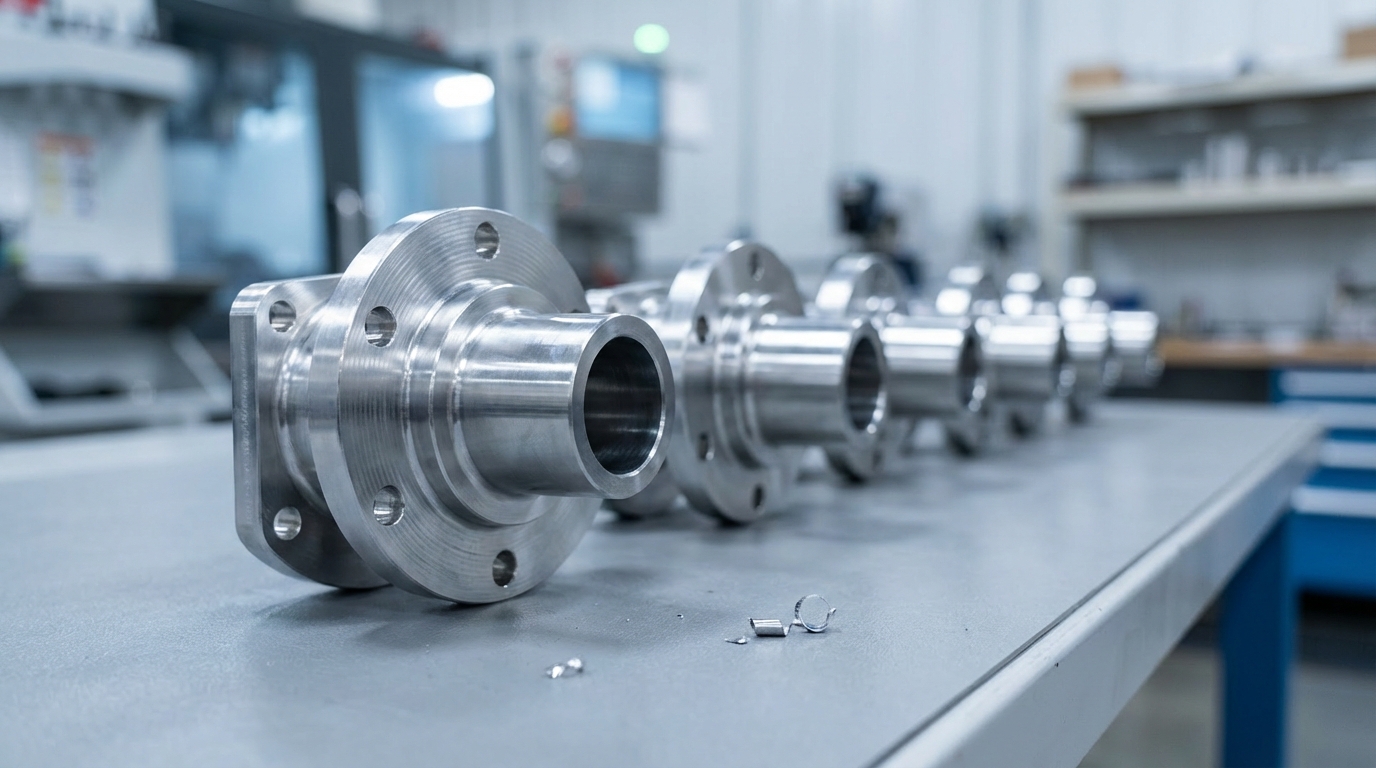
Aerospace sheet metal fabrication cuts, forms, welds and finishes metal sheet stock into structural and flight-critical components. It supports commercial aviation, military defense, space systems and UAV programs where dimensional accuracy, material traceability and regulatory compliance remain mandatory.
Certification Checklist for Aerospace Sheet Metal Fabricator Qualification
Certification status forms the foundation of supplier qualification. Procurement and supplier quality teams should verify the following for each candidate fabricator.
- AS9100D registration: Confirms the supplier runs an aerospace quality management system that covers configuration management, risk management and first article inspection per AS9102. AS9100D is maintained through annual surveillance audits and a full recertification audit every three years by an accredited registrar.
- ISO 9001:2015 registration: Serves as the foundational quality standard under AS9100D. The scope statement should cover processes and product types relevant to the program.
- ITAR registration: Establishes legal eligibility for manufacturing defense articles or handling ITAR-controlled technical data. ITAR registration is mandatory for defense work involving U.S. Munitions List items and functions as a legal requirement, not a quality credential.
- NADCAP accreditation (process specific): Applies when special processes such as heat treating, welding, chemical processing or non-destructive testing are involved. A supplier can be AS9100 certified and still be unqualified for a NADCAP-controlled process unless it holds the specific commodity accreditation. Suppliers with strong audit histories may achieve Merit status, which extends the audit interval to 18 or 24 months.
- Scope and currency: Each certificate should be current, in scope and applicable to the exact part, process and program. Prime contractors often require AS9100D plus ITAR and, when special processes apply, NADCAP.
Precision Advanced Manufacturing holds AS9100D and ISO 9001:2015 registrations and maintains ITAR registration across its California and Texas operations. Verify certification scope against specific program requirements.
Certifications That Address Aerospace Procurement Risk
Certification requirements align with common buyer pain points such as nonconforming parts, material traceability gaps and documentation failures. These issues create production stops, trigger audits and delay first article approval.
AS9100D, ISO 9001:2015, ITAR registration and relevant NADCAP accreditations embed inspection, traceability and configuration control into daily operations. These systems prevent problems at the process level instead of catching them after parts reach receiving.
Precision Advanced Manufacturing applies this prevention-first approach across its certified quality systems so programs gain consistent control from quote through shipment.
Technical Capabilities for Aerospace Sheet Metal Programs
After certification status is confirmed, procurement teams assess whether a fabricator can execute the required work. Technical capability evaluation should consider materials, processes and tolerance systems together.
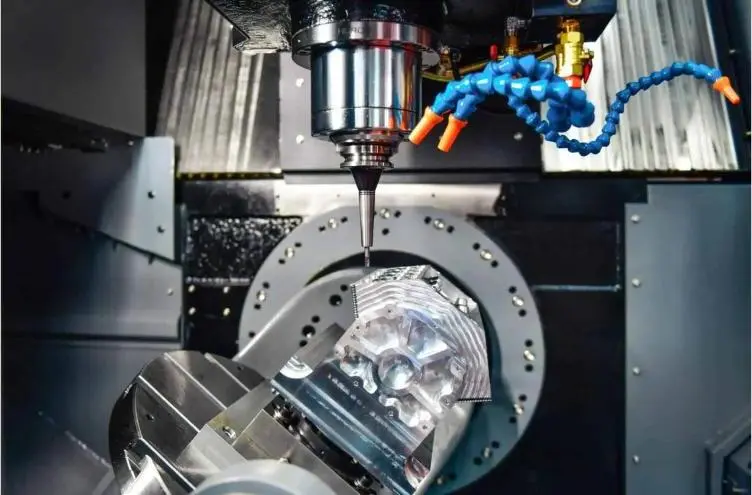
Common aerospace sheet metal materials include aluminum alloys, stainless steel grades, titanium alloys and specialty nonmetallic materials, each selected for specific structural, thermal or weight requirements. These materials often demand advanced cutting, forming and joining methods.
Aerospace sheet metal fabrication requires tighter tolerances than commercial applications, supported by AS9100 quality management, ITAR compliance and NADCAP accreditation where applicable. Precision Advanced Manufacturing combines material expertise, tight-tolerance processes and integrated finishing in one facility, which reduces handoffs and strengthens production control.
Quality and Compliance Systems That Carry the Load
Quality and compliance in aerospace sheet metal fabrication extend far beyond framed certificates. Effective suppliers design traceability architecture, inspection infrastructure and documentation systems that support every shipment.
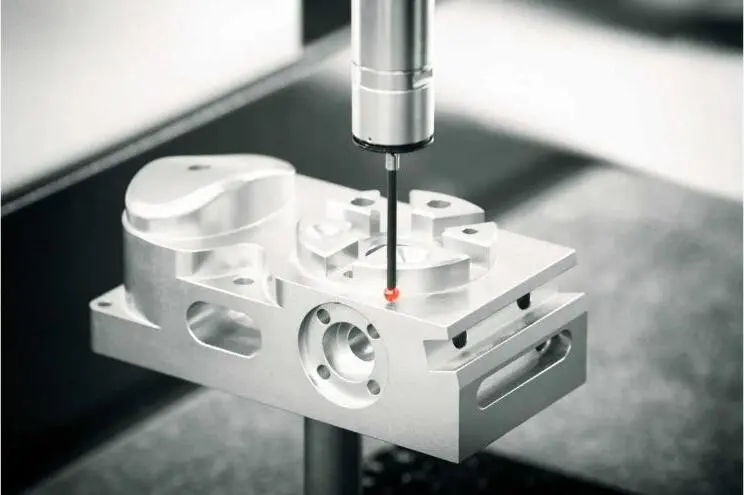
Key quality system elements to verify during supplier qualification include:
- Material certifications and mill traceability for every production lot
- In-process and final inspection records aligned to AS9100D requirements
- First article inspection reports per AS9102
- Configuration management and revision control procedures
- Nonconformance management and corrective action processes
- ITAR-compliant data handling for controlled technical information
Precision Advanced Manufacturing runs certified quality systems that build traceability and documentation into each production step. Complete inspection reporting and material certifications ship with every order, which reduces verification work for customer quality teams.
Prototype-to-Production Scaling for Aerospace Programs
Scaling from prototype to production functions best as a controlled engineering step. Teams freeze the design, run design for manufacturability analysis, define critical features, build fixtures, approve finish samples, create inspection records and execute a pilot run before full-rate release.
A structured pilot run should confirm:
- Cycle time and routing accuracy
- Material yield against plan
- Fixture performance under production conditions
- First article inspection results
- Finish quality and hardware installation integrity
- Assembly fit and packaging method
- Rework rate and records traceability
Prototype parts often rely on senior technicians, small quantities and informal inspection, which can hide risks when programs ramp without documentation. Precision Advanced Manufacturing uses a scalable production platform that supports prototype through multi-shift, high-volume manufacturing with the same certified processes validated at the prototype stage, so programs avoid supplier changes at ramp.
Discuss prototype-to-production transition requirements with the engineering team.
Integration Scope and Total Cost of Ownership
Total cost of ownership modeling for aerospace fabrication should include labor, materials, overhead, logistics, inventory and quality costs. Low unit prices can mask higher program expenses once rework, freight and schedule risk enter the picture.
Total cost of ownership for fabricated parts includes unit price plus freight, duties, inventory carrying cost, quality and rework and engineering-change speed. Domestic fabricators with integrated finishing and secondary operations cut supplier handoffs, compress lead times and lower coordination risk.
Fabricators that consolidate secondary operations in-house remove extra logistics steps and reduce schedule exposure. Integration scope elements that reduce total cost of ownership include:
- Kitting that consolidates components into organized kits to streamline assembly and reduce handling
- Hardware installation with PEM-style nuts, studs, standoffs and pins installed in-house
- Secondary finishing such as anodizing, passivation, plating and sandblasting aligned to aerospace standards
- Laser marking and deburring so part identification and edge quality arrive complete with the component
Multiregion manufacturing networks provide resilience through redundancy, while single-site concentration increases vulnerability. Precision Advanced Manufacturing addresses this with dual facilities in California and Texas.
Aerospace Sheet Metal Fabrication in California
California functions as a major hub for commercial aerospace and defense manufacturing, with proximity to prime contractors, defense installations and dense supply chains. U.S. manufacturing technology orders reached $930.5 million in the first two months of 2026, a 26 percent increase over the same period in 2025, which reflects accelerating investment in domestic fabrication capacity.
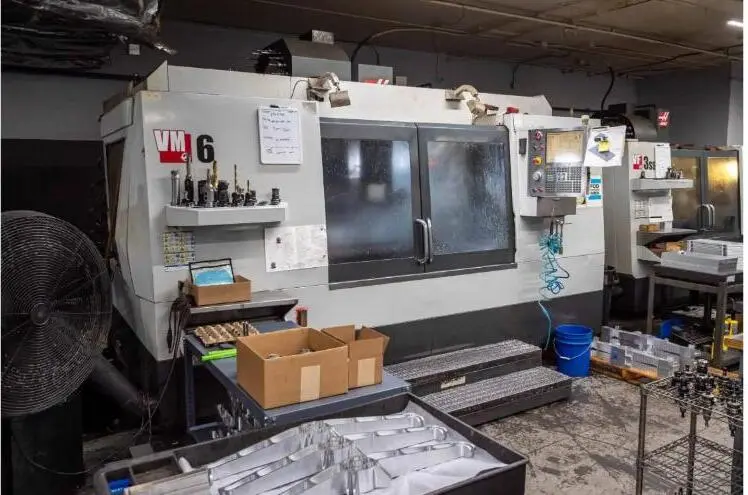
Precision Advanced Manufacturing’s California facility provides:
- AS9100D and ISO 9001:2015 certified sheet metal fabrication and CNC machining
- ITAR-registered operations for defense and space programs
- Multi-axis CNC cutting, forming, welding and integrated finishing
- Prototype and production capacity with full traceability and documentation
- Engineering support for design for manufacturability and first article inspection
The California location supports programs that benefit from short supply chain loops to West Coast prime contractors and defense integrators.
Aerospace Sheet Metal Fabrication in Texas
Texas has grown into a significant aerospace and defense manufacturing center, with expanding defense contractor presence and favorable operating conditions for domestic fabrication. Defense represents a substantial share of the U.S. aerospace and defense market, and Texas-based suppliers serve military and commercial programs across the South and Central United States.

Precision Advanced Manufacturing’s Texas facility focuses on scalable production and integration depth. The site provides:
- AS9100D and ISO 9001:2015 certified fabrication aligned to defense program requirements
- ITAR-registered operations for controlled defense articles and technical data
- Scalable multi-shift production capacity for full-rate manufacturing programs
- Integrated secondary finishing, kitting and hardware installation
- Traceability and documentation systems that meet prime contractor flow-down requirements
The California and Texas facilities operate as a coordinated, dual-site production network that supports program continuity and geographic diversification for long-term aerospace contracts.
Frequently Asked Questions
Is certified precision fabrication more expensive than standard sheet metal work?
Certified precision fabrication carries costs for maintaining AS9100D, ISO 9001:2015 and ITAR-compliant quality systems, including documentation, inspection infrastructure and audit readiness. The relevant comparison centers on total program cost, not unit price alone. Out-of-spec parts create rework, scrap, expedited orders and schedule delays that often exceed the cost difference between certified and uncertified suppliers. Delivering parts right the first time, with full traceability, protects budgets across the production lifecycle.
What happens when a program needs to switch fabricators midproduction?
Midprogram supplier transitions introduce risk through documentation gaps, requalification costs, schedule disruption and potential nonconformance during changeover. Precision Advanced Manufacturing manages transitions by providing complete documentation packages, material traceability records and engineering support from the outset. Pilot builds or validation runs confirm process alignment before full-rate transfer, which limits disruption to active programs.
How does a fabricator maintain quality consistency from prototype to full-rate production?
Consistency from prototype to production depends on process discipline rather than technician skill alone. Critical steps include freezing the design before production release, running a structured pilot that validates fixtures, cycle times, inspection records and finish quality and documenting any deviations from the prototype stage. Precision Advanced Manufacturing applies the same certified processes and inspection systems at prototype scale that govern full-rate production, so quality validated early in the program matches quality delivered at volume.
What materials and geometries can aerospace sheet metal fabricators reliably process?
Aerospace sheet metal fabrication commonly uses aluminum alloys, stainless steel, titanium and specialty alloys selected for structural, thermal or weight requirements. Complex geometries, tight-tolerance features and difficult-to-cut materials such as carbon fiber composites and ballistic materials require advanced cutting technology, including 5-axis Dynamic Waterjet, and experienced process engineering. Precision Advanced Manufacturing’s capabilities span a broad range of aerospace-grade materials and geometries, supported by in-house CNC programming and tooling expertise.
How should procurement teams evaluate scalability when qualifying a new fabricator?
Scalability evaluation should extend beyond stated capacity. Buyers can request evidence of production ramp experience, including first-pass yield data, concession rates and pilot run outcomes on comparable programs. Multishift capacity, fixture investment and scheduling discipline serve as practical indicators of true scalability. Precision Advanced Manufacturing’s production platform supports the full program lifecycle, from initial prototype through sustained high-volume manufacturing, without supplier changes at transition points.
Next Steps for Engaging Precision Advanced Manufacturing
Qualifying a new aerospace sheet metal fabricator follows a defined sequence. The steps below outline how procurement, program and supplier quality teams can engage Precision Advanced Manufacturing efficiently.
- Define program requirements: Document part specifications, material requirements, tolerance targets, certification needs and production volume expectations before initial contact.
- Connect with a manufacturing specialist: Engage Precision Advanced Manufacturing’s team to review program needs, confirm certification applicability and identify the appropriate facility, California or Texas, for the program scope.
- Receive a tailored quote: A detailed quote will address capabilities, tolerances, materials, certifications and production strategy specific to the program requirements.
- Launch prototype or pilot production: Begin with a controlled prototype or pilot run under AS9100D quality systems, with full traceability and first article inspection documentation.
- Transition to full-rate production: Scale to multishift, high-volume manufacturing using the same certified processes validated during prototyping, with no supplier switch required.
Precision Advanced Manufacturing’s certified, dual-site operations and prototype-to-production scalability are structured to reduce supplier risk and protect program outcomes. Begin the qualification process with the Precision Advanced Manufacturing team.