Last updated: August 13, 2026
Key Takeaways
-
Precision aerospace component manufacturing requires tight-tolerance parts that meet strict dimensional, material and compliance requirements for flight-critical applications.
-
Market growth to $43.6 billion by 2032, driven by OEM ramp-ups and multi-axis CNC adoption, makes partner selection central to program success.
-
Buyers should evaluate U.S. manufacturers across six key dimensions: technical capabilities, quality and compliance, scalability, integration scope, total program risk and domestic location or ITAR advantages.
-
Domestic ITAR-registered partners reduce geopolitical, export-control and supply-chain disruption risks while supporting lifecycle production from prototype through full-rate manufacturing.
-
Connect with Precision Advanced Manufacturing to streamline supplier qualification and reduce total program risk by engaging the team through its online quote portal.
Technical Capabilities for Complex Aerospace Components
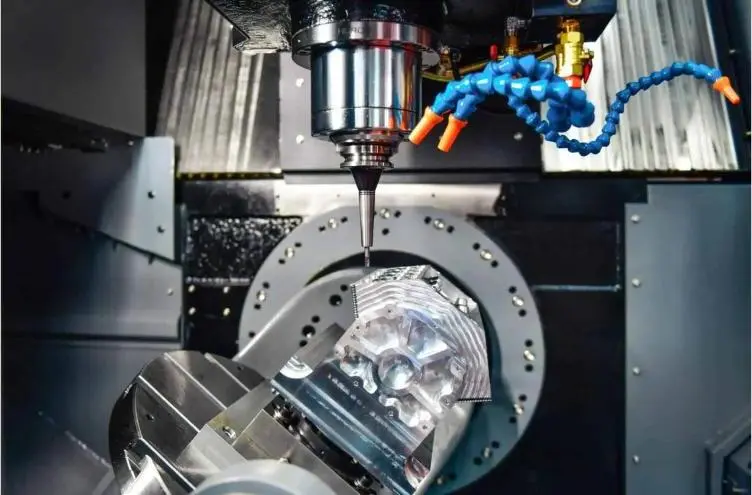
Milled parts form a major process segment in aerospace machining, driven by demand for complex geometries and investment in high-speed multi-axis CNC solutions. A qualified manufacturer operates advanced multi-axis CNC milling and turning centers that hold repeatable accuracy across production runs for space, satellite, aerospace and UAV systems.
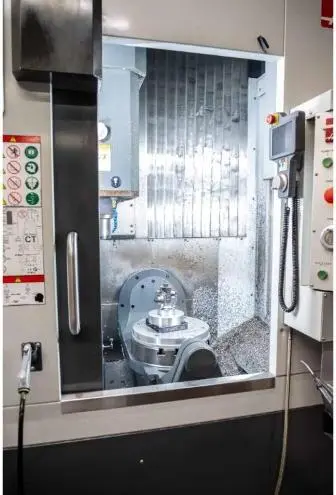
Technical capability evaluation should cover specific process strengths and material experience.
-
Multi-axis CNC machining for complex, high-tolerance components
-
Precision sheet metal fabrication including laser and waterjet cutting, stamping, forming, bending and welding
-
Specialty welding with thermal distortion control for lightweight aerospace assemblies
-
Integrated secondary finishing including anodizing, passivation, plating and ultrasonic cleaning
-
Material versatility across titanium alloys, superalloys, aluminum, stainless steel and advanced composites
The capability list above includes material versatility for a reason. Titanium and other difficult materials are critical to aerospace applications because they maintain strength under extreme conditions. Manufacturers without demonstrated experience in these materials and in complex geometries create out-of-spec risk on programs where rework is not an option.
Quality and Compliance Systems that Prove Performance
Technical capabilities determine what a manufacturer can produce. Quality systems determine whether that manufacturer can produce it consistently and document compliance. AS9100 is a widely recognized aerospace quality management system standard that builds on ISO 9001 with added requirements such as risk management, configuration control, traceability, special process control and foreign object debris prevention.
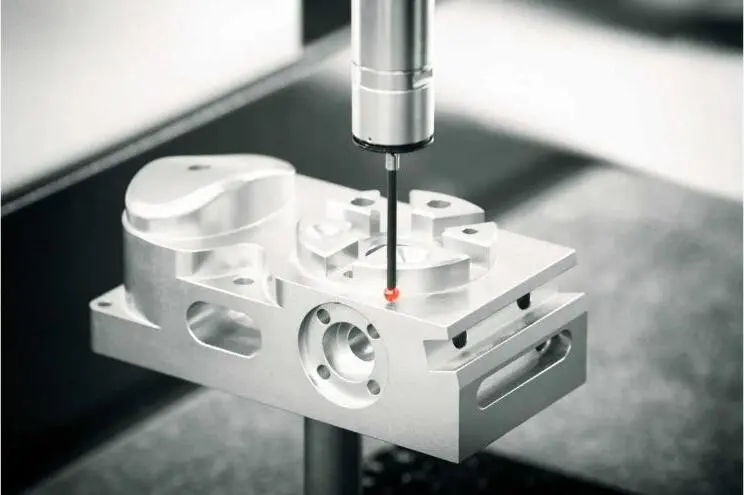
ITAR registration functions as a separate federal requirement for manufacturers that handle defense-related technical data and hardware. Both certification and day-to-day discipline matter during supplier qualification.
Buyers should verify the following during supplier qualification.
-
Active AS9100D and ISO 9001:2015 registrations with current certificates from accredited bodies
-
ITAR registration for any defense or space program
-
Full material traceability linking raw material batch through receiving, processing, inspection and shipment
-
Controlled documentation with revision management, supported by formal systems rather than spreadsheets or paper travelers
-
In-process and final inspection with complete quality records delivered with each shipment
Operational discipline, not only certification labels, drives supplier readiness for aerospace work. Common red flags include material certificates that do not match batch numbers, gaps between drawing revisions and manufacturing documentation and inconsistent calibration records.
AS9100 Rev D requires aerospace organizations to establish supplier control procedures covering selection, evaluation and ongoing monitoring. Flow-down requirements extend through the full supply chain, so a certified partner reduces audit burden and compliance exposure at every tier.
Scalability from Prototype to Full-Rate Production
Program requirements change over time, so a manufacturer qualified for prototype work must also support full-rate production without forcing requalification or supplier changes. Buyers benefit from manufacturers whose systems sustain traceability, configuration control and compliance as a program scales from prototype into recurring production.
Scalability evaluation criteria form a connected set of checks that confirm a supplier can grow with a program.
-
Documented transition process from prototype to full-rate production
-
Multi-shift production capacity with disciplined scheduling
-
Process controls, including statistical process control and Cpk tracking, that maintain consistency at higher volumes
-
Dedicated tooling and master programs that amortize across production runs
-
Capacity reservation options that support multi-year programs
For mixed-volume aerospace programs, buyers should evaluate whether a shop has a documented playbook for transitioning from prototype to production. That playbook should include master tooling investment and process controls that scale with volume. Shops without this structure create bottlenecks at the point when programs need to accelerate.
Integration Scope and In-House Process Control
Scalable capacity delivers full value when it connects to a streamlined supply chain. Fragmented supply chains multiply handoff risk and increase coordination effort across multiple vendors. Suppliers that combine material sourcing, machining capabilities and project coordination can streamline procurement and keep aerospace projects moving efficiently by serving as a single accountable partner.
Integration scope covers the range of services a manufacturer delivers without outsourcing critical steps. Evaluation should focus on how much work stays under direct control and how sub-tiers are managed.
-
In-house engineering support and CNC programming
-
Kitting and hardware installation that reduce assembly burden
-
Secondary finishing such as anodizing, passivation, plating, sandblasting and ultrasonic cleaning aligned to aerospace standards
-
Laser marking, deburring and brush finishing for ready-to-integrate delivery
-
Sub-tier oversight and approved supplier lists for any outsourced special processes
Sub-tier control must be evaluated as rigorously as the primary supplier. Approved sub-tier lists, surveillance methods and incoming verification all contribute to consistent quality. A manufacturer that controls more steps in-house reduces the number of sub-tier exposure points and simplifies program oversight.
Total Program Risk Across the Supply Chain
Total program risk aggregates across technical capability, quality, scalability and integration scope. Program risk often appears through a set of recurring failure modes that supplier selection can address directly.
Out-of-spec parts cause missed deadlines and disrupt downstream assembly. Rigorous in-process and final inspection, supported by validated quality documentation, prevents these delays. Compliance failures during audits often stem from weak traceability, so certified AS9100D, ISO 9001 and ITAR-compliant systems with full traceability reduce audit exposure at every program stage.
Scaling bottlenecks emerge mid-program when suppliers lack multi-shift capacity or a defined transition plan. A single certified partner with multi-shift capacity eliminates requalification risk when production volumes increase. Rework and scrap costs erode budgets, while tight-tolerance machining and process discipline produce parts right the first time and reduce corrections.
Supplier transition disruption occurs when documentation and material history do not transfer cleanly. Complete documentation, material traceability and engineering support enable smoother integration into existing supply chains and reduce schedule impact.
Frequent supplier changes produce inconsistent documentation, weak traceability and reduced regulatory oversight, which increases the likelihood of failed audits and regulatory violations. Supplier stability through controlled qualification processes provides a primary mitigation for program delays and compliance risk.
Evaluate how Precision Advanced Manufacturing reduces program risk for a specific application by sharing part requirements and program constraints with the team.
U.S. Location and ITAR Advantages for Aerospace Programs
Domestic manufacturing capacity has become a strategic priority across the aerospace and defense sector. A 2025 Aerospace Industries Association and Kearney study found that nearly 60% of aerospace and defense companies were exploring ways to bring production back to the United States, with 15% already taking action to expand domestic manufacturing.

The drivers behind reshoring are structural and persistent. Roland Berger’s 2025 aerospace supply chain report found that 64% of companies were still facing supply chain disruption, with lead times and raw material availability remaining key issues. Domestic partners reduce exposure to geopolitical risk, import delays and export control complexity.
ITAR registration serves as a core requirement for defense and space programs that involve controlled technical data or hardware. Working with an ITAR-registered U.S. manufacturer removes the export licensing burden associated with foreign suppliers and reduces intellectual property exposure risk. Switching to non-ITAR-compliant suppliers expands exposure to potential ITAR and CMMC-related cyberattacks and IP theft in defense programs.

Precision Advanced Manufacturing operates from facilities in California and Texas, providing domestic capacity for commercial aerospace, military and defense, space and satellite, advanced industrial and UAV programs. ITAR registration is maintained across all operations.
Next Steps to Shortlist and Qualify a U.S. Precision Aerospace Partner
A structured qualification process reduces sourcing risk and accelerates program readiness. The steps below form a connected framework that moves from internal clarity to external validation.
-
Define internal requirements. Document part specifications, tolerances, materials, certifications required, production volumes and program timelines before engaging suppliers.
-
Verify certifications directly. Validate certifications through issuing bodies rather than relying only on supplier copies. Confirm AS9100D, ISO 9001 and ITAR status are current.
-
Assess traceability systems. Request examples of material certifications, inspection records and first article inspection outputs. Evaluate whether documentation is revision-controlled and audit-ready.
-
Evaluate integration scope. Determine how many production steps the supplier controls in-house versus outsourcing to sub-tiers. Fewer handoffs reduce risk and simplify coordination.
-
Confirm scalability. Ask for a documented transition process from prototype to full-rate production. Verify multi-shift capacity and scheduling discipline that support future growth.
-
Review supplier performance history. A comprehensive aerospace supplier scorecard tracks on-time delivery, first article inspection first-pass yield and audit findings.
-
Engage Precision Advanced Manufacturing. Connect with specialists to define program needs, receive a tailored quote and move from prototype to full-rate manufacturing within a single certified partner.
Begin the qualification process with Precision Advanced Manufacturing and reduce program risk from the first part by sharing drawings, volumes and schedule targets.
Frequently Asked Questions
What certifications should a U.S. precision aerospace component manufacturer hold?
The baseline certifications for aerospace component manufacturing are AS9100D and ISO 9001:2015. AS9100D, discussed in the Quality and Compliance section above, builds on ISO 9001 with aerospace-specific requirements. For any program involving defense or space hardware or technical data, ITAR registration functions as a separate federal requirement. Buyers should verify that certifications are current and issued by accredited registrars, not self-declared. Precision Advanced Manufacturing holds AS9100D and ISO 9001:2015 registrations and maintains ITAR registration across all operations.
Can a single manufacturer support both prototype development and full-rate production?
An integrated manufacturer can support the full product lifecycle within the same certified quality system when scalable processes exist. The key factor is a documented transition process that includes master tooling investment, statistical process controls and multi-shift scheduling that maintain quality consistency as volumes increase. Requalifying a new supplier mid-program introduces documentation gaps, traceability risk and schedule exposure. Precision Advanced Manufacturing is structured to move programs from prototype through sustained, multi-shift production without supplier changes or requalification requirements.
What materials and processes are available for aerospace components?
Qualified aerospace manufacturers work with materials such as titanium alloys, superalloys including Inconel, aluminum, stainless steel, carbon steel and advanced composites. Process capabilities should include multi-axis CNC milling and turning, precision sheet metal fabrication, specialty welding with thermal distortion control and integrated secondary finishing such as anodizing, passivation and plating. Precision Advanced Manufacturing applies expertise across complex materials and advanced fabrication processes to meet the durability and reliability requirements of aerospace, defense, space and UAV applications.
How does traceability work in precision aerospace manufacturing?
Traceability in aerospace manufacturing links the finished component to the raw material batch, manufacturing process records, operator and machine data, inspection results and engineering revision history. This complete product genealogy supports customer inquiries, regulatory compliance and audit readiness. Buyers should confirm that a supplier’s traceability system is revision-controlled and captures data at the point of execution, not reconstructed manually after the fact. Precision Advanced Manufacturing maintains full traceability across materials and processes and delivers complete documentation with every shipment.
What happens when transitioning from an existing supplier mid-program?
Mid-program supplier transitions carry documentation, traceability and schedule risk when not managed carefully. The receiving manufacturer must review existing drawings, material certifications, inspection records and process history to establish a compliant baseline. Pilot builds or validation runs reduce transition risk before full production resumes. Precision Advanced Manufacturing supports supplier transitions by providing complete documentation, material traceability and engineering support that protect continuity. The team integrates into existing supply chains with minimal disruption to program timelines.