Last updated: August 7, 2026
Key Takeaways for Aerospace CNC Supplier Selection
- Aerospace and defense procurement teams must qualify suppliers that hold tight tolerances on flight-critical materials while meeting ITAR, AS9100D and CMMC Level 2 requirements at the same time.
- Five-axis CNC capability supports complex titanium and Inconel components with fewer setups, which reduces tolerance stack-up and improves first-article acceptance rates.
- Suppliers must deliver complete AS9102 Rev C FAI packages, full material traceability and CMMC-aligned cybersecurity controls to satisfy 2026 aerospace program documentation standards.
- Selecting a single supplier that scales from prototype to full-rate production preserves process knowledge, shortens delivery schedules and avoids requalification risk.
- Precision Advanced Manufacturing provides integrated multi-axis CNC machining, fabrication and finishing under one AS9100D-certified roof, and a quote request begins supplier qualification.
Advanced ITAR-Compliant Aerospace CNC Machining Defined
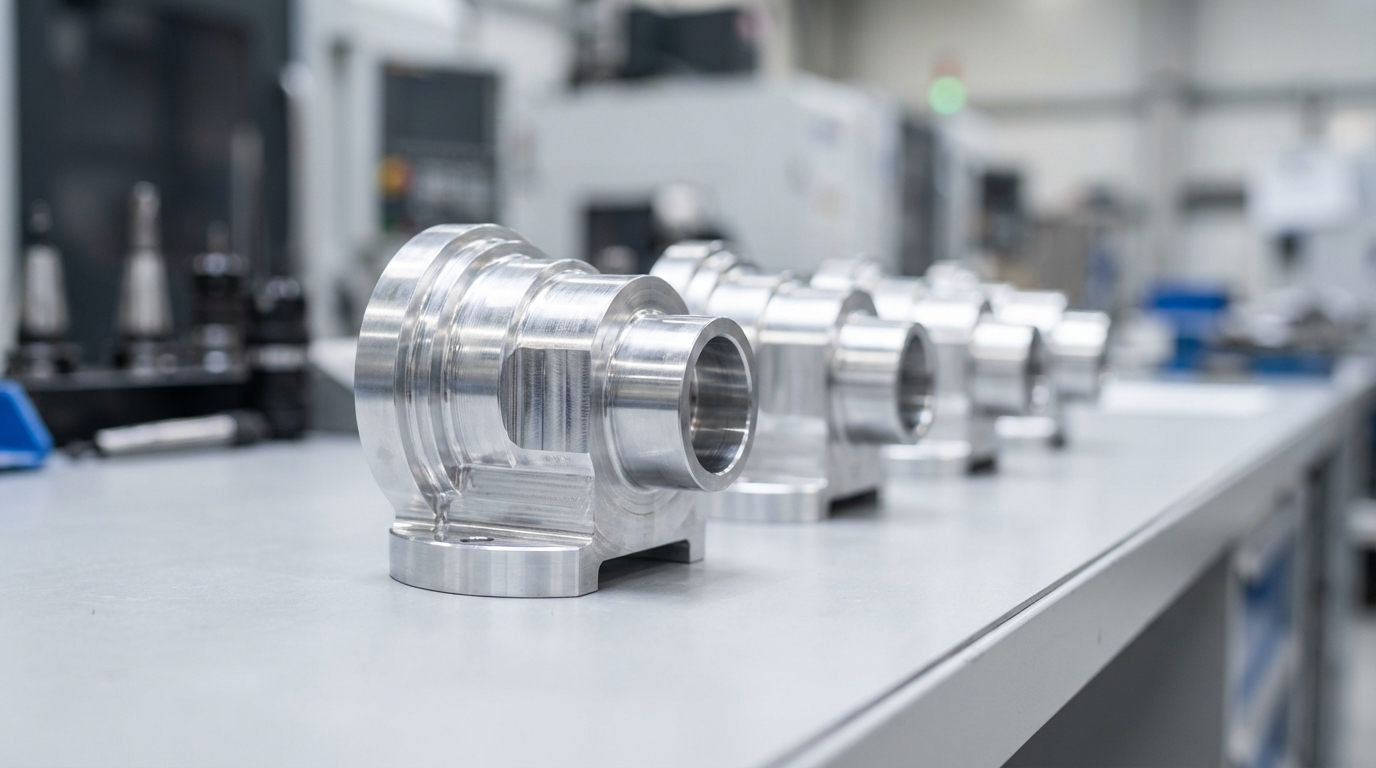
Advanced aerospace CNC machining uses multi-axis computer-controlled cutting centers to produce flight-critical metal components with tight tolerances, complex geometries and full regulatory traceability. Multi-axis platforms, particularly 5-axis and beyond, allow the cutting tool to approach a workpiece from multiple orientations in a single setup, which enables features that 3-axis machines cannot reach without repositioning.

ITAR registration under 22 CFR Part 122 is a baseline legal requirement for any U.S. manufacturer that produces or exports defense articles or technical data covered by the U.S. Munitions List. Annual DDTC Tier 1 registration fee is $3,000, renewal submissions become available 60 days before expiration, and civil penalties for violations reach up to $1,271,078 per violation.
These baseline registration requirements form only the starting point for supplier qualification. In 2026, buyer expectations extend beyond registration. The CMMC final DFARS rule became effective November 10, 2025, and requires third-party assessments by C3PAOs for Level 2 contracts involving Controlled Unclassified Information. Suppliers that handle ITAR technical data classified as CUI must address export controls and CMMC cybersecurity requirements at the same time. Procurement teams sourcing advanced CNC ITAR compliant machining suppliers for U.S. aerospace programs must confirm that a supplier’s digital infrastructure, access controls and data handling practices meet these overlapping obligations.
Five-Dimension Framework for Qualifying ITAR CNC Suppliers
A structured evaluation reduces program risk by moving beyond price and lead time to assess the factors that support consistent delivery across a program lifecycle. The five dimensions are technical capabilities, quality and compliance systems, scalability, integrated service scope and total program risk reduction.
Technical capabilities determine whether a supplier can produce the geometry and tolerance the drawing requires. Without that foundation, documentation quality cannot rescue a program. Quality and compliance systems then determine whether every part ships with documentation that satisfies AS9100D, ITAR and CMMC requirements, which turns machining capability into program-ready deliverables. Even a supplier that excels at both must show scalability, meaning the ability to move from a first article to sustained production without introducing new risk. Integrated service scope defines how many handoffs exist between machining and a ready-to-integrate component, and fewer handoffs reduce coordination overhead. Total program risk reduction reflects the combined effect of these four dimensions on schedule predictability and cost control.
Each dimension maps directly to a buyer persona’s core concern. Procurement managers focus on compliance and traceability. Program managers focus on schedule reliability and integration readiness. Supplier quality engineers focus on documentation completeness and inspection rigor. A supplier that scores well across all five dimensions reduces exposure for all three stakeholders at the same time.
Begin a capability assessment against this framework by requesting a quote from Precision Advanced Manufacturing.
5-Axis CNC Capabilities for Aerospace Materials
Five-axis machining centers add two rotational axes to the three linear axes of conventional CNC, which allows the spindle to approach a workpiece from almost any angle without repositioning. On aerospace aluminum alloys, a well-maintained 5-axis center can hold tight linear tolerances and true position on hole patterns in a single clamping. Every re-fixture on a 3-axis machine adds positional error that accumulates across multiple setups, which compounds tolerance stack-up on complex parts.

Titanium and Inconel present machining challenges that make multi-axis capability a practical necessity rather than a preference. Ti-6Al-4V generates higher cutting force than aluminum at equivalent parameters and concentrates heat because of low thermal conductivity, so single-setup 5-axis machining helps avoid re-clamping distortion. For Inconel 718, 5-axis platforms allow shorter tool reach that limits deflection while coolant-through-spindle capability manages heat in low-thermal-conductivity material.
Five-axis CNC machining creates complex aerospace geometries with fewer setups than conventional 3-axis processes and delivers meaningful time savings while enabling internal features with thin wall thickness. For program managers facing tight delivery schedules, fewer setups translate directly to shorter cycle times and higher first-article acceptance rates. Single-setup 5-axis machining on flight-critical parts removes repositioning errors that cause tolerance stack-up, which supports more predictable delivery schedules.
These operational advantages explain why the U.S. defense and aerospace sectors drive demand for 5-axis CNC machines capable of complex, multi-material processing for lightweight components, and the multi-axis machining centers segment is projected to grow significantly. Suppliers without genuine multi-axis capability will face increasing difficulty meeting the geometry and tolerance requirements of next-generation platforms.
Quality, Compliance and Traceability Requirements in 2026
A qualified aerospace CNC supplier in 2026 operates under a layered compliance architecture. AS9100D provides the quality management system framework specific to aviation, space and defense. ISO 9001:2015 establishes the underlying process discipline. ITAR registration, discussed earlier, governs the handling of defense-related technical data and hardware. CMMC Level 2 governs cybersecurity practices for suppliers that handle CUI under defense contracts.
CMMC Level 2, aligned with NIST SP 800-171 controls, is a contractual requirement for defense contractors that handle CUI, and prime contractors must flow down requirements to subcontractors. Supplier quality engineers must confirm that a machining partner’s IT environment, data storage and access controls satisfy these requirements before technical data is shared.
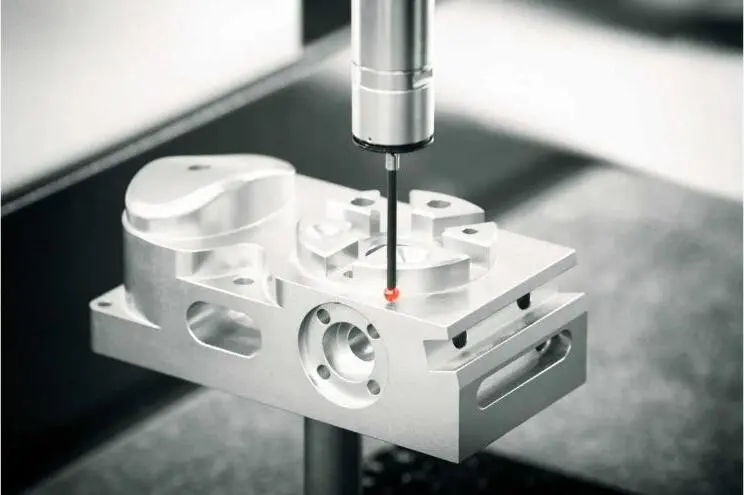
First Article Inspection per AS9102 Rev C (2023) is the SAE standard that establishes documentation requirements for First Article Inspection in aerospace. A compliant FAI package includes three forms, and Form 1 covers part number accountability, Form 2 covers material and special-process accountability including heat and lot numbers and Nadcap references, and Form 3 records every dimension and tolerance on the drawing with actual measured values. A compliant package must also include a ballooned drawing whose balloon count exactly matches the number of rows on Form 3.
Material traceability extends beyond the FAI. For aerospace and defense applications, full material traceability documentation is required. Suppliers must maintain manufacturing, inspection and test records for an extended period after purchase order completion. Suppliers that deliver complete documentation packages reduce the inspection burden on customer quality teams and simplify audit preparation.
Scaling from Prototype to Production with Less Risk
The transition from prototype to full-rate production is the stage where supplier relationships most often fail. Common failure modes include design complexity that drives excessive cycle time at volume, material substitution between phases that affects machinability and tolerance stack-up across large production runs. Additional issues include unoptimized machining strategies, fixture limitations unsuitable for volume and supplier transition gaps.
A common scaling trap occurs when prototypes are made by a senior engineer on new equipment, and production then moves to a less experienced operator on older machines, which causes quality to decline. This personnel mismatch often appears alongside a second bottleneck, where machining capacity grows faster than metrology capacity. When machining capacity outpaces inspection, parts queue at inspection and delay feedback that could catch process drift. That drift becomes especially problematic in high-volume runs of hard materials, where tool wear is not linear, and without a data-driven tool management system, parts can move out of tolerance as volume increases.
Partnering with a single CNC machine shop across prototype to production preserves design continuity and process knowledge, which enables faster engineering feedback and strengthens DFM collaboration. These communication advantages reduce the gaps that appear when designs transfer between vendors, which accelerates ramp-up and lowers requalification risk. Moving a design to a new vendor for production creates communication gaps, loss of process knowledge and requalification requirements that increase delay and cost.
Maintaining spindle utilization below full capacity preserves buffer for machine downtime and ramp-up variability. Machine redundancy is a non-negotiable requirement. A supplier with a single 5-axis machine capable of the required geometry has no scalability because one mechanical failure halts the entire program.
Integrated Capabilities that Reduce Total Program Risk
Supplier fragmentation creates a primary source of program risk. When machining, fabrication, finishing and inspection sit across multiple vendors, each handoff introduces scheduling dependency, communication risk and traceability complexity. A single-facility supplier that consolidates these capabilities under one quality management system removes those handoffs.
Precision Advanced Manufacturing operates under AS9100D and ISO 9001:2015 certified quality systems and holds ITAR registration across facilities in California and Texas. Multi-axis CNC machining, precision sheet metal fabrication, specialty welding with thermal distortion control, secondary finishing such as anodizing, passivation and plating, laser marking, deburring and kitting all occur under one roof. Components ship fully finished and ready to integrate, which removes secondary work that delays assembly and testing.
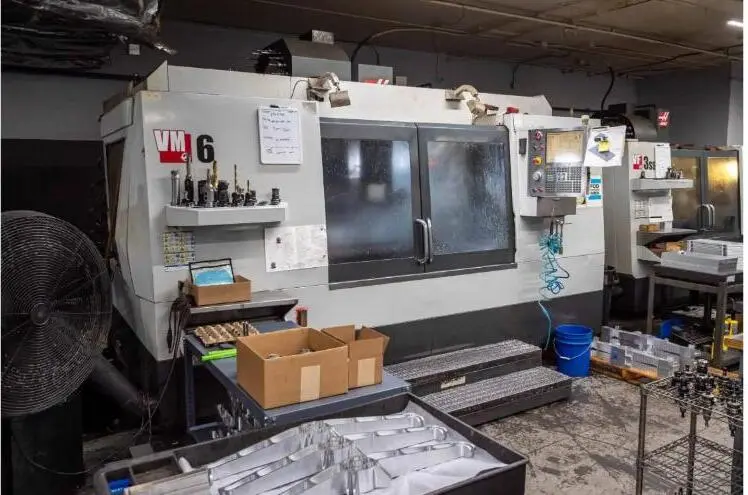
Engineering support and in-house CNC programming apply at the outset of each program to improve designs for manufacturability, refine tolerances and strengthen production efficiency. Full material traceability, AS9102-compliant FAI packages and complete inspection documentation accompany every delivery. The California and Texas footprint supports prototype development and multi-shift full-rate production without a supplier change at any stage of the program lifecycle.

Discuss how Precision Advanced Manufacturing’s integrated capabilities align with program requirements by requesting a quote.
Eight-Step Supplier Qualification Checklist
The following checklist provides a structured sequence for evaluating advanced CNC ITAR compliant machining suppliers for U.S. aerospace programs.
- Verify current AS9100D and ISO 9001:2015 certifications with valid registration dates and scope statements that cover the required manufacturing processes.
- Confirm active ITAR registration under DDTC and review the supplier’s data handling procedures for CUI, including access controls, U.S. data residency and audit log practices aligned with CMMC Level 2.
- Assess multi-axis CNC capability by reviewing the equipment list for 5-axis and multi-axis centers, machine redundancy for critical geometries and in-house programming resources.
- Request a sample AS9102 Rev C FAI package and confirm that Forms 1, 2 and 3 are complete, that the ballooned drawing matches Form 3 row count and that sub-tier material traceability evidence appears on Form 2.
- Evaluate material traceability documentation, including full material test reports traceable to accredited laboratories and heat and lot number continuity across traveler, inspection record and certifications.
- Assess production scaling evidence by requesting references or documented case studies that show prototype-to-full-rate transitions, spindle utilization data and tool life management practices.
- Confirm integrated service scope that covers finishing, welding, fabrication and inspection under the same quality management system to reduce handoffs and traceability gaps.
- Conduct a trial order with full CMM inspection data and material certificates before committing to production volumes, and establish a rolling forecast cadence to reserve capacity and stabilize material procurement.
Next Steps for Engaging a Certified Supplier
The qualification process begins with an internal needs assessment. Program managers and procurement teams document the part geometry, material specifications, tolerance requirements, required certifications and production volume trajectory before engaging a supplier. This information supports a meaningful technical review and a quote that reflects actual program requirements rather than generic pricing.
Prime contractors continue to move to onshore sub-tier suppliers as the Pentagon prioritizes domestic industrial capacity and advanced production capabilities. The window to qualify a reliable domestic supplier before program ramp-up narrows each year. Execution discipline now holds equal weight with technological capability in aerospace and defense, and a supplier’s record of on-time delivery, documentation completeness and compliance maintenance provides a strong predictor of program performance.
Precision Advanced Manufacturing serves commercial aerospace, military and defense, space and satellites, advanced industrials and UAV programs from facilities in California and Texas. The company’s integrated multi-axis CNC machining, fabrication, finishing and engineering support capabilities, combined with the certifications outlined above, position it as a low-risk choice for programs that require traceable, flight-critical components at any production volume.
Begin the supplier qualification process with Precision Advanced Manufacturing.
Frequently Asked Questions
What certifications should an ITAR-compliant aerospace CNC machining supplier hold in 2026?
A qualified supplier holds active AS9100D and ISO 9001:2015 registrations with scope statements that cover the required manufacturing processes. ITAR registration under DDTC forms a legal baseline for any supplier that produces or handles defense-related hardware or technical data. In 2026, defense programs that involve Controlled Unclassified Information also require CMMC Level 2 compliance, which means the supplier demonstrates cybersecurity practices aligned with NIST SP 800-171 and prepares for third-party assessment by a C3PAO. Procurement teams request current certificates, verify registration dates and review the supplier’s documented procedures for data handling, access control and audit logging before sharing any technical data.
How does 5-axis CNC machining improve outcomes for aerospace programs compared with 3-axis machining?
Five-axis machining centers allow the cutting tool to approach a workpiece from multiple orientations in a single setup, which removes the repositioning events that introduce cumulative alignment error in 3-axis workflows. As noted earlier, single-setup capability removes the repositioning errors that affect 3-axis workflows, which makes it the primary mechanism for achieving tight tolerances consistently across production runs. On difficult aerospace materials such as titanium and Inconel, 5-axis platforms provide tool engagement angles that distribute cutting forces and manage heat more effectively than multi-setup 3-axis approaches. The result includes higher first-article acceptance rates, more predictable delivery schedules and improved material utilization on high-cost alloys.
What documentation should a supplier provide with each shipment for aerospace and defense programs?
A complete shipment package for aerospace and defense programs includes a Certificate of Conformance that identifies the supplier, purchase order number, part number and revision, batch or lot number and a signed statement of compliance. Full material test reports with chemical and mechanical test results traceable to an accredited laboratory must accompany the hardware. For programs that require First Article Inspection, a complete AS9102 Rev C package, with the three forms described earlier, plus a ballooned drawing and sub-tier traceability evidence is required. Heat treatment certifications, special process certifications and in-process inspection records should also be available. Suppliers that operate under AS9100D maintain these records for the duration required by the customer’s quality requirements, typically a minimum of 10 years after purchase order completion.
What are the most common risks when transitioning from a prototype supplier to a production supplier?
The most significant risk is loss of process knowledge. When a design moves to a new vendor for production, the receiving supplier must reconstruct fixturing, toolpaths, inspection sequences and material sourcing from documentation alone, which creates gaps that cause out-of-spec parts, schedule delays and requalification costs. Additional risks include tolerance stack-up at volume that did not appear in low-quantity prototype runs, inspection bottlenecks when metrology capacity does not scale with machining capacity and tool wear patterns in hard materials that require data-driven management to prevent drift. The most effective mitigation is selecting a single supplier that supports both prototype and full-rate production under the same quality management system, which preserves process continuity and removes requalification risk.
How does Precision Advanced Manufacturing support supplier transitions mid-program?
Precision Advanced Manufacturing supports mid-program transitions by providing complete documentation, material traceability and engineering support that protect continuity from the outset. The team can begin with pilot builds or validation runs to limit risk while integrating into existing supply chains. In-house engineering and CNC programming resources allow the team to review incoming designs for manufacturability, identify high-risk features and establish stable fixturing and toolpaths before committing to production volumes. Certified quality systems, operating under the AS9100D and ISO 9001:2015 framework described earlier, ensure that all documentation, inspection records and material certifications meet the standards required by aerospace and defense primes and Tier 1 suppliers.