Last updated: August 19, 2026
Key Takeaways for Spacecraft CNC Sourcing
- Selecting an unqualified supplier for custom CNC spacecraft parts creates cascading risk across schedule, budget and compliance.
- Mandatory supplier requirements include AS9100D certification, ITAR registration, full material traceability and First Article Inspection with CMM reports.
- Integrated U.S. certified precision manufacturers remove inter-vendor handoffs and close compliance gaps common in distributed supply chains.
- Five core challenges, including tight tolerances, regulatory burden, quality costs, scaling risk and supplier transitions, are addressed through documented processes and in-house engineering support.
- Precision Advanced Manufacturing satisfies every requirement for mission-critical spacecraft programs. Procurement teams can request a quote to begin supplier evaluation.
The Problem: Supplier Failures Derail Satellite and UAV Programs
Out-of-spec parts arriving at integration create some of the most expensive events in a spacecraft program. Tier-1 aerospace and defense companies can face re-verification processes when switching machine shops, which can trigger production delays. Rework, scrap and expedited orders compound the financial impact.
Mandatory entry requirements for any supplier touching flight hardware include:
- AS9100D certification, which adds about 100 requirements to ISO 9001 covering risk management, configuration management, first article inspection, counterfeit parts prevention and key characteristics
- ITAR registration with the Directorate of Defense Trade Controls (DDTC), renewed annually, with every supplier in the chain independently registered
- Full material traceability from mill certificate through finished part, with chain-of-custody documentation retained for the life of the program
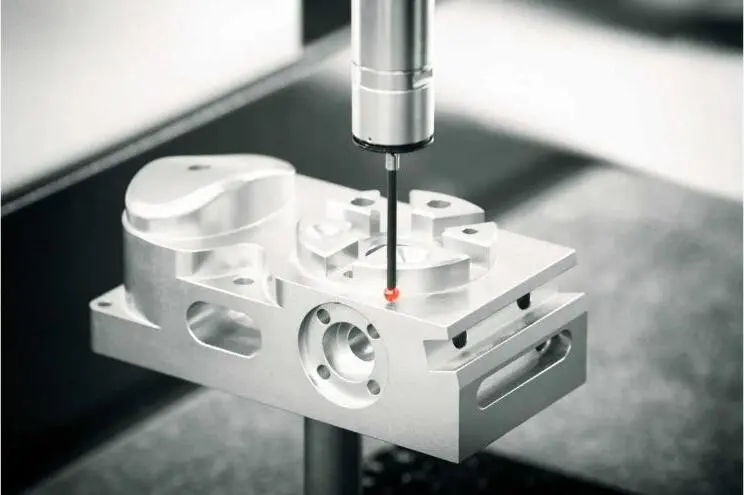
- First Article Inspection with a CMM report for every new setup, delivered with the part
- Sub-0.001-inch tolerances on critical interfaces, with fuel and hydraulic manifolds often held to ±0.0002 to ±0.0005 inch
ISO 9001 alone does not satisfy these requirements. A shop can hold ISO 9001 without AS9100, but AS9100 always includes ISO 9001 core quality management requirements. Procurement teams that accept ISO 9001 as a substitute expose programs to audit failures and delivery risk.
Integrated U.S. Certified Precision Manufacturers for Spacecraft Parts
The integrated, ITAR-registered, AS9100D-certified U.S. precision manufacturer category removes significant program risk. This supplier model consolidates multi-axis CNC machining, precision fabrication, finishing and engineering support under one roof. That structure eliminates inter-vendor handoffs and the compliance gaps that often follow them.
Precision Advanced Manufacturing operates as a benchmark in this category. Facilities in California and Texas hold AS9100D and ISO 9001:2015 registrations and maintain full ITAR registration. The company supports prototype through full-rate production across commercial aerospace, military and defense, space and satellites, advanced industrials and UAV programs.
Procurement teams sourcing custom CNC spacecraft parts can request a quote to begin the supplier evaluation process.
Challenge 1: Tight-Tolerance Complex Geometries
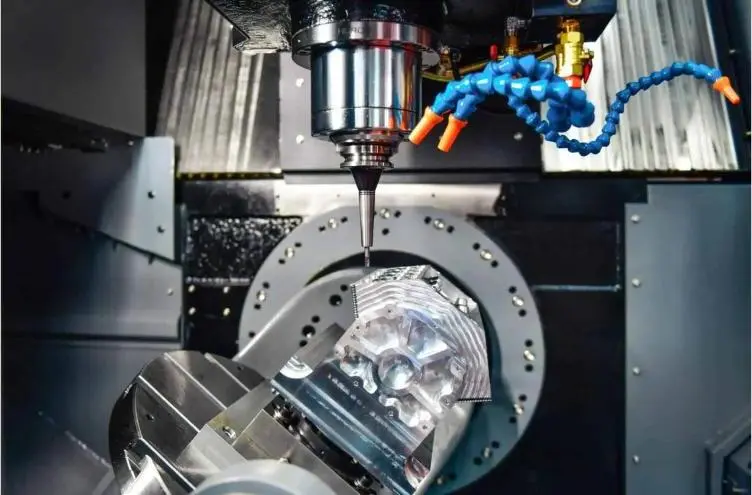
Spacecraft components often require geometries that standard 3-axis machining cannot produce in a single setup. Five-axis CNC machining produces complex geometries in fewer setups than 3-axis methods, which reduces accumulated error and improves dimensional accuracy. Each additional setup introduces fixturing variation that compounds across a part feature stack.
Space programs require full material traceability and a documented, repeatable process control system so later production parts match the first article. That requirement includes in-process inspection and final CMM verification. A supplier without in-house engineering cannot refine toolpaths, manage fixturing or resolve manufacturability issues without adding lead time and cost.
Precision Advanced Manufacturing applies advanced multi-axis CNC milling and turning alongside in-house CNC programming and tooling development. Engineering support enters at the outset to refine designs, adjust tolerances and strengthen production efficiency before the first cut.
Challenge 2: Regulatory Compliance and Documentation Burden
ITAR compliance in 2026 extends beyond registration. Sending an ITAR-controlled drawing to an unregistered supplier, even domestically, constitutes a federal violation. ITAR-registered machine shops maintain controlled access to drawings, encrypted file transfer and personnel eligibility screening.
Defense-adjacent space programs increasingly flow down CMMC Level 2 certification based on NIST SP 800-171 controls for safeguarding Controlled Unclassified Information. Suppliers without this certification risk removal from bid lists as primes implement the requirement starting in 2026.
Beyond data security and export controls, spacecraft programs impose material-level compliance requirements that general manufacturers rarely encounter. Outgassing represents one such dimension for satellite and spacecraft hardware. Surface-cleaning and finishing processes control contamination and outgassing risk for satellite and spacecraft parts exposed to vacuum service. Secondary finishing processes such as passivation and ultrasonic cleaning, integrated within a certified quality system, reduce outgassing risk without external vendor handoffs.
Precision Advanced Manufacturing operates under AS9100D, ISO 9001:2015 and ITAR-compliant quality systems with full documentation, inspection reporting and material certifications at every production step. Each project runs against defined quality checkpoints and audit-ready traceability records.
Challenge 3: Rework, Scrap and Inspection Costs
Poorly managed production programs create quality escapes, cost overruns and team burnout. When a supplier lacks aerospace-grade process discipline, the cost of nonconformance transfers to the customer through rework charges, scrap, expedited replacement orders and downstream integration delays.
First Article Inspection per AS9102 is typically mandatory for new defense part numbers, and the FAI package becomes a program record that requires engineering disposition for any deviations. Suppliers without rigorous in-process inspection generate FAI failures that delay program milestones.
Precision Advanced Manufacturing implements rigorous in-process and final inspections and delivers validated parts with complete quality documentation. This approach reduces the inspection burden on customer quality teams and removes the rework cycles that erode program budgets.
Challenge 4: Prototype-to-Full-Rate Scaling Risk
The transition from prototype validation to volume production represents the point where most design and supplier risk emerges. A prototype reflects the design plus unrecorded labor required to extract a clean unit from a process the design did not fully accommodate. Volume production removes many accommodations present in prototype builds.
Scale amplifies intermittent problems, so an issue occurring once during pilot production can appear multiple times per shift at volume. Suppliers without multi-shift capacity and documented production processes cannot sustain quality as volume increases.
Precision Advanced Manufacturing supports the full product lifecycle from prototype development to sustained, multi-shift production. Established processes and scalable capacity allow programs to move from initial design to full-rate manufacturing without supplier changes or requalification events.
Program managers ready to evaluate scaling capability can request a quote and discuss production roadmap requirements directly.
Challenge 5: Supplier-Transition Disruption
Frequent supplier changes in aerospace and defense programs remove accumulated machining data, tooling optimization knowledge and problem-solving experience held by established technicians. Mid-program transitions also expand the digital supply-chain footprint and heighten exposure under ITAR and CMMC requirements.
Qualifying an alternative source can require inspection, documentation and approval processes that consume significant time.
Precision Advanced Manufacturing makes supplier transitions manageable by providing complete documentation, material traceability and engineering support to protect continuity. Pilot builds and validation runs reduce risk while integrating into existing supply chains.
Sourcing Options Compared for Spacecraft CNC Programs
Understanding where Precision Advanced Manufacturing fits within the broader supplier landscape helps procurement teams evaluate alternatives and justify selection. Three primary supplier categories serve the spacecraft parts market, each with distinct tradeoffs in compliance, capability and risk.
General job shops offer flexibility on simple geometries but typically lack AS9100D certification, ITAR registration and the in-house finishing and engineering capabilities required for flight hardware. These shops suit noncritical commercial work but introduce compliance and traceability gaps on regulated programs.
Online manufacturing platforms provide rapid quoting and broad supplier networks. However, they route work through distributed shops with variable certification levels, which makes consistent compliance, traceability and process control difficult to verify across a full production run.
Certified integrated specialists, meaning ITAR-registered, AS9100D-certified manufacturers with multi-axis CNC, fabrication, finishing and engineering support under one roof, provide the compliance rigor, documentation depth and production continuity that mission-critical spacecraft programs require. Precision Advanced Manufacturing operates in this category.
Due-Diligence Framework for Supplier Selection
Procurement and supplier-quality teams can apply a structured evaluation before awarding a purchase order for custom CNC spacecraft parts. The following steps support that review.
- Certification audit: Verify current AS9100D and ISO 9001:2015 registration certificates and confirm ITAR registration status with DDTC records.
- Sample documentation review: Request a redacted First Article Inspection Report, a sample material traceability package and a representative inspection report to assess documentation quality.
- Pilot-run validation: Require a pilot build under production-representative conditions before committing to full-rate purchase orders. Validate first-pass yield and process capability metrics before advancing.
- Capability assessment: Confirm multi-axis CNC capability, in-house finishing options and engineering support availability for the specific materials and geometries required.
- Financial and operational stability: Assess facility size, multi-shift capacity and production history to confirm the supplier can sustain delivery commitments across the program lifecycle.
Decision Checklist for the Next RFQ
This checklist supports evaluation of custom CNC spacecraft parts suppliers. Each item represents a requirement that Precision Advanced Manufacturing satisfies.
- AS9100D certification current and verifiable
- ISO 9001:2015 registration current and verifiable
- ITAR registration with DDTC, independently held and renewed annually
- Full material traceability from mill certificate through finished part
- First Article Inspection per AS9102 with CMM report delivered with parts
- Multi-axis CNC machining capability for complex geometries in a single setup
- In-house engineering and CNC programming support
- Integrated secondary finishing aligned to aerospace standards
- Scalable production platform supporting prototype through multi-shift full-rate manufacturing
- Documented processes enabling seamless supplier transition with pilot-run validation
- Complete inspection and documentation systems that reduce customer quality team burden
- U.S.-based facilities that support ITAR-compliant data handling
Precision Advanced Manufacturing satisfies every criterion on this checklist. Supply-chain managers, program managers and supplier-quality engineers sourcing custom CNC spacecraft parts can request a quote to begin a tailored evaluation of program requirements, tolerances, materials and production strategy.
Frequently Asked Questions
The following questions address common concerns procurement teams raise when evaluating certified precision manufacturers for spacecraft programs.
What certifications are non-negotiable for a custom CNC spacecraft parts supplier?
AS9100D certification and ITAR registration remain the baseline requirements discussed earlier. The key distinction: AS9100D adds aerospace-specific controls beyond ISO 9001, while ITAR registration functions as a separate export-control requirement that every supplier in the chain must hold independently. ISO 9001 alone satisfies neither requirement.
How does Precision Advanced Manufacturing handle mid-program supplier transitions?
Precision Advanced Manufacturing supports mid-program transitions with complete material traceability documentation, process records and engineering support from the outset. The team can begin with pilot builds or validation runs to confirm dimensional and quality compliance before full production transfer. Documented processes and in-house engineering expertise reduce the requalification burden and limit schedule disruption during the transition period.
Can a supplier scale from prototype to full-rate production without requalification?
Scaling without requalification occurs when the supplier uses the same documented processes, fixturing and quality checkpoints from prototype through full-rate production. Precision Advanced Manufacturing operates a scalable, multi-shift production platform so the process validated during prototyping carries directly into volume manufacturing. Programs avoid the yield collapse that occurs when production processes diverge from prototype conditions.
What outgassing controls are relevant for spacecraft CNC parts?
Outgassing represents a critical concern for satellite and spacecraft hardware operating in vacuum environments. Contamination from machining residues, oils and surface compounds can degrade sensitive optics and electronics. Effective control relies on precision cleaning processes, including ultrasonic cleaning, passivation and electropolishing where applicable, integrated within a certified quality system. Secondary finishing processes aligned to aerospace standards reduce volatile residue risk and support vacuum compatibility requirements. Precision Advanced Manufacturing integrates secondary finishing within its certified quality system to address these needs.

Is certified precision manufacturing more cost-effective than using a general job shop?
Total cost of ownership on a spacecraft program includes rework, scrap, inspection burden, schedule recovery and compliance remediation when a supplier delivers out-of-spec parts. Certified precision manufacturing with rigorous in-process inspection and full traceability reduces nonconformance events and the downstream costs they generate. For mission-critical programs where a single part failure can affect the entire system, first-time quality delivers the most cost-effective outcome.