Key Takeaways for Aerospace Prototype Sourcing
-
Aerospace prototype manufacturing services connect engineering intent with production reality across aerospace, defense, space and UAV programs.
-
Effective partner selection depends on verified AS9100D and ITAR registration, integrated capabilities, traceability, scalability and engineering support.
-
Unreliable suppliers introduce program delays, rework costs, compliance failures and traceability gaps.
-
Precision Advanced Manufacturing mitigates these risks through certified systems, integrated multi-axis machining and structured prototype-to-production transitions.
-
Program teams protect timelines and compliance by partnering with Precision Advanced Manufacturing, and can request a quote to initiate engagement.
Defining Aerospace Prototype Manufacturing Services
Aerospace prototype manufacturing services cover design support, machining, fabrication, inspection and documentation for flight-adjacent and mission-critical metal components before full-rate production. These services connect engineering intent with production reality for commercial aerospace, defense, space and UAV programs.
Selecting the wrong partner at this stage creates compounding risk across schedule, cost and compliance. A five-point vetting checklist helps procurement, program and supplier quality teams filter candidates effectively. These five criteria together confirm that a supplier can deliver compliant prototypes while maintaining the quality infrastructure needed for production scaling.
-
AS9100D/ITAR registration: Confirm active certification and ITAR registration, not just a claim of compliance.
-
Integrated capabilities: Verify that machining, fabrication, welding, finishing and kitting operate under one roof.
-
Traceability systems: Require documented material and process traceability from raw stock through final inspection.
-
Scalable platform: Confirm the supplier can transition from prototype to full-rate production without a supplier change.
-
Engineering support: Assess whether DFM collaboration and in-house programming are available before production begins.
Rapid Prototyping Services for Aerospace Programs
Rework and scrap costs escalate when parts arrive out of tolerance. The American Society for Quality estimates that the cost of poor quality, including rework and scrap, can equal 15 to 20 percent of a company’s annual revenue. In aerospace prototype programs, a single out-of-spec iteration delays downstream integration and forces expedited reorders.
Common root causes include over-specified tolerances without DFM review and unclear engineering drawings with missing dimensions or inconsistent revisions. Capability gaps also arise when suppliers lack the multi-axis equipment and process control needed to hold tight tolerances repeatably.
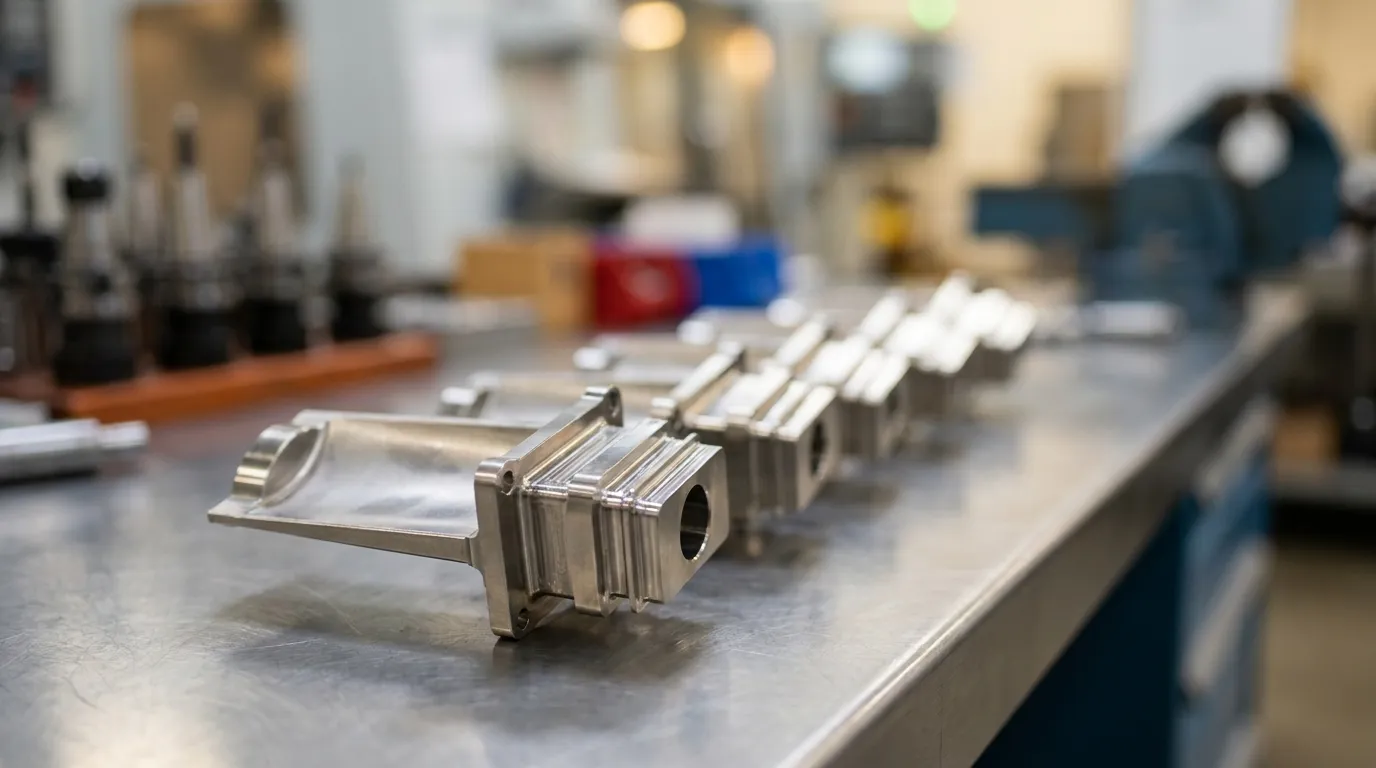
Precision Advanced Manufacturing uses advanced multi-axis CNC milling and turning to produce complex, high-tolerance components with repeatable accuracy. This machining capability is validated through rigorous in-process and final inspections that confirm each part meets specifications before delivery. To prevent tolerance issues from occurring, engineering support and in-house CNC programming engage early to refine designs and reduce first-iteration rework.
ITAR Prototype Manufacturing for Regulated Programs
Compliance failures during prototype manufacturing create program-level exposure that extends beyond a single part. A supplier mishandling ITAR-controlled technical data may expose the buyer to schedule delays, documentation failures, compliance concerns or supplier disqualification. In severe cases, DDTC investigations and civil or criminal penalties follow.
ITAR compliance must be embedded into every operational phase, including quoting, programming, machining, inspection and delivery. Suppliers manage facility access, data security, personnel eligibility, process documentation and supply chain integrity as part of daily operations.
Precision Advanced Manufacturing is ITAR registered and operates with controlled access, secure technical data handling and documentation aligned to defense program requirements. Material certifications and inspection records accompany every deliverable, which supports audit readiness across the program lifecycle.
AS9100 Prototype Manufacturing and Traceability Control
Traceability gaps represent a frequent failure mode in aerospace prototype programs. Reliance on paper travelers, handwritten inspection results and mismatched serial numbers often forces conservative decisions such as scrapping acceptable hardware during nonconformance investigations.
AS9100D auditors verify material traceability from raw material through machining and inspection, including cross-checks of heat numbers, MTC linkage and lot segregation practices. Precision Advanced Manufacturing operates under AS9100D and ISO 9001:2015 registrations and maintains complete material and process traceability on every program.
UAV Prototype Manufacturing Services and Scaling Support
Production bottlenecks often appear when UAV programs attempt to scale from prototype to full-rate manufacturing through a supplier without sufficient capacity or process discipline. Program teams benefit from early manufacturing involvement, standardized materials and finishes, and auditable quality documentation to reduce test variability and speed qualification approvals.
Precision Advanced Manufacturing supports UAV programs from initial prototype through multi-shift, high-volume manufacturing. The same certified quality systems, process controls and traceability infrastructure that govern prototype builds also govern full-rate production. Programs transition without a supplier change, which removes qualification overhead and schedule risk associated with a mid-program handoff.
Aerospace Component Manufacturing with Integrated Finishing
Integration delays occur when parts arrive requiring additional finishing, adjustment or secondary work before assembly can proceed. Poor assembly access, hidden fasteners and inaccessible inspection points slow assembly and create rework during pilot builds. Suppliers that outsource finishing add handoffs, lead time variability and traceability risk.
Precision Advanced Manufacturing delivers fully finished, ready-to-integrate components. Secondary finishing services such as anodizing, passivation, plating, sandblasting and ultrasonic cleaning are performed in-house and aligned to aerospace standards. Kitting, hardware installation, laser marking, deburring and brush finishing consolidate the supply chain under one roof and maintain continuous traceability across all operations.
Structured Prototype-to-Full-Rate Production Transition
Moving from prototype to manufacturing without a documented production handoff often causes rework and delay. A clean transition relies on complete production documentation, DFM sign-off, a defined first article inspection plan and confirmed supplier alignment.
Precision Advanced Manufacturing structures the prototype-to-production transition around four documented steps that build on each other to preserve quality continuity. First, engineering support and in-house CNC programming review the design for manufacturability and identify tolerance stack-ups, material impacts and fixturing requirements before production. These DFM findings guide the second step, a pilot build or validation run that confirms process alignment and generates FAI data under the refined parameters. Third, capacity planning uses validated cycle times from the pilot build to confirm multi-shift scheduling can support the required production rate. Fourth, all process parameters, tooling and inspection criteria validated during earlier steps carry forward unchanged into full-rate production, which prevents quality drift between prototype and production.
Documentation and FAI Workflows That Support Audits
Delays in First Article Inspection and production ramp-up often occur when inspection data is unavailable or when production records must be reconstructed after the fact. Missing revision history, process steps, material lots and operator assignments slow approvals.
Precision Advanced Manufacturing’s quality system supports AS9102-aligned FAI workflows, complete inspection reporting and audit-ready records maintained throughout the program lifecycle. Material certifications, process documentation and nonconformance records link to specific part numbers and serial numbers. Customers receive complete quality packages with each delivery, which reduces internal inspection burden and simplifies customer and regulatory audits.
Common Aerospace Prototype Failure Modes
Three recurring failure modes account for a large share of aerospace prototype program losses. Traceability breaks occur when records are scattered across disconnected systems, paper travelers and email, which makes reconstruction slow, fragile and unreliable at the exact moment high-stakes audits occur.
Configuration drift appears when different groups operate from different versions of engineering documentation, which drives rework, scrap, customer escapes and audit findings. This risk intensifies when multiple vendors handle different production phases without a shared configuration baseline.
Over-reliance on subcontractors introduces handoff delays, traceability gaps and compliance exposure at each transfer point. AS9100D auditors often flag overdependence on subcontractors as a sustainability risk and a common cause of audit findings. Consolidating capabilities under one certified facility reduces these exposure points.
Sourcing Models for Aerospace Prototype Manufacturing
General job shops provide broad machining access but often operate without AS9100D certification, ITAR registration or the traceability infrastructure required for regulated aerospace programs. These shops may deliver acceptable prototype parts yet lack the documented quality systems needed for FAI, configuration control or production scaling.
Transactional manufacturing networks aggregate capacity across multiple facilities, which can create traceability discontinuities, inconsistent process controls and compliance variability when different nodes handle different operations. Buyers sourcing through networks often absorb coordination overhead and audit burden that a single-facility partner would otherwise manage.
AS9100D and ITAR-registered single-facility manufacturers consolidate machining, fabrication, finishing and documentation under one certified quality system. Vertically integrated partners reduce coordination steps by uniting machining, coatings and assembly under one roof while maintaining continuous traceability from raw material to final delivery. This model reduces supplier qualification overhead, simplifies audits and supports seamless prototype-to-production transitions.
Due-Diligence Checklist for Aerospace Buyers
Before awarding aerospace prototype manufacturing work, procurement and supplier quality teams should verify the following against each candidate supplier. This expanded checklist translates the five high-level vetting criteria into eight specific, auditable verification points that support formal supplier qualification.
-
Active AS9100D certification and ISO 9001:2015 registration, confirmed through the IAQG OASIS database.
-
ITAR registration with the Directorate of Defense Trade Controls, with documented data security and access control procedures.
-
Integrated multi-axis CNC machining, precision sheet metal fabrication, specialty welding and secondary finishing under one roof.
-
Complete material and process traceability from raw stock through final inspection, with audit-ready records.
-
Demonstrated prototype-to-production scaling capability, including multi-shift capacity and documented handoff procedures.
-
In-house DFM collaboration and engineering support available before and during production.
-
FAI capability aligned with AS9102, with inspection reports and material certifications delivered with each shipment.
-
Documented nonconformance and corrective action processes with verified closure timelines.
Precision Advanced Manufacturing meets each criterion. Request a quote to begin supplier qualification.
Frequently Asked Questions
What materials does Precision Advanced Manufacturing work with for aerospace prototypes?
Precision Advanced Manufacturing works with a broad range of metals and specialty materials suited to aerospace and defense applications, including stainless steel, carbon steel, aluminum, exotic alloys, composites and ballistic materials. The team provides guidance on material selection during DFM review so the chosen material supports both prototype performance and production repeatability.
Can Precision Advanced Manufacturing accept CAD files and standard engineering formats?
Precision Advanced Manufacturing uses an advanced CAD/CAM system capable of receiving and interpreting digital datasets in most standard file formats. Engineering teams submit design packages directly, and in-house programmers develop toolpaths and fixturing strategies from those files without format conversion or manual re-entry.
How does Precision Advanced Manufacturing handle a transition from an existing supplier mid-program?
Precision Advanced Manufacturing supports mid-program supplier transitions with complete documentation, material traceability and engineering support to maintain continuity. The team typically begins with pilot builds or validation runs to confirm process alignment before full integration into the existing supply chain. This approach minimizes schedule disruption and preserves the quality record required for ongoing compliance.
What certifications are required for defense and UAV prototype programs, and does Precision Advanced Manufacturing hold them?
Defense and UAV prototype programs typically require AS9100D certification, ISO 9001:2015 registration and ITAR registration as baseline supplier qualifications. Precision Advanced Manufacturing holds all three. Every component produced for regulated programs is manufactured under these certified quality systems, with documentation and inspection reporting available to support customer and regulatory audits.
Can Precision Advanced Manufacturing scale from a single prototype to full-rate production without a supplier change?
Precision Advanced Manufacturing’s scalable production platform supports the full program lifecycle from initial prototype through sustained, multi-shift manufacturing. The same process controls, quality systems and traceability infrastructure validated during prototyping carry forward into full-rate production. Programs avoid qualification overhead, schedule risk and traceability disruption associated with a mid-program supplier transition.
Conclusion: Protect Aerospace Programs with a Proven U.S. Partner
Aerospace prototype programs face compounding risks across multiple dimensions, including supplier-driven delays, rework and scrap costs, compliance failures, traceability gaps and production bottlenecks at scale. Fragmented sourcing models that distribute machining, fabrication, finishing and documentation across multiple vendors often intensify these risks.
Precision Advanced Manufacturing addresses these risks through a single-facility model operating under AS9100D, ISO 9001:2015 and ITAR-registered quality systems. Integrated multi-axis CNC machining, precision sheet metal fabrication, specialty welding, secondary finishing and kitting operate under one roof with continuous traceability from raw material to final delivery. Programs scale from prototype to full-rate production without a supplier change, which preserves quality continuity and protects program milestones.
U.S. aerospace, defense and UAV programs that require tight-tolerance prototypes with a clear path to production have a proven partner in Precision Advanced Manufacturing. Request a quote to begin.