Last updated: August 17, 2026
Key Takeaways for Defense CNC Material Selection
- Material selection for CNC-machined military components functions as a program-risk decision that must align environment, MIL-specs, certifications and production scale.
- High-impact crew protection often relies on 17-4 PH stainless steel and maraging armor steels, both backed by certified material test reports and full traceability.
- Naval and chemical-exposure applications frequently use 316L stainless steel, 17-4 PH H1150 and PEEK polymer, each documented against NACE and AMS specifications for corrosion performance.
- Extreme-heat propulsion components use Inconel 718 and Ti-6Al-4V, which require tight process control, elevated-temperature testing and complete MTR documentation to protect schedules.
- Precision Advanced Manufacturing consolidates ITAR-registered and AS9100D-certified machining, finishing and documentation under one roof, supporting requirement reviews and tailored production plans for mission-critical military components.
Impact-Resistant Metals for Crew Protection Hardware
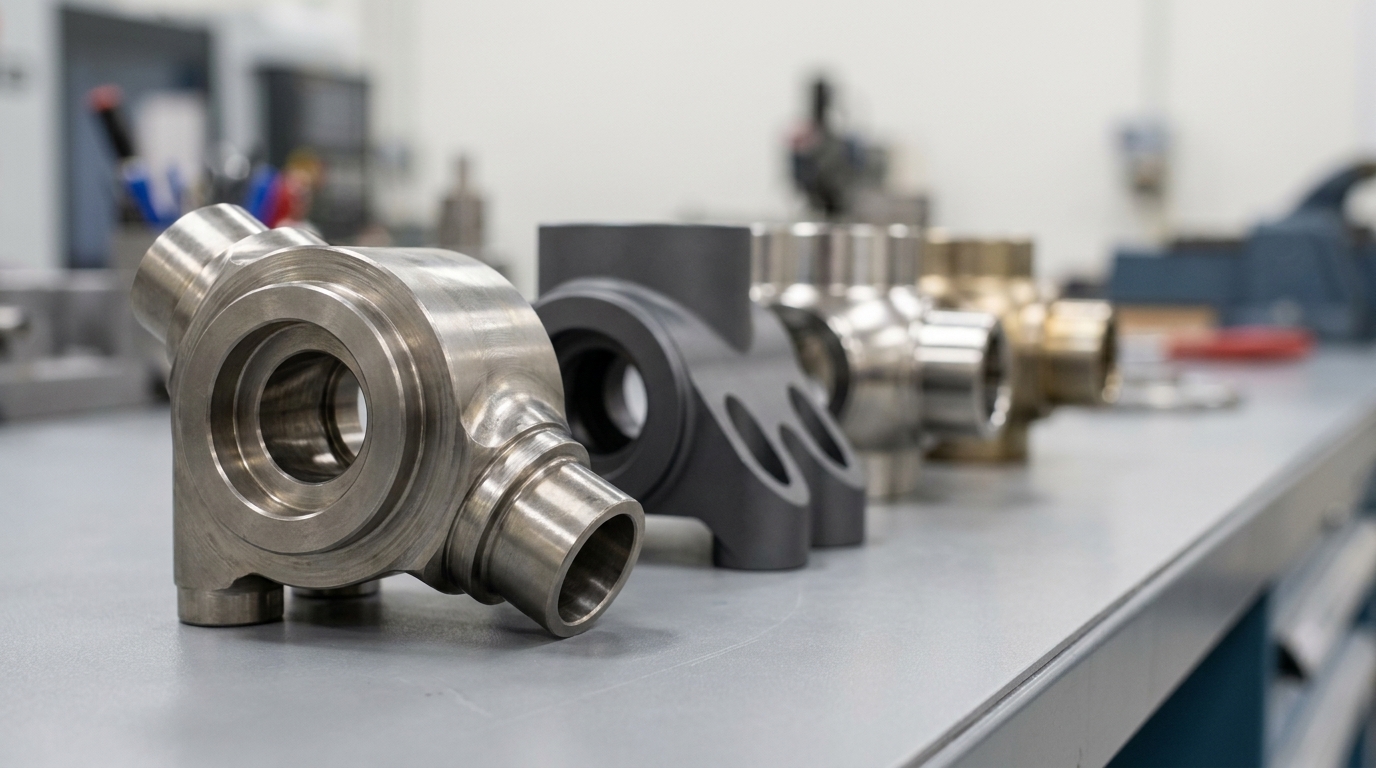
Structural and ballistic protection components rely on materials that absorb or deflect impact energy while still machining to tight tolerances. Two grades appear consistently in defense crew-protection programs.
17-4 PH stainless steel serves as a workhorse material for structural protection hardware because it combines high strength with moderate corrosion resistance. The alloy is specified under AMS 5643, and its performance depends on heat treatment. When aged to the H1150 condition, it provides improved toughness compared to the H900 condition, which supports components that must absorb impact without fracturing. This distinction matters, because the properties of 17-4 PH are entirely defined by its final aging treatment, so heat-treatment condition must be specified at the time of order.
Maraging and high-hardness armor steels support applications where ballistic resistance is the primary requirement. These grades require certified material test reports that include heat number, chemical analysis, mechanical test results and hardness values. Material without a traceable CMTR cannot be used in certified aerospace or defense applications, regardless of how well it appears to meet performance targets.
Precision Advanced Manufacturing uses a one-facility model that eliminates inter-vendor handoffs. Every MTR travels with the material through machining, finishing and inspection, which preserves a traceability chain that withstands DCSA and AS9100D audits.
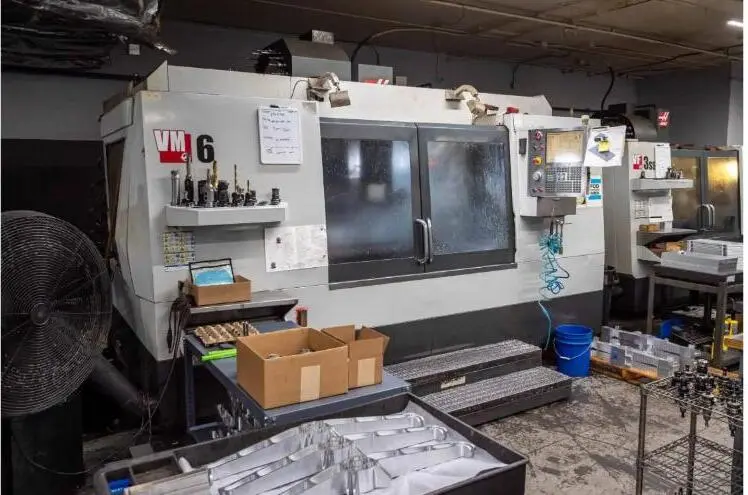
While crew protection components prioritize impact resistance, naval and chemical-exposure applications shift material selection toward corrosion performance, which introduces different failure modes and alloy choices.
Corrosion-Resistant Materials for Naval and Chemical Systems
Marine and chemical-exposure environments create corrosion, stress-corrosion cracking and tribocorrosion demands that generic stainless grades often fail to handle. Material and heat-treatment choices directly influence compliance and service life.
316L stainless steel provides a Pitting Resistance Equivalent Number (PREN) of approximately 25-30, which suits moderate chloride environments. For components that need higher strength with corrosion resistance, such as valve stems, pump shafts and offshore fasteners, 17-4 PH in the H1150 condition is often specified under ASTM A564, AMS 5643 and NACE MR0175 / ISO 15156. A documented North Sea subsea bolting case showed that replacing 316L bolts with 17-4 PH H1150 per ASTM A564 and NACE MR0175 extended service life beyond 10 years where 316L had failed from chloride stress-corrosion cracking within five years.
PEEK functions as an engineering polymer that complements these metallic choices in the same naval and chemical environments. Unfilled PEEK offers continuous service capability to 480 F (250 C) and strong chemical resistance for brackets, sensor carriers and connector insulators. Because those parts operate in harsh environments, defense programs using PEEK require material certificates, PPAP reports, FMEA, control plans and batch-level traceability, so documentation planning must start with the machining process.
Certified processes reduce inspection burden and rework risk for these corrosion-focused systems. When heat-treatment condition, passivation and surface treatment are controlled and documented at the machining facility, customer quality teams receive validated parts instead of parts that need broad secondary verification.
Propulsion and exhaust hardware introduces a different challenge, where extreme temperature and pressure drive material selection toward nickel superalloys and titanium.
High-Temperature Alloys for Propulsion and Exhaust Hardware
Propulsion, exhaust and hot-section components operate at temperatures and pressures that remove most common alloys from consideration. Two materials dominate this high-temperature group.
Inconel 718 serves as a standard nickel superalloy for turbine discs, exhaust ducting, APU components and nacelle hardware. Rolled Alloys supplies Inconel 718 for aerospace ducting, APU components, pylons and exhaust ducting that require high-temperature performance and corrosion resistance. The alloy is purchased to AMS 5662 (solution-annealed) or AMS 5663 (precipitation-hardened) rather than generic alloy descriptions, because propulsion components operate where material performance must be verified at temperature. A full MTR for Inconel 718 in aerospace structural applications includes room-temperature tensile testing, hardness, chemical analysis and, for many programs, elevated-temperature tensile testing and NDT, which proves the material will maintain strength and resist oxidation under thermal cycling.
Inconel 718 is difficult to machine because it work-hardens aggressively if chip load drops below threshold values. This behavior means process control, not only equipment choice, determines whether a program stays on schedule. Multi-axis CNC capability and in-house programming expertise allow Precision Advanced Manufacturing to maintain chip-load discipline and toolpath strategies that protect both part quality and program timelines.
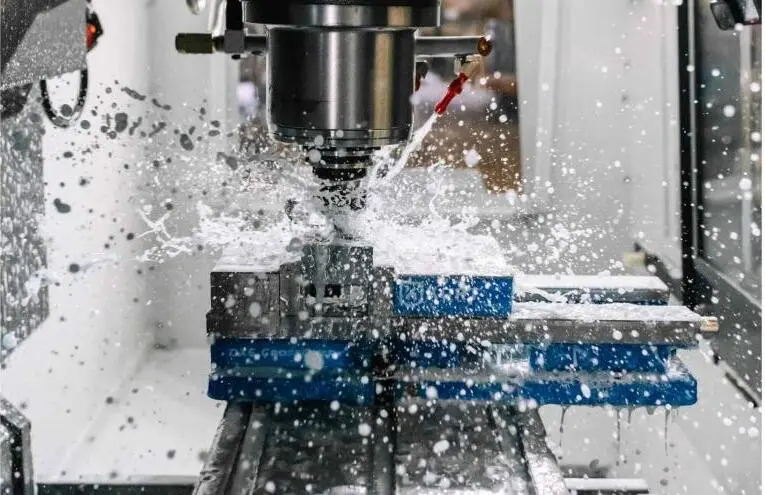
Ti-6Al-4V, specified under AMS 4928 for bar and AMS 4911 for sheet and plate, supports propulsion-adjacent structures where weight reduction and temperature resistance to about 350 C are both required. Its low thermal conductivity requires rigid workholding, controlled engagement and reliable coolant delivery during machining.
Weight-sensitive structures such as UAV frames and airframe brackets shift the focus from temperature survival to mass reduction and machining efficiency.
Lightweight Metals for UAV Frames and Airframe Structures
UAV frames, airframe brackets and structural fittings depend on materials that minimize mass while maintaining strength and machinability. The primary candidates are 7075-T6 aluminum and Ti-6Al-4V titanium, with the choice driven by temperature, corrosion and total program cost.
7075-T6/T651 aluminum has a density of about 2.80 g/cm3 compared to 4.42 g/cm3 for Ti-6Al-4V, which makes titanium roughly 58 percent heavier at equal volume. For drone frames, aerospace brackets and lightweight UAV structural components where room-temperature strength and machining efficiency matter most, 7075-T6 aluminum has a tensile strength of 572 MPa and good machinability. These properties support shorter cycle times and lower finished-part cost. It is specified under AMS 4045 for aerospace sheet and plate.
Ti-6Al-4V becomes the practical choice when components face elevated temperatures, seawater corrosion or structural loads that exceed aluminum capability. Ti-6Al-4V has a tensile strength of 950 MPa and strong corrosion resistance, but machining cycle times run longer than aluminum and raw material costs are higher. Programs weigh those cost and schedule factors against performance requirements before committing to titanium.
Precision Advanced Manufacturing uses integrated capabilities to support seamless prototype-to-production scaling for both materials. Engineering support at the outset, including toolpath, tolerance and fixturing decisions, reduces scrap risk and protects program budgets across aluminum and titanium programs.
Selecting the right alloy represents only part of the decision, because defense programs also depend on documentation and traceability frameworks that survive audits and support the full lifecycle.
Documentation and Traceability for Military CNC Programs
Material selection extends beyond alloy grade into documentation that supports audits and long-term sustainment. The five elements below form a minimum traceability chain, where a gap in any element can halt production.
- Material test reports or certified mill test reports traceable to the original mill heat lot, including mill name, heat number, material specification and revision, chemical composition and mechanical test results
- EN 10204 3.1 or 3.2 certification from the material supplier, with heat treatment certificates that specify cycle temperatures and times for precipitation-hardened or solution-annealed conditions
- AMS or MIL-spec references on engineering drawings, with customer-specific specifications from prime contractors that supplement or supersede standard references where required
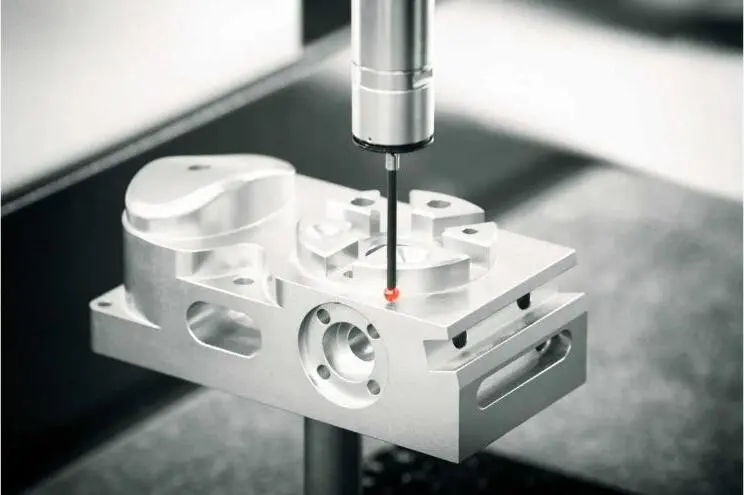
- First article inspection reports and in-process inspection records aligned to AS9100D requirements
- ITAR registration documentation for all defense and space-related programs
A single traceability gap discovered during an AS9100 audit can result in production shutdown and loss of approved supplier status. Material selection influences total program cost through raw material and machining rates, scrap rates, quality control demands, tooling wear, failures and warranty exposure.
Prototype-to-full-rate transitions introduce additional risk when suppliers change between phases. Precision Advanced Manufacturing uses a scalable production platform that supports prototype through multi-shift, high-volume manufacturing, which eliminates that risk by allowing programs to transition without supplier changes and preserving validated processes and documentation continuity.
Conclusion and Next Steps for Defense Material Planning
Effective material selection for CNC machined military components maps alloy grade, heat-treatment condition and documentation requirements to the operational environment, MIL-spec reference and program scale. Ballistic protection, naval corrosion, extreme heat and UAV weight constraints each point to defined grades such as 17-4 PH, 316L, PEEK, Inconel 718, Ti-6Al-4V and 7075-T6 aluminum, all supported by certified sourcing, process control and full traceability to protect budgets and timelines.
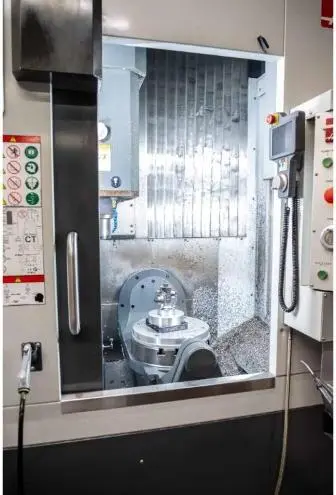
Precision Advanced Manufacturing operates ITAR-registered, AS9100D and ISO 9001:2015 certified machining, finishing and documentation within a single integrated structure. That structure eliminates handoffs, preserves traceability and reduces compliance and scalability risks that often drive cost overruns and schedule delays on defense programs.
Request a quote to begin a requirement review and receive a tailored production plan for mission-critical military components.
Frequently Asked Questions
Precision Advanced Manufacturing addresses common questions about defense program material selection and traceability.
What materials does Precision Advanced Manufacturing machine for defense programs?
Precision Advanced Manufacturing machines a broad range of metals and engineering materials for defense applications, including stainless steels such as 17-4 PH and 316L, aluminum alloys including 6061 and 7075, titanium alloys, nickel superalloys such as Inconel 718, carbon and alloy steels and engineering polymers such as PEEK. Material selection follows the operational environment, applicable MIL-spec or AMS reference and the documentation requirements of the program. The facility works with certified, traceable stock and supplies full material test reports with every order.
How does Precision Advanced Manufacturing support MIL-spec and AMS traceability requirements?
Every project at Precision Advanced Manufacturing runs under AS9100D and ISO 9001:2015 certified quality management systems with ITAR registration. Material traceability is maintained from certified stock through machining, finishing and final inspection. Documentation packages include MTRs or CMTRs traceable to the original mill heat, EN 10204 3.1 or 3.2 certification where required, heat treatment records, in-process inspection reports and first article inspection documentation. This documentation structure is designed to withstand DCSA and AS9100D audits without gaps.
Can Precision Advanced Manufacturing scale from a prototype to full-rate production without changing suppliers?
Precision Advanced Manufacturing operates a production platform that supports the full program lifecycle from prototype development through multi-shift, high-volume manufacturing. Processes and quality documentation validated during prototyping carry forward into production, which removes the risk of requalification or traceability gaps that arise when programs change suppliers between phases. This continuity protects program schedules and reduces the inspection burden on customer quality teams.
What is the risk of choosing the wrong heat-treatment condition for 17-4 PH or similar alloys?
Heat-treatment condition functions as a compliance variable, not a secondary detail. For 17-4 PH stainless steel, the H900 condition provides high hardness but is not recommended for seawater or sour-service environments because of stress-corrosion cracking risk. The H1150 condition is required for NACE MR0175 / ISO 15156 sour-service compliance and provides better toughness for marine applications. Specifying the wrong condition can result in premature component failure, audit findings and program rework. Precision Advanced Manufacturing provides engineering support that helps programs specify the correct condition at the outset and reduce downstream risk.
How does material choice affect total program cost beyond raw material price?
Material choice affects machining cycle time, tool consumption, scrap risk, inspection burden and documentation overhead, which all contribute to total program cost. Difficult-to-machine alloys such as Inconel 718 and Ti-6Al-4V require more process control and longer cycle times than aluminum, which increases per-part cost. Selecting a lower-cost material that fails to meet operational or compliance requirements can create greater cost through rework, re-inspection, schedule delays and potential loss of approved supplier status. A requirement-driven selection process, supported by certified machining and full documentation, protects program budgets more effectively than focusing on raw material price alone.