Key Takeaways
-
Space procurement teams face supply chain disruptions in processors, solar panels, and propulsion, which drive delays and cost overruns.
-
Precision CNC machining, sheet metal fabrication, and specialty welding produce tight-tolerance components that perform in extreme space environments.
-
Essential supplier criteria include AS9100D, ITAR compliance, prototype-to-production scalability, and a proven on-time delivery record.
-
Integrated manufacturing under one roof reduces risks from multiple suppliers and supports growing Artemis program demands.
-
Partner with Precision Advanced Manufacturing for compliant, scalable spacecraft components that support mission success.
Core Manufacturing Technologies for Spacecraft Components
Mission-critical spacecraft components rely on specialized manufacturing technologies built for extreme environments and strict reliability requirements.
Precision CNC Machining for Tight-Tolerance Space Parts
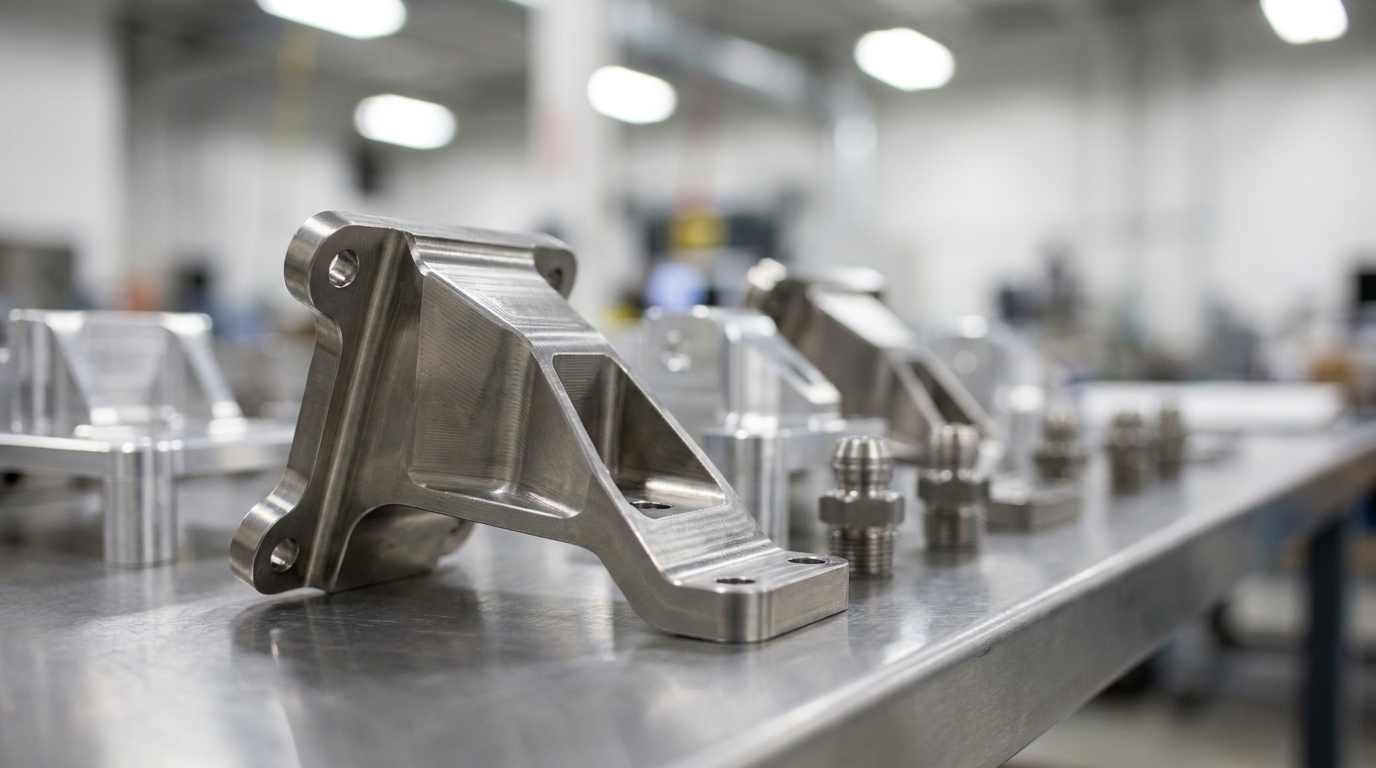
Multi-axis CNC machining delivers the repeatability spacecraft components need in orbital environments. Advanced CNC capabilities support large, complex structures for pressurized modules and spacecraft subsystems. Key benefits include:
-
Repeatability reduces rework and scrap costs
-
Tight tolerances meet NASA benchmarks for mission-critical applications
-
Digital-twin technology validates machining strategies before cutting begins
-
Compatibility with hybrid additive-subtractive processes for complex geometries
These tight tolerances reflect real production requirements. CNC machining space parts often demands micron-level linear tolerances with precise control of roundness, flatness, and concentricity for spacecraft structures and propulsion mounts.
CNC Metal Sheet Fabrication for Structural Assemblies
Precision sheet metal fabrication uses laser cutting, waterjet cutting, and forming to create lightweight structural assemblies. This approach produces precise, structurally sound components that meet strict aerospace tolerances while improving material utilization and supporting scalable production. Advanced fabrication supports satellite bus structures, avionics enclosures, and propulsion system housings.
Specialty Welding with Thermal Distortion Control
Precision welding techniques such as TIG, MIG, and laser welding protect the structural integrity of lightweight aerospace assemblies. Thermal distortion control limits warpage that could compromise fit and function in space environments. These processes create strong, consistent bonds for propulsion systems and launch hardware where failure is not an option.
Ready to enhance your spacecraft component sourcing? Request a quote for precision manufacturing solutions. Once you understand the manufacturing technologies your program requires, the next step is confirming that potential suppliers can meet your compliance and scalability needs.
Vetting Space Manufacturing Suppliers for Compliance and Scale
Successful spacecraft components suppliers in the USA must satisfy strict compliance and operational standards. Use this checklist when you evaluate potential partners:
-
AS9100D certification for aerospace quality management systems
-
ITAR registration and compliance for defense-related technical data
-
Prototype-to-production scalability with multi-shift capacity
-
Engineering support that improves manufacturability and reduces redesign cycles
-
Full traceability and documentation systems across materials and processes
-
Proven on-time delivery record across complex aerospace programs
ITAR-Compliant Space Manufacturing Essentials
Beyond basic ITAR registration, compliant manufacturers must meet several operational requirements. ITAR compliance requires organizations handling USML items to maintain stringent record-keeping and limit access to authorized U.S. persons. Essential requirements include:
-
DDTC registration for manufacturers of defense articles
-
U.S. persons-only access to controlled technical data
-
Relevant records concerning the manufacture, acquisition and disposition of defense articles and the provision of defense services must be maintained for a minimum of six years under ITAR (22 CFR 122.5)
-
Employee training on export control regulations and data handling
Scalable Production for Modern Space Programs
Space programs now move from low-volume, bespoke builds to higher-volume, repeatable manufacturing. This shift challenges traditional procurement models that rely on small batches and long lead times. AIA’s 2026 Space Priorities call for investments in domestic manufacturing capacity and small business innovation programs to address supply chain vulnerabilities and meet growing national space demands.
Spotlight on Precision Advanced Manufacturing for Space Programs
Comprehensive evaluation of spacecraft components suppliers highlights Precision Advanced Manufacturing as a leading choice for procurement managers who need reliable, compliant manufacturing partners. The company provides integrated multi-axis CNC machining, precision metal fabrication, and specialty welding services under one roof across California and Texas facilities. This integrated approach translates into tangible benefits for each stakeholder in the procurement process.
Precision Advanced Manufacturing directly addresses critical procurement pain points:
-
On-time delivery for procurement teams managing tight program schedules
-
Precision and scalability for program managers requiring consistent quality
-
AS9100D, ITAR, and ISO 9001 compliance for quality assurance teams
-
Engineering manufacturability support that refines designs from prototype through production
-
Mission reliability proven across space, satellite, and UAV applications
The company’s integrated approach removes handoffs between multiple suppliers, which reduces risk and improves production control. With 2026 Artemis surge support and proven aerospace experience, Precision Advanced Manufacturing provides the reliability and compliance that mission-critical programs require.
Request a quote to reduce program risks and keep schedules on track.
Spacecraft Supplier Landscape and 2026 Market Trends
The spacecraft components supplier landscape splits between large prime contractors and specialized mid-tier manufacturers.
Large primes such as Northrop Grumman and Moog serve as preeminent suppliers of a wide range of high-quality spacecraft products, including precision structures, propellant tanks, space avionics, propulsion, actuation and mechanisms, fluid controls, deployables, and thermal control systems.
Mid-tier suppliers such as Precision Advanced Manufacturing offer greater flexibility with fewer handoffs for precision machining and fabrication needs.
Key 2026 trends include precision machining serving as a practical analog to additive manufacturing for complex geometries, broader use of exotic materials for in-orbit servicing applications, and stronger emphasis on US-compliant scaling. The space supply chain faces critical chokepoints. Post-Artemis demand continues to drive the need for scalable, compliant domestic manufacturing capacity.
Frequently Asked Questions
What certifications ensure space compliance?
AS9100D certification provides the aerospace quality management framework required for spacecraft components, and ITAR registration enables handling of defense-related technical data. ISO 9001 certification adds another layer of quality system rigor. Together, these certifications support full traceability, documentation, and compliance with stringent aerospace standards for mission-critical applications.
How do you scale from prototype to production?
Scaling from prototype to production works best with suppliers that run seamless multi-shift manufacturing and maintain stable processes. These suppliers hold quality from initial prototypes through higher-volume production. Look for partners that offer integrated services under one roof to remove handoffs and maintain consistency. Certified platforms that transition smoothly between phases help avoid supplier changes and operational disruption.
What support exists for complex space geometries?
Multi-axis CNC machining combined with expertise in exotic materials supports production of complex spacecraft geometries. Advanced CAM software and digital-twin technology allow teams to validate machining strategies before cutting begins. Suppliers that specialize in aerospace applications understand the requirements for tight tolerances, surface finishes, and material properties in space environments.
How do you handle transitioning suppliers mid-program?
Supplier transitions rely on complete documentation, material traceability, and engineering support to protect continuity. Qualified suppliers can start with pilot builds or validation runs to reduce risk while they integrate into existing supply chains. The transition plan should include comprehensive quality documentation and inspection reports so program integrity remains intact.
What capabilities address tight deadlines and exotic materials?
Proven suppliers meet tight deadlines through established processes, multi-shift capacity, and right-first-time manufacturing methods. Experience with aerospace-grade materials such as titanium alloys, Inconel, and specialty composites ensures they can handle exotic material requirements. Advanced equipment and skilled technicians help teams meet demanding schedules without sacrificing quality.
Conclusion and Next Steps
Precision Advanced Manufacturing represents a strong choice for low-risk spacecraft component sourcing, combining integrated capabilities, proven compliance, and scalable production. Use the compliance and scalability checklist as you evaluate suppliers, and prioritize partners that support seamless prototype-to-production transitions.
Request a quote today for tailored spacecraft manufacturing solutions that align with your mission-critical requirements.