Last updated: August 3, 2026
Key Takeaways for ITAR-Compliant Aerospace Machining
- Aerospace supply chain disruptions and long requalification cycles make selecting an ITAR-registered machining partner critical for protecting program schedules.
- ITAR registration and AS9100D certification together cover export-control compliance and aerospace quality management, both required for defense and space programs.
- Consolidating machining, fabrication, welding and finishing under one AS9100D quality system closes traceability gaps and reduces delays from multi-vendor handoffs.
- Documented process discipline, material traceability and AS9102-aligned First Article Inspection protect programs from costly rework, scrap and compliance audit failures.
- Precision Advanced Manufacturing provides integrated, ITAR-compliant aerospace precision machining across two US facilities; evaluate our capabilities against your program requirements.
Core Requirements for ITAR-Compliant Aerospace Precision Machining
Under 22 CFR Part 122, any US person engaged in manufacturing or exporting defense articles must register with the Directorate of Defense Trade Controls (DDTC) before engaging in those activities. ITAR registration is a mandatory administrative requirement. It does not authorize specific export transactions, and its absence disqualifies a shop from defense and space programs entirely.
AS9100D is the current aerospace quality management standard developed by the International Aerospace Quality Group. It builds on ISO 9001:2015 and adds aerospace controls for high-risk, regulated manufacturing environments. These controls include risk management, configuration control, counterfeit part prevention, First Article Inspection aligned with AS9102 and lifecycle traceability to lot or serial number. ITAR registration covers export-control compliance. AS9100D covers quality management. Mission-critical work requires both, and neither replaces the other.
Certification alone is not enough. A shop must also show integrated multi-axis machining, precision fabrication, finishing and engineering support under one quality system, along with capacity to scale. Procurement teams that evaluate only credentials without assessing operational integration accept structural risk, which often appears later as delays and cost growth.
The Problem: Program Delays from Fragmented Suppliers
A 2025 Roland Berger survey found that 64% of aerospace companies still experience supply chain disruptions. Supplier fragmentation often drives these disruptions. When machining, fabrication and finishing sit with different vendors, each handoff introduces a delay point and a traceability gap.
Procurement teams reduce this risk by favoring suppliers that consolidate all production steps under one roof and one quality system. A manufacturing partner that performs precision machining, certified welding, fabrication and finishing in-house under a single AS9100 quality system reduces fragmentation, shortens lead times and maintains unbroken traceability.
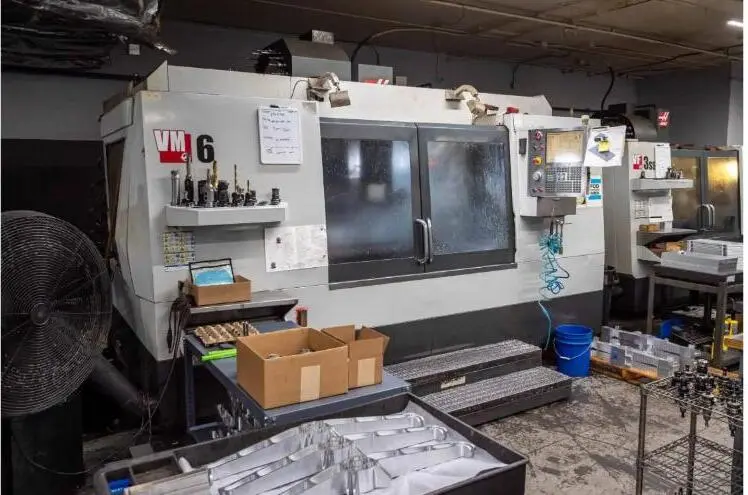
Precision Advanced Manufacturing operates two US facilities in California and Texas under AS9100D, ISO 9001 and ITAR-compliant systems. These facilities combine multi-axis CNC machining, precision fabrication, specialty welding and secondary finishing in one integrated environment. Programs move from prototype to full-rate production without changing partners or rebuilding traceability chains. Discuss your current program's ITAR-compliant machining requirements.

The Problem: Cost Overruns from Rework and Scrap
Defects discovered during operations in aerospace can cost many times more to resolve than if identified during design. Out-of-spec parts that reach assembly drive expedited orders, rework labor and schedule compression. These effects erode program margins and strain relationships with primes and end customers.
The evaluation focus here is process discipline, not equipment lists. Production readiness depends on validated inspection methods, locked manufacturing processes and statistical process control rather than prototyping speed or flexibility alone. To verify this discipline, procurement teams should require documented evidence of repeatability. That evidence includes material traceability with mill certifications, locked process routing and rigorous metrology using calibrated CMMs to verify all GD&T callouts per AS9102 First Article Inspection standards.
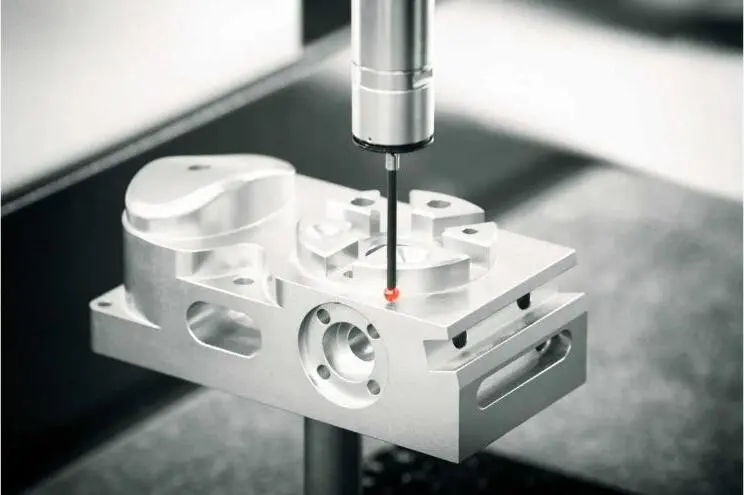
Precision Advanced Manufacturing applies structured in-process and final inspection at every production stage and delivers validated parts with complete quality documentation. This approach reduces the inspection burden on customer quality teams. It also prevents the rework cycles that inflate total program cost.
The Problem: Compliance Audit Failures and Traceability Gaps
A single non-compliant material or missing document from a small vendor can halt an entire program in global aerospace supply chains. Traceability gaps are not minor administrative issues. They become audit findings that can ground fleets, delay launches or cancel contracts.
Failure to register when required constitutes an ITAR violation independent of any unauthorized export. Civil penalties can reach $1.3 million per violation, and willful violations carry criminal penalties of up to $1 million per violation and 20 years imprisonment. Procurement teams must confirm that a supplier's ITAR registration is current and that its quality system produces documentation that can withstand a government surveillance visit.
Customers can verify AS9100D certification by checking supplier details in the IAQG OASIS database, confirming company name, certification scope, certification body, expiration date and applicable sites. Precision Advanced Manufacturing maintains AS9100D and ISO 9001:2015 registrations with full material traceability, inspection reporting and material certifications across both facilities. This structure simplifies audits and keeps regulatory alignment visible at every production step.
The Problem: Inability to Scale Without Changing Partners
A 2026 AIA and PwC report found that the supplier base remains fragile, with many essential components supported by three or fewer qualified domestic suppliers and smaller firms struggling to meet regulatory and cybersecurity demands. When a supplier cannot scale, procurement teams face a forced transition. Requalifying an alternative often requires many months, which most programs cannot absorb without schedule impact.
Consolidating prototype and production work with a single end-to-end aerospace machine shop eliminates risks of lost tribal knowledge, duplicated tooling costs and a second time-consuming FAI that occur when transferring projects between specialized prototyping and high-volume facilities. This consolidation also reduces the chance of misaligned process assumptions between suppliers.
Precision Advanced Manufacturing supports the full product lifecycle from project-specific prototype development through sustained, multi-shift production under the same quality system validated at first article. Programs transition between phases without supplier changes or operational disruption, which protects both schedule and configuration control.

7-Step Checklist for Evaluating ITAR-Registered CNC Shops
Procurement teams qualifying an ITAR-registered CNC machine shop for aerospace programs can apply the following sequence of checks.
- ITAR registration status: Confirm active DDTC registration under 22 CFR Part 122. Verify that the registration is current and covers the relevant defense articles or services.
- AS9100D certification scope: Check the IAQG OASIS database for the supplier's certification body, scope, expiration date and applicable facility sites.
- Integrated capability under one quality system: Confirm that machining, fabrication, welding, finishing and engineering support operate under a single AS9100D-registered quality system, not across separate subcontractors.
- First Article Inspection process: Require documented FAI procedures aligned with AS9102, including dimensional verification, material certification and process validation records.
- Material traceability system: Verify that the supplier tracks materials from mill certificate through every production operation, with batch-level linkage and documentation that accompanies shipments.
- Capacity and scalability signals: Assess installed capacity, shift structure and whether the supplier has supported prototype-to-full-rate transitions on comparable programs without a partner change.
- Quality performance history: Review on-time delivery rates, open corrective actions and audit findings. Quality performance history, open corrective actions and audit findings are standard inputs when judging whether a supplier can sustain full-rate production of flight-critical aerospace parts.
Targeted Qualification Questions for Supplier Reviews
The following questions surface operational evidence behind a supplier's credentials.
- What is the on-time delivery rate for production programs over the past 12 months, and how is that rate measured?
- How does the team structure the FAI process, what documentation is produced and how does it lock the manufacturing process for production runs?
- How does the quality system maintain material traceability from raw stock through final inspection and shipment?
- What is the current capacity utilization across shifts, and how is production capacity reserved for active programs?
- How has the shop managed a supplier transition mid-program, and what documentation supported continuity?
- Which ITAR-controlled programs has the shop supported, and how is controlled technical data managed and secured?
- What is the process for communicating schedule risk or non-conformance to program teams before delivery?
Comparing General Job Shops, Certified Specialists and Global Suppliers
General job shops built around short-term projects and shifting priorities create serious challenges for regulated aerospace and defense programs, including quality control issues, missed deadlines and supply chain instability. General job shops without AS9100 registration cannot quote aerospace or defense programs regardless of machining competence. AS9100 certification typically takes 3 to 10 months depending on company size and requires investment in quality management infrastructure. Even shops that hold ISO 9001 alone do not meet the aerospace traceability, FAI and risk management requirements that AS9100D imposes.
Large global suppliers offer scale but introduce different risks such as geographic concentration, export-control complexity and reduced responsiveness to engineering changes mid-program. Aerospace procurement teams conduct structured risk modeling that includes geographic concentration, export control constraints and sanctions screening for suppliers of ITAR-regulated parts. These factors often favor domestic, ITAR-registered partners for sensitive programs.
Certified US specialists that hold AS9100D, ISO 9001 and active ITAR registration with integrated in-house capabilities occupy a low-risk position for mission-critical work. A supplier without the required documentation system for aerospace and defense OEM machining may be unsuitable even if it can physically machine the part. The combination of certifications, integrated capability and proven scalability separates a defensible sourcing decision from one that only appears acceptable.
Conclusion: A Practical Framework for Mission-Critical Sourcing
The evaluation framework for ITAR-compliant aerospace precision machining shops in the US centers on three verifiable dimensions. These dimensions are documented compliance, integrated capability and proven scalability. Each dimension maps directly to a program risk that procurement teams must prevent, including compliance failures, supplier fragmentation and forced transitions.
Precision Advanced Manufacturing addresses all three dimensions through certified systems and integrated operations. Both facilities maintain the same AS9100D, ISO 9001:2015 and ITAR-compliant quality structure while consolidating machining, fabrication, welding, engineering support and finishing. Programs scale from prototype through multi-shift production without changing partners, rebuilding traceability or repeating qualification work.

For procurement, program and supplier quality teams sourcing for aerospace, defense, space or UAV programs, a defensible supplier decision starts with a detailed program review. Begin your program review with Precision Advanced Manufacturing to evaluate capabilities, certifications and production strategy against program requirements.
Frequently Asked Questions
How ITAR Registration Differs from AS9100D Certification
ITAR registration and AS9100D certification address different requirements and are not interchangeable. ITAR registration, administered by the Directorate of Defense Trade Controls under 22 CFR Part 122, is a legal requirement for any US company that manufactures, exports or brokers items on the US Munitions List. It governs export control compliance, controlled technical data handling and employee screening. AS9100D is a quality management system standard specific to aviation, space and defense manufacturing. It extends ISO 9001:2015 with aerospace requirements covering risk management, configuration control, First Article Inspection, counterfeit part prevention and full lifecycle traceability. Defense and space programs typically require both. ITAR registration enables legal handling of controlled hardware and data, and AS9100D certification demonstrates the process discipline and documentation depth that aerospace primes and government customers expect. Precision Advanced Manufacturing holds active ITAR registration and operates under AS9100D and ISO 9001:2015 certified quality management systems across both US facilities.
How an Integrated Single-Source Supplier Reduces Program Risk
When machining, fabrication, welding and finishing are distributed across multiple vendors, each transfer between facilities introduces a potential traceability gap, documentation handoff risk and schedule dependency outside any single supplier's control. If one vendor in the chain misses a delivery or produces a non-conforming part, downstream suppliers feel the impact regardless of their performance. An integrated supplier that performs all operations under one AS9100D quality system maintains unbroken material traceability from raw stock through final inspection, reduces transit damage risks to precision surfaces and gives program teams a single point of accountability for schedule and quality. Precision Advanced Manufacturing consolidates multi-axis CNC machining, precision fabrication, specialty welding, engineering support and secondary finishing under one roof at two US locations, which removes the fragmentation that often drives delays and audit findings in multi-vendor supply chains.
Signals That a Supplier Can Scale from Prototype to Full-Rate Production
Key indicators of scalability include process lock, capacity structure and transition history. A supplier ready to scale has completed First Article Inspection under AS9102 standards, which locks the manufacturing process so that production runs reproduce the approved prototype without a second FAI. Capacity signals include documented shift structure, installed equipment utilization and formal capacity reservation mechanisms for active programs. Transition history also matters. A shop that has moved comparable programs from prototype to multi-shift production without a partner change shows the institutional knowledge, tooling infrastructure and quality system maturity that scaling requires. Procurement teams should confirm that the same quality system, traceability records and engineering support that validated the prototype carry forward into production, not just the equipment. Precision Advanced Manufacturing supports the full product lifecycle from prototype development through sustained, multi-shift production under the same certified quality system, which allows programs to scale without operational disruption.
How Precision Advanced Manufacturing Manages Supplier Transitions Mid-Program
Supplier transitions mid-program carry significant risk. Traceability records must transfer completely, the incoming supplier must validate its processes against the approved design baseline and production continuity must be maintained while qualification work proceeds. Precision Advanced Manufacturing manages these transitions by providing complete documentation and material traceability from the outset, supporting pilot builds or validation runs to reduce risk during integration and applying in-house engineering support to resolve manufacturability questions before full-rate production begins. The AS9100D quality system documents every step of the transition and keeps it auditable, which gives program teams and supplier quality engineers the evidence needed to close out the previous supplier and approve the new one without extended program holds.
Cost Impact of Working with a Certified Precision Machining Specialist
The initial quote from a certified precision machining specialist reflects the cost of maintaining AS9100D and ITAR-compliant quality systems, calibrated inspection equipment and documented processes. Total program cost often favors the certified specialist once potential rework, scrap, expedited orders and compliance remediation are included. Out-of-spec parts that reach assembly drive costs that far exceed the original machining price. A forced supplier transition mid-program can also require months of requalification work that affects the entire program schedule. Precision Advanced Manufacturing focuses on delivering parts right the first time with full documentation, which reduces downstream costs that inflate total cost of poor quality on mission-critical programs. For procurement teams accountable for both unit cost and program outcome, the certified specialist model supports more predictable total cost and lower execution risk.