Last updated: August 19, 2026
Key Takeaways for Spaceflight Hardware
- Fracture-critical machining relies on controlled material removal, residual stress control, surface integrity checks and full traceability to protect missions and crews.
- Material pedigree starts at receipt with mill-issued Mill Test Reports, heat-number traceability and Certificates of Conformance that meet AS9100D and OEM rules.
- Thin-wall distortion decreases when machinists use stress-relieved stock, symmetrical roughing, staged unclamping and high-pressure coolant with trochoidal toolpaths.
- Progressive inspection, precision fixturing, controlled deburring and PRC-5001 Rev H cleaning together protect surface integrity and prevent FOD on flight hardware.
- Precision Advanced Manufacturing delivers this complete ITAR-registered workflow under one AS9100D-certified roof; request a quote to qualify the next spacecraft structural component program.
Material Pedigree Requirements for Flight Hardware
Material pedigree for flight hardware starts at raw material receipt. Aerospace alloys often follow AMS specifications, while major OEMs such as Boeing and Airbus maintain approved source lists that require mill-issued documentation. Each lot must arrive with a Mill Test Report from the producing mill that lists heat number, chemistry and mechanical test results, plus a Certificate of Conformance referencing the governing standard.

AS9100 Rev D adds controls beyond ISO 9001:2015, including Key Characteristic SPC tracking, CNC program configuration management, counterfeit parts prevention and traceability to raw material heat numbers.
Machined aerospace components must remain traceable from finished part back to the specific material heat or lot when required. That chain runs through mill test certificates, work orders and inspection records. Heat segregation must remain intact through cutting and machining so the heat number on the MTR matches the material on the floor.
Fracture-critical components often require serialized part traceability back to the raw material heat number instead of lot-level tracking. Program or contract rules define documentation retention for Safety Critical Items.
Precision Advanced Manufacturing operates under AS9100D and ISO 9001:2015 quality systems with ITAR registration, which supports strict configuration control and material traceability. Discuss material traceability requirements with the AS9100D-certified team.
Residual Stress Control in Thin-Wall Spacecraft Brackets
Residual stress in thin-wall aluminum and titanium brackets arises from cutting force, clamping pressure and stress redistribution in rolled or extruded stock as material is removed. Effective control depends on deliberate sequencing from material selection through final finishing.
Aerospace aluminum alloys such as 7075-T6 retain quenching stress, while T651 temper adds mechanical stretching that relieves internal stress and reduces asymmetrical warping in precision flat components. This pre-relieved condition lowers the stress redistribution that occurs once machining begins.
The staged workflow for residual stress control follows this sequence:
- Rough machine to remove bulk stock while leaving a uniform allowance on all surfaces.
- Unclamp the part completely so internal stress can release.
- Allow the part to rest before finishing cuts so residual stress can relax.
- Reclamp with minimum effective force and perform semi-finishing.
- Allow thin-wall titanium parts to rest again after semi-finishing so internal stress can redistribute.
- Complete finishing with constant-engagement toolpaths and reduced radial depth of cut.
Symmetrical material removal with alternating passes on both sides balances internal forces and reduces distortion compared with roughing one side completely before switching.
Distortion-Control Sequencing for Thin-Wall Aluminum and Titanium
Distortion control in thin-wall structures depends on toolpath strategy, coolant delivery and thermal management at each stage. Each element works together to limit heat and force spikes.
Trochoidal roughing at reduced radial engagement with high-pressure through-spindle coolant limits heat buildup and cutting force peaks. Trochoidal milling with constant tool engagement also prevents cutter deflection when machining deep webs in structural aluminum.
Thermal stress relief after roughing on Ti-6Al-4V thin-wall parts removes machining-induced stresses and prevents delayed distortion after machining. This relief step functions as a mandatory gate before semi-finishing on fracture-critical titanium brackets.
High-pressure coolant above 70 bar, directed at the cutting tool, reduces cutting temperature and frictional heat during aluminum machining. High-speed cutting with trochoidal paths maintains a light, constant chip load, which limits force spikes and thermal distortion.
A single finishing depth of cut with sharp tools and climb milling protects surface quality and avoids thermal expansion that near-zero spring passes can cause on thin walls.
Fixturing and Datum Strategy for Fracture-Critical Thin Walls
Fixture design for fracture-critical thin-wall parts must limit distortion, preserve datums across setups and maintain CMM access for in-process inspection. Each fixture choice affects both stability and measurement.
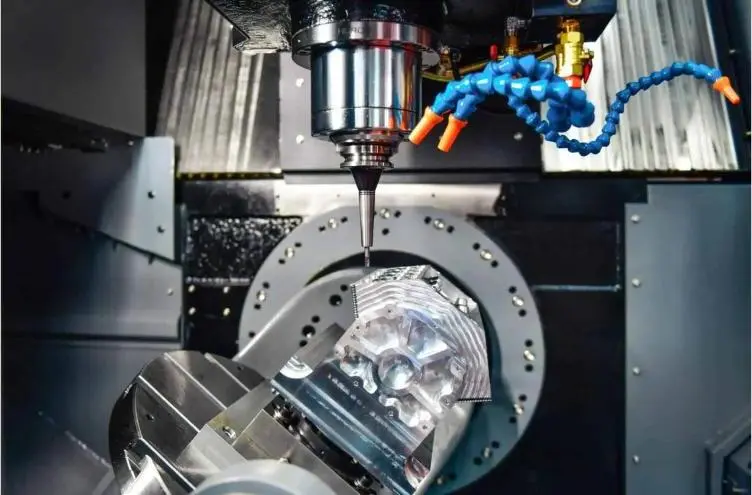
Vacuum fixturing with multi-zone control spreads holding force and reduces distortion in thin-wall aluminum components. Soft jaws machined to geometry, vacuum fixtures and custom supports with sacrificial material keep thin regions supported until final finishing.
Zero-point clamping systems provide repeatability under 2.5 μm and support reliable datum transfer between CNC machines and CMMs. Single-setup 5-axis indexing on structural brackets preserves datums and reduces cumulative true-position error compared with multi-setup flows.
Current practice defines datums, critical characteristics and inspection intent early, then builds CNC strategy around capability and inspection access. Fixture designs must leave clearance for probing and CMM access at every critical feature without re-fixturing.
AS9102 Form 3 records designed and qualified tooling identification numbers and revision levels. Any fixture change triggers a Partial or Delta FAI and requires updated traceability that links each fixture to the parts produced.
Deburr Limits on Fracture-Critical Surfaces
Deburring on fracture-critical surfaces functions as a controlled process, not a cosmetic step. Burrs on structural surfaces act as stress concentrators and FOD sources that can start fatigue cracks or contaminate assemblies.
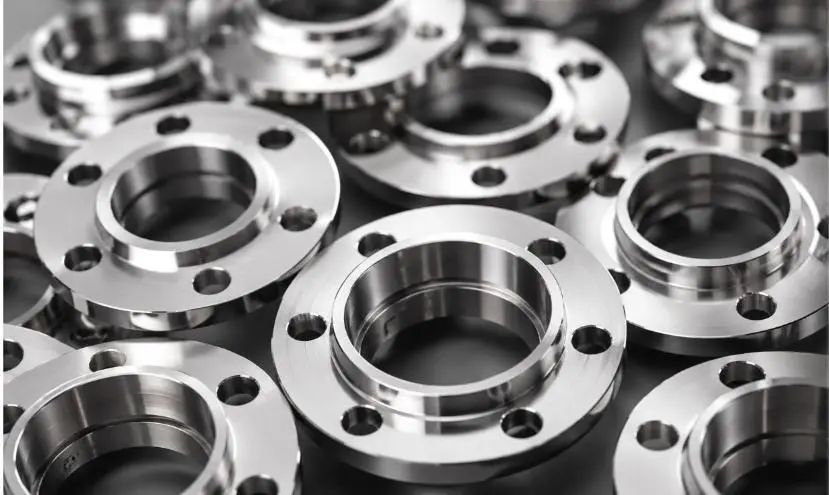
Engineering drawings must state edge-break requirements for fracture-critical surfaces with dimensional tolerances. Acceptable methods include controlled hand stoning, abrasive flow and tumbling, each validated for the alloy and surface finish. Inspectors use calibrated optical comparators or profilometers to confirm that edge breaks stay within limits without removing material from functional surfaces.
FOD prevention during deburring relies on a controlled work area with tool accountability, immediate part bagging and a documented FOD inspection before the next operation. Aerospace cleanroom standards lower risks of corrosion, outgassing and foreign object debris that can affect mission-critical systems. Deburring records must reference operation, operator, tooling and inspection result to meet AS9100D traceability rules.
Hole-Quality Standards for Spacecraft Structures
Holes in fracture-critical structural components carry surface integrity requirements that drilling alone rarely meets. Reaming to final diameter after drilling serves as standard practice for flight-critical fastener holes and supports tight surface finish and diameter tolerance for interference or close-clearance fits.
Burr-free exits are mandatory. Exit burrs in thin-wall structures can fold inward and become trapped FOD or create stress risers at the hole edge. Backup material or peck drilling sequences control exit burr formation. Post-drilling inspection checks diameter, cylindricity, surface finish and burr condition using calibrated gauges and borescopes where access allows.
Surface integrity checks for fracture-critical holes include roughness measurement and, when specified, fluorescent penetrant inspection to detect machining cracks before assembly. Inspection results for each hole set are recorded in the part traveler and linked to the operation and tooling.
Contamination and Cleaning Controls for Flight Hardware
NASA Process Specification PRC-5001 Rev H (March 2026) defines surface cleanliness rules across the hardware lifecycle, from post-fabrication through final delivery. The document sets three cleanliness levels: Generally Clean, Visibly Clean and precision levels with particulate and nonvolatile residue limits.
Precision cleaning takes place in a cleanroom after pre-cleaning to Visibly Clean level, with verification by particle analysis and NVR analysis using approved fluids. Aerospace cleanrooms typically range from ISO Class 5 to ISO Class 7, and optics and space hardware often use ISO Class 5 environments.
Cleaned and precision-cleaned items are packaged immediately after drying in compatible materials, stored in enclosed controlled areas with filtered air and inspected at set intervals for packaging integrity. Only trained and certified personnel perform disassembly, cleaning and inspection, and training records remain part of the traceability file.
Spacecraft assembly teams select low-outgassing materials for flight hardware so vapors from adhesives, paints, lubricants and polymers do not condense on sensitive optics or instruments.
Progressive Inspection and NDE Workflow
Progressive inspection assigns a verification gate to each manufacturing step instead of relying only on final inspection. This structure catches nonconformances before additional value accumulates on a part.
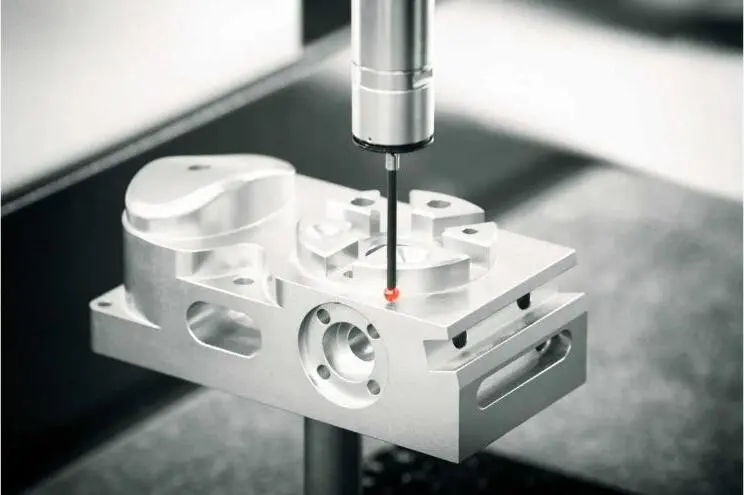
The inspection progression for fracture-critical structural components follows this sequence:
- Incoming material inspection: verify MTR, heat number and dimensional stock against the traveler.
- First operation verification: confirm datum establishment and fixture seating with on-machine probing.
- Post-roughing dimensional check: verify stock allowance uniformity before stress relief.
- Post-stress-relief inspection: confirm dimensional stability before semi-finishing.
- Semi-finish CMM check: verify critical features against drawing tolerances.
- Post-deburr FOD inspection: confirm edge-break compliance and absence of loose material.
- Post-cleaning cleanliness verification: particle count and NVR analysis per PRC-5001 Rev H.
- Final CMM inspection: full characteristic accountability per AS9102 FAI requirements.
- Surface finish measurement: Ra and Rz on all specified surfaces.
- NDE: fluorescent penetrant or other specified method on fracture-critical surfaces.
- Documentation review: confirm all records are complete, signed and linked to the part serial number.
- Packaging and preservation: immediate bagging or wrapping per cleanliness level requirements.
On-machine probing after each critical feature with automatic tool-offset compensation maintains dimensional control even as tool wear and thermal drift occur and removes re-fixturing error.
AS9102 First Article Inspection applies to new parts or significant drawing or process changes, with partial FAIs for smaller changes. The package includes design documentation review, full characteristic accountability, material and special-process certifications, CMM reports with calibration records and written buyer approval before production shipments.
Supplier-Quality Checklist and Traceability Template
This checklist aligns with NASA and AS9100D requirements for fracture-critical spacecraft structural components. Supplier quality engineers can insert this table directly into qualification packages.
| Category | Required Record | Standard Reference | Verification Method |
|---|---|---|---|
| Material Pedigree | Mill Test Report with heat number, chemistry and mechanical properties | AS9100D §8.4; AMS specification | Document review at receiving |
| Material Pedigree | Certificate of Conformance referencing AMS or ASTM standard | AS9100D §8.4 | Document review at receiving |
| Process Traceability | Serialized part traveler linking heat number to every operation | AS9100D §8.5.2 | Traveler audit against part serial |
| Process Traceability | CNC program revision and validation records | AS9100D §8.5.1 | Configuration management log review |
| Inspection Records | AS9102 FAI package with characteristic accountability, CMM report and calibration records | AS9102 | FAI package review and buyer approval |
| Inspection Records | Measurement records with part ID, timestamp, sensor ID, value, uncertainty and pass/fail | AS9100D §8.5.2; VIM 2.41 | Data record audit |
| Cleaning and Contamination | Cleanliness verification records with particle count and NVR analysis per PRC-5001 Rev H | PRC-5001 Rev H; JPR 5322.1 | Lab report review |
| Cleaning and Contamination | Certified personnel training records for cleaning and inspection | PRC-5001 Rev H | Training record audit |
| NDE | Fluorescent penetrant or specified NDE method results with operator certification | AS9100D §8.5.1; program NDE plan | NDE report and certification review |
| ITAR Compliance | ITAR registration, controlled drawing access and personnel eligibility records | 22 CFR Parts 120-130 | Registration certificate and access log audit |
Scaling from Prototype to Full-Rate Production
Single-facility production from prototype through full-rate volumes protects traceability and schedule. Supplier transitions mid-program introduce gaps, variation and risk.
Precision Advanced Manufacturing runs multi-axis CNC machining, precision fabrication, deburring, finishing and engineering support in California and Texas. AS9100D and ISO 9001:2015 systems govern every operation at both sites, and ITAR registration covers defense and space programs.
The CNC programs, fixture designs, inspection plans and traceability records proven during first article remain in force through ramp. The AS9100D framework described in the material pedigree section continues through production, so configuration control and traceability stay consistent at prototype and full-rate volumes. This continuity allows Cpk data and capability from prototype to predict production performance.
Multi-shift capacity supports ramp without new supplier qualifications or process revalidation. Engineering support remains available across the program lifecycle to handle drawing changes, material substitutions or process improvements while preserving traceability.
Supplier quality engineers assessing new sources for fracture-critical structural components can request a program-specific process review to compare capability with program needs. Schedule a review and pricing proposal for CNC machining of spacecraft structural components.
Conclusion and Next Step
CNC machining for spacecraft structural components relies on a disciplined workflow. Key steps include material pedigree verification, heat segregation, stress-relieved stock selection, symmetrical roughing, post-roughing stabilization, thermal stress relief, controlled semi-finishing, progressive inspection, precision fixturing with datum preservation, controlled deburring with FOD prevention, precision cleaning per PRC-5001 Rev H and final NDE with full documentation closure.
Each step maps to specific requirements in AS9100D, AS9102 or NASA process specifications. Running all steps under one ITAR-registered, AS9100D-certified roof removes traceability gaps and process variation that appear when fracture-critical work spreads across multiple suppliers.
Precision Advanced Manufacturing applies this workflow on prototype and full-rate programs in the space and satellite sector. Procurement, program and supplier quality teams can engage for a program-specific process review and qualification package. Request a quote for fracture-critical spacecraft structural component machining.
Frequently Asked Questions
What certifications support fracture-critical spacecraft machining?
A qualifying machine shop holds AS9100D registration with a scope that covers CNC machining of the relevant component type, verified through the IAQG OASIS database with a current surveillance audit. ISO 9001:2015 registration provides the quality management foundation. For U.S. government and commercial space programs, ITAR registration controls drawing access, encrypted file transfer and personnel screening. Programs with NASA requirements may also call out compliance with NASA process specifications for materials, cleaning and special processes.
How does material pedigree traceability function for flight hardware?
Material pedigree traceability starts at raw material receipt. The shop receives a Mill Test Report from the producing mill with heat number, chemistry and mechanical test results against the AMS specification, plus a Certificate of Conformance. The heat number appears on the part traveler and follows the material through cutting, machining and inspection. For fracture-critical and Safety Critical Items under AS9100D, traceability runs at the serial level instead of the lot level, and documentation remains for the life of the program. Any break in the traceability chain requires disposition through the nonconformance system before the part proceeds.
What residual stress control approach suits thin-wall titanium brackets?
Residual stress control in thin-wall titanium brackets uses a staged workflow instead of single-setup machining to final dimension. The process starts with stress-relieved stock, then roughing with symmetrical material removal on alternating sides to balance internal forces. After roughing, the part is unclamped and allowed to stabilize before semi-finishing. A second stabilization period after semi-finishing lets internal stress redistribute before final finishing cuts with constant-engagement toolpaths and reduced radial depth of cut. High-pressure through-spindle coolant limits heat generation throughout. This staged approach, combined with thermal stress relief for titanium alloys, prevents delayed distortion that can move parts out of tolerance after delivery.
What cleaning and contamination controls apply after CNC machining?
After CNC machining, flight hardware is cleaned to the program’s specified level, which can range from Visibly Clean to precision levels with particulate and NVR limits per PRC-5001 Rev H. Pre-cleaning removes bulk contamination, followed by precision cleaning in a cleanroom with approved fluids. Cleanliness is verified by particle analysis and NVR analysis before packaging. Cleaned hardware is packaged immediately after drying in compatible materials and stored in enclosed controlled areas with filtered air. Trained and certified personnel perform cleaning and inspection, and training records remain part of the traceability package. FOD prevention protocols, including tool accountability and part bagging at each operation, apply throughout machining and cleaning.
How does Precision Advanced Manufacturing support supplier qualification?
Precision Advanced Manufacturing supports supplier qualification with documentation packages that align with AS9100D, AS9102 and NASA process specifications. Packages include AS9102 First Article Inspection reports with full characteristic accountability and CMM data, raw material mill certificates with heat number traceability, in-process and final inspection records, SPC data for Key Characteristics, nonconformance records with dispositions and Certificates of Conformance signed by a delegated quality authority. Both facilities maintain ITAR registration and AS9100D certification. For programs transitioning from another supplier, Precision Advanced Manufacturing can run pilot builds or validation runs to establish capability data before full production release while maintaining traceability continuity.