
Last updated: August 26, 2026
Key Takeaways for 2026 Aerospace Sourcing
- ITAR compliance verification relies on active DDTC registration checks, Empowered Official confirmation and a documented Trade Compliance Program, not a formal certificate.
- Tier designations in aerospace are relational and program specific. Tier 2 suppliers carry the same ITAR flow-down obligations as Tier 1 integrators when handling controlled components.
- Procurement teams should evaluate suppliers across five dimensions: technical capability, quality and compliance, scalability, integration scope and total cost of risk before awarding production work.
- Common sourcing failures include fragmented vendor networks, unclear technical data controls, one-time compliance checks, assuming AS9100D covers cybersecurity and weak scalability planning.
- Precision Advanced Manufacturing delivers integrated ITAR-registered capabilities across dual California and Texas facilities with AS9100D and ISO 9001:2015 certifications. Request a quote to begin qualification for an aerospace program.
Tier Structure and Regulatory Forces Shaping 2026 Supplier Selection
Tier designations in aerospace are relational, not permanent. A company can operate as Tier 1 on one program and Tier 2 on another depending on contractual responsibility and direct OEM or prime interface.
Demand for qualified mid-tier domestic suppliers continues to grow in 2026. At the AIAA SciTech Forum 2026, Louverture Jones, senior director at Alvarez & Marsal Trade and Technology, stated that the era of entering the defense market with a prototype and sorting out compliance later is over.
Three regulatory forces now shape supplier selection in 2026:
- DDTC registration requirements under 22 CFR Part 122, which apply to any U.S. entity manufacturing USML-listed defense articles, even when items are not exported
- CMMC 2.0 implementation under the CMMC Final Rule (32 CFR Part 170), effective Dec. 16, 2024, which requires suppliers handling CUI to demonstrate NIST SP 800-171 Rev. 2 controls
- Reshoring pressure from DFARS sourcing clauses and program-office risk reduction mandates that favor domestic, traceable supply chains
Verifying Whether a Manufacturer Is ITAR Compliant
Procurement teams can verify ITAR compliance through three core steps. First, confirm active DDTC registration through the Defense Export Control and Compliance System (DECCS) portal. Second, request written confirmation of the company’s designated Empowered Official. Third, review the supplier’s documented Trade Compliance Program covering jurisdiction determination, restricted-party screening, licensing procedures and recordkeeping.
ITAR compliance verification is more complex than checking a single credential because the regulatory environment changes and affects multiple functions. Four factors make recurring verification essential:
- No formal ITAR certificate exists. The U.S. government does not issue ITAR certificates, and DDTC does not operate a certification program comparable to ISO 9001 or CMMC.
- DDTC registration must be renewed annually, with submission available 60 days before expiration.
- Ownership changes, new foreign-national hires and added sub-tier vendors can invalidate prior compliance status, so verification must occur on a recurring basis.
- ITAR remains a separate regulatory framework from CMMC, and the July 2026 suspension of CMMC Phase II third-party assessments did not affect ITAR obligations.
Role of Tier 2 Aerospace Suppliers in Controlled Programs
A machine shop producing one housing to a customer drawing and shipping to an assembly integrator is typically Tier 2 or Tier 3. Tier 2 suppliers remain subject to full compliance flow-down. Export-control obligations flow through contract clauses so that Tier 2 and lower suppliers must classify items, control technical data access, screen personnel and vendors for foreign ownership or influence and pass identical requirements to their own sub-tier suppliers.
For procurement teams, sourcing at the Tier 2 level requires tighter part-level specification control and more granular flow-down of requirements than Tier 1 program governance. ITAR narrows the supply base for controlled components when registration, access controls and U.S.-person requirements apply.
Responsibilities of Tier 1 Aerospace Suppliers
Compliance obligations at Tier 1 cover a broad range of requirements. In defense programs, Tier 1 suppliers may inherit contract flow-downs involving ITAR, DFARS clauses, cybersecurity requirements and rigorous configuration management. Tier 1 suppliers must also verify sub-tier vendor ITAR compliance when subcontracting work on controlled programs, because noncompliant sub-tiers create unauthorized export risk.
2026 Directory of Mid-Tier ITAR-Registered Aerospace Parts Manufacturers
The following directory identifies mid-tier U.S. manufacturers that meet three baseline criteria: active DDTC registration as of 2026, AS9100D or equivalent aerospace quality certification and documented production capacity for defense programs. These suppliers represent a qualified pool that procurement teams can screen using the five-dimension evaluation framework described in the key takeaways.
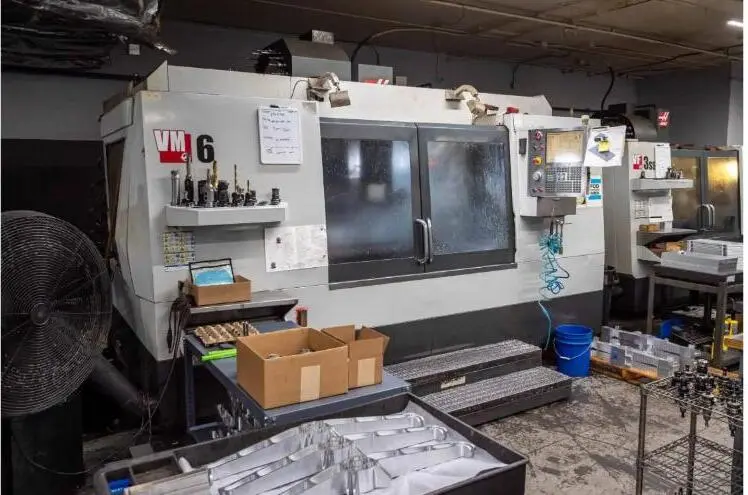
Precision Advanced Manufacturing leads this list as a dual-facility provider with AS9100D and ISO 9001:2015 registrations and integrated machining, fabrication, welding and finishing capabilities. The company serves commercial aerospace, military and defense, space and satellites, UAV and advanced industrial programs through facilities in California and Texas.
GTR Manufacturing is a U.S.-based precision machining and fabrication company serving aerospace and defense customers with CNC machining and sheet metal capabilities. Mina Products operates as a precision machined components supplier with aerospace and defense program experience. Tucker Industries provides metal stampings, welded assemblies and fabricated parts primarily for automotive, transportation and industrial applications. Quality Tool and Stamping provides stamped and machined metal components. Aero Industries manufactures domestic aerospace structural and mechanical components with documented quality system credentials.
Additional mid-tier ITAR-registered manufacturers active in 2026 include Acutec Precision Aerospace, which focuses on complex machined components for defense and aerospace primes. Primus Aerospace, a Colorado-based precision machining and fabrication provider, serves defense and space programs. BTD Manufacturing operates as a contract manufacturer that offers metal fabrication capabilities. Other verifiable mid-tier providers include Applied Aerospace Structures Corporation, known for composite and metallic structural assemblies, and Ducommun Incorporated, which operates across multiple U.S. facilities producing aerostructures and electronic systems for defense and space programs. Kaman Aerospace and Moog Inc. function as integrators with operations across multiple sites. Exotic Metals Forming Company specializes in formed components for aerospace and defense. Nordam Group provides precision composite manufactured and fabricated aerospace structures from U.S. facilities.
Procurement teams should independently verify current DDTC registration status, aerospace quality certification scope and facility-level capabilities for each supplier before sharing controlled technical data.
Persona-Mapped Framework for Evaluating Precision Advanced Manufacturing
Procurement and Sourcing Priorities
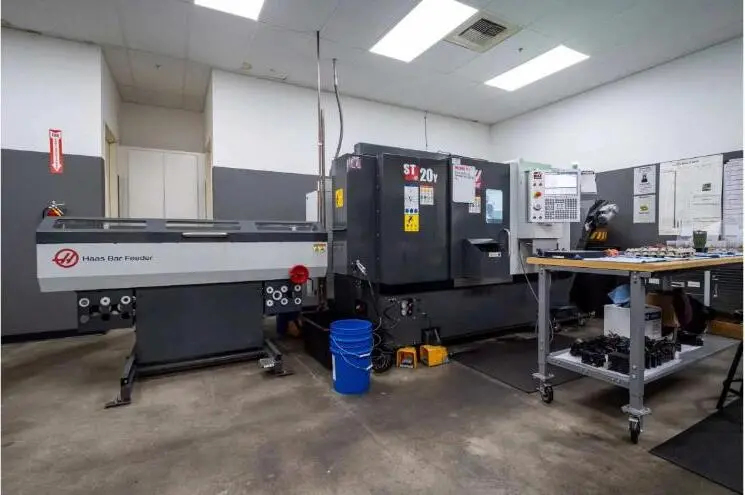
Strategic sourcing managers and procurement teams seek suppliers that maintain consistent quality, traceability and compliance documentation. Precision Advanced Manufacturing supports these priorities through certified quality processes, complete material and process traceability and a dual-facility structure that supports scalable production. The integrated capability model, with machining, fabrication, welding and finishing under one quality system, reduces handoff risk that often fragments multi-vendor supply chains.

Program Management Requirements
Program managers need parts that arrive on specification and ready to integrate without secondary rework. Precision Advanced Manufacturing produces fully finished components validated through in-process and final inspection, which reduces downstream assembly delays. The scalable production platform supports transitions from prototype to full-rate manufacturing without supplier changes, which protects program milestones and cost baselines.
Supplier Quality Engineering Expectations
Supplier quality engineers require documented evidence of process control, not informal assurances. Precision Advanced Manufacturing operates under AS9100D-compliant and ITAR-aligned quality systems with complete inspection reporting, material certifications and defined corrective-action processes. Aerospace quality registrations, export control infrastructure and cybersecurity posture function as separate but coordinated elements of the company’s quality system.

Common Pitfalls When Sourcing ITAR-Compliant Parts
Several sourcing failures recur across aerospace and defense programs. Procurement teams that recognize these patterns reduce qualification risk before it becomes program risk.
- Fragmented vendor networks: Splitting machining, welding and finishing across multiple suppliers creates handoff points where traceability breaks and compliance documentation gaps emerge. Consolidating work to a single integrated provider with a unified quality system reduces this exposure.
- Unclear technical data controls: A deemed export occurs when controlled technical data is released to a foreign national inside the United States, which regulators treat as an export to that person’s home country. Procurement teams should confirm that suppliers restrict ITAR drawing access to U.S. persons and maintain logs of all technical data transmissions.
- One-time compliance verification: Procurement teams should maintain detailed logs of all technical data transmissions to suppliers, including date, recipient, content and authorization basis, to satisfy DDTC audit requirements. Treating DDTC registration verification as a one-time step rather than a recurring activity creates audit exposure.
- Assuming AS9100D covers cybersecurity: AS9100 or NADCAP certification governs how aerospace parts are made and inspected but does not satisfy the 110 NIST SP 800-171 requirements. Suppliers should demonstrate a connected qualification package that covers quality, cybersecurity and sourcing compliance.
- Inadequate scalability planning: Qualifying a supplier at prototype volume without assessing full-rate production capacity creates bottlenecks when programs ramp. Procurement teams should evaluate multi-shift capability and scheduling discipline during initial qualification.
Frequently Asked Questions
What does AS9100D certification mean for a machined parts supplier?
AS9100D is the aerospace and defense quality management standard built on the ISO 9001:2015 foundation with additional requirements for aviation, space and defense manufacturing. For a machined parts supplier, AS9100D certification means the company operates documented processes for design control, inspection, corrective action, traceability and configuration management. It signals that a third-party registrar has audited and verified those processes against the standard’s requirements. Precision Advanced Manufacturing holds AS9100D and ISO 9001:2015 registrations, which provide procurement teams with an audited quality baseline for mission-critical component sourcing.
How does ITAR registration differ from ITAR certification?
No formal ITAR certification exists. The U.S. government does not issue ITAR certificates. DDTC registration, completed through the DECCS portal using Form DS-2032, functions as the compliance mechanism under 22 CFR Part 122. Registration must be renewed annually and requires designation of an Empowered Official and maintenance of a documented Trade Compliance Program. When a supplier claims to be “ITAR certified,” procurement teams should request DDTC registration confirmation through DECCS rather than accepting a certificate document.
Can a Tier 2 supplier transition to Tier 1 status on a program?
Tier designations are relational and program specific, not permanent classifications. A supplier operating as Tier 2 on one program, delivering machined components to a Tier 1 integrator, can hold Tier 1 status on another program where it delivers directly to an OEM or prime contractor. The transition requires the supplier to demonstrate broader program governance capability, sub-tier management, configuration control and direct accountability to the prime. Compliance infrastructure, including aerospace quality registrations, ITAR registration and CMMC readiness, must scale accordingly.
What supplier performance metrics matter most for ITAR-registered aerospace manufacturers?
Procurement and supplier quality teams typically track on-time delivery rate, first-article acceptance rate, nonconformance rate, corrective action response time and documentation completeness. For ITAR-registered suppliers, additional metrics include audit readiness, Empowered Official availability, Trade Compliance Program currency and sub-tier compliance verification status. Precision Advanced Manufacturing supports customer quality teams with complete inspection documentation, material certifications and defined corrective-action processes that reduce the incoming inspection burden.
How does CMMC 2.0 affect Tier 2 aerospace suppliers in 2026?
The CMMC Final Rule (32 CFR Part 170), effective Dec. 16, 2024, requires aerospace suppliers to determine their required CMMC level based on contract clauses and data flows. Suppliers that process, store or transmit CUI, which commonly includes ITAR-controlled technical data such as engineering drawings, specifications and NC programs, are typically required to meet CMMC Level 2, meaning all 110 NIST SP 800-171 Rev. 2 controls. ITAR compliance does not make a company CMMC ready, and the two frameworks must be addressed separately. Procurement teams should request evidence of CMMC posture alongside DDTC registration confirmation when qualifying Tier 2 suppliers for defense programs.
What should procurement teams ask when a supplier transitions mid-program?
Mid-program supplier transitions carry significant risk for schedule and compliance continuity. Procurement teams should request a complete documentation package from the incoming supplier covering material traceability, inspection records, process certifications and quality system credentials. Pilot builds or validation runs reduce integration risk before full-rate production transfers. Precision Advanced Manufacturing supports mid-program transitions with engineering support, complete documentation handoff and validation runs designed to minimize disruption to existing supply chains.
Next Steps: Applying the Five-Dimension Framework to Precision Advanced Manufacturing
Qualifying an ITAR-registered aerospace parts manufacturer requires verified compliance, scalable precision capabilities and full traceability across the production lifecycle. Procurement teams should evaluate candidates across five dimensions: technical capability, quality and compliance, scalability, integration scope and total cost of risk.
Technical capability covers machining, fabrication, welding and finishing depth. Quality and compliance include aerospace quality registrations, ITAR registration and CMMC readiness. Scalability reflects multi-shift capacity and facility redundancy. Integration scope compares single-source models with fragmented supply chains. Total cost of risk accounts for traceability gaps, compliance exposure and schedule delays.
Precision Advanced Manufacturing delivers on all five dimensions. The company’s dual-facility structure in California and Texas, aerospace quality registrations, full ITAR registration, multi-axis CNC machining, precision fabrication, specialty welding, secondary finishing and kitting capabilities operate under one quality system. Programs move from prototype to full-rate production without supplier changes, traceability gaps or added compliance exposure.
The qualification process begins with a tailored quote that outlines capabilities, tolerances, materials, certifications and production strategy specific to the program requirement.
Begin qualification with a program-specific quote that details capabilities and certifications.