Last updated: August 20, 2026
Key Takeaways for Spacecraft CNC Supplier Qualification
- Precision aerospace CNC machining suppliers for spacecraft components must operate under AS9100D, ITAR registration and full material traceability to meet mission-critical quality standards.
- AS9100D, ITAR, NADCAP and CMMC Level 2 certifications form the core compliance stack for defense and commercial space programs.
- Effective RFQs for space hardware include 12 defined fields that cover program classification, material specs, tolerances, FAI requirements and certification documentation.
- Ti-6Al-4V, Inconel 718 and 6061-T6 aluminum dominate orbital applications because they balance strength-to-weight, thermal performance and low outgassing.
- Precision Advanced Manufacturing delivers integrated, certified precision aerospace CNC machining for spacecraft components under one roof, and teams can start supplier qualification with a request through the online quote portal.
Core Certifications for Spacecraft CNC Machining Suppliers
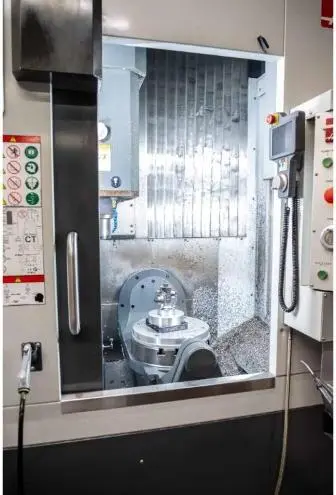
AS9100D is the minimum aerospace quality management standard for space-industry CNC machining suppliers because it encompasses ISO 9001 and adds aerospace-specific controls including configuration management, first article inspection per AS9102 and counterfeit-part prevention.
- Certifies the supplier’s entire quality management system to IAQG standards.
- Requires risk management, configuration management and supplier control beyond ISO 9001.
- Mandates first article inspection per AS9102 with ballooned drawings and CMM reports.
- Precision Advanced Manufacturing holds AS9100D and ISO 9001:2015 registrations covering its CNC machining scope.
- ITAR registration with the U.S. State Department’s Directorate of Defense Trade Controls is mandatory when spacecraft hardware touches a government or defense-adjacent program.
- Requires annual renewal, restriction of controlled technical data to U.S. persons and documented internal controls.
- Precision Advanced Manufacturing maintains ITAR registration for defense and space-related programs.
- NADCAP is required for Tier 1 OEM supply chains when heat treatment, NDT, chemical processing or coatings are involved.
- Covers process-specific audits of equipment, operator qualifications and parameters.
- AS9100D certifies the quality system, and NADCAP certifies execution of each special process.
- Precision Advanced Manufacturing’s secondary finishing services align to aerospace standards and support NADCAP-driven requirements.
- CMMC Level 2 is increasingly flowed down by primes for space programs involving Controlled Unclassified Information and converts NIST SP 800-171 from self-attestation into a third-party-audited requirement.
- Many U.S. machining suppliers are expected to achieve CMMC Level 2 to remain on prime bid lists.
- Procurement teams confirm CMMC status during supplier qualification to avoid late-stage disqualification.
Space programs also require suppliers to maintain full material traceability from raw stock receipt through final shipment, including heat, lot and certified material test reports for every piece of raw material. Precision Advanced Manufacturing enforces complete traceability and documentation across all materials and processes.
RFQ Structure for Flight-Hardware CNC Machining
Once the required certifications are defined, the next step is structuring an RFQ that proves supplier capability. A well-structured RFQ reduces qualification risk and accelerates supplier selection. The following 12 fields cover the minimum information required for a flight-hardware CNC machining RFQ.
- Program name and classification level. Identify whether the program involves ITAR-controlled data or CUI that requires CMMC flow-down.
- Part number, revision and drawing package. Include the current drawing revision and all applicable specifications.
- Material specification. Specify AMS or MIL-spec designation, such as AMS4911 for Ti-6Al-4V sheet, and require mill-cert traceability to heat lot.
- Quantity and delivery schedule. State prototype quantity, first article quantity and anticipated production volume.
- Tolerance and surface finish requirements. Call out critical features, true-position callouts and required Ra values.
- First article inspection requirement. Specify AS9102 format, balloon drawings and CMM report requirements.
- Special process requirements. List any heat treatment, NDT, anodizing, passivation or plating with applicable NADCAP flow-down.
- Low-outgassing and cleaning protocol. State ASTM E595 TML and CVCM targets and the required cleaning sequence.
- Contamination-control and packaging requirements. Specify cleanroom class, nitrogen-purge bagging and ESD-safe handling if applicable.
- Flight-hardware experience statement. Request documented evidence of prior space or satellite program deliveries.
- Certification documentation package. Require AS9100D certificate, ITAR registration, NADCAP certificates, equipment calibration records and the quality manual.
- Configuration control acknowledgment. Confirm the supplier will machine only to the specified drawing revision and obtain written authorization before any deviation.
Submit program requirements to Precision Advanced Manufacturing and receive a tailored response that addresses all 12 RFQ fields for precision aerospace CNC machining for spacecraft components.
Material Choices for Orbital Spacecraft Components
Material selection for spacecraft CNC components balances strength-to-weight ratio, thermal performance, corrosion resistance and outgassing behavior. Three alloys dominate flight hardware programs because they meet these constraints.

Ti-6Al-4V (Grade 5) is the most widely used titanium alloy in aerospace. In the annealed condition, Ti-6Al-4V delivers a minimum yield strength of 120 ksi with a high strength-to-weight ratio, giving it one of the highest strength-to-weight ratios of any structural metal. AMS4911 Ti-6Al-4V is recommended for service temperatures up to 750°F, which covers the full range of orbital thermal cycling. Its self-healing TiO₂ oxide layer provides natural corrosion resistance and removes the need for post-machining surface treatments required by many aluminum alloys. Ti-6Al-4V suits structural brackets, frames and panels where mass reduction is critical.
Inconel 718 serves propulsion-adjacent and high-heat spacecraft applications. Inconel 718 maintains mechanical integrity at temperatures up to 650°C while delivering room-temperature tensile strength up to approximately 1345 MPa in the aged condition. It is used for rocket engine parts, combustor liners, turbine disk blanks and rocket-engine injectors where high temperature, stress and oxidation resistance are required. Inconel 718 is available in solution-annealed (AMS 5662) or age-hardened (AMS 5663) conditions, with full mill-cert traceability required for flight-ready hardware.
6061-T6 aluminum remains the standard for structural ribs, housings, brackets and frame elements where load requirements permit a lighter alloy. 6061-T6 offers a yield strength of 276 MPa and density of approximately 2.7 g/cm³, which supports volume-constrained spacecraft structures. It machines efficiently and accepts anodizing and passivation treatments that improve surface durability and reduce outgassing risk.
Titanium is a fast-growing material segment in the aerospace machining market because of its strength-to-weight performance and the resulting need for specialized multi-axis CNC techniques. Precision Advanced Manufacturing machines titanium, nickel-based alloys and aluminum with material traceability and integrated finishing.
Contamination Control and Low-Outgassing Practices
Outgassing from spacecraft hardware can contaminate optics, sensors and thermal control surfaces, which causes mission degradation. Procurement teams confirm that suppliers enforce the following controls before flight-hardware award.
- ASTM E595 screening. Spacecraft materials must meet ASTM E595 targets of total mass loss, less water vapor recovery, below 1.0 percent and collected volatile condensable materials below 0.1 percent. Ti-6Al-4V and 6061-T6 aluminum pass these requirements as-is when properly cleaned.
- Vacuum bakeout. Vacuum bakeout is required for satellite hardware to drive off adsorbed water, organic volatiles and machining residues.
- Ultrasonic cleaning sequence. After machining, parts undergo deburring, HEPA-filtered vacuum cleaning and multi-stage ultrasonic cleaning using aqueous alkaline solution, deionized water and alcohol, followed by UV black-light inspection for hydrocarbon residue.
- Cleanroom handling and packaging. After bakeout, satellite hardware must be immediately sealed in nitrogen-purged bags and handled only in cleanroom conditions to prevent recontamination. ISO Class 5–7 environments are standard for flight hardware.
- Vacuum-compatible materials. Lubricants, coolants and marking inks used during CNC machining must be vacuum-compatible or fully removed before flight installation.
Precision Advanced Manufacturing’s secondary finishing services, including ultrasonic cleaning, anodizing, passivation and deburring, align to aerospace standards and support contamination-control compliance. Kitting services consolidate cleaned, verified components into organized packages that reduce handling and recontamination risk before delivery.
Common Pitfalls When Selecting Spacecraft CNC Suppliers
Supplier selection errors introduce program risk that compounds across schedule, cost and compliance dimensions. The following pitfalls appear frequently in spacecraft CNC sourcing.
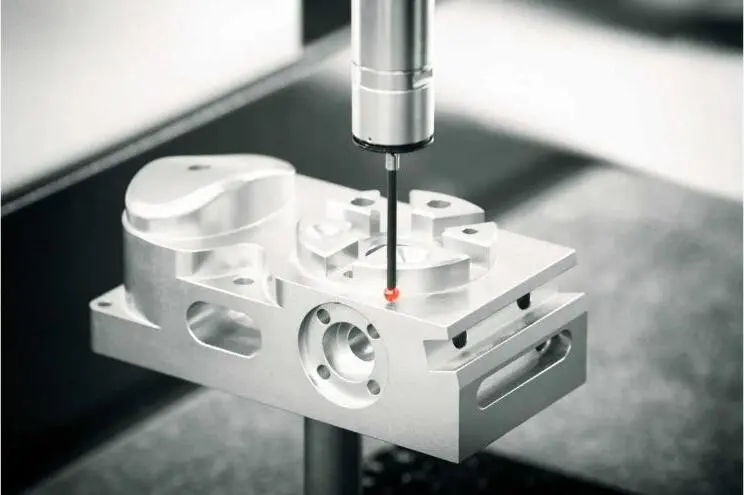
- Fragmented vendor networks. Using separate suppliers for machining, welding, finishing and kitting multiplies handoff points, traceability gaps and schedule risk. By consolidating these capabilities under one roof, Precision Advanced Manufacturing removes inter-vendor transitions and keeps multi-axis CNC machining, precision sheet-metal fabrication, specialty welding with thermal-distortion control, secondary finishing and kitting within a single quality system.
- Inadequate material traceability. Aerospace manufacturing for flight hardware requires 100 percent material traceability back to the mill certificate with heat-lot traceability and AMS or MIL-spec conformance. Suppliers that cannot produce certified material test reports for every part create disqualifying risk.
- Missing low-outgassing verification. Suppliers without documented cleaning protocols, ASTM E595 compliance records or vacuum-bakeout capability cannot support optical or sensor-adjacent spacecraft hardware. Procurement teams confirm these controls before award.
- Absent or incomplete FAI documentation. Space programs require First Article Inspection Reports that include balloon drawings, material certifications and actual measured values for every controlled dimension. Suppliers that rely on hand gauging rather than CMM inspection introduce dimensional risk.
- No ITAR compliance program. Suppliers without a documented DDTC-registered ITAR compliance program and access controls for controlled technical data create export-control liability for the prime and the program.
- Limited multi-axis capability. Five-axis CNC machining centers capable of holding tight tolerances on titanium alloy flight structures reduce cycle times significantly versus legacy three-axis approaches. Suppliers without simultaneous multi-axis capability cannot reliably produce compound-angle features in a single setup.
Engage Precision Advanced Manufacturing’s aerospace specialists to assess program requirements against a fully integrated, certified U.S. supplier.
Next Steps to Qualify Precision Advanced Manufacturing
The qualification process for precision aerospace CNC machining for spacecraft components follows a defined sequence. The checklist below maps each step to Precision Advanced Manufacturing’s documented capabilities.
- Confirm AS9100D and ISO 9001:2015 registration, and document these certifications in the supplier file.
- Verify ITAR registration status and confirm current DDTC listing for defense and space programs.
- Review NADCAP-aligned special process coverage and confirm that the secondary finishing services described earlier operate under these controls.
- Request a qualification documentation package that includes the quality manual, AS9100D certificate, ITAR registration, representative first article reports and equipment calibration records.
- Confirm material traceability controls and require full traceability across materials and processes on every program.
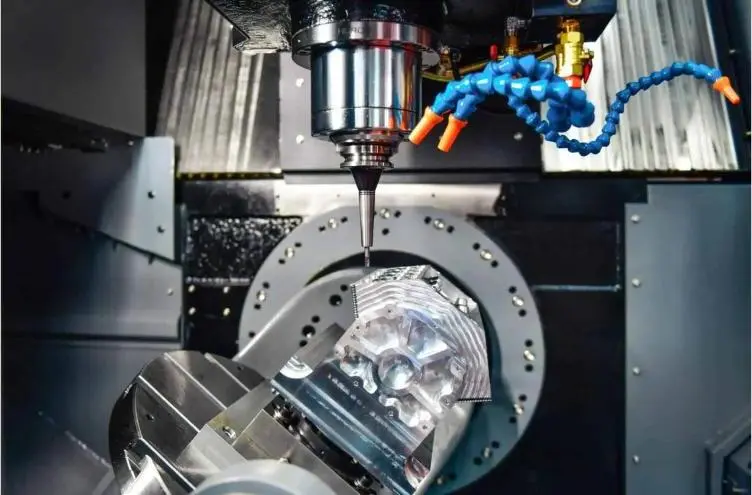
- Assess multi-axis machining and inspection capability and review sample CMM reports for tight-tolerance flight hardware.
- Evaluate integrated capability scope, including machining, fabrication, welding, finishing and kitting under one quality system.
- Initiate a prototype or first article build so the team can complete pilot builds and validation runs that minimize transition risk.
Begin the qualification process with Precision Advanced Manufacturing’s U.S.-based team and align flight-hardware requirements with an integrated aerospace machining partner.
Frequently Asked Questions
What documentation should a spacecraft CNC machining supplier provide with every shipment?
A qualified supplier delivers a complete documentation package with every shipment. This package includes a certificate of conformance, certified material test reports traceable to heat lot, dimensional inspection reports generated from CMM data, process records covering each operation and a First Article Inspection Report in AS9102 format when required by the program. For special processes such as anodizing or passivation, process certifications and NADCAP-aligned records accompany the package. Precision Advanced Manufacturing produces complete inspection and documentation systems as a standard part of every production order.
How does a supplier demonstrate low-outgassing compliance for optical or sensor-adjacent spacecraft hardware?
Low-outgassing compliance requires documented evidence at multiple stages. The supplier confirms that base materials meet ASTM E595 targets for total mass loss and collected volatile condensable materials. Cleaning records show a multi-stage ultrasonic cleaning sequence using aqueous alkaline solution, deionized water and alcohol, followed by UV black-light inspection. Vacuum bakeout records document chamber pressure, temperature and duration. Packaging records confirm nitrogen-purge bagging and cleanroom-class handling after bakeout. Procurement teams request these records as part of the supplier qualification package before program award.
Can a single supplier handle machining, welding, finishing and kitting for spacecraft hardware?
Consolidating these capabilities under one supplier reduces traceability gaps, eliminates inter-vendor handoffs and simplifies quality oversight. Precision Advanced Manufacturing provides advanced multi-axis CNC machining, precision sheet-metal fabrication, specialty welding with thermal-distortion control, secondary finishing including anodizing and passivation and kitting services under a unified quality system. All capabilities operate within an AS9100D and ITAR-compliant framework, so documentation and traceability remain continuous from raw material receipt through final packaged delivery.
What is the difference between AS9100D and NADCAP, and does a spacecraft supplier need both?
AS9100D certifies a supplier’s overall quality management system, covering risk management, configuration management, supplier control and first article inspection. NADCAP accredits the execution of specific special processes such as heat treatment, non-destructive testing, chemical processing and coatings through process-specific audits conducted by subject matter experts. A supplier can hold AS9100D without NADCAP accreditation, but programs that require special processes typically flow down NADCAP requirements from the prime. Spacecraft programs with finishing, NDT or heat treatment requirements confirm that the supplier’s special process providers hold applicable NADCAP accreditation.
How does a supplier handle a mid-program transition from an existing CNC machining source?
Mid-program supplier transitions carry schedule and compliance risk that structured onboarding can manage. Precision Advanced Manufacturing supports transitions by providing complete documentation, material traceability records and engineering support that maintain continuity with the existing design baseline. The team begins with pilot builds or validation runs and delivers first article inspection reports before full production release. This approach allows programs to validate the new supplier against the existing drawing package and quality requirements without disrupting the broader production schedule.