Last updated: August 14, 2026
Five Factors That Define a Qualified ITAR Machining Partner
- ITAR compliance for aerospace machining requires active DDTC registration plus AS9100D and ISO 9001:2015 certifications. Registration alone does not confirm capability or reliability.
- Technical evaluation should confirm 5-axis CNC capacity, tight-tolerance production data, in-house finishing and experience with aerospace alloys such as titanium and Inconel.
- Scalability and integration reduce program risk by eliminating vendor handoffs and keeping one quality system from prototype through full-rate production.
- Directory listings often omit verified registration dates and certification scope. A five-dimension framework covering technical depth, compliance, scalability, integration and total program risk provides a stronger screen.
- Precision Advanced Manufacturing supports complex aerospace programs across facilities in California and Texas. Evaluate an upcoming aerospace machining program with the Precision Advanced Manufacturing team.
Technical Depth for Flight-Critical Aerospace Machining
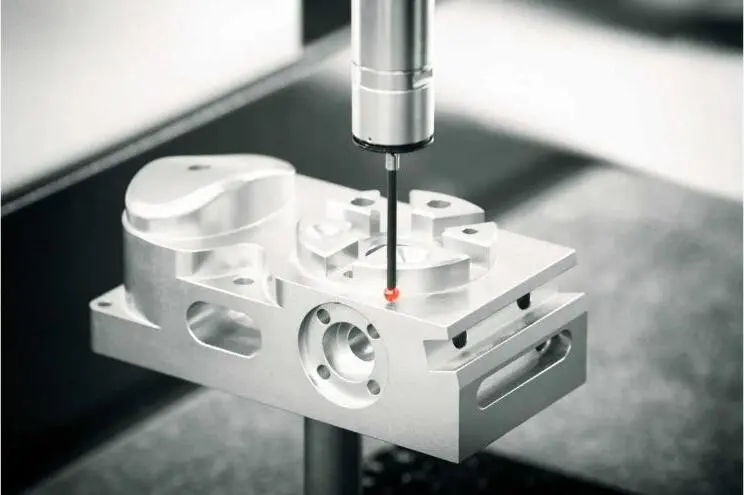
Technical depth forms the first qualification dimension. Aerospace components often require tight tolerances on flight-critical features, and standard shop-floor tools cannot verify these dimensions. Small deviations at this scale create fatigue cracking, misalignment and assembly failure.
Complex parts with contoured surfaces, deep cavities and compound angles benefit from 5-axis CNC machining in a single setup. Single-setup machining holds tighter dimensions, reduces setup errors and shortens production cycles.
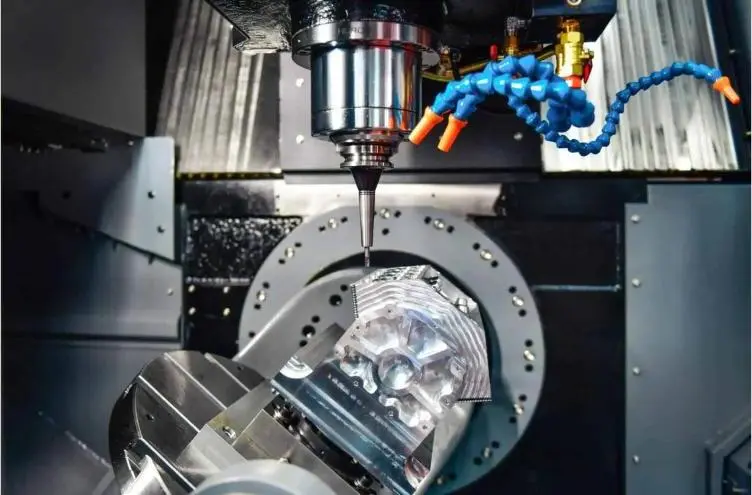
Use these questions to qualify technical capability:
- What is the maximum part envelope the shop can machine, and what multi-axis configurations operate on the floor?
- What tolerance ranges does the shop hold in production, supported by inspection records and capability data?
- Does the shop perform precision sheet-metal fabrication, welding and secondary finishing in-house under the same quality system?
- What materials, including titanium, Inconel, aluminum alloys and stainless steel, run routinely in production?
Red flags include subcontracted core machining, missing in-process inspection records and claimed tolerance ranges without supporting measurement data.
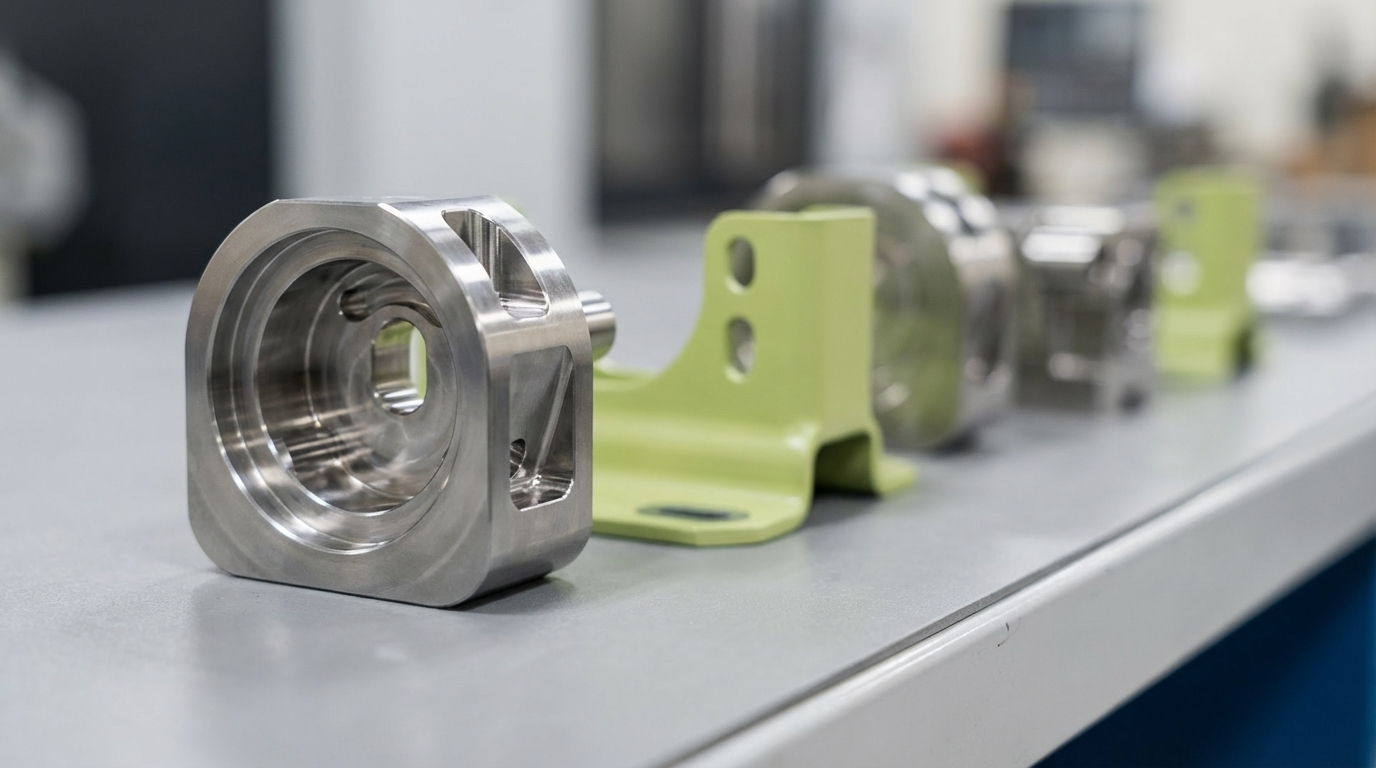
Precision Advanced Manufacturing runs multi-axis CNC milling and turning alongside precision sheet-metal fabrication, specialty welding with thermal distortion control and integrated secondary finishing under one roof.
Quality, ITAR Compliance and Documentation Discipline
Documented compliance forms the second qualification dimension. The DDTC under the U.S. Department of State administers ITAR registration, and active status requires direct verification, not assumptions based on marketing claims.
Use this process to verify current DDTC registration:
- Request the supplier’s DDTC registration number and expiration date in writing.
- Confirm that registration covers the relevant commodity categories on the U.S. Munitions List.
- Ask for the most recent registration renewal documentation, since registrations require annual renewal.
- Verify that the registered entity name matches the contracting entity exactly.
Beyond ITAR, a complete compliance checklist for aerospace machining suppliers includes:
- DDTC/ITAR registration: Active, current and aligned with applicable USML categories.
- AS9100D certification: The aerospace quality management standard required by most primes and Tier 1 suppliers.
- ISO 9001:2015 certification: The baseline quality management system that supports AS9100D.
- CMMC Level 2 readiness: For suppliers handling Controlled Unclassified Information, CMMC Level 2 sets the baseline, measured against NIST SP 800-171 Revision 2 and its 110 security requirements. Phase 2 of CMMC implementation was originally scheduled to begin November 10, 2026, adding mandatory Level 2 C3PAO certification for applicable contracts, but these requirements were suspended on July 13, 2026.
- Full material traceability: Material certifications, inspection reports and process records available for every production run.
Red flags include expired or unverifiable ITAR registration, AS9100D certificates from unaccredited bodies and missing quality documentation.
ITAR compliance in precision machining depends on internal controls, not only a registration number. Effective programs include export-control training, technology-transfer safeguards and documented procedures that govern daily operations.
Scalable Production From Prototype Through Full-Rate
Production scalability forms the third qualification dimension. Aerospace and defense machining programs require equipment and staffing that support a wide range of part sizes and geometries. Prototype capability alone does not confirm full-rate production capacity.
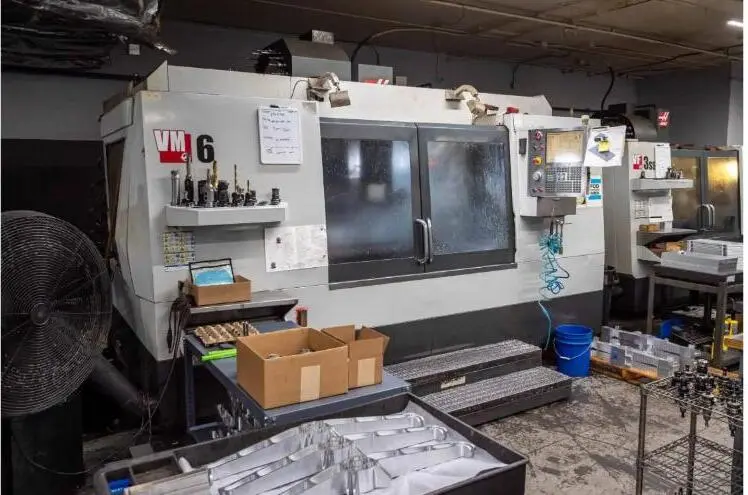
Use these questions to assess scalability:
- Does the shop operate multi-shift production, and what process governs authorization of additional shifts?
- How does the shop manage tooling, fixturing and programming when moving from prototype to production volumes?
- What scheduling and capacity-planning systems protect delivery commitments at scale?
- Has the shop demonstrated ramp-up on programs with similar volume and complexity?
Red flags include separate business units for prototype and production with different quality systems or undocumented transition processes.
Precision Advanced Manufacturing uses a scalable production platform that supports the full product lifecycle, from project-specific prototype development through sustained multi-shift manufacturing, without supplier changes or requalification events.
Integrated Machining, Fabrication and Finishing Under One System
Integration depth forms the fourth qualification dimension. Fragmented supply chains that split machining, welding, finishing and kitting across multiple vendors create handoff risk, traceability gaps and schedule exposure at each transfer.

An integrated supplier consolidates key operations:
- Multi-axis CNC machining and precision sheet-metal fabrication
- Specialty welding, including TIG, MIG and laser welding with thermal distortion control
- Secondary finishing such as anodizing, passivation, plating and ultrasonic cleaning
- Hardware installation, deburring, brush finishing and laser marking
- Kitting and assembly support that delivers ready-to-integrate components
- In-house engineering, CNC programming and tooling development
In-house engineering support at program launch strengthens manufacturability, reduces tolerance stack-up risk and accelerates first-article approval. Precision Advanced Manufacturing applies engineering support from initial design review through sustained production.
Total Program Risk Across the Supplier Lifecycle
Aggregate program risk forms the fifth qualification dimension. Sourcing decisions that favor unit price over certification depth, integration scope and scalability often create downstream costs that exceed any initial savings. These costs appear as rework, expedite fees, requalification events and missed milestones.
Certified, integrated providers reduce program risk in measurable ways:
- Defined quality checkpoints and in-process inspection catch out-of-spec parts before they reach assembly.
- Full material traceability and documentation streamline prime and government audits.
- Single-source integration removes inter-vendor handoffs that create schedule and quality variability.
- Established transition processes, including pilot builds and validation runs, reduce risk when replacing a supplier mid-program.
A common objection states that certified precision manufacturing carries a higher initial cost. This objection ignores downstream costs from rework, scrap, program delays and requalification driven by out-of-spec parts or non-compliant suppliers. When these hidden costs enter the analysis, correct delivery on the first production run protects both budget and schedule on mission-critical programs.
Limits of Directory-Style ITAR Supplier Lists
Directory-style lists of ITAR machining suppliers often omit verified DDTC registration dates, current certification status and evidence of production-depth capability. This omission means that a supplier appearing on a list still may lack active registration, adequate AS9100D certification scope or the capacity to scale from prototype to full-rate production.
Procurement teams that rely on these resources face the risk of onboarding suppliers that pass an initial screen but fail during source approval, first-article inspection or production ramp. Applying the five-dimension framework in this guide directly to candidate suppliers closes that gap and supports stronger sourcing decisions.
Precision Advanced Manufacturing operates two specialized facilities in California and Texas that provide geographic redundancy and capacity depth for programs requiring mission-critical reliability. This dual-state footprint, combined with integrated capabilities and certified quality systems, positions the company as a low-risk, long-term partner for aerospace and defense primes and Tier 1 suppliers across commercial aerospace, military and defense, space and satellites, advanced industrials and UAV programs.
Conclusion and Next Steps for ITAR Supplier Selection
Qualifying ITAR compliant aerospace machining suppliers in the United States requires evaluation across five dimensions: technical capabilities, quality and compliance, scalability, integration scope and total program risk. Suppliers that meet all five dimensions reduce program exposure and protect milestones from prototype through full-rate production.
Precision Advanced Manufacturing is AS9100D-registered, ISO 9001:2015-certified and ITAR-registered, with multi-axis CNC machining, precision fabrication, integrated finishing and in-house engineering support operating under a single certified quality system across two U.S. facilities.
Frequently Asked Questions
What certifications should an ITAR compliant aerospace machining supplier hold?
A qualified aerospace machining supplier should hold active DDTC/ITAR registration, AS9100D certification from an accredited registrar and ISO 9001:2015 certification. For programs involving Controlled Unclassified Information, CMMC Level 2 compliance, measured against NIST SP 800-171, is increasingly required by defense primes and appears in DoD solicitations. Suppliers should provide current certificates, registration documentation and compliance records on request. Precision Advanced Manufacturing maintains AS9100D, ISO 9001:2015 and ITAR registration with full documentation and traceability supporting every production program.
How does a supplier scale from prototype to full-rate production without compromising quality?
Scaling from prototype to full-rate production works best when the same quality system, inspection processes and traceability controls carry forward into production volumes. Separate workflows for prototype and production introduce requalification risk and documentation gaps. A supplier with multi-shift capacity, established tooling and fixturing libraries and a documented transition process can ramp production while holding the tolerances and certifications validated during the prototype phase. Precision Advanced Manufacturing uses a production platform designed for this transition, supporting programs from initial prototype development through sustained high-volume manufacturing under one certified quality system.
What is the risk of sourcing from a supplier that appears on a directory list but has not been independently verified?
Directory listings do not confirm active ITAR registration, current AS9100D certification scope or production-depth capability. A supplier that passes an initial directory screen may still fail during source approval, first-article inspection or production ramp if registration has lapsed, certification scope does not cover required commodity categories or the shop lacks multi-shift capacity. The qualification framework in this guide, which verifies DDTC registration directly, confirms certification currency and assesses scalability, provides a more reliable basis for supplier selection than directory inclusion alone.
What does integrated manufacturing mean for aerospace program risk?
Integrated manufacturing means that machining, fabrication, welding, finishing, kitting and engineering support operate under one certified quality system at one provider. Each handoff between separate vendors introduces a potential traceability gap, schedule delay and quality variability point. Consolidated operations remove inter-vendor transfers, reduce the number of supplier qualification events and deliver fully finished, ready-to-integrate components. For mission-critical programs where schedule and compliance remain non-negotiable, integration directly reduces program risk.
Can a supplier transition be managed mid-program without disrupting production?
Mid-program supplier transitions remain manageable when the incoming supplier provides complete documentation, material traceability and engineering support from the outset. Pilot builds or validation runs allow the new supplier to demonstrate capability against existing specifications before full production transfer. Precision Advanced Manufacturing supports mid-program transitions with documentation and engineering continuity, which allows programs to integrate a new supplier without restarting qualification from zero or accepting added schedule exposure during the changeover period.