Last updated: August 16, 2026
Key Takeaways for Defense Machining in 2026
- Precision machining for defense relies on tight tolerances, full traceability and certifications such as AS9100D and ITAR registration.
- Startups like Hadrian, Castelion and Machina Labs expand U.S. capacity, while primes still depend on established partners for volume and compliance.
- Defense procurement teams prioritize long-term production capability, process control and supply-chain stability over lowest-bid quotes.
- Established suppliers with multi-axis CNC, integrated fabrication and multi-shift scalability bridge prototype-to-production gaps without requalification risk.
- Precision Advanced Manufacturing provides certified, scalable machining capacity for defense programs. Evaluate Precision Advanced Manufacturing with a tailored quote for the next program.
Leading Defense Manufacturing Startups Expanding US Machining Capacity
The following startups represent active builders of U.S. precision-machining capacity in 2026. Ranking reflects funding scale, facility footprint and machining-fit signals for defense procurement teams.
1. Hadrian
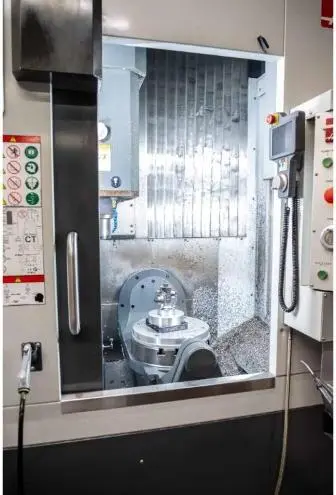
Hadrian operates AI-guided automated factories producing precision metal parts for aerospace and defense sectors, including shipbuilding, rockets and fighter jets. Its Opus AI platform automates scheduling, machine-tool routing and quality inspection.
- Multiple factories across California, Arizona and Alabama
- Factory 4 in Cherokee, Alabama targets Virginia- and Columbia-class submarine components
- Factories-as-a-Service model at a Lockheed Martin site for missile components
- U.S. Army contract for an advanced automation facility in Texarkana, Texas
2. Castelion
Castelion is a California-based defense startup that won a U.S. Navy contract to produce hypersonic weapons. Its sourcing strategy draws high-temperature precision-machined tubes from the fracking industry. Compliance posture and ITAR registration status remain areas for procurement teams to verify independently. Other startups have taken different paths to defense contracting scale.
3. Anduril
Anduril holds roughly $560 million in Pentagon contracts based on actual federal obligations. The company adopted pharmaceutical-industry bladeless centrifugal mixers to process rocket motor propellant batches. Anduril maintains a supply partnership with Hadrian for autonomous technology components, and HH Machining lists Anduril among its defense customers.
4. Machina Labs
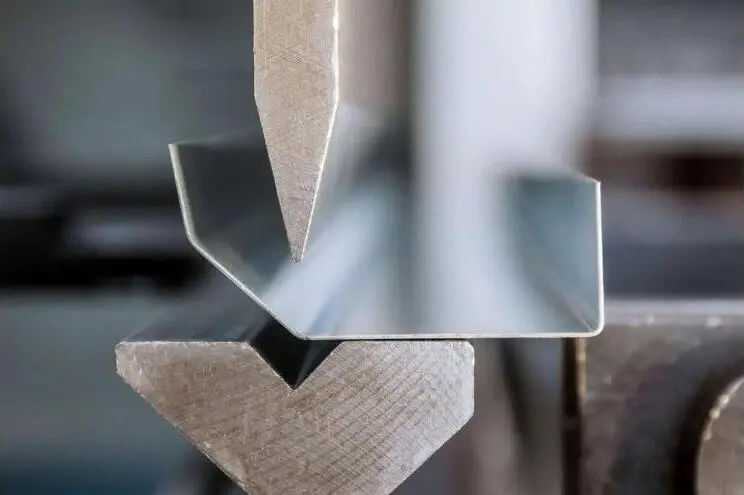
Machina Labs raised funding from investors including Lockheed Martin Ventures to build an Intelligent Factory. Its RoboCraftsman platform uses dual 7-axis robotic arms and machine learning for dieless sheet-metal forming without conventional tooling.
- Defense subsidiary Machina Bellator holds a qualification contract from Lockheed Martin for JASSM structural assemblies
- Manufacturing components for hypersonic vehicles
- Active U.S. patents covering AI-based trajectory planning and closed-loop monitoring
5. Aurex
Backed by Godspeed Capital and headquartered in Huntsville, Alabama, Aurex supports classified programs through rapid prototyping, precision manufacturing and systems integration. Capabilities include precision machining, casings, hardware production and flight hardware for missile defense, hypersonics and counter-UAS programs.
6. Isembard
UK-founded Isembard opened its second Dallas-Fort Worth factory, which serves as its U.S. headquarters. The company uses its proprietary MasonOS software to manage quoting, scheduling, production and quality control. A phased equipment rollout includes 5-axis mills, mill-turn centers for titanium and Inconel and Mazak Integrex systems with automation. The company targets a significant capacity increase within the first year of the new facility.
7. Beehive Industries
Beehive Industries acquired Able Tool Corporation and Planet Products Corporation in Greater Cincinnati, adding precision aerospace manufacturing expertise. The acquisitions support full-rate production of its 3D-printed Frenzy jet engines. Beehive is establishing a Production Machining Center of Excellence in Cincinnati and a Production Additive Manufacturing Center of Excellence in Knoxville, Tennessee.
8. HH Machining
HH Machining operates from Santa Clarita, California and holds AS9100D, ISO 9001:2015 and ITAR registration. The company machines Inconel 718, titanium alloys, aluminum and other high-performance alloys for aerospace and defense applications. Lot sizes range from single prototypes to large production runs.
Current Defense Startup Climate and US Machining Demand
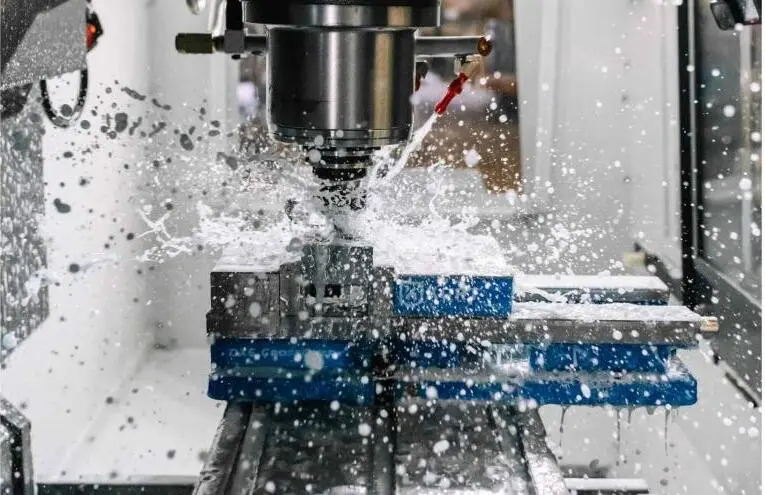
Dealroom’s ranking of top U.S. defense startups shows these companies have collectively raised significant funding, with the United States identified as the strongest global hub. The U.S. machine tools market is forecast to grow, driven by aerospace and defense expansion and reshoring. Cumulative U.S. metalworking machinery orders reflect capital investment in precision machining capacity.
Reshoring accelerates this investment and defense contracts increasingly mandate domestic production. That requirement concentrates demand for multi-axis CNC systems in U.S. facilities. Workforce constraints remain a structural bottleneck. The U.S. shipbuilding sector is estimated to need roughly 250,000 additional workers over the next decade, per Navy statements. Startups expand automation, yet automation does not replace the need for certified, experienced machining partners that can absorb overflow and maintain compliance documentation at every production stage. For programs requiring immediate certified capacity alongside emerging startup capabilities, established partners provide the compliance infrastructure and scalability that new facilities are still building.
Get a capacity assessment from Precision Advanced Manufacturing to support defense machining requirements.
Sourcing Priorities for Primes Selecting Machining Partners
OEM procurement teams assess long-term production capability rather than quoting ability alone. Teams research suppliers and verify capacity months before issuing any RFQ. Supply-chain stability outweighs marginal cost savings because a supplier failure mid-contract triggers requalification and production delays that far exceed quote differentials.
In 2026, OEM supplier approval processes center on function-critical dimensions, inspection methods, material traceability and prototype-to-production volume support. These approval requirements create a structural challenge for startups building new factories. They must demonstrate process control and repeatability across production batches before primes will commit volume. Because most startups cannot yet meet these approval thresholds at scale, the qualification gap creates demand for established partners that can bridge prototype and full-rate production without compliance risk.
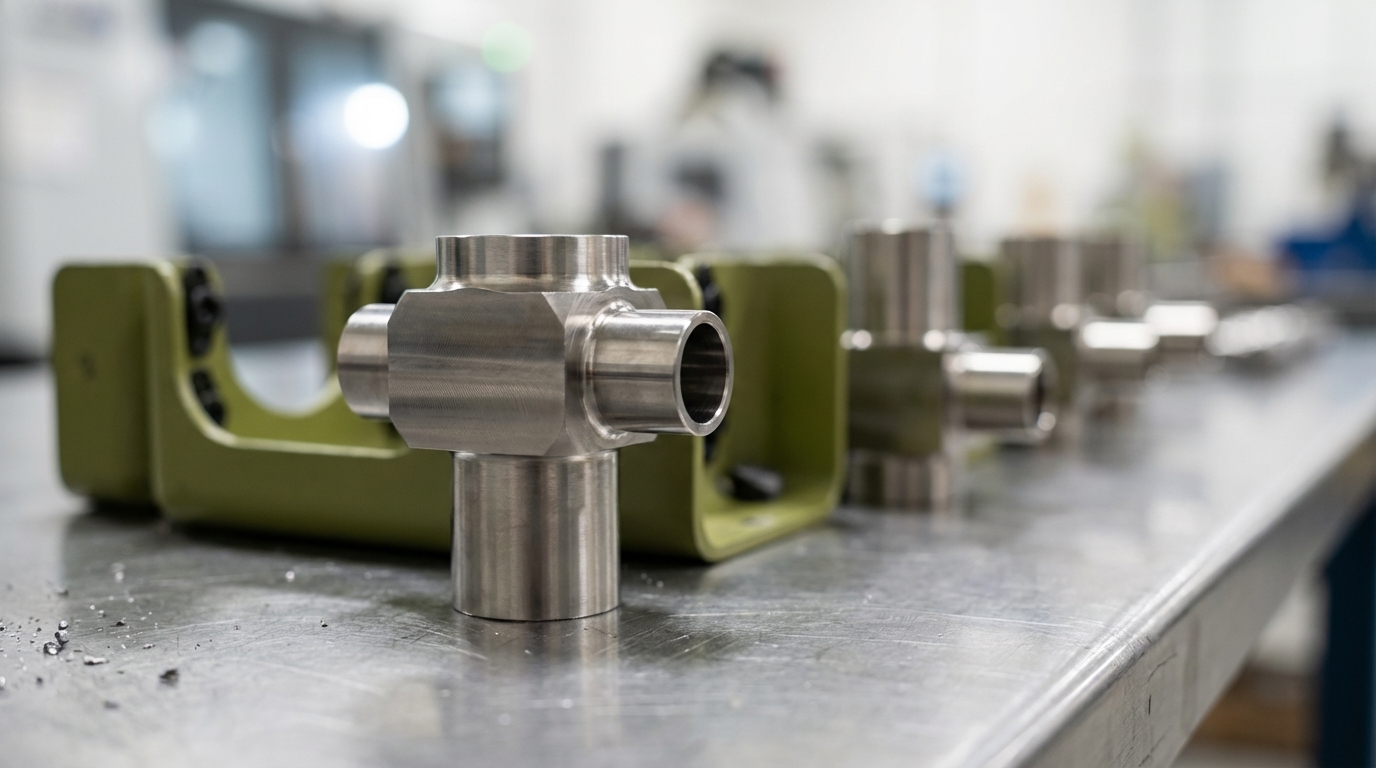
Precision Advanced Manufacturing addresses this gap directly. The company operates two specialized facilities in California and Texas under AS9100D, ISO 9001:2015 and ITAR-registered quality systems. Integrated capabilities under one roof include advanced multi-axis CNC machining, precision sheet-metal fabrication, specialty welding with thermal distortion control, kitting, hardware installation, secondary finishing and laser marking. Multi-shift scalability supports smooth transitions from prototype to sustained production. Full material traceability and complete inspection documentation apply on every program.
Connect with aerospace and defense specialists at Precision Advanced Manufacturing to review compliance and scalability needs.
Checklist for Selecting a Defense Machining Partner
The following criteria support evaluation of precision-machining partners for defense programs in 2026.
- ITAR registration confirmed and current
- AS9100D and ISO 9001:2015 certifications with full documentation
- Multi-axis CNC machining capability for complex geometries and tight-tolerance components
- Integrated fabrication, welding, finishing and kitting under one roof to reduce hand-off risk
- Demonstrated prototype-to-production scalability with multi-shift capacity
- Full material traceability and inspection reporting on every order
- Domestic facility footprint supporting program continuity and supply-chain resilience
- Proven track record with aerospace, defense, space and UAV programs
Precision Advanced Manufacturing meets every criterion on this list through two specialized facilities serving five industry segments, all operating under certified quality systems built for mission-critical programs. The company maintains the full certification stack required for defense work, including the AS9100D and ITAR credentials detailed earlier.

Evaluate Precision Advanced Manufacturing as a compliant, scalable supplier for upcoming programs.
Frequently Asked Questions
What certifications should a precision machining supplier hold for defense programs?
Defense programs require suppliers to hold AS9100D certification, which governs quality management systems for aviation, space and defense. ISO 9001:2015 certification provides the underlying quality framework. ITAR registration is mandatory for any supplier handling defense-related technical data or hardware. DFARS compliance applies to suppliers working on Department of Defense contracts involving domestic sourcing of specialty metals. Precision Advanced Manufacturing holds AS9100D, ISO 9001:2015 and ITAR registration, with quality systems designed to support full documentation, traceability and audit readiness on every program.
How do defense primes evaluate new precision machining suppliers versus established ones?
Defense primes evaluate suppliers on process control, repeatability, financial stability and compliance posture, not lowest bid. Procurement teams verify capacity, inspect quality systems and review traceability documentation months before issuing an RFQ. Startups with new facilities must demonstrate consistent output across production batches before primes commit volume. Established suppliers with certified quality systems, documented inspection records and multi-shift production capacity carry lower qualification risk. Primes also assess whether a supplier can scale from prototype to full-rate production without a supplier change, which reduces requalification cost and schedule risk.
What is the difference between a defense manufacturing startup and an established precision machining partner?
Defense manufacturing startups typically focus on a specific technology such as AI-guided automation, robotic forming or additive manufacturing and build production capacity for a narrow set of programs. They often lack the breadth of certifications, the multi-process integration and the production history that primes require for sustained supply. An established precision machining partner brings certified quality systems, proven traceability, integrated capabilities across machining, fabrication, welding and finishing and the scalability to absorb overflow or serve as a primary supplier across multiple programs simultaneously.
Can a single supplier handle both prototype and full-rate production for defense components?
A single supplier can support both phases when quality systems, equipment and capacity are designed for that lifecycle. Many machine shops can produce prototypes but lack the process discipline, documentation infrastructure or multi-shift capacity to sustain full-rate production at aerospace quality levels. Precision Advanced Manufacturing is structured to support the full product lifecycle from initial prototype development through sustained, multi-shift production using the same certified processes and quality checkpoints at every stage. This structure reduces supplier transition risk that commonly causes schedule delays and requalification costs mid-program.
What materials and processes are most critical for defense precision machining in 2026?
Defense programs in 2026 demand machining of high-performance alloys including titanium, Inconel, stainless steel and aluminum alloys used in airframes, propulsion systems, missile structures and satellite hardware. Multi-axis CNC milling and turning serve as core processes for complex geometries and tight-tolerance features. Specialty welding, including TIG and laser welding with thermal distortion control, supports lightweight structural assemblies. Secondary finishing processes such as anodizing, passivation and plating help meet durability and environmental standards. Full material traceability from raw stock through finished part remains a non-negotiable requirement for mission-critical defense components.