Last updated: August 6, 2026
Key Takeaways
- The US aerospace market is valued at USD 463.06 billion in 2026, so supplier selection becomes a program-critical decision for procurement and quality teams.
- Precision specialists that combine machining, fabrication, welding and finishing in one facility reduce tolerance escapes, documentation gaps and schedule delays compared with fragmented suppliers.
- AS9100D certification, ISO 9001:2015 registration and ITAR compliance are non-negotiable for defense and space programs, and suppliers without active IAQG OASIS status are treated as higher-risk sources.
- Scalable manufacturing platforms that move from prototype through full-rate production with one supplier eliminate requalification risk and maintain traceability continuity across the program lifecycle.
- Precision Advanced Manufacturing combines integrated capabilities, certified quality systems and multi-shift capacity to deliver mission-critical parts, and the team can begin qualification for the next program.
Five-Point Framework for Selecting US Aerospace Parts Manufacturers
This guide presents a five-point evaluation framework for assessing aerospace parts manufacturers. The framework covers certifications and compliance, technical capabilities and integration scope, scalability from prototype to production, total cost of risk and the role of precision specialists. Each section below aligns with one of these dimensions so procurement and supplier quality teams can apply a consistent structure to sourcing decisions.
1. Certifications and Compliance Requirements to Confirm Before Awarding Work
Beyond quality management standards, ITAR registration is a separate and equally critical requirement for defense work. When a program involves controlled technical data on the US Munitions List, ITAR registration is required at the supplier level. Buyers should verify registration through DDTC and cross-reference the supplier CAGE Code.
AS9100 adds roughly 100 aerospace-specific requirements on top of ISO 9001, including key characteristics tracking, configuration management, counterfeit part prevention and supply chain flow-down of quality requirements. ISO 9001 alone does not meet expectations for flight-critical or defense applications.
Precision Advanced Manufacturing holds AS9100D and ISO 9001:2015 registrations and maintains ITAR registration. Every project follows defined quality checkpoints, full material traceability and complete documentation aligned to aerospace standards. This structure reduces audit burden and compliance exposure for procurement teams.

2. Technical Capabilities and Integration Scope That Reduce Program Risk
Supplier fragmentation is a primary source of program risk. When machining, fabrication, welding and finishing sit with multiple vendors, each handoff introduces a potential tolerance escape, documentation gap or schedule delay.
Machined components are particularly affected by process queue stacking and external special process routing that extend lead times even when internal manufacturing is efficient. Consolidating capabilities in one facility reduces that exposure and simplifies coordination.
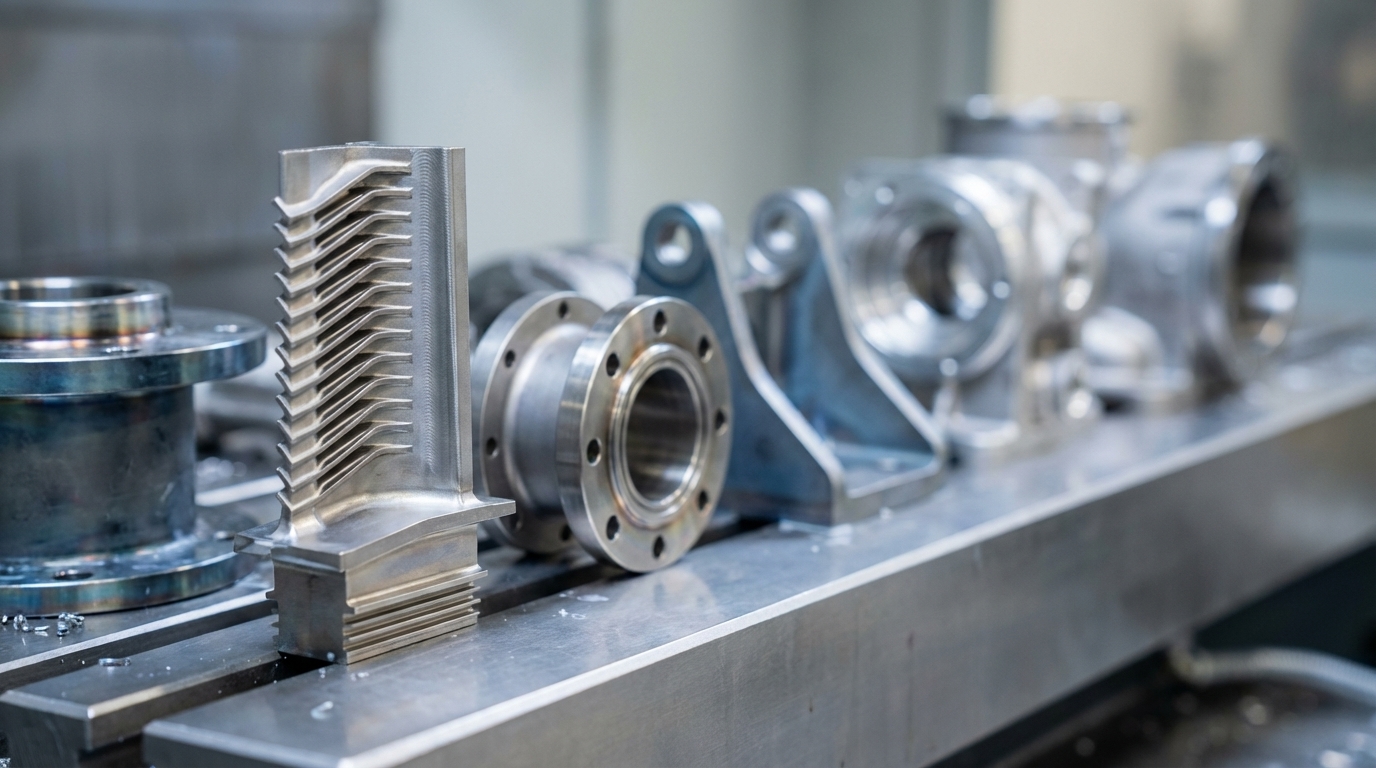
Precision Advanced Manufacturing combines advanced multi-axis CNC machining, precision sheet metal fabrication, specialty welding with thermal distortion control, integrated finishing services and engineering support in a single facility. These connected capabilities produce a finished, ready-to-integrate component that arrives at the next assembly step without secondary work.
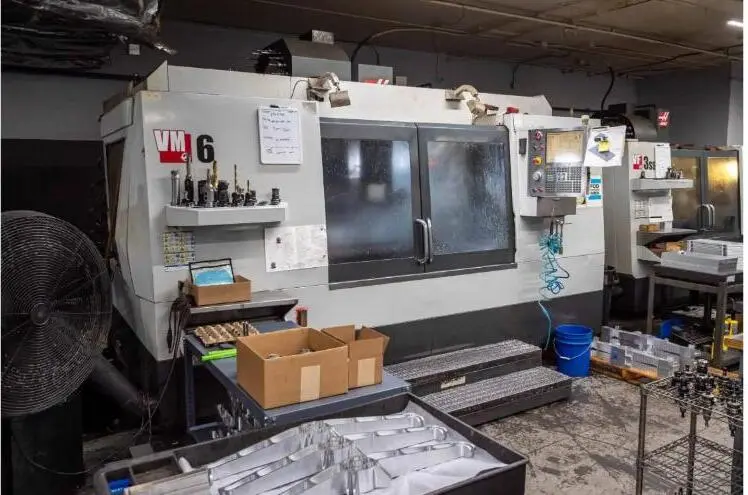
Engineering-driven manufacturability enters the process from the outset. In-house CNC programming and tooling development refine designs, adjust tolerances and strengthen production efficiency before the first part is cut. That discipline reduces rework, scrap and downstream integration delays that inflate program cost.

This cost-control and risk-reduction approach aligns with a broader industry shift, as aerospace and defense organizations move from a cost-first model to a resilience-first model that emphasizes robustness, flexibility and proactive risk management. Integrated capability reflects that shift in daily operations.
3. Scalability From Prototype to Full-Rate Production With One Supplier
Supplier transitions mid-program create compounding risk because requalification consumes engineering resources, introduces process variability and disrupts traceability continuity. Approved-source status often matters more than the tier label itself, since it confirms the supplier or part has been qualified for use on the program and avoids mid-program transitions.
A scalable manufacturing platform reduces that risk by supporting the full product lifecycle. Precision Advanced Manufacturing supports project-specific prototype development and then ramps into sustained, multi-shift production without a supplier change.
Aerospace programs often experience nominal machining times of days but total lead times of weeks because of upstream material allocation, non-destructive testing queues, first article documentation and customer-specific acceptance steps. A supplier with established processes and multi-shift capacity compresses that exposure by removing the ramp-up uncertainty that accompanies a new vendor relationship.
Procurement teams evaluating scalability should confirm that quality validation during prototyping carries forward into production. At Precision Advanced Manufacturing, the same AS9100D-governed inspection and documentation system that validates a prototype governs every production run.
4. Total Cost of Risk When Choosing a Precision Manufacturer
Unit price is one input, but total cost of risk provides the complete picture. This broader view includes rework, scrap, expedited orders, compliance failures and program delays, and each factor can outweigh the price difference between a lower-cost and a higher-quality supplier.
The US Department of Defense relies on more than 200,000 suppliers supporting advanced weapons systems, and many smaller suppliers cannot absorb economic shocks. Supplier instability translates directly into program risk for the buyer.
A Tier 1 supplier that misses a delivery in US aerospace can incur significant penalties when the OEM loses production time. The cost of a nonconforming part from a lower-tier supplier then compounds through every downstream assembly it affects.
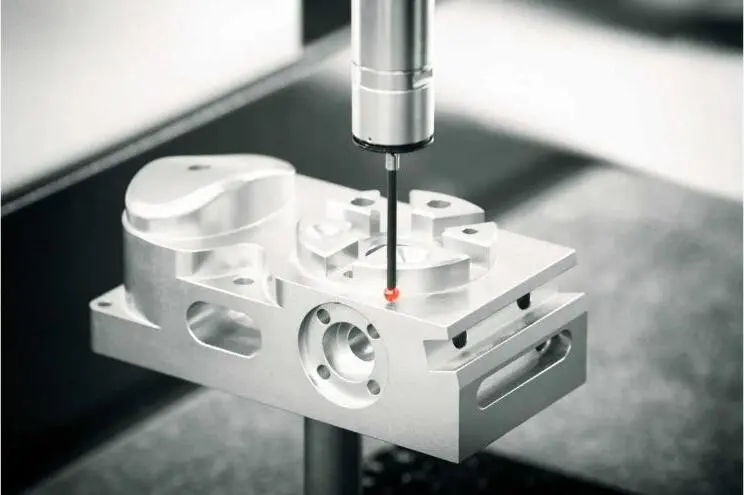
Precision Advanced Manufacturing reduces total cost of risk through rigorous in-process and final inspection, complete quality documentation and certified processes that produce parts right the first time. Full traceability across materials and processes supports rapid containment of any nonconformance and simplifies customer audits.
Tracking vendor on-time in-full performance at the item-vendor level and reviewing misses with root-cause analysis represents a best practice for evaluating total cost of ownership impacts from lead-time variability. Procurement teams can apply that discipline when comparing domestic precision manufacturers.
5. Why Tight-Tolerance, Traceable Programs Shift to Precision Specialists
The aerospace supply chain segments by capability as well as by tier. Primes manage systems integration. Tier 1 integrators own major assemblies and program interfaces. Precision specialists deliver the tight-tolerance, fully documented components that both levels depend on.
Tier 2 suppliers provide specific components and subsystems such as machined parts, wiring harnesses, sensors and specialized materials to Tier 1 firms. Within that segment, precision specialists differentiate on tolerance control, traceability and integration scope, which matter most for mission-critical applications.
North America held the largest regional revenue share at 47.9% in the global aerospace parts manufacturing market in 2025, and the United States accounted for the largest share within the region because of high government defense spending and robust commercial aircraft production infrastructure. That concentration of demand makes supplier selection more competitive and raises the cost of a poor choice.
Demand for aircraft and engine systems exceeds qualified industrial capacity in areas with lengthy qualification cycles, concentrated capacity, dual new-build and MRO requirements and regulatory limits on rapid supplier substitution. Programs that already qualified a precision specialist with proven traceability and certified processes gain insulation from that pressure.
Precision Advanced Manufacturing serves commercial aerospace, military and defense, space and satellites, advanced industrials and UAV programs from two specialized US facilities in California and Texas. Integrated capabilities, certified quality systems and scalable production position the company as a strong partner for programs where tolerance control, documentation and repeatability remain non-negotiable.

Begin a qualification conversation with Precision Advanced Manufacturing for an upcoming program.
Frequently Asked Questions
What is the difference between Tier 1 and Tier 2 aerospace suppliers?
Tier 1 suppliers deliver complete subsystems or major assemblies directly to prime contractors and absorb engineering interfaces, industrialization and lower-tier supplier management. They typically hold design authority or significant work-package ownership and face direct OEM delivery penalties. Tier 2 suppliers provide specific machined components, fabricated structures or specialized materials to Tier 1 firms. A company can hold Tier 1 status on one program and Tier 2 status on another depending on the scope of work. For procurement teams, the practical distinction is the level of integration responsibility and compliance flow-down each tier carries.
Which certifications are required for defense and space programs?
AS9100D, discussed earlier, is the baseline quality management standard required by virtually every aerospace prime and defense OEM for supplier qualification. ITAR registration is required for any supplier handling controlled technical data on the US Munitions List. NADCAP accreditation applies when a supplier performs critical special processes such as welding, heat treatment, chemical processing or non-destructive testing. Buyers should verify AS9100D status through the IAQG OASIS database and ITAR registration through DDTC before awarding work.
How can buyers reduce the risk of program delays from unreliable suppliers?
The most effective risk-reduction strategy involves consolidating capabilities with a supplier that holds active certifications, operates under documented quality systems and can scale from prototype to full-rate production without a supplier change. Buyers should track on-time in-full performance at the item-vendor level, maintain approved alternate supplier pipelines for critical components and engage suppliers early in the program lifecycle. Suppliers that deliver finished, ready-to-integrate components remove the secondary processing handoffs that most often introduce schedule risk. Evaluating a supplier corrective action history and documentation completeness during qualification provides early signal on execution reliability.
What documentation should accompany every aerospace component shipment?
Every aerospace component shipment should include a certificate of conformance, material test reports traceable to the raw stock used, dimensional inspection reports with actual measured values and a First Article Inspection Report for new part numbers or drawing revisions. For defense programs, documentation must also reflect ITAR compliance and any applicable customer flow-down requirements from the purchase order. Suppliers operating under AS9100D maintain defined record retention practices and provide documentation packages that support customer audits and incoming inspection without additional supplier follow-up.
Conclusion: Apply This Five-Point Framework to Protect the Next Program
The five-point evaluation framework covers certifications and compliance, technical capabilities and integration scope, scalability and total cost of risk, along with the role of precision specialists. Procurement and supplier quality teams gain a repeatable method for comparing domestic precision manufacturers on consistent criteria.
Programs that apply this framework consistently identify the same gap. Fragmented suppliers with narrow capabilities and incomplete documentation create compounding risk that unit price alone cannot offset. Precision specialists that combine machining, fabrication, welding and finishing under certified, traceable quality systems reduce that risk at every stage of the program lifecycle.
Precision Advanced Manufacturing is built to meet that standard. Two US facilities, AS9100D and ISO 9001:2015 certifications, full ITAR registration and a scalable multi-shift production platform support mission-critical programs from prototype through sustained production. This approach avoids supplier transitions, traceability gaps and compliance exposure.