Last updated: August 27, 2026
Certified Aerospace Parts: Key Points for Procurement Teams
- Certified aerospace parts require active FAA approvals (PMA, PC or TSOA) plus AS9100D, ISO 9001:2015 and ITAR compliance to maintain traceability and installation eligibility.
- Procurement teams verify certifications through FAA DRS and IAQG OASIS databases instead of relying only on supplier-provided documents.
- The U.S. certified-parts ecosystem includes OEMs, PMA holders and mid-tier contract manufacturers that support work from prototype through full-rate production.
- Domestic manufacturing hubs such as California and Texas anchor major aerospace clusters and benefit from ongoing reshoring and investment trends.
- Precision Advanced Manufacturing offers AS9100D-certified machining and fabrication with full traceability; start a quote request to qualify this mid-tier supplier for an upcoming program.
FAA Certification Paths for Airplane Parts
Three FAA approval types govern production of certified airplane parts. Each type carries distinct legal authority and installation eligibility.
A Parts Manufacturer Approval (PMA) is a combined design and production approval issued under 14 CFR Part 21 Subpart K. It authorizes a manufacturer to produce and sell replacement or modification parts for installation on specific type-certificated aircraft. PMA eligibility ties to particular applications, not model-agnostic use. PMA data is searchable at drs.faa.gov, which supports independent verification.
A Production Certificate (PC) is issued under 14 CFR Part 21 Subpart F. It authorizes a manufacturer to produce duplicate products, including aircraft, engines or propellers, under an approved type design without individual FAA conformity inspections on each unit. OEM parts produced under a PC provide full traceability to the original type design.
A Technical Standard Order Authorization (TSOA) is issued under 14 CFR Part 21 Subpart O. It functions as both a design approval and a production approval confirming an article meets the applicable TSO minimum performance standard. TSOA is model-agnostic and approves an article against a performance class standard. Installation eligibility still requires a separate approval such as an STC or inclusion in the type design.
Procurement teams complete several verification steps before issuing any purchase order.
- Search the FAA Dynamic Regulatory System at drs.faa.gov to confirm active PMA or TSOA status.
- Verify AS9100 certification independently through the IAQG OASIS database and avoid reliance on a certificate supplied by the vendor.
- Confirm ITAR registration status for any defense or space-related components.
- Require a Certificate of Conformity, material certifications and applicable test reports with every shipment.
- Confirm the supplier traceability system links purchase orders, material lot records, work travelers, inspection records and shipment documentation.
Precision Advanced Manufacturing operates under AS9100D, ISO 9001:2015 and ITAR-compliant quality systems with full traceability across materials and processes. Start the supplier qualification process with a quote request.
Supplier Tiers in the U.S. Airplane Parts Market
The U.S. certified-parts ecosystem divides into three primary tiers: OEMs, PMA holders and contract manufacturers.
OEMs such as Boeing, GE Aerospace and Raytheon Technologies produce parts under Production Certificates tied to their own type designs. They represent the highest-cost sourcing path but provide direct compatibility with original type designs.
PMA holders are independent manufacturers authorized to produce replacement or modification parts for specific type-certificated aircraft. Chromalloy, headquartered in Palm Beach Gardens, Florida, holds FAA approval on gas-path PMA parts. Jet Parts Engineering, based in Seattle, Washington, received FAA approval in May 2026 for new PMA parts covering engine inserts, impellers and preformed packings across multiple commercial platforms.
Contract manufacturers occupy a critical mid-tier role. They produce precision components to customer-supplied designs under certified quality management systems, including AS9100D, ISO 9001 and ITAR, without holding their own type certificates. This tier serves OEMs, PMA holders, defense primes and Tier 1 integrators that require scalable, compliant machining and fabrication capacity without building it in-house.
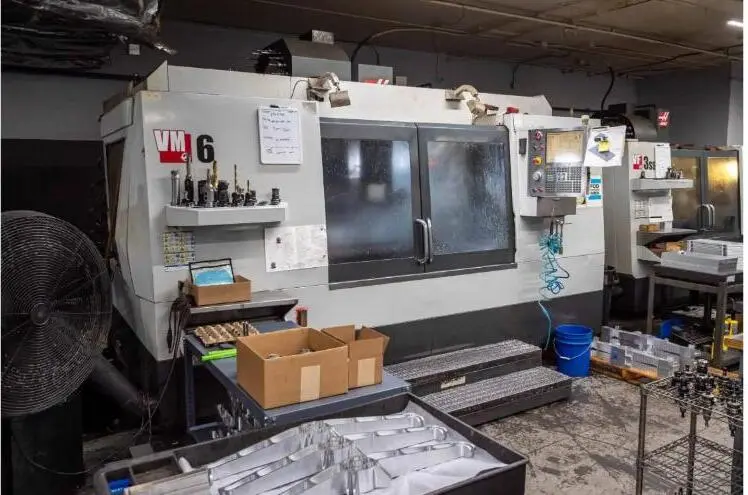
The U.S. aerospace and defense electronics manufacturing services market reached approximately $25 billion in 2023, which reflects the scale of this mid-tier contract manufacturing segment.
How Major OEMs Source Airplane Parts
Boeing and other major OEMs source components across a multi-tier supply chain that spans OEM-owned facilities, Tier 1 integrators and mid-tier contract manufacturers. Procurement decisions at every tier follow a consistent framework built around four priorities.
Traceability. AS9100 requires traceability down to part, lot, batch and serial number level, plus configuration control confirming the correct drawing and specification revision was used. Mid-tier contract manufacturers operating under AS9100D provide this linkage across purchase orders, material certifications, work travelers, inspection records and shipment documentation.
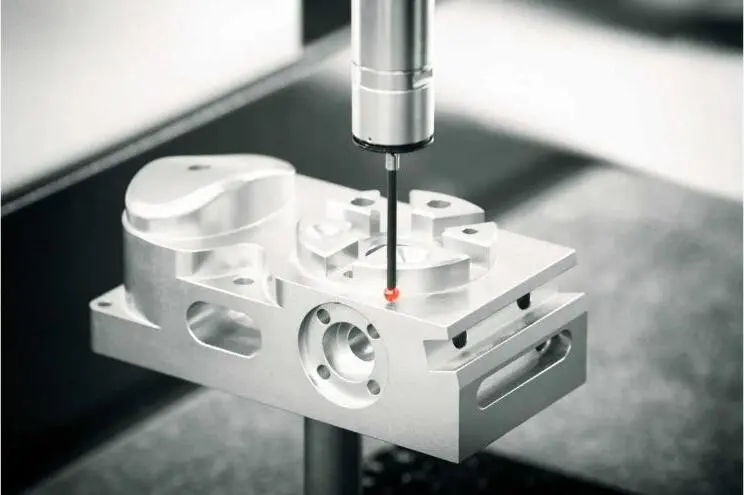
Scalability. Programs require suppliers that can move from prototype validation to full-rate production without a supplier change. First Article Inspection per AS9102 Rev C must be completed and documented before serial production begins. This requirement establishes objective evidence that design characteristics, materials and functional requirements are verified.
Compliance. Major OEMs including Boeing, Lockheed Martin and RTX require IAQG OASIS verification of active AS9100 certification as a baseline condition for approved supplier list inclusion. ITAR registration functions as a non-negotiable requirement for defense and space programs.
Integration support. Suppliers that deliver fully finished, ready-to-integrate components eliminate secondary work and reduce assembly cycle time. Mid-tier manufacturers with in-house finishing, hardware installation and kitting capabilities reduce handoffs and improve production control.
Deloitte’s 2026 Aerospace and Defense Industry Outlook notes that contractors are increasingly exploring additive manufacturing and digital production tools to augment constrained casting and forging supply chains and enable more localized production of selected components. This trend reinforces the strategic value of domestic mid-tier manufacturers.
U.S. Locations Leading Airplane Parts Manufacturing
Certified aerospace parts manufacturing concentrates in metro regions with deep engineering talent, established supplier ecosystems and proximity to major OEM or defense facilities.
Global Location Strategies’ 2026 Best Places for Aerospace and Defense Insights Report ranked Wichita, Kansas first among 387 U.S. metropolitan areas for aerospace and defense manufacturing investment. The full top 10 includes:
- Wichita, KS
- Ogden, UT
- Dayton, OH
- Salt Lake City, UT
- Huntsville, AL
- Palm Bay-Melbourne-Titusville, FL
- Grand Rapids, MI
- Phoenix, AZ
- Dallas-Fort Worth, TX
- Indianapolis, IN
Emerging markets in Utah, North Carolina and the Southeast/Southwest corridor are gaining prominence due to engineering talent, advanced manufacturing capabilities and supplier ecosystem strength. California and Texas, where Precision Advanced Manufacturing operates, anchor two of the largest aerospace and defense manufacturing clusters in the country and support commercial aerospace, military, space and UAV programs.
The Reshoring Initiative’s 2024 annual report and related coverage indicate substantial cumulative reshoring and FDI job announcements in the U.S. since 2010. Recent activity connects to CHIPS Act investments, Inflation Reduction Act incentives and tariff policy changes. Domestic sourcing of certified aerospace components benefits directly from this trend.
Precision Advanced Manufacturing: Mid-Tier Contract Manufacturer Profile
Precision Advanced Manufacturing is a U.S.-based, ITAR-registered metal machining and fabrication provider with facilities in California and Texas. The company’s certified quality management systems, detailed earlier, support commercial aerospace, military and defense, space and satellites, advanced industrials and UAV programs.

Core capabilities include advanced multi-axis CNC machining, precision sheet metal fabrication, specialty welding with thermal distortion control and integrated finishing services such as anodizing, passivation, plating and ultrasonic cleaning. Engineering support, CNC programming and tooling development occur in-house, which improves manufacturability from the outset and reduces downstream rework risk.

The production platform supports the full program lifecycle, from prototype development through multi-shift, full-rate manufacturing, without a supplier change. Every project is backed by defined quality checkpoints, complete inspection documentation and material traceability aligned to AS9100D requirements. Kitting and hardware installation capabilities deliver fully finished, ready-to-integrate components that reduce assembly cycle time for program teams.

For supplier quality engineers, Precision Advanced Manufacturing provides complete inspection and documentation packages with every delivery, including material certifications and traceability records that satisfy AS9100 Rev D Clause 8.5.2 flow-down requirements. This documentation posture reduces the incoming inspection burden on customer quality teams and supports audit readiness.
Procurement teams managing mid-program supplier transitions can engage Precision Advanced Manufacturing for pilot builds or validation runs. Full engineering support helps maintain continuity of documentation and traceability before full production transfer.
Next Steps for Qualifying a Certified U.S. Supplier
The following checklist guides procurement and supplier quality teams from internal needs assessment through RFQ and onboarding.
- Define internal requirements: part criticality, applicable FAA approval type (PMA, PC or TSOA), ITAR sensitivity and production volume range. These requirements establish baseline criteria that determine which certifications a supplier must hold.
- Complete the AS9100 verification described earlier, confirming the certification is active, issued by an accredited body and matches the scope of work defined in step 1.
- Complete the ITAR verification noted in the initial procurement steps for parts flagged as defense or space-related.
- Issue a Supplier Qualification Questionnaire covering QMS status, production capabilities, capacity, key personnel and sub-tier controls.
- Conduct a risk-based capability audit aligned to AS9100 Rev D Section 8.4 requirements.
- Require First Article Inspection documentation per AS9102 Rev C before approving serial production.
- Include explicit traceability requirements in purchase orders and supplier quality agreements as a condition of acceptance.
- Establish ongoing performance scorecards tracking quality, delivery, responsiveness and compliance metrics.
- Add the qualified supplier to the approved supplier list and define requalification triggers.
Precision Advanced Manufacturing supports each stage of this process with certified quality systems, complete documentation and engineering expertise. Begin the qualification process by submitting program specifications.
Frequently Asked Questions
What is the difference between a PMA and a TSOA for airplane parts?
A Parts Manufacturer Approval authorizes a manufacturer to produce specific replacement or modification parts for identified type-certificated aircraft. Eligibility ties to particular aircraft applications. A Technical Standard Order Authorization approves an article against a minimum performance standard for its class, such as an avionics unit or life vest, and is model-agnostic. A TSOA does not by itself authorize installation on an aircraft, so a separate approval such as an STC or inclusion in the type design is required. PMA is the more common approval path for structural and mechanical replacement parts, while TSOA is standard for avionics, instruments and appliances.
How can a procurement team verify a supplier’s FAA certification status?
PMA and TSOA status can be searched directly through the FAA Dynamic Regulatory System at drs.faa.gov. AS9100 certification must be verified independently through the IAQG OASIS database, not solely from a certificate the supplier provides, to confirm the registration is active, issued by an accredited certification body and covers the scope of work being purchased. ITAR registration is maintained by the U.S. Department of State Directorate of Defense Trade Controls. Procurement teams complete all three verifications before issuing a purchase order or adding a supplier to an approved supplier list.
What traceability documentation should a certified aerospace parts supplier provide?
A complete traceability package for certified aerospace parts includes a Certificate of Conformity, material certifications tying specific heat or lot numbers to the shipment, applicable test reports, work order or traveler records, tooling and calibration evidence, nonconformance records and final acceptance documentation. AS9100 Rev D requires both forward traceability from material receipt to shipment and backward traceability from a shipped unit back to source materials, process history and acceptance records. Procurement teams specify these requirements explicitly in purchase orders and supplier quality agreements as a condition of acceptance.
Can a mid-tier contract manufacturer support both prototype and full-rate production for certified aerospace programs?
Mid-tier contract manufacturers operating under AS9100D and ITAR-compliant quality systems are structured to support the full program lifecycle. The key requirement is that the same quality processes, documentation standards and traceability systems validated during First Article Inspection carry forward into serial production without interruption. Precision Advanced Manufacturing’s scalable production platform, which supports prototype through multi-shift manufacturing, is designed to enable this transition without a supplier change and protect program timelines while reducing qualification risk.