Key Takeaways for Austin CNC Milling Buyers
-
Directories list CNC milling companies in Austin but do not verify capabilities, certifications or compliance for mission critical work.
-
Buyers evaluate suppliers across five dimensions: technical capability fit, quality and compliance, scalability, integration scope and documentation traceability.
-
AS9100D certification, ITAR registration and ISO 9001:2015 status require independent verification through OASIS and direct documentation review before awarding regulated work.
-
Integrated capabilities under one roof and one quality system reduce program risk by limiting handoff delays, traceability gaps and schedule variability.
-
A structured qualification checklist applied before award remains the strongest control against compliance gaps, fragmented vendors and prototype to production surprises.
What Austin Buyers Need From a CNC Milling Partner
The Austin manufacturing landscape in 2026 shows sustained demand across multiple regulated sectors. The Austin Chamber of Commerce 2026 State of Tech report identifies aerospace, defense, space technology and advanced manufacturing as converging sectors driving the region deep tech ecosystem. CesiumAstro expands local aerospace manufacturing capacity in the Austin area and Firefly Aerospace contributes to the region aerospace manufacturing capabilities. The Austin region has more than 120 defense companies and 14,000 aerospace employees. Semiconductor demand is significant as well. Austin area companies captured approximately 78 percent of Texas $458.9 million Semiconductor Innovation Fund in 2026, anchored by the Samsung Taylor fab and a growing cluster of precision materials and equipment suppliers.

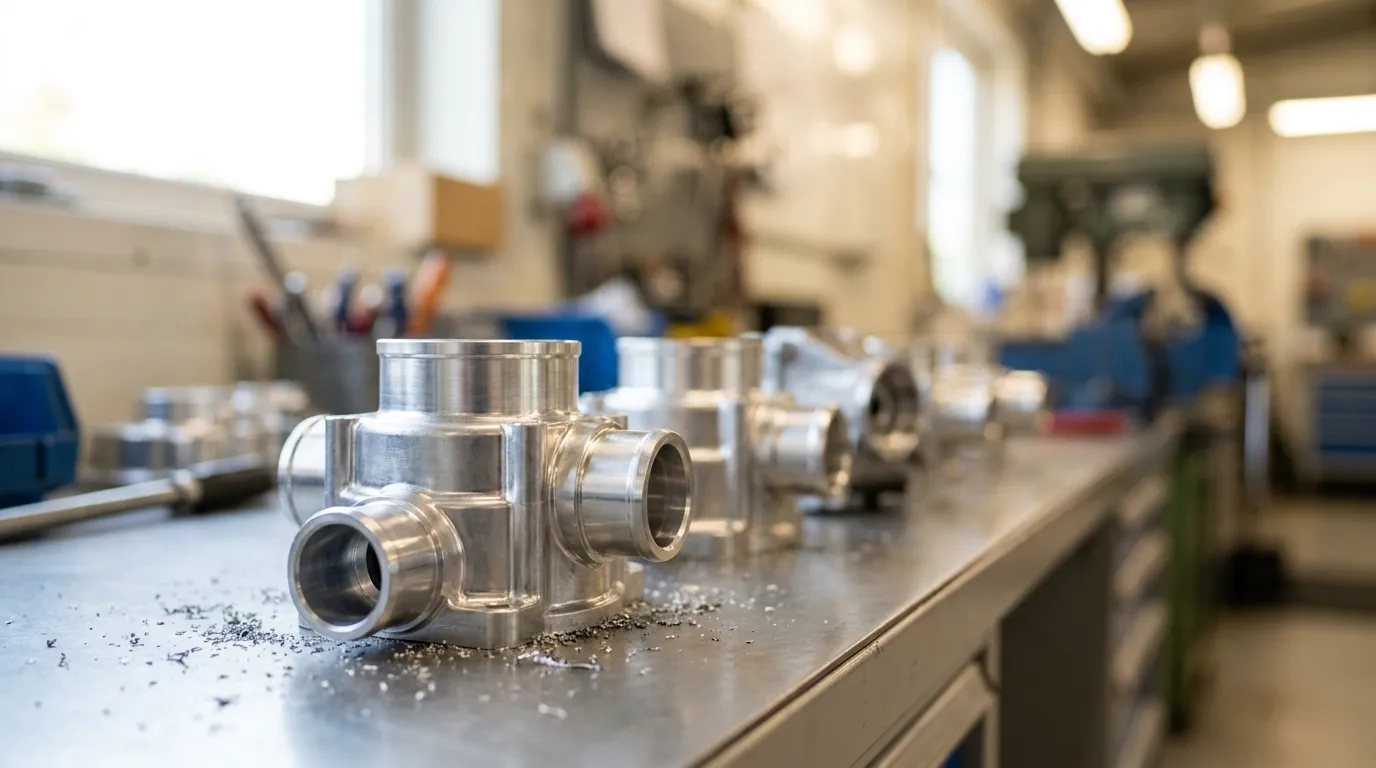
CNC milling companies in Austin are machine shops and precision manufacturers that use computer controlled cutting tools to remove material from metal or other substrates. These shops produce complex components to tight dimensional tolerances for aerospace, defense, space, semiconductor equipment, UAV and industrial programs. They differ from general job shops through investment in multi axis equipment, certified quality systems and regulated industry documentation.
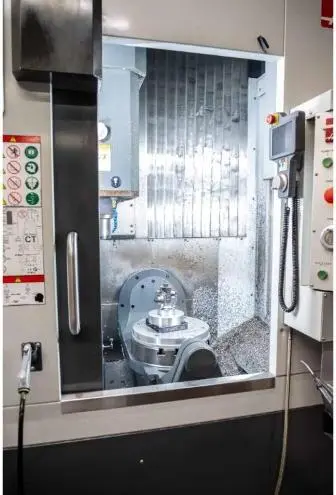
CNC milling is distinct from CNC turning, which rotates the workpiece against a stationary tool to produce cylindrical features. It also differs from engine machine work, which typically refers to automotive engine rebuilding. For structural frames, housings, brackets, contoured surfaces and complex prismatic components, milling is the relevant process.
Austin buyers match five elements before shortlisting suppliers: part complexity, tolerance requirements, material specifications, production volume and compliance documentation. Each factor screens out suppliers that cannot support the program.
A Capability Tagged Shortlist of CNC Milling Companies in Austin
The shops below appear frequently in Austin CNC milling searches and industry directories. This list illustrates how public capability tags narrow options before deeper qualification. Capability tags reflect only publicly available information. No certifications, tolerances or lead times appear unless publicly verifiable.
-
Precision Advanced Manufacturing, Texas and California locations: ITAR registered, AS9100D and ISO 9001:2015 certified. Multi axis CNC milling and turning, precision sheet metal fabrication, specialty welding with thermal distortion control, integrated finishing, kitting, hardware installation, laser marking and deburring. Serves commercial aerospace, military and defense, space and satellites, advanced industrials and UAV sectors. Supports prototype through full rate production.
-
Wolfram Manufacturing, Austin area: A 30,000-square-foot CNC machine shop in Austin, Texas, founded in 2011, that specializes in medium- to high-volume production of metal parts and has diversified its machining work into aerospace, firearms and other industrial customers.
-
Four Points Platinum, Austin area: An Austin, Texas precision machining and integrated manufacturing provider that supplies mechanical parts to industries including automation, automotive, aerospace, medical, electronics, homeland security and semiconductor.
-
Austin Precision Machining and Manufacturing, Austin area: CNC milling and turning with public references to general precision machining for industrial customers.
-
Sentinel Machining, Austin area: CNC machining services with public references to precision components for industrial applications.
-
Traxis Manufacturing, Austin area: An Austin, Texas-based machine shop that provides precision CNC machining, milling, turning and fabrication services, including work for commercial and military customers.
-
Athena Manufacturing, Austin area: Precision machining and fabrication with public references to aerospace and industrial sectors.
-
CMP Manufacturing, Austin area: CNC machining services with public references to precision components for industrial customers.
-
Axis Tool and Manufacturing, Austin area: CNC machining and tooling with public references to precision manufacturing for industrial applications.
Directory presence and capability tags narrow the field but do not qualify a shop for regulated work. A homepage claim about 5 axis milling or AS9100D status still requires independent verification. The framework below turns this shortlist into a defensible selection.
How to Choose a CNC Milling Company in Austin: A Buyer Qualification Framework
Directory tags narrow options. Evaluation across five dimensions turns that shortlist into a repeatable, defensible decision for regulated programs.
Dimension 1: Technical Capability Fit
Part geometry and access needs determine the required axis count. Three axis milling suits plates, brackets, covers and simple housings where one setup reaches all critical features. Four axis milling adds a rotary axis for multi face machining of valve bodies, radial hole parts and cylindrical components without full reclamping. Five axis milling supports aerospace contours, impellers, robot joints and angled features where tool access from multiple angles is necessary.
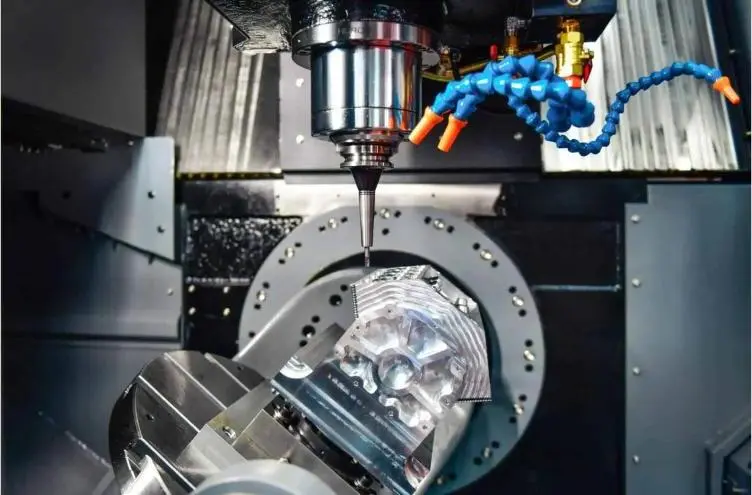
Accuracy generally improves as setups decrease, but the machine alone does not determine precision. Calibration, workholding, tooling and inspection all affect the final result. Select the axis count that solves a real access or setup problem for the part.
Dimension 2: Quality and Compliance
AS9100D certification, ITAR registration and ISO 9001:2015 status form the baseline for regulated CNC milling work. Verify each element independently through OASIS and direct documentation review. The compliance section below outlines specific questions and evidence.
Dimension 3: Scalability
A qualified shop supports prototype builds, pilot runs and full rate production under one quality system. A pilot production run conducted with production tooling, production cycle times and production operators validates process capability before full volume. Ask whether the shop uses the same quality documentation for pilot builds and production runs.
Dimension 4: Integration Scope
Fragmented vendors across machining, welding, finishing and kitting increase handoff risk, schedule variability and traceability gaps. A shop that consolidates these operations under one roof and one quality system materially reduces that risk.
Dimension 5: Documentation and Traceability
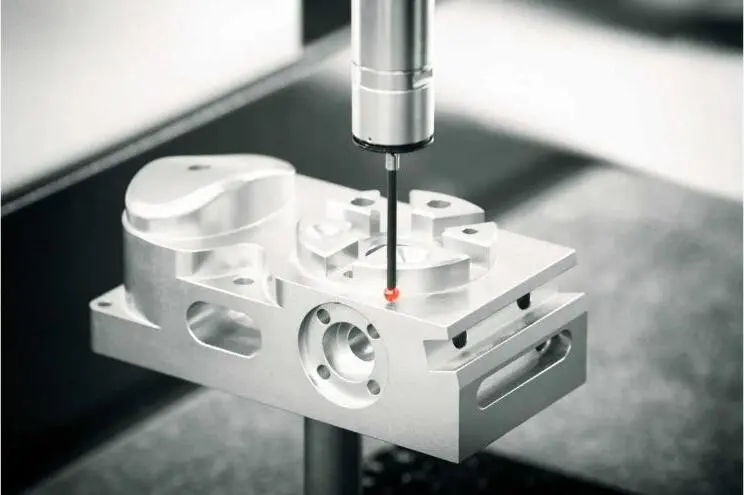
Mission critical programs require material certifications, first article inspection reports, in process inspection records and full traceability across materials and processes. Confirm these deliverables appear as standard outputs on every regulated order.
Qualification Checklist for RFQ
The checklist below supports consistent RFQ preparation for regulated CNC milling work in Austin.
-
Confirm AS9100D certificate scope covers the specific processes required, including milling, turning, welding and finishing.
-
Verify AS9100D certification status in the IAQG OASIS database.
-
Confirm ITAR registration status for defense and space programs.
-
Request a sample first article inspection report to assess documentation completeness.
-
Confirm axis count capability matches part geometry and tolerance requirements.
-
Ask whether the shop supports prototype, pilot build and full rate production under the same quality system.
-
Confirm material traceability practices, including lot tags, material certifications and job traveler controls.
-
Request evidence of counterfeit parts prevention procedures.
-
Confirm integrated finishing, kitting or secondary operations are available in house if required.
-
Request nonconformance and corrective action records to assess quality system maturity.
How to Verify Certifications and Traceability in Austin CNC Milling
AS9100D is the international quality management system standard for aviation, space and defense manufacturing, developed by the International Aerospace Quality Group and published through SAE International. It contains all ISO 9001:2015 requirements plus aerospace specific additions covering risk management, configuration management, product safety, counterfeit parts prevention and key characteristics control. AS9100D certification remains valid for three years, with annual surveillance audits in years one and two and a full recertification audit in year three.
ITAR, or International Traffic in Arms Regulations, governs the export of defense articles and technical data. Parts on the U.S. Munitions List cannot legally be manufactured at non ITAR registered facilities. Any U.S. person who manufactures a USML defense article must register with DDTC under 22 CFR § 122.1, regardless of export activity. Certain limited activities, such as assembly without cutting, drilling or machining, do not count as manufacturing and do not require registration. ITAR registration forms a mandatory baseline for defense and space programs.
Concrete questions to ask when verifying compliance include the following items.
-
What is the current AS9100D certificate scope, registrar name and expiration date.
-
Can the certification be verified in the IAQG OASIS database.
-
What is the ITAR registration number and renewal date.
-
What does the material certification process look like for a typical production order.
-
What inspection reports ship as standard with each order.
-
How is traceability maintained across materials, processes and subcontractors.
A certificate copy alone rarely satisfies aerospace procurement teams. The minimum documentation set for aerospace machining qualification includes the current AS9100D certificate with scope statement and registrar name, an AS9102 first article inspection package, counterfeit and suspect parts procedures, a risk register, recent nonconformance and corrective action records, material traceability examples and calibration records.
Why Precision Advanced Manufacturing Aligns With This Framework
For Austin area buyers sourcing CNC milling for mission critical programs, Precision Advanced Manufacturing aligns closely with the qualification framework above. Certified quality systems, ITAR registration and integrated capabilities reduce program risk from prototype through full rate production.
Key differentiators include ITAR registration for defense and space programs and AS9100D and ISO 9001:2015 certified quality management systems. Multi axis CNC milling and turning support complex, tight tolerance components. Precision sheet metal fabrication with CNC waterjet and laser cutting, specialty welding with thermal distortion control and integrated finishing services operate under one quality system. Kitting, hardware installation, laser marking and deburring occur in house across two specialized facilities in California and Texas, with scalable production from prototype through multi shift manufacturing.
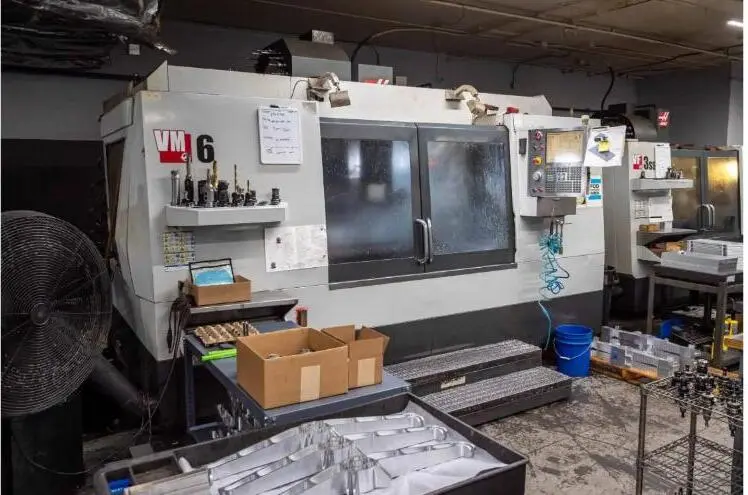
Procurement and sourcing teams gain consistent on time performance, cost predictability and full traceability across materials and processes. Program managers receive finished, ready to integrate components and seamless prototype to production transitions without supplier changes. Supplier quality engineers work with defined quality checkpoints, inspection reporting and material certifications aligned to aerospace standards.
The partnership path follows a clear sequence. First, an expert team defines program needs and part specifications. Next, the team provides a tailored quote covering capabilities, tolerances, materials, certifications and production strategy. Production then moves from prototype to full rate manufacturing under certified quality and full traceability.
Common Pitfalls When Selecting CNC Milling Companies in Austin
Several recurring mistakes increase program risk when sourcing CNC milling in Austin. Recognizing these patterns early reduces exposure.
Fragmented vendor base. Splitting machining, welding and finishing across multiple shops introduces handoff delays, traceability gaps and schedule variability. The control is to prioritize suppliers with integrated capabilities under a single quality system.
Unclear specifications. Drawings that rely on CAD defaults rather than functional tolerance requirements create ambiguity at the machine. Tight tolerances that are not measured do not function as tight tolerances. Functional datums, fits and key characteristics require explicit definition before issuing an RFQ.
Inadequate supplier qualification. Accepting a homepage certification claim without OASIS verification or documentation review creates a common compliance gap. The qualification checklist above provides a structured control.
Misaligned prototype to production expectations. A prototype part can pass functional testing and still generate yield problems when production tooling runs at full cycle time with operators following a work instruction rather than tribal knowledge. Pilot builds with production parameters and defined acceptance criteria reduce that risk.
Compliance documentation gaps. Missing material certifications, incomplete first article packages or absent corrective action records create audit exposure. Requiring the full documentation set at RFQ stage closes this gap.
Weak changeover and setup controls. Many supplier escapes stem from transition failure, such as the wrong program loaded or an outdated drawing revision, rather than from a lack of cutting ability. Questions about program revision control, fixture identity and material identity at each job change reveal the strength of these controls.
The qualification framework and checklist address each of these pitfalls directly. Applying them before award provides one of the strongest risk controls available to Austin buyers.
Frequently Asked Questions
What Do CNC Milling Companies in Austin Typically Do, and How Do They Differ From General Machine Shops?
CNC milling companies use computer controlled multi axis cutting equipment to remove material from metal or other substrates and produce complex components to tight dimensional tolerances. They differ from general machine shops through investment in multi axis equipment, certified quality management systems such as AS9100D and ISO 9001:2015, ITAR registration and the documentation infrastructure required for regulated industries. General machine shops often handle a broader range of repair, maintenance and fabrication work without the same compliance framework. For aerospace, defense, space and UAV programs, this distinction matters because regulated work requires traceable materials, first article inspection, counterfeit parts controls and audit ready documentation.
How Can a Buyer Tell Whether a Shop Is Set Up for Prototypes vs. Full Rate Production?
Direct questions about quality systems and documentation reveal production readiness. A shop set up for full rate production uses the same quality system, documentation and inspection processes for prototype builds and production runs. It maintains defined process controls, production control plans, multi shift capacity and a scalable scheduling system. It can describe how it conducts pilot builds, which are limited quantity runs using production parameters, before full volume. Sample first article inspection reports and evidence of capability data on critical dimensions provide strong indicators of production readiness.
What Do AS9100D and ITAR Mean for a Buyer, and How Are They Verified?
AS9100D is the international quality management system standard for aviation, space and defense manufacturing. It requires documented risk management, configuration management, product safety controls, counterfeit parts prevention and full traceability across materials and processes. ITAR registration is required for any supplier handling defense articles or technical data on the U.S. Munitions List. Verification of AS9100D occurs through the IAQG OASIS database, where the certificate scope must match required processes. Verification of ITAR registration occurs through the supplier registration number and renewal date. Both checks should be complete before issuing an RFQ for regulated work.
How Do Buyers Match Part Complexity to 3 Axis, 4 Axis or 5 Axis Machining?
The decision depends on part geometry, critical datums, tolerance requirements and the number of setups required to reach all features. Three axis milling suits plates, brackets, covers and simple housings where one setup reaches all critical surfaces. Four axis milling adds a rotary axis for multi face machining of cylindrical components, valve bodies and radial hole parts without full reclamping, which reduces datum transfer error. Five axis milling supports aerospace contours, impellers, angled features and complex curved surfaces where the tool must approach from multiple angles. Tighter tolerances are generally achievable with higher axis counts because fewer setups reduce positioning error. Calibration, workholding, tooling and inspection still govern the final result, so the selected axis count should solve a specific access or setup problem.
What Should a Buyer Ask When Transitioning a Program From an Existing Supplier Mid Program?
Mid program supplier transitions carry documentation, traceability and continuity risk. The incoming supplier must accept and review existing engineering drawings, material certifications and process documentation from the outgoing supplier. Pilot builds or validation runs before full rate production verify process capability on the specific part. Questions about engineering change order management and traceability for materials already in the supply pipeline clarify continuity controls. A complete first article inspection package from the incoming supplier should precede production approval. Precision Advanced Manufacturing provides documentation, material traceability and engineering support to maintain continuity during supplier transitions, beginning with pilot builds to minimize risk.
How Do Integrated Services Like Finishing, Kitting and Assembly Affect Program Risk and Cost?
Integrated services reduce program risk by eliminating handoffs between separate vendors. Each handoff introduces schedule variability, traceability gaps and the possibility that a part is damaged, mislabeled or delayed in transit. When machining, welding, finishing, kitting and hardware installation occur under one roof and one quality system, the documentation chain remains intact and inspection occurs at each stage by the same quality team. The program manager gains a single point of contact for schedule and compliance questions. The cost impact varies by program, but the risk reduction remains consistent because fewer vendors create fewer failure points between raw material and ready to integrate component.
Does High Precision, Certified Manufacturing Cost More, and How Should Total Cost of Ownership Be Evaluated?
The unit price for certified, tight tolerance machining often exceeds the price for uncertified alternatives. Total cost of ownership for mission critical programs includes rework, scrap, expediting, incoming inspection burden, compliance failure remediation and program delay costs. The 2026 USA Reshoring Survey found that OEM adoption of total cost of ownership modeling for domestic versus offshore sourcing increased from 30 percent in 2025 to 40 percent in 2026, reflecting broader recognition that unit price alone does not support sourcing decisions. For regulated programs where a nonconforming part can halt integration or trigger an audit, the cost of a quality escape often exceeds the price premium of certified manufacturing.
Conclusion and Next Steps
Selection among CNC milling companies in Austin requires more than a directory search. The qualification framework in this guide, covering technical capability fit, quality and compliance verification, scalability, integration scope and documentation traceability, gives procurement, program management and supplier quality teams a repeatable evaluation method.
Austin manufacturing continues to expand across aerospace, defense, space, semiconductor equipment and UAV sectors, supported by investment from companies including CesiumAstro, Firefly Aerospace and Samsung Taylor fab. Demand for qualified, certified CNC milling partners in the region remains strong.
For mission critical programs, Precision Advanced Manufacturing aligns with this demand through ITAR registration, AS9100D and ISO 9001:2015 certified quality systems, multi axis CNC machining, integrated finishing and scalable production from prototype to full rate manufacturing under one roof. These capabilities address core risks that Austin buyers face when sourcing regulated components.
Suggested next steps include an internal needs assessment covering part complexity, tolerance requirements, materials, volume and compliance documentation needs. The qualification checklist then supports a shortlist of capable, verified suppliers. Compliance verification through OASIS and direct documentation review, pilot builds before full rate approval and site visits to confirm shop floor discipline complete a structured sourcing process.