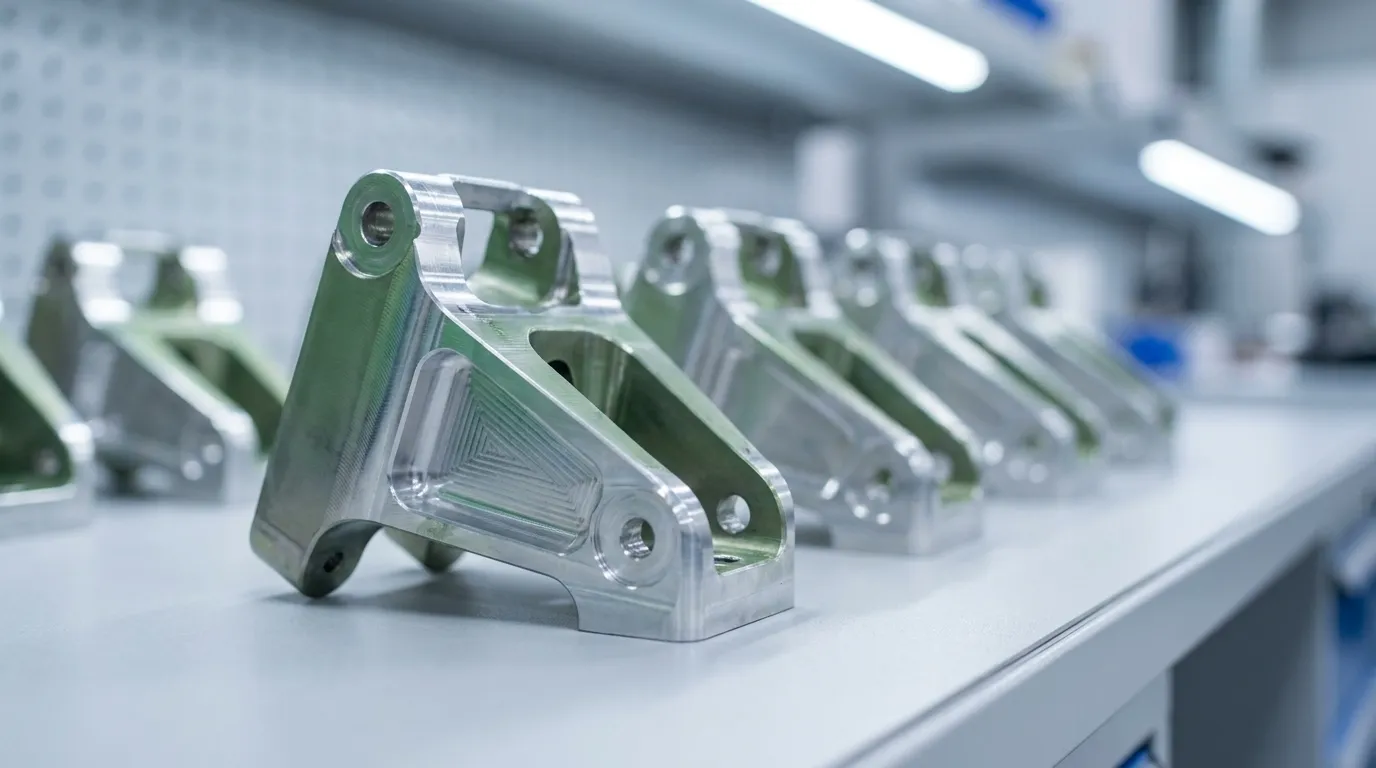
Key Takeaways for Aerospace CNC Delivery
- Aerospace CNC suppliers typically achieve 85 to 93 percent on-time delivery, with world-class performance defined as 96 percent or higher.
- Missed deliveries trigger line stoppages, rework cycles and AS9100D compliance penalties that can cost programs millions annually.
- Root causes of late deliveries include inaccurate cycle-time estimates, zero-buffer scheduling, material shortages and weak interdepartmental coordination.
- Five-axis machining, finite-capacity ERP planning and single-facility integration significantly improve schedule adherence for flight-critical parts.
- Precision Advanced Manufacturing delivers certified processes, multi-axis capability and traceability aerospace programs need. Connect with a certified partner to secure reliable on-time delivery for the next build.
The Cost Impact of Missed Aerospace CNC Deliveries
Late parts create line stoppages, rework cycles and regulatory exposure that compound across a program. Programs targeting 95 percent or higher on-time delivery face immediate financial and compliance penalties when suppliers fall short. Supply chain disruptions cost aerospace manufacturers an average of $184 million per year.
The compliance dimension compounds the financial one because late deliveries create audit exposure beyond the immediate schedule impact. AS9100D requires documented production plans, risk assessment for schedule changes and on-time delivery monitoring, so a supplier that misses delivery dates creates regulatory risk for the entire program, not just a single purchase order.
Procurement managers, program managers and supplier quality engineers evaluating CNC partners need data-backed criteria that separate reliable suppliers from those whose planning systems break under program pressure.
Root Causes of CNC Delivery Delays
Infinite-capacity assumptions in quoting and planning represent the single biggest cause of late deliveries in manufacturing. Planners accept orders that cannot be completed on time because they overestimate available machine hours, labor readiness and setup flexibility.
Several compounding factors drive the majority of late shipments:
- Inaccurate cycle-time estimates. A quoted 10-minute cycle that averages 13 minutes due to tool wear, in-process checks and chip management destroys promised lead times across hundreds of components.
- Zero-buffer scheduling. Running every machining center at near-full theoretical utilization leaves no buffer for preventive maintenance, urgent demand, quality escapes or engineering changes.
- Material shortages. Material shortages contribute to late deliveries, with aerospace specialty alloys often requiring longer procurement lead times.
- Multi-fixture 3-axis setups. Each re-clamping introduces positional error and adds setup time, which compresses the available window for machining and inspection.
- Weak interdepartmental coordination. Late delivery occurs when sales commits dates without capacity validation, engineering releases drawings late or quality adds inspection steps not reflected in the schedule.
- First-piece approval delays. First-piece approval delays and inspection backlogs function as an invisible tax on capacity that shifts available hours away from current jobs.
Multi-Axis Capability and Schedule Adherence
Among the root causes above, multi-fixture 3-axis setups and zero-buffer scheduling create the most immediate capacity constraints. Five-axis machining directly addresses both issues by reducing the setup-driven delays that erode on-time delivery performance.
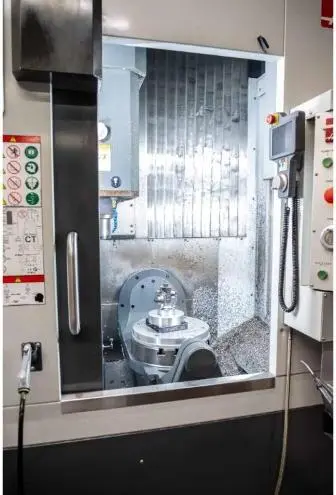
Five-axis machining reduces setup-driven delays that slow aerospace programs. On 3-axis machines, setup time for an aerospace bracket averages 45 to 90 minutes per fixture change, which leads to 2.5 to 4.5 hours of total setup time across three setups per production run. Five-axis machining cuts this to 15 to 30 minutes in a single clamping for complex parts.

Shops running aerospace aluminum alloys on 5-axis centers achieve cycle-time reductions on complex geometries compared to equivalent 3-axis setups. The tolerance benefit is equally significant. Five-axis contouring reduces positional uncertainty from 0.04 to 0.08 millimeter across three re-clampings to less than 0.015 millimeter in a single clamping, which lowers the risk of tolerance-related rework that delays shipment.
Aerospace shops that use full simultaneous 5-axis machining shorten lead times for complex structural components compared to 3 plus 2 indexed workflows. The primary driver is the elimination of custom fixture fabrication between operations.
Certification and Traceability for Flight-Critical Parts
AS9100D is the aerospace-specific extension of ISO 9001 that adds requirements for configuration management, risk analysis and first-article inspection. Without this certification, shops cannot bid on airframe or engine component contracts from major prime contractors.
Traceability requirements carry equal weight. Every piece of aerospace-grade material must be traceable back to the mill heat lot via the material test report through every operation from saw cutting to final inspection. A single traceability gap during an AS9100 audit can result in production shutdown and loss of approved supplier status.

ITAR registration adds a further layer of compliance for defense and space programs. Suppliers without ITAR registration cannot legally handle controlled technical data or manufacture defense articles, which removes them from a large share of flight-critical work.
Capacity Planning and ERP Integration
Finite-capacity scheduling improves on-time delivery by replacing infinite-capacity assumptions with schedules that respect real constraints. These constraints include machines, labor, tooling and material availability.
ERP integration accelerates that improvement. Integrating ERP for unified production and inventory control in a precision manufacturing operation produced a 17 percent increase in on-time delivery and a 15 percent reduction in machine downtime.
These improvements are consistent across the industry. Precision machining job shops have achieved major gains in on-time delivery through ERP implementation that includes real-time capacity planning and mobile shop-floor updates.
Labor planning matters as much as machine scheduling. Shifting from planning machines alone to planning machines and labor together improves on-time delivery, because CNC equipment sitting idle due to unavailable qualified operators consumes schedule time without producing parts.
Integrated Precision AM Capabilities That Remove Delivery Risk
Precision Advanced Manufacturing combines multi-axis CNC machining, precision fabrication, specialty welding and integrated finishing under one roof at facilities in California and Texas. Consolidating these capabilities removes the vendor handoffs that introduce documentation gaps, scheduling conflicts and transit delays.
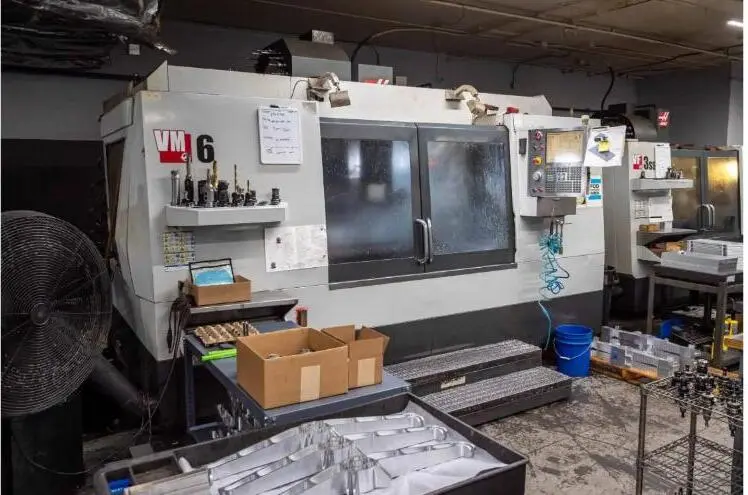
Operations run under AS9100D and ISO 9001:2015 certified quality management systems with full ITAR registration. Every project includes defined quality checkpoints, material traceability and complete documentation aligned to aerospace audit requirements. This structure creates a supply partner that supports both prototype development and full-rate production without a supplier change as programs scale.
Managing Mid-Program Supplier Transitions and Scaling
Changing suppliers mid-program introduces documentation gaps and qualification delays that threaten flight-critical timelines. Precision Advanced Manufacturing addresses this risk by providing pilot builds, full material traceability and engineering support that maintain continuity during transitions.
The same scalable production platform that supports prototype runs also supports sustained multi-shift manufacturing. Programs move from initial design validation to full-rate production while preserving the quality records and traceability chains that AS9100D and customer-specific requirements demand.
Supplier-Evaluation Checklist for Aerospace CNC Programs
Procurement and supplier quality teams can use the following criteria when evaluating aerospace CNC suppliers for flight-critical programs:
- Current on-time delivery rate. Request documented on-time delivery performance over the prior 12 to 24 months. World-class suppliers target 95 to 98 percent.
- Certification stack. Confirm AS9100D registration, ISO 9001:2015 certification and ITAR registration as minimum requirements for flight-critical work.
- Finite-capacity planning method. Ask whether the shop uses finite or infinite capacity scheduling. Finite scheduling that models machines, labor, tooling and material simultaneously produces achievable dates.
- Single-facility integration. Verify that machining, fabrication, finishing and inspection occur under one quality system. Multi-vendor handoffs introduce traceability risk and schedule variability.
- Documented traceability procedures. Confirm that material heat numbers are maintained through every production step and that records are retained per AS9100D and program-specific requirements.
- Prototype-to-production continuity. Confirm the supplier can scale from prototype to full-rate production without a supplier change, which preserves validated processes and quality records.
- Engineering support capability. Assess whether in-house programming, tooling development and design-for-manufacturability support are available to resolve issues before they affect the schedule.
Frequently Asked Questions
What OTD rate do prime contractors expect from aerospace CNC suppliers?
Prime contractors and Tier-1 integrators generally expect on-time delivery rates of 95 percent or higher from certified CNC suppliers. Top performers exceed the 96 percent threshold mentioned earlier by maintaining robust capacity planning and quality systems. Suppliers consistently below 90 percent on-time delivery often face corrective action requests, supplier qualification reviews or removal from approved supplier lists. Programs with tight integration schedules frequently impose contractual on-time delivery minimums and track performance monthly.
How does 5-axis machining affect on-time delivery compared with 3-axis methods?
As detailed in the multi-axis capability section, the primary on-time delivery benefit comes from setup reduction. Beyond the time savings, single-clamping workflows also eliminate the tolerance stack-up that occurs across multiple setups, which reduces scrap rates that would otherwise consume unplanned capacity and delay subsequent jobs. These combined effects protect schedule capacity and support higher sustained on-time delivery performance.
Which certifications are required to bid on flight-critical programs?
The AS9100D certification discussed earlier serves as the baseline requirement for most prime contractors, with ISO 9001:2015 forming its foundation. ITAR registration is mandatory for any work involving U.S. defense articles or controlled technical data. Beyond these core certifications, some programs additionally require NADCAP accreditation for special processes such as heat treating, non-destructive testing and plating. Suppliers should confirm the specific certification requirements in the request for proposal, because requirements vary by prime contractor, program and component classification.
How can buyers verify supplier capacity planning during due diligence?
Buyers can verify capacity planning rigor by asking suppliers to describe their scheduling methodology and whether it uses finite or infinite capacity assumptions. Finite capacity scheduling that simultaneously models machine hours, qualified labor, tooling availability and material lead times produces executable delivery dates. Buyers can also ask whether the shop uses an integrated ERP system that connects purchasing, production planning, shop floor execution and quality in a single database. Requesting historical on-time delivery data and asking how the supplier handles engineering change orders mid-program reveals whether the planning system remains stable under real program conditions.
Conclusion: Building Reliable Aerospace CNC Delivery
Reliable on-time delivery aerospace CNC performance requires certified processes, integrated capacity planning and multi-axis machining capability operating under a single quality system. Missed deliveries create line stoppages, audit risk and program cost overruns that compound quickly on flight-critical timelines.
Precision Advanced Manufacturing supplies the process controls, certifications and integrated capabilities that procurement managers, program managers and supplier quality engineers use to protect mission-critical schedules. AS9100D and ITAR-registered operations in California and Texas support seamless scaling from prototype to full-rate production with complete traceability at every step.