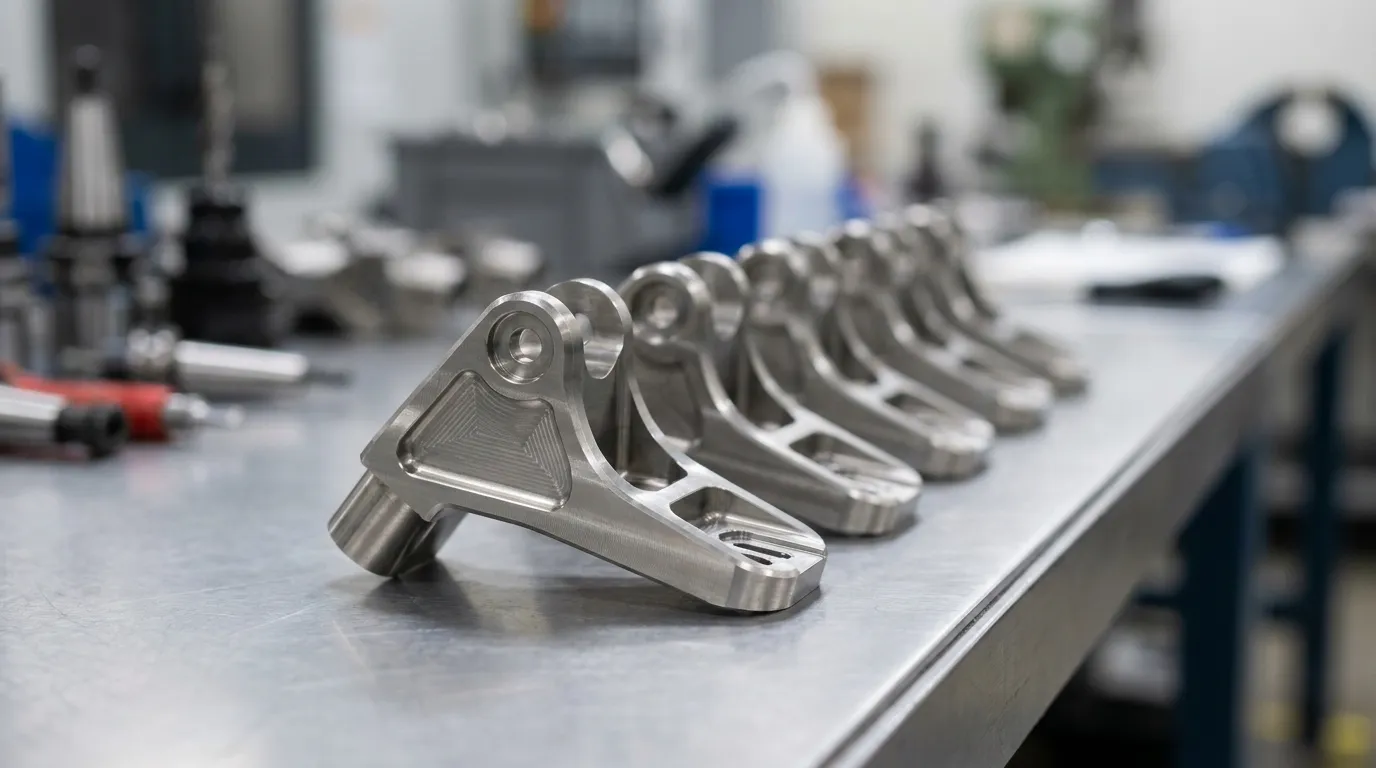
Key Evaluation Priorities for Aerospace CNC Suppliers
- AS9100D certification with documented audit history is mandatory for bidding on airframe or engine contracts from major aerospace OEMs.
- ITAR registration plus controlled data access and supply chain accountability reduce export control risk on defense programs.
- Complete AS9102 First Article Inspection documentation (Forms 1, 2 and 3) must accompany every new part or engineering change to maintain airworthiness traceability.
- Integrated machining, fabrication and finishing under a single certified quality system removes handoffs that introduce dimensional variation and traceability gaps.
- Precision Advanced Manufacturing provides scalable, ITAR-registered, AS9100D-certified capacity from prototype through full-rate production; request a quote to begin program evaluation.
AS9100D Requirements for Aerospace CNC Machining Partners
AS9100D is the aerospace-specific extension of ISO 9001 that adds configuration management, risk analysis via FMEA and First Article Inspection per AS9102. Without AS9100D certification, a shop cannot bid on airframe or engine component contracts from major OEMs.
The standard sets documentation requirements at every production step. AS9100D Clause 7.5 requires CNC programs to be identified by part number, revision level and operation number, controlled through ECN review and distributed only from a controlled DNC server. That program control extends to the setup phase. Clause 8.5.1 mandates documented setup sheets covering machine ID, fixture identification, tool lists, program filename and revision, and first article inspection points. Clause 8.5.2 then closes the traceability loop with full material lot tracing via traveler systems linked to material test records before any part release.
Traceability gaps carry serious consequences. A single traceability gap discovered during an AS9100 audit can result in production shutdown and loss of approved supplier status. Procurement teams should review audit histories for patterns in common nonconformances such as uncontrolled program versions, incomplete FAI documentation, missing material traceability, expired gage calibration and untracked tool life. Recurring findings in these areas signal systemic process weakness rather than isolated incidents.
Avoiding these pitfalls requires systematic process controls across every production step. Precision Advanced Manufacturing operates under AS9100D and ISO 9001:2015 certified quality management systems that address each of these risk areas. Every project runs with defined quality checkpoints, full documentation and material traceability aligned to aerospace standards. The quality system covers multi-axis CNC machining, precision sheet metal fabrication, specialty welding and secondary finishing under one roof, which reduces the audit surface area for procurement and supplier quality teams.
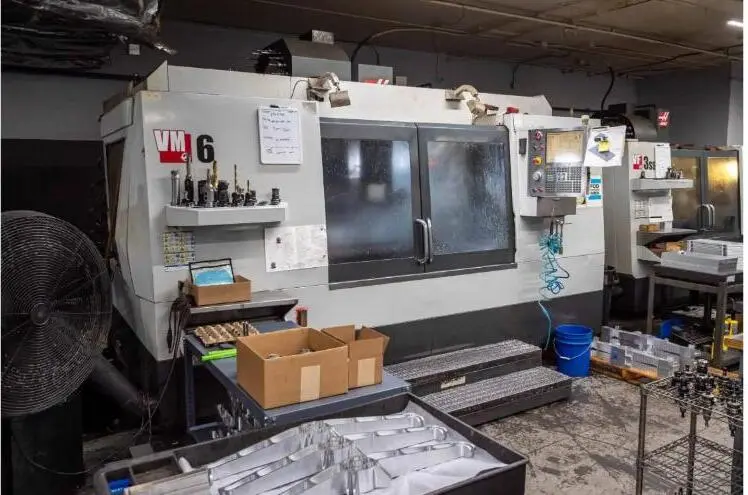
AS9102 First Article Inspection uses a three-form system. Form 1 covers part number accountability. Form 2 documents raw material accountability including heat lot and MTR linkage. Form 3 records dimensional accountability with every characteristic ballooned, measured and recorded. FAI applies to new parts and to any change that could affect form, fit or function, including new machines, fixture changes, tooling revisions, material supplier changes or production gaps longer than two years.
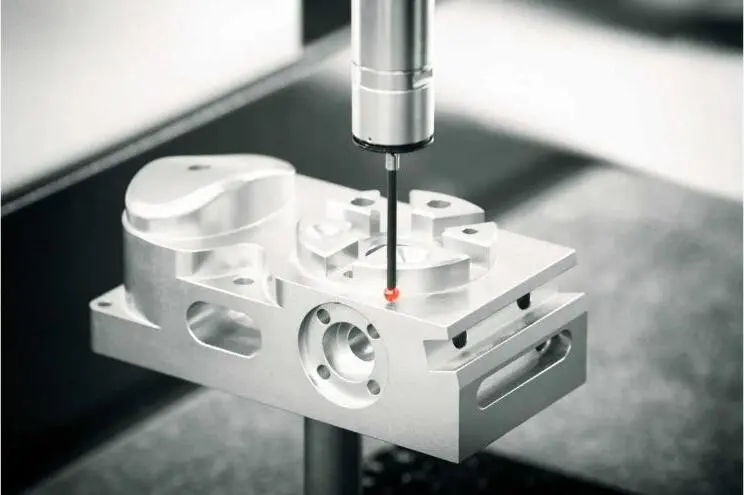
ITAR Controls for Defense-Focused Aerospace Machining
ITAR registration is a federal requirement for suppliers that manufacture defense articles or provide defense services. ITAR compliance requirements for CNC machining include controlled access to technical data, employee training and screening, secure document storage, export control procedures, visitor and facility controls and supply chain accountability.
Defense OEMs evaluate machining suppliers on ITAR compliance alongside precision machining expertise, quality management systems, inspection capabilities, production scalability and AS9100-compliant quality systems. A supplier that cannot demonstrate documented ITAR controls introduces program-level export control risk that procurement teams must avoid.
Supplier transitions mid-program amplify this risk. Switching suppliers requires engineering revalidation including updated DFM reviews, revised tolerances, first article inspections, validation testing and process verification. Every supplier transition forces new manufacturers to relearn product intent, quality expectations, revision history and assembly requirements, which increases the likelihood of production errors due to lost institutional knowledge. For defense programs, these transition risks compound with export control requirements because the new supplier must demonstrate ITAR compliance before any technical data transfer.
Precision Advanced Manufacturing is 100% ITAR registered, which supports seamless onboarding without export control delays. The company supports supplier transitions with complete documentation, material traceability and engineering support to maintain continuity. Pilot builds or validation runs are available to reduce risk when integrating into existing supply chains.
Scaling Aerospace CNC Programs from Prototype to Full-Rate Production
Transferring an aerospace CNC program from a specialized prototyping shop to a separate high-volume production facility introduces risks including lost tribal knowledge, duplicated tooling costs and the requirement for a second, time-consuming FAI. Programs that consolidate prototype and production under one certified partner avoid these failure modes.
Effective supplier capacity validation for aerospace ramp-up evaluates more than available machine hours. True supplier capacity extends to operational maturity, quality systems, leadership capability, financial stability, sub-tier supplier readiness, production planning, maintenance, workforce availability and consistent execution under increasing demand.
Procurement teams can apply this framework by assessing specific transition readiness indicators.
- FAI first-pass approval rate and documented corrective action history
- On-time delivery performance across prototype and production phases
- Capacity for multi-shift operations without quality degradation
- Sub-tier supplier visibility for critical materials and long-lead components
- Revision control systems that maintain traceability across engineering changes
Precision Advanced Manufacturing supports the full product lifecycle from prototype development through sustained multi-shift production. Established processes and scalable capacity allow programs to transition without supplier changes or operational disruption, which preserves the quality validated during prototyping.
The global aerospace machining market was valued at US$31.3 billion in 2024 and is projected to reach US$43.6 billion by 2032. Machining and forgings hold a significant share of the aerospace parts manufacturing market because critical aircraft parts require tight tolerance control and repeat inspection. Suppliers with strong quality discipline and program-specific capacity gain stronger long-term contracts as OEMs prioritize delivery stability over price.
Tight-Tolerance Titanium and Superalloy Machining for Aerospace
Standard aerospace tolerances often reach ±0.0005 in or tighter. Titanium and nickel-based alloys present specific machining risks. Low thermal conductivity concentrates heat at the cutting interface, which accelerates tool wear without proper inserts, coatings and coolant strategies.
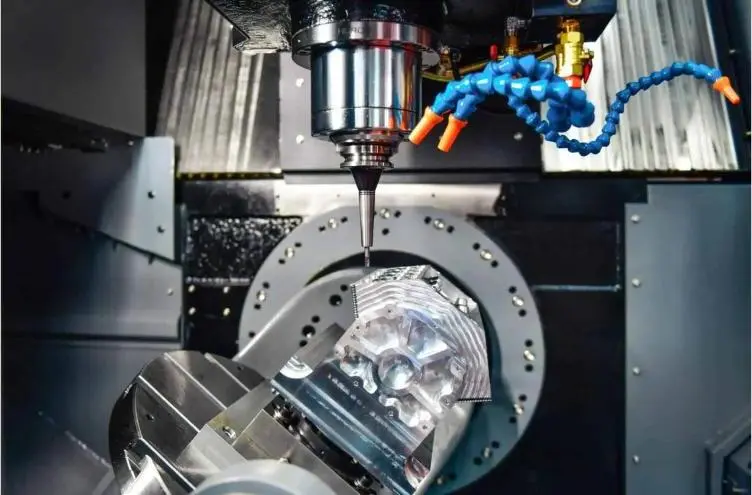
Consistent tight-tolerance output in titanium depends on coordinated process controls, not machine capability alone. Key process controls include machine calibration status, fixture design for repeatable datum location, tool wear management, coolant strategy for titanium and superalloys, in-process probing on high-risk features and revision control for programs and setup sheets. These controls work together to maintain stable cutting conditions, repeatable part location and documented responses to variation.
Consolidated machining, fabrication and finishing under one quality system further reduces the handoffs that introduce dimensional variation and traceability gaps. Precision Advanced Manufacturing integrates multi-axis CNC machining, precision sheet metal fabrication, specialty welding with thermal distortion control and secondary finishing services including anodizing, passivation and plating under AS9100D and ITAR-compliant systems. Components ship fully finished and ready to integrate, which removes secondary work and shortens assembly timelines.

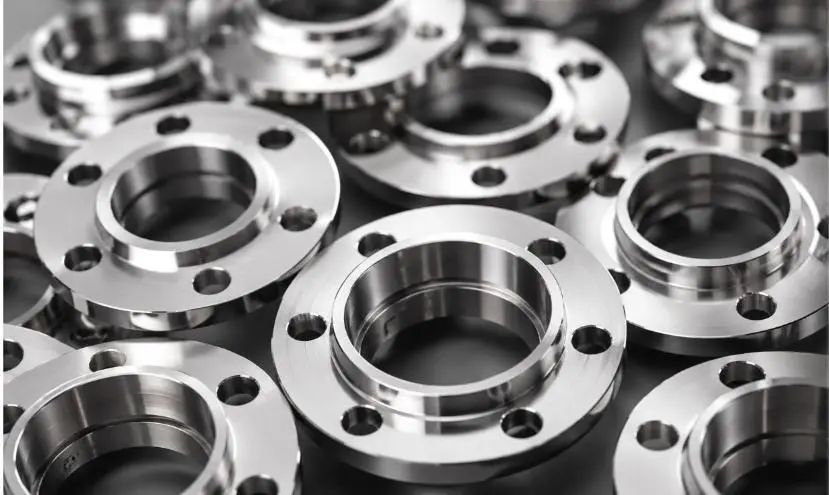
Global supply chain realignments have accelerated reshoring and nearshoring of manufacturing activities in North America, which drives higher investments in precision machining technologies and localized production capabilities. U.S. companies are reshoring production to domestic facilities to reduce reliance on global supply chains, driven by trade policy changes, tariffs, pandemic-era supply chain vulnerabilities and geopolitical tensions. Precision Advanced Manufacturing operates a dual-facility U.S. platform in California and Texas that aligns with this shift while maintaining certified quality.
Request a quote for tight-tolerance titanium or complex aerospace components that require integrated machining and finishing under one certified roof.
Program Risk Mitigation Using Certified Process Controls
Certified aerospace CNC shops use formal controls to reduce common program failure modes. These controls align with AS9100D, AS9102 and ITAR requirements and provide a practical checklist for supplier evaluation.
Material traceability gaps can lead to shipment holds, audit findings or lot scrapping. These gaps typically occur when heat-lot links are missing from traveler systems, which violates AS9100D Clause 8.5.2. Certified suppliers prevent this failure mode with MTR linkage in traveler systems and material certs verified at receiving so every part traces back to its source material.
Uncontrolled CNC program versions can produce out-of-spec parts, FAI failures or rework costs. Unauthorized program modification or use of local copies violates AS9100D Clause 7.5. Certified controls include DNC servers with ECN-controlled revision and archived superseded versions, which keep machinists on the correct approved program.
FAI documentation failures can cause production holds or requalification delays. Incomplete AS9102 forms or missing ballooned drawings violate AS9100D Clause 8.6. Certified controls include AS9102 Form 1, 2 and 3 checklists and customer source inspection at first article to confirm complete documentation.
Supplier transition knowledge loss can result in duplicated tooling costs, second FAI or schedule slips. Splitting prototype and production across separate facilities creates this risk. Certified controls include single integrated partners that retain tooling, fixtures and process history so programs scale without requalification.
Production scaling quality drift can increase PPM nonconforming or escape incidents. Thermal expansion or tool wear without SPC monitoring contributes to this risk. Certified controls include in-process probing, scheduled CMM inspection and automated tool-life management to maintain stable processes at higher volumes.
ITAR export control violations can lead to program suspension or federal penalties. Uncontrolled access to technical data or unscreened personnel creates this risk. Certified controls include the ITAR registration and data access protocols described earlier, plus employee screening and training records available for customer audit.
Frequently Asked Questions
What traceability documentation should an AS9100D certified CNC supplier provide with each shipment?
An AS9100D certified supplier should provide a Certificate of Conformance, dimensional inspection reports, and material test records linked to the specific heat lot used in production. A completed AS9102 First Article Inspection Report must accompany new parts or any change affecting form, fit or function. Setup sheets, traveler records and nonconformance disposition records should be retained and available on request. Complete documentation at shipment reduces the receiving inspection burden and supports airworthiness certification downstream.
How does a supplier transition mid-program affect AS9100D and ITAR compliance?
A mid-program supplier transition requires the new supplier to perform a full First Article Inspection per AS9102, revalidate all process plans and re-establish material traceability from the new supply chain. The supplier must also demonstrate ITAR-compliant handling of all transferred technical data. Engineering revalidation consumes program resources and introduces schedule risk. Suppliers that support the full lifecycle from prototype through full-rate production avoid this requalification burden by maintaining continuous process history, tooling and documentation under one certified quality system.
What does prototype-to-full-rate production scaling require from a certified CNC supplier?
Scaling requires the supplier to demonstrate capacity beyond available machine hours, including quality system stability at higher volumes and disciplined multi-shift scheduling. Sub-tier supplier visibility for critical materials and consistent first-pass FAI approval rates also matter. The supplier should maintain the same AS9100D-controlled processes validated during prototyping as production rates increase. Suppliers with integrated machining, fabrication and finishing under one roof reduce the coordination failures that commonly cause scale-up delays.
Why does tight-tolerance titanium machining require a specialized certified supplier?
Titanium’s low thermal conductivity concentrates heat at the cutting interface, which accelerates tool wear and creates dimensional drift without proper inserts, coatings and coolant strategies. Repeatable tolerances in titanium require fixture designs that maintain datum repeatability across builds, in-process probing on high-risk features and tool life management systems that swap cutters before tolerance drift occurs. Standard machine shops without aerospace-specific process controls and AS9100D quality systems cannot demonstrate the statistical process capability required for flight-critical titanium components.
What certifications should procurement teams require from an aerospace CNC machining partner?
Procurement teams should require current AS9100D and ISO 9001:2015 registrations with documented audit history, plus ITAR registration for any defense or space-related work. Suppliers performing special processes such as welding, heat treatment or surface treatments may also need NADCAP accreditation for those specific processes. Procurement teams should verify that certifications are current, that the scope covers all processes being sourced and that the supplier can provide complete traceability documentation from raw material through final inspection.
Conclusion: Selecting a Long-Term Aerospace CNC Partner
Evaluating a precision CNC machining partner for aerospace programs requires more than a capability list. Procurement, program and supplier quality teams need documented proof of AS9100D and ITAR compliance, complete material and process traceability, demonstrated FAI capability and a scalable production platform that reduces the risks of supplier transitions.
The aerospace parts manufacturing market is projected to reach USD 235.1 billion by 2036. Within that broader market, the machining segment discussed earlier represents a fast-growing category as OEMs prioritize certified suppliers that hold tolerance and deliver parts without disrupting aircraft flow. Integrated, certified capabilities create a durable competitive advantage in this environment.
Precision Advanced Manufacturing delivers tight-tolerance components under AS9100D, ISO 9001:2015 and ITAR-compliant systems from two U.S. facilities. The integrated platform covers multi-axis CNC machining, precision fabrication, specialty welding, finishing and kitting under one quality system, which supports programs from initial prototype through sustained full-rate production without a supplier change.
Connect with Precision Advanced Manufacturing to engage aerospace specialists and receive a tailored production plan covering capabilities, tolerances, certifications and overall program strategy.