
Key Takeaways for ITAR Traceability
-
ITAR traceability depends on an unbroken chain of custody from raw material through every fabrication step, supported by DDTC registration and AS9100D quality systems.
-
Procurement teams verify active DDTC registration, material lineage, AS9100D/ISO 9001:2015 certifications, AS9102 First Article Inspection and NIST SP 800-171 data security controls.
-
Traceability gaps most often occur at sub-tier supplier boundaries when ITAR flowdowns and material identification are not documented.
-
Certificates of Conformance reference DFARS clauses, ITAR controls and program-specific flowdowns to support audit-ready contract closeout.
-
Precision Advanced Manufacturing delivers end-to-end ITAR traceability with in-house capabilities and documented compliance, and can begin a structured traceability audit on request.
Step 1: Confirm Active DDTC Registration and Program Scope
ITAR registration with the Directorate of Defense Trade Controls is a legal prerequisite for manufacturing defense articles on the United States Munitions List or handling related technical data. The correct term is “ITAR registered,” not “ITAR certified”, because no certification body issues ITAR certification.
Registration status alone does not confirm operational capability. Buyers confirm that registration is active, covers the specific USML categories relevant to the program and has not lapsed at the current renewal cycle. Buyers also verify that suppliers maintain active DDTC registration and confirm scope alignment per contract during supplier qualification.
Confirm registration scope against program requirements before committing to a sourcing decision.
Step 2: Confirm Material Lineage from Mill Receipt Through All Operations
DDTC registration confirms legal authority to handle defense articles, but it does not verify that a supplier can track those articles through fabrication. Material lineage closes that gap by documenting the chain of custody from raw stock to finished part. A defensible traceability chain verifies incoming raw material against the material certification before any material is placed on a machine, confirming alloy designation, heat number, lot number and mechanical or chemical property requirements from the customer drawing.
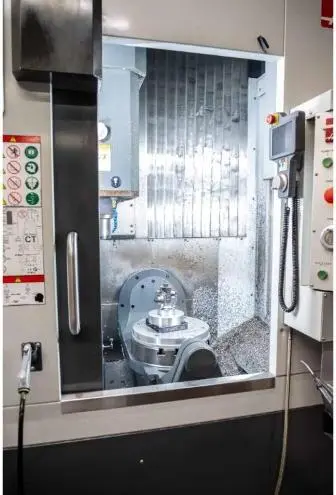
Heat-lot identification travels with the material through all fabrication operations to maintain the chain of custody established by the mill certificate. For defense contracts, that chain also proves DFARS Specialty Metals compliance under DFARS 252.225-7009, documenting that applicable steel, stainless and qualifying alloys were melted or produced in the United States or a qualifying country.
A complete material lineage verification relies on several document types, each with a specific role in the traceability chain. The table below links each document to its confirmation function, trigger condition and retention expectation.
|
Document |
What It Confirms |
When Required |
Retention Expectation |
|---|---|---|---|
|
Mill Test Report / Material Test Report |
Alloy designation, heat number, lot number, AMS/ASTM/MIL spec, mechanical and chemical properties |
Every order with traceable raw stock |
At least 5 years for ITAR-related records |
|
DFARS 252.225-7009 Compliance Documentation |
DFARS 252.225-7009 requires that specialty metals in covered defense articles be melted or produced in the United States or a qualifying country, with compliance documented via mill test reports showing melt or produce origin |
All applicable DoD contracts |
Duration of contract plus retention period |
|
Work Order / Traveler with Heat-Lot Tags |
Continuous identity of material through all operations |
Every production run |
Linked to serial or lot genealogy record |
|
Certificate of Conformance (CoC) |
Parts manufactured per drawing revision, applicable specs and PO, with references to DFARS and ITAR controls |
Every shipment |
Minimum 5 years per DDTC agreement terms |
Step 3: Validate AS9100D and ISO 9001:2015 Quality System Controls
An AS9100D-registered quality management system provides the structural backbone that makes traceability auditable. AS9100 traceability architecture defines a single source system for each data class, such as ERP for lots, PLM for engineering BOMs and QMS for nonconformances, while standardizing identifiers across systems to support reconstruction of as-planned versus as-built records for any serial or lot.
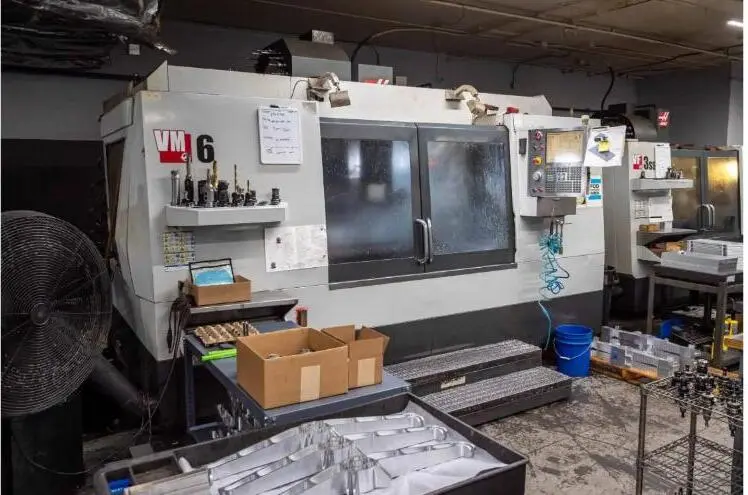
Basic ITAR registration alone does not ensure a supplier can handle controlled work. Buyers verify that AS9100D and ISO 9001:2015 quality systems are in place and current. Precision Advanced Manufacturing operates under both AS9100D and ISO 9001:2015 registrations, with defined quality checkpoints, traceability and full documentation aligned to aerospace quality standards across its California and Texas facilities.
Step 4: Review AS9102 First Article Inspection and Characteristic Accountability
AS9102 Rev C requires that Form 2, Product Accountability, capture materials used, including specification, type and lot or heat numbers. It also records special processes such as heat treatment, NDT and plating, with associated certifications or test reports. Form 3 requires one-to-one mapping between each ballooned drawing characteristic and its sequence number, creating a configuration-controlled verification history.
Review of a supplier’s First Article Inspection Report focuses on several checkpoints that together confirm complete characteristic accountability.
-
FAI type is clearly identified on Form 1 as full, partial or delta
-
All design characteristics appear on Form 3 with no manual workarounds
-
Materials and special processes on Form 2 link to certifications and test reports
-
The FAIR ties to a specific work order, drawing revision and serial or lot number
Suppliers that execute AS9102-format First Article Inspections as part of a documented quality process produce FAI packages that support prime-contractor contract closeout requirements.

Step 5: Assess NIST SP 800-171 and CMMC Data Security for Technical Data
ITAR adds access control requirements on top of traceability data. Traceability records that contain controlled technical data restrict access to U.S. persons, reside on compliant systems and follow protection requirements in NIST SP 800-171. CMMC alignment confirms that cybersecurity controls receive independent assessment rather than self-attestation.
Buyers verify secure storage of CAD files and technical data, access limited to authorized personnel and physical facility security alongside employee training on ITAR restrictions for foreign nationals. A supplier’s cybersecurity program aligns with NIST SP 800-171 for CUI handling on defense contracts.
Precision Advanced Manufacturing maintains ITAR-compliant data handling controls, including access restrictions on controlled technical data, as part of its integrated quality and compliance systems.
Step 6: Evaluate Special Process Controls and Sub-Tier Flowdowns
Special process data under AS9100 includes identification of operations classified as special processes, process parameters required by specification, NADCAP qualification records and expiry dates, and sub-tier processor certifications. These records must appear through identifiers in the core traceability model.
Traceability breaks most often at sub-tier boundaries, where controls weaken. Buyers confirm that the supplier flows down ITAR controls, material traceability requirements and quality clauses to every sub-tier processor involved in welding, heat treatment, plating, anodizing, passivation or NDT. For ITAR-controlled parts or technical data, the digital manufacturing supply chain enforces access restrictions and export controls across the entire supplier base through role-based access control and supplier vetting for ITAR handling capability.
Precision Advanced Manufacturing consolidates multi-axis CNC machining, precision sheet-metal fabrication, specialty welding with thermal distortion control, kitting and secondary finishing, including anodizing, passivation and plating, under one roof with facilities in California and Texas. This consolidation reduces sub-tier handoffs and lowers the risk of traceability gaps.

Step 7: Examine Certificate of Conformance and Program-Specific Flowdowns
The previous six steps verify that a supplier has the systems and controls to maintain traceability. The Certificate of Conformance serves as the document that attests to that traceability for each shipment. A Certificate of Conformance attests that parts were manufactured in accordance with the specified drawing revision, applicable specifications and purchase order requirements, identifying part number, revision, quantity and material information. For defense programs, the CoC also references DFARS clauses, ITAR controls and program-specific flowdown documentation.
A complete shipment closeout package references DFARS clauses, ITAR controls and program-specific flowdown documentation for prime-contractor contract closeout. Buyers verify that the supplier’s CoC template includes fields for all required references and that the document is revision controlled within the quality management system.
Precision Advanced Manufacturing issues CoC packages per shipment that reference applicable specifications, ITAR controls and program flowdown requirements, which supports audit-ready closeout for prime contractors.
Receive a documentation overview showing how Precision Advanced Manufacturing’s CoC and flowdown packages align to program requirements.
Red Flags: Supplier Claims That Fail Traceability Audits
Recent FAA and EASA audits have identified recordkeeping issues across supply chains, which highlight traceability and documentation weaknesses. The following patterns indicate that a supplier’s traceability claim lacks operational support.
-
DDTC registration is cited, but the supplier cannot confirm the specific USML categories covered or the registration renewal date
-
Mill Test Reports are available at receiving, but heat-lot identification does not carry through work orders or travelers
-
AS9100D or ISO 9001:2015 certificates are expired, suspended or cover a different facility than the one performing the work
-
First Article Inspection Reports are incomplete, with missing Form 2 material entries, unballooned characteristics or no FAI type designation on Form 1
-
NIST SP 800-171 compliance is self-attested with no supporting System Security Plan or Plan of Action and Milestones
-
Sub-tier processors perform welding, plating or heat treatment without documented ITAR flowdown or qualification records
-
Certificates of Conformance do not reference DFARS clauses, ITAR controls or applicable program flowdowns
-
Traceability records containing controlled technical data are not access controlled for U.S. persons or stored on compliant systems
Recap of the Seven-Step Verification Framework
The seven steps above form a repeatable supplier-qualification sequence that mirrors RFI and RFQ documentation requests for defense and aerospace programs. Each step targets a specific compliance layer.
-
Active DDTC registration with confirmed USML scope
-
Unbroken material lineage from mill receipt through all operations, with MTRs, DFARS records, travelers and CoC
-
Current AS9100D and ISO 9001:2015 quality system registrations covering the performing facility
-
AS9102 Rev C First Article Inspection with complete characteristic accountability on Forms 1, 2 and 3
-
NIST SP 800-171-aligned and CMMC-consistent data security controls for controlled technical data
-
Special process controls and documented ITAR flowdowns to all sub-tier processors
-
Program-specific Certificate of Conformance packages referencing DFARS, ITAR and applicable flowdowns
Basic ITAR registration and marking requirements differ from true traceability capability because true traceability tracks part identity, process history and documentation all the way to final certification. Procurement and supplier-quality teams that apply this checklist at the RFI stage reduce the risk of compliance failures, program delays and cost overruns that follow from selecting suppliers on registration claims alone.
Partner With an ITAR Traceability Metal Fabrication Supplier
Precision Advanced Manufacturing is a U.S.-based, ITAR-registered metal machining and fabrication provider operating under AS9100D and ISO 9001:2015 certified quality management systems. The company operates facilities in California and Texas, with in-house capabilities that reduce sub-tier handoffs and the traceability gaps they create. Every project is backed by defined quality checkpoints, full material traceability and documentation packages aligned to aerospace and defense program requirements.

Procurement, program and supplier-quality teams that need a tailored traceability audit against the seven-step framework can engage Precision Advanced Manufacturing’s specialists directly. The process starts with a detailed review of program specifications, certifications and documentation requirements before any production commitment.
Begin a traceability audit to confirm that Precision Advanced Manufacturing’s systems satisfy every checkpoint on the verification checklist.
Frequently Asked Questions
What is the difference between ITAR registration and full ITAR traceability capability?
ITAR registration with DDTC is a legal requirement for manufacturers of defense articles listed on the United States Munitions List or handlers of related technical data. It confirms that a company has filed with the Directorate of Defense Trade Controls and paid the required fees. Full ITAR traceability capability goes substantially further. It requires an unbroken material lineage from mill receipt through all fabrication operations, AS9100D or ISO 9001:2015 quality systems that make records auditable, AS9102 First Article Inspection documentation, NIST SP 800-171-aligned data security controls for controlled technical data, documented ITAR flowdowns to sub-tier processors and a Certificate of Conformance package that references DFARS clauses and program-specific flowdowns. A supplier that holds only a DDTC registration number without these operational systems cannot deliver the documentation chain that defense and aerospace programs require.
How does AS9100D support ITAR material traceability?
AS9100D provides the quality management framework that makes material traceability auditable and repeatable. It requires a defined system for identifying and controlling raw material from receipt through all production operations, including heat and lot number tracking, special process records, inspection and test data and nonconformance management. When integrated with AS9102 First Article Inspection requirements, AS9100D creates a configuration-controlled verification history that links every ballooned drawing characteristic to its measured result, the material it was made from and the process records that governed its manufacture. For ITAR programs, this framework also governs how controlled technical data, including drawings, specifications and technical data packages, is stored, accessed and transmitted, which supports compliance with NIST SP 800-171 requirements for CUI handling.
What documents should procurement teams request to verify material lineage at the RFI stage?
At the RFI stage, procurement teams request sample Mill Test Reports showing heat number, lot number, alloy designation and applicable specification such as AMS, ASTM or MIL. Teams also request a sample work order or traveler that demonstrates how heat-lot identification carries through all operations, a sample Certificate of Conformance showing references to DFARS clauses, ITAR controls and program flowdowns, and evidence of DFARS 252.225-7009 Specialty Metals compliance documentation for applicable alloys. Teams then request the supplier’s AS9100D or ISO 9001:2015 certificate with scope statement and expiration date, a sample AS9102 First Article Inspection Report showing completed Forms 1, 2 and 3, and a summary of the supplier’s NIST SP 800-171 System Security Plan or CMMC assessment status. Reviewing these documents before issuing an RFQ reduces the risk of selecting a supplier that cannot meet program documentation requirements.
Why do traceability gaps most often occur at sub-tier supplier boundaries?
Traceability gaps at sub-tier boundaries occur because prime and Tier-1 suppliers often apply rigorous internal controls but do not flow down equivalent requirements to processors that perform welding, heat treatment, plating, anodizing or NDT. When a sub-tier processor does not receive documented ITAR flowdown clauses, material traceability requirements and quality specifications, the chain of custody breaks at that handoff point. The finished part may carry a Certificate of Conformance from the Tier-1 supplier, but the underlying process records from the sub-tier operation are missing, incomplete or not access controlled for ITAR purposes. Suppliers that consolidate special processes in-house or maintain documented qualification and flowdown records for every sub-tier processor reduce this risk. Buyers request a list of sub-tier processors and confirm that ITAR flowdown and traceability requirements are contractually imposed and audited.
Can Precision Advanced Manufacturing support mid-program supplier transitions without breaking traceability?
Precision Advanced Manufacturing supports supplier transitions by providing complete material traceability documentation, engineering support and quality records from the first production run. The team can begin with pilot builds or validation runs that generate a full AS9102 First Article Inspection Report, which establishes a documented baseline before transition to full-rate production. Because machining, fabrication, welding, finishing and kitting operations occur under one AS9100D and ISO 9001:2015 certified quality system, the traceability chain remains intact without the documentation gaps that can occur when work moves between multiple independent suppliers. Program teams receive the same CoC package structure and flowdown documentation from the first shipment, which supports continuity of compliance records for prime-contractor audits.